Bakery Equipment Guide to Commercial Ovens, Dough Mixers, Other Equipment and Industrial Baking Systems
Bakery equipment includes the machines, ovens, tools, and production systems used to prepare, process, bake, cool, and handle baked foods. A small bakery may use a mixer, deck oven, refrigerator, work tables, proofing cabinet, and basic preparation tools, while a large industrial bakery can use connected production lines covering ingredient handling through packaging.
Context
The development of bakery equipment is closely linked with the growth of commercial food production. As bakeries began producing larger quantities of bread, cakes, biscuits, pastries, and other products, manual preparation alone became difficult to manage consistently. Mechanical mixers, temperature-controlled ovens, proofers, dividers, molders, and conveyors gradually became important parts of organized bakery production.
Today, bakery equipment ranges from individual machines to integrated industrial baking systems. The appropriate equipment depends on the product, batch size, production sequence, available space, recipe characteristics, and desired level of automation.
Main categories of bakery equipment
Commercial bakery equipment can be grouped according to the stage of production. Common categories include:
Ingredient handling equipment for weighing, storage, conveying, and dosing
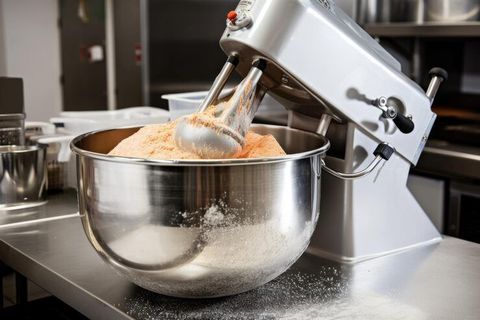
Dough preparation equipment such as spiral mixers and planetary mixers
Dough processing equipment including dividers, rounders, sheeters, and molders
Proofing equipment for controlled fermentation
Commercial ovens for baking different product types
Cooling equipment and conveyors for handling baked products
Slicing and depositing equipment for particular bakery formats
Packaging and product-handling systems for finished goods
Each machine performs a specific function, but industrial baking systems are usually designed around the complete production flow rather than a single piece of equipment.
Commercial ovens
Commercial ovens are central to many bakery operations because baking depends on controlled heat transfer. Different oven designs provide different combinations of temperature control, airflow, humidity management, loading arrangements, and production capacity.
Common types include deck ovens, convection ovens, rack ovens, rotary ovens, and tunnel ovens. Deck ovens can be used for products requiring direct heat from a baking surface, while convection ovens circulate heated air around the product. Rack ovens accommodate wheeled racks, and tunnel ovens are designed for continuous production.
Dough mixers
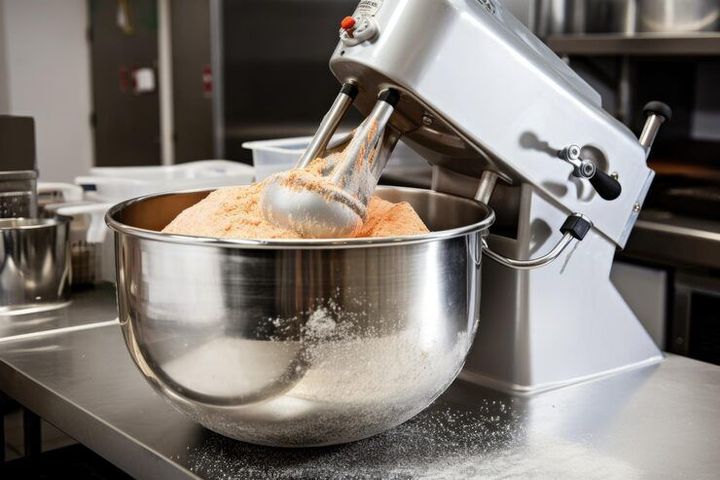
Dough mixers combine flour, water, yeast, fats, sugars, and other ingredients according to a particular formulation. Mixer design influences how ingredients are incorporated and how the dough develops during mixing.
Spiral mixers are commonly associated with bread and other dough products. Planetary mixers can accommodate different attachments and are used for a broader range of bakery preparations, including batters, creams, and doughs.
Importance
Bakery equipment matters because the physical conditions of mixing, proofing, baking, cooling, and handling directly influence production consistency. Equipment also determines how efficiently ingredients and products move through a bakery.
For smaller operations, individual machines can reduce repetitive manual work. In larger facilities, coordinated equipment can connect multiple stages into a continuous or semi-continuous production process.
Matching equipment with production requirements
Equipment selection depends on more than the size of the bakery. Important considerations include:
Product type and dough characteristics
Batch size and expected production frequency
Oven temperature and humidity requirements
Available floor space
Electrical, gas, water, ventilation, and drainage requirements
Cleaning and access requirements
Degree of automation required
Compatibility with other production equipment
A machine designed for one production method may not be appropriate for another. For example, equipment designed around continuous bread production may not fit a bakery producing small batches of pastries with frequent product changes.
Production consistency
Commercial bakery equipment can help standardize repeated operations. A mixer can apply a controlled mixing sequence, a divider can portion dough into similar quantities, and a programmable oven can maintain defined temperature and baking parameters.
However, automation does not eliminate the need for process control. Ingredient characteristics, dough temperature, fermentation conditions, loading patterns, and environmental conditions can still affect the finished product.
Common equipment sequence
A simplified bakery production flow may look like this:
Ingredient preparation → Mixing → Dividing → Shaping → Proofing → Baking → Cooling → Slicing or finishing → Packaging
Not every bakery uses every stage. Cakes, bread, biscuits, pastries, pizza bases, and specialty products can require substantially different equipment arrangements.
| Equipment | Main function | Common applications |
|---|---|---|
| Dough mixer | Combines and develops ingredients | Bread, rolls, pizza dough |
| Dough divider | Portions dough | Rolls, buns, bread |
| Dough rounder | Shapes divided dough | Rolls and buns |
| Sheeter | Reduces dough thickness | Pastry, cookies, laminated products |
| Proofer | Controls fermentation conditions | Bread and yeast products |
| Deck oven | Uses heated baking decks | Bread, pizza, artisan products |
| Convection oven | Circulates heated air | Pastries, cakes, baked goods |
| Rack oven | Bakes products on wheeled racks | Bread, rolls, pastries |
| Tunnel oven | Provides continuous baking | Industrial bread, biscuits, snacks |
| Cooling conveyor | Moves and cools baked products | Continuous production |
Recent Updates
Bakery equipment development from 2024 through 2026 has increasingly focused on automation, digital monitoring, energy management, flexibility, and production data. A 2025 academic review of digitalization in the bakery sector identified robotics, automation, wireless sensors, digital platforms, and traceability as important areas of technological development.
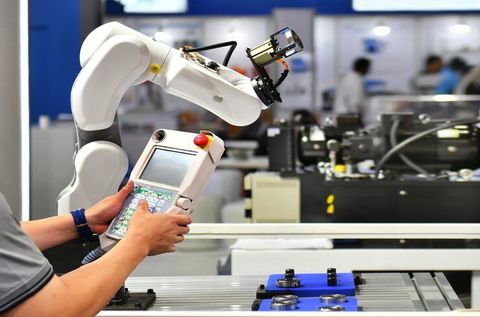
Automation is being applied across more stages of production, including dough handling, dividing, sheeting, proofing, baking, filling, and packaging. Industry reporting has also highlighted automated handling as a way to reduce repetitive manual processes and support more consistent production.
Digital controls and monitoring
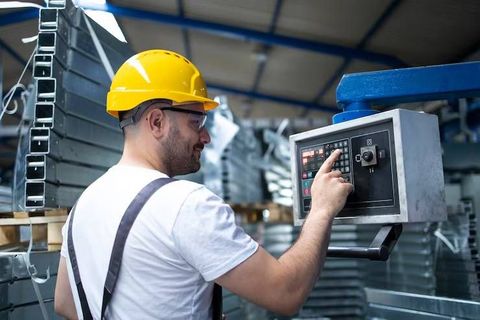
Modern commercial ovens increasingly use programmable controls that allow operators to define temperature, baking time, airflow, and other process parameters. Digital interfaces can also record operating information and make repeated production sequences easier to reproduce.
Industrial baking systems may connect mixers, conveyors, proofers, ovens, cooling systems, and packaging equipment through centralized control systems. Sensors can provide information about temperature, speed, position, and other operating conditions.
Energy and resource efficiency
Energy management has become another important equipment-development theme. Recent industrial baking discussions have highlighted more efficient thermal systems, electrification, heat management, and process monitoring.
The focus is not limited to ovens. Mixers, proofers, refrigeration equipment, conveyors, and compressed-air systems can also influence the overall energy use of a bakery.
Flexible production systems
Many bakeries produce multiple product formats rather than one standardized item. Equipment is therefore increasingly designed around quicker adjustments, programmable settings, modular components, and digital recipe management.
This trend is particularly relevant to industrial bakeries that need to move between different dough weights, shapes, baking conditions, or product sizes without redesigning the entire production line.
Laws or Policies
Bakery equipment is generally affected by food-safety, workplace-safety, electrical, fire, sanitation, and environmental requirements. The exact legal requirements depend on the jurisdiction, facility type, equipment configuration, and products being manufactured.
Food-hygiene principles commonly require equipment that comes into contact with food to be designed so it can be adequately cleaned, maintained, and inspected. Codex food-hygiene guidance also addresses suitable materials, equipment construction, temperature control, and prevention of contamination.
Food-contact materials are another consideration. Equipment surfaces that contact ingredients or finished food generally need to be suitable for their intended use and should not introduce substances that could affect food safety.
Equipment hygiene and maintenance
Bakery equipment should be designed and operated in a way that supports routine cleaning and inspection. Areas where flour, dough, fillings, or food particles can accumulate require particular attention.
Depending on the jurisdiction, food establishments may also be subject to hazard-control systems, documented sanitation procedures, equipment maintenance requirements, temperature controls, and inspection programs. For example, food regulations in some jurisdictions incorporate preventive-control principles covering facility design, equipment, sanitation, and production processes.
Because requirements vary internationally, bakery operators and equipment manufacturers need to follow the rules applicable to their specific location and production activity.
Tools and Resources
Several practical resources can help explain bakery equipment and production requirements.
Equipment specifications
Manufacturer documentation can provide information about dimensions, electrical requirements, operating temperatures, capacity ranges, compatible accessories, cleaning procedures, and installation conditions. Technical specifications are particularly useful when planning the physical layout of a bakery.
Production calculations
Simple production worksheets can help estimate dough quantities, batch frequency, oven loading, proofing capacity, and cooling requirements. A production schedule can also show where bottlenecks may occur between individual machines.
For example, a bakery may have sufficient mixing capacity but insufficient proofing or oven capacity. Examining the entire production sequence can reveal such limitations before equipment is integrated.
Food-hygiene resources
International food-hygiene guidance from organizations such as the FAO and Codex Alimentarius can help explain general principles for hygienic facility and equipment design. These resources address equipment construction, cleaning, maintenance, food-contact surfaces, and temperature control.
Maintenance records
A maintenance record can track inspection dates, cleaning activities, calibration checks, component replacement, and unusual operating conditions. For temperature-sensitive equipment, calibration and monitoring records can also help identify changes in operating performance.
FAQs
What equipment is needed for a commercial bakery?
Common commercial bakery equipment includes dough mixers, proofers, commercial ovens, refrigerators, work tables, dough dividers, sheeters, molders, cooling equipment, and product-handling systems. The exact combination depends on the bakery's products, production volume, layout, and process.
What are the main types of commercial ovens?
Common commercial oven types include deck, convection, rack, rotary, and tunnel ovens. Their differences include heating method, airflow, loading arrangement, temperature control, and whether production is batch-based or continuous.
How does a dough mixer work?
A dough mixer combines ingredients through a rotating mixing mechanism. Different mixer designs create different movement patterns and levels of dough development, making some configurations more suitable for bread dough while others accommodate batters, creams, or multiple preparation types.
What equipment is used in industrial baking systems?
Industrial baking systems can include ingredient handling equipment, mixers, dividers, rounders, molders, proofers, ovens, cooling conveyors, slicers, inspection systems, and packaging equipment. These machines may be connected through conveyors and centralized control systems.
How is bakery equipment kept hygienic?
Bakery equipment is generally designed to allow cleaning, inspection, and maintenance of food-contact and surrounding surfaces. Appropriate cleaning procedures, suitable materials, equipment access, and routine inspection are important parts of hygienic production.