Types of Heat Press Machines: Guide, Insights, Tips & Detailed Comparison Overview
Heat press machines are specialized devices used to transfer designs onto materials such as fabric, ceramics, metal, and plastics through controlled heat and pressure. Commonly used in garment printing, promotional product manufacturing, and small-scale customization businesses, these machines play a crucial role in modern printing workflows.
In recent years, the demand for heat press machines has grown due to the expansion of customized products, print-on-demand businesses, and e-commerce platforms. As consumers increasingly seek personalized items—such as custom t-shirts, mugs, and caps—heat press technology has become more accessible to beginners and professionals alike.
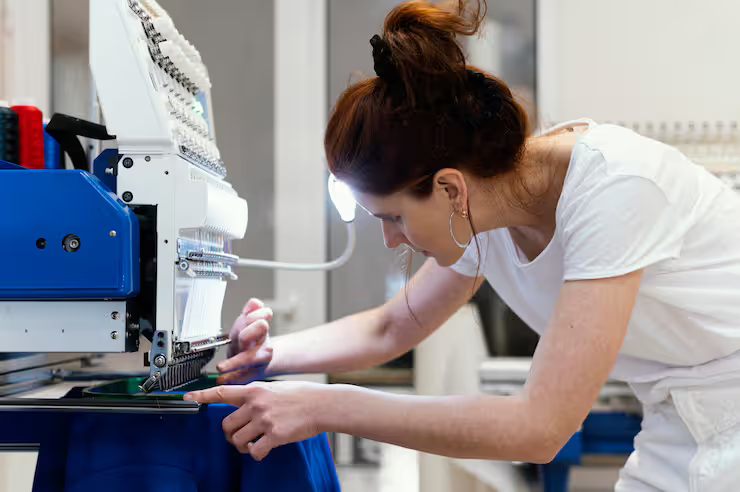
This comparison matters today because the market now offers multiple types of heat press machines, each suited to different applications and production scales. Choosing the wrong type can lead to inefficiencies, uneven prints, or increased operational costs. Recent trends also show a shift toward automation, digital controls, and multi-functional machines, making it essential to understand the differences before selecting one.
Understanding the types, features, and use cases of heat press machines helps users make informed decisions, optimize production, and ensure consistent output quality.
Who It Affects and What Problems It Solves
Heat press machines affect a wide range of users, including small business owners, apparel startups, print-on-demand sellers, hobbyists, and large-scale manufacturers. Entrepreneurs entering the custom printing space often rely on these machines as an entry-level production solution due to their relatively low setup cost compared to industrial printing systems. Educational institutions, sports teams, and promotional product companies also use heat presses for branding and merchandise creation.
For beginners, selecting the right machine type can significantly impact productivity and product quality. For professionals, machine choice affects throughput, consistency, and scalability. Even hobby users benefit from understanding machine types to avoid unnecessary expenses or technical limitations.
Problems Heat Press Machines Solve
- Customization at Scale: Enables quick production of personalized items without complex setups.
- Cost Efficiency: Reduces reliance on outsourcing printing tasks.
- Consistency Issues: Provides uniform heat and pressure for repeatable results.
- Material Versatility: Supports multiple substrates like fabric, ceramic, and metal.
- Low Entry Barrier: Offers an accessible starting point for small businesses.
Recent Updates and Trends (Past Year)
The heat press industry has seen several notable developments in the past year:
- Rise of Automatic and Smart Heat Presses: Newer models now include auto-open and pressure sensors, reducing manual intervention and improving safety.
- Integration with Digital Printing Workflows: Machines are increasingly paired with sublimation and DTF (Direct-to-Film) printing technologies.
- Energy Efficiency Improvements: Manufacturers are focusing on reducing power consumption through better insulation and heating elements.
- Compact and Portable Designs: Demand for home-based businesses has led to smaller, lightweight machines with professional capabilities.
- Improved Temperature Accuracy: Digital control panels now offer precise temperature calibration, minimizing errors.
These updates reflect a broader trend toward automation, efficiency, and user-friendly interfaces, especially for beginners entering the market.
Types of Heat Press Machines Comparison
| Type of Machine | Structure & Design | Best Use Case | Advantages | Limitations |
|---|---|---|---|---|
| Clamshell | Opens vertically like a clamshell | T-shirts, flat garments | Space-saving, easy to use | Limited pressure control, risk of burns |
| Swing-Away | Top plate swings away horizontally | Professional garment printing | Even pressure, safer operation | Requires more space |
| Draw Heat Press | Lower platen slides out | High precision applications | Better placement accuracy | Slightly complex operation |
| Portable Heat Press | Compact, handheld design | Small projects, hobby use | Lightweight, affordable | Limited size and pressure consistency |
| Multifunction Heat Press | Interchangeable attachments | Mugs, caps, plates, garments | Versatile, multi-purpose | Setup time, less specialization |
| Pneumatic Heat Press | Air-powered pressure system | Industrial-scale production | Consistent pressure, high efficiency | Higher cost, requires air compressor |
Laws and Policies Affecting Heat Press Machines
Heat press machines are generally not heavily regulated as standalone equipment, but they are influenced by broader safety, manufacturing, and environmental policies depending on the country.
Key Regulatory Areas
- Electrical Safety Standards: Machines must comply with national electrical safety certifications (such as BIS standards in India or CE marking in Europe).
- Workplace Safety Regulations: Businesses using heat presses must follow occupational safety guidelines, including proper ventilation and operator training.
- Environmental Regulations: Energy consumption and material usage (such as heat transfer vinyl) may be subject to environmental policies.
- Product Compliance: Items produced using heat presses (e.g., clothing) must meet labeling and consumer protection laws.
Practical Guidance
- For home-based users, basic electrical safety and proper handling are sufficient.
- For small businesses, ensuring compliance with workplace safety norms is essential.
- For industrial setups, adherence to labor laws, safety audits, and environmental standards becomes critical.
Understanding these regulations helps avoid operational risks and ensures long-term sustainability.
Tools and Resources
Several tools and resources can enhance the efficiency and accuracy of heat press operations:
Software and Design Tools
- Graphic design tools like vector editors for creating print-ready designs
- RIP software for managing print workflows
Temperature and Pressure Guides
- Online calculators for determining optimal heat and pressure settings
- Manufacturer-provided material compatibility charts
Learning Resources
- Industry blogs and tutorials on heat transfer techniques
- Video demonstrations for machine handling and maintenance
Templates and Checklists
- Pre-designed templates for t-shirts, mugs, and caps
- Maintenance checklists to ensure consistent performance
Monitoring Tools
- Infrared thermometers for verifying platen temperature
- Pressure testing sheets to ensure even distribution
These resources help users reduce errors, improve output quality, and maintain operational consistency.
Frequently Asked Questions
What is the most common type of heat press machine?
Clamshell heat press machines are the most commonly used due to their compact design and ease of operation, especially for beginners.
Which heat press machine is best for beginners?
Portable or clamshell machines are generally suitable for beginners because they are simple to use and require minimal setup.
What is the difference between swing-away and clamshell heat press?
Swing-away machines provide more even pressure and safer operation, while clamshell machines are more space-efficient and quicker to use.
Can one heat press machine handle multiple products?
Yes, multifunction heat press machines come with interchangeable attachments for printing on mugs, caps, plates, and garments.
Are heat press machines energy efficient?
Modern machines are increasingly energy-efficient, but power consumption varies depending on size, heating elements, and usage duration.
Conclusion
Heat press machines have evolved into versatile tools that support a wide range of customization needs across industries. The comparison of different types—such as clamshell, swing-away, draw, portable, multifunction, and pneumatic—reveals that each serves a distinct purpose based on scale, precision, and operational requirements.
Data and industry trends indicate a growing preference for automated and multifunction machines, especially among small businesses and print-on-demand operators. However, beginners often benefit from simpler models, while industrial users require advanced systems with consistent pressure and high throughput.
The most suitable heat press machine depends on factors such as workspace, production volume, material type, and budget constraints. For small-scale or entry-level use, clamshell or portable machines provide efficiency and affordability. For professional or high-volume operations, swing-away or pneumatic machines offer better performance and consistency.
A clear understanding of machine types, supported by recent trends and practical insights, enables users to make informed, data-driven decisions aligned with their specific needs.