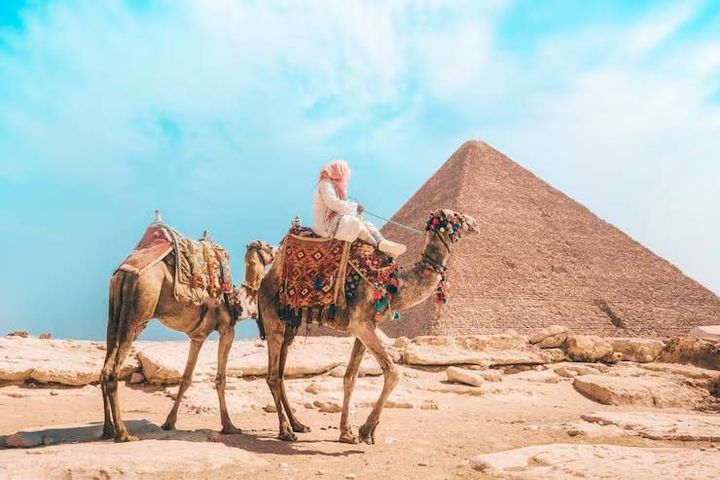
Egypt Trip Planning: Explore Cairo, Luxor & the Nile in One Trip
Egypt trip planning often brings together several destinations that represent different parts of the country's history, geography, and culture. Cairo provides access to major museums, historic neighborhoods, and the Giza Plateau, while Luxor is associated with ancient Thebes, temples, royal tombs, and archaeological landscapes.
Context
A trip combining Cairo, Luxor, and the Nile can therefore be structured around several types of experiences rather than a single attraction. Travelers may divide their time between museums and historic areas in Cairo, archaeological sites on both sides of Luxor, and a Nile journey between destinations farther south.
The Nile has historically been central to life in Egypt. Today, the river corridor remains an important part of travel planning, particularly for visitors interested in combining cultural sites with movement between cities. The official tourism portal groups Cairo and Giza, Luxor, Middle and Upper Egypt, and Aswan among the major areas connected with the Nile.
How the destinations fit together
Cairo and Giza are located in northern Egypt, while Luxor lies farther south along the Nile. This means travelers need to consider transportation when creating an itinerary.
A simple structure might look like this:
| Destination | Main focus | Typical planning role |
|---|---|---|
| Cairo and Giza | Museums, historic Cairo and pyramids | Beginning or ending point |
| Luxor | Temples, tombs and archaeological sites | Main historical exploration |
| Nile | River landscapes and connected destinations | Travel and sightseeing experience |
| Aswan | Temples, Nubian heritage and southern Nile | Optional extension |
The exact number of nights depends on travel pace, transportation choices, opening hours, and the number of archaeological sites included.
Importance
Egypt trip planning matters because the country's major attractions are spread across a large geographic area. Attempting to visit Cairo, Luxor, and several Nile destinations without considering travel time can create a crowded schedule.
A planned itinerary also helps separate major sightseeing areas into manageable groups. Cairo can require substantial time because attractions are spread across different parts of the metropolitan area, while Luxor's archaeological sites are divided between the East Bank and West Bank.
Why Cairo, Luxor and the Nile work together
Cairo introduces travelers to several periods of Egyptian history and modern urban life. The Giza Plateau provides access to the pyramids and associated ancient sites, while museums provide additional historical context.
Luxor presents another concentration of ancient sites. The official Egyptian tourism portal describes the area as an open-air museum and highlights attractions including Karnak Temple, Luxor Temple, the Valley of the Kings, and other sites on the West Bank.
The Nile provides a geographical connection between many destinations. Depending on the itinerary, travelers may use domestic flights, trains, road transportation, or river-based travel.
Planning around travel time
A useful itinerary should leave room for transportation between major destinations. Common planning considerations include:
- Arrival and departure airport locations
- Travel time between Cairo and Luxor
- Opening hours for museums and archaeological sites
- Time required for security and ticket procedures
- Early starts for outdoor archaeological visits
- Rest periods between longer sightseeing days
The Egyptian tourism authority lists Cairo International Airport, Sphinx International Airport, Luxor International Airport, and Aswan International Airport among the country's airports. It also identifies domestic air travel and railway connections as options for moving between regions.
A practical itinerary structure
For a trip lasting roughly one to two weeks, travelers can divide their time into broad stages rather than attempting to see every attraction.
A sample structure could include:
- Cairo and Giza for museums, historic areas, and the pyramids
- Luxor for East Bank and West Bank archaeological sites
- Nile travel for river scenery and selected stops
- Aswan as an optional southern extension
- A final night near the departure point when flight timing makes this practical
This is a planning framework rather than a fixed schedule. Transportation availability and individual interests can change the appropriate arrangement.
Recent Updates
Travel planning for Egypt has changed with the continued development of museums, tourism infrastructure, and digital information resources. One of the most significant recent developments has been the opening of the Grand Egyptian Museum.
The museum's official history states that its main galleries partially opened during 2024 and that the museum subsequently opened as an international destination in 2025. Its current visitor information lists galleries, the Grand Hall, Grand Stairs, the Khufu's Boats Museum, and other areas as part of the visitor experience.
The museum's current opening information also shows different hours on Wednesdays and Saturdays, with later gallery hours on those days. Because operating hours can change, travelers should check the official visitor information before planning a specific visit.
Digital planning resources
Another noticeable trend is the increased use of official online platforms for visitor information. The Egyptian tourism portal provides sections covering entry requirements, practical information, transportation, travel safety, and destinations.
The Grand Egyptian Museum also has an online ticketing platform and publishes visitor regulations and opening information. Its official ticketing website states that visitors should use its official platform for ticket purchases and provides current entry information.
Changes in museum planning
The expansion of the Grand Egyptian Museum means Cairo itineraries can now include another major museum complex near the Giza area. This can affect how travelers divide their sightseeing days because the museum itself can require substantial time.
Luxor remains centered on its established archaeological landscape, including the temples and tombs around the ancient city of Thebes. The official tourism portal continues to identify Ancient Thebes and its Necropolis as a UNESCO World Heritage area.
Laws or Policies
Travel to Egypt is affected by entry requirements, immigration rules, archaeological-site regulations, photography restrictions, and transportation rules. These requirements can vary according to nationality, passport type, destination, and the activity being undertaken.
Entry requirements
Egypt operates an official electronic visa portal administered by the Ministry of Interior. The portal states that eligible travelers can submit an e-Visa application online and that applications should be created at least seven days before departure. Eligibility depends on nationality and the applicable entry rules.
Travelers should check the current requirements applicable to their own passport before departure. An electronic visa is not, by itself, a final decision on entry; Egyptian border authorities retain authority over admission.
Photography and site rules
Photography rules can vary between public areas, museums, archaeological locations, and government or security-related facilities. The Egyptian tourism authority states that personal photography in public places is generally permitted, while certain government, security, and military locations have restrictions. Professional equipment and some commercial photography activities can require additional permission.
Visitors should therefore follow signs and instructions at individual sites rather than assuming that one photography rule applies everywhere.
Travel safety information
Travel advisories can change because of regional circumstances. Official foreign-travel guidance currently contains restrictions concerning particular areas of Egypt, including the Egypt-Libya border region and North Sinai. Such guidance does not necessarily apply equally to Cairo, Luxor, or every Nile destination, so travelers should review the current advisory for the specific areas included in their itinerary.
Tools and Resources
Several official resources can make Egypt trip planning easier and reduce uncertainty about changing information.
Official tourism information
The Experience Egypt portal provides destination information for Cairo and Giza, Luxor, the Nile, museums, archaeological sites, transportation, and practical travel information. It can be used as a starting point for checking current destination information.
Grand Egyptian Museum information
The Grand Egyptian Museum website provides current visitor information, opening hours, visitor regulations, directions, and ticketing details. Checking these details before a Cairo sightseeing day can help prevent conflicts with opening schedules.
Egypt e-Visa portal
The official Egypt e-Visa portal provides information about eligibility, application procedures, and electronic visa requirements. Travelers should use the official government portal when checking whether an electronic visa is applicable to their nationality.
Travel planning checklist
A simple planning worksheet can include:
- Passport validity and entry requirements
- Arrival and departure airports
- Cairo and Giza sightseeing days
- Luxor East Bank and West Bank visits
- Nile travel arrangements
- Museum opening hours
- Archaeological-site schedules
- Local transportation between major areas
- Weather conditions during the intended travel period
- Current government travel guidance
Keeping these details together can make it easier to identify scheduling conflicts before the trip begins.
FAQs
How many days are needed for an Egypt trip covering Cairo and Luxor?
The appropriate length depends on the number of museums, archaeological sites, and Nile destinations included. A shorter itinerary can focus on Cairo, Giza, and Luxor, while a longer trip can include additional Nile destinations such as Aswan.
What should be included in an Egypt trip planning itinerary?
An Egypt trip planning itinerary commonly includes Cairo and Giza, Luxor, transportation between cities, archaeological sites, museums, and optional Nile travel. The schedule should also account for opening hours and travel time.
Is a Nile cruise necessary when visiting Cairo and Luxor?
No single travel format is necessary for every itinerary. Travelers can move between destinations using several transportation methods, while a Nile journey can be included when the river experience is an important part of the trip.
What are the main places to visit in Luxor?
Major areas include Karnak Temple, Luxor Temple, the Valley of the Kings, and other archaeological locations on the East and West Banks. The official tourism portal identifies Ancient Thebes and its Necropolis as an important heritage area.
What should travelers check before visiting Egypt?
Travelers should check current entry requirements, official travel advisories, transportation arrangements, museum and archaeological-site schedules, and any photography or site-specific rules. Requirements can change, so information should be reviewed close to the planned journey.
Conclusion
Egypt trip planning can combine Cairo's museums and historic areas, Luxor's archaeological sites, and the Nile's connected landscapes within one itinerary. The main planning considerations are geographic distance, transportation, opening schedules, entry requirements, and site-specific rules. Recent developments such as the opening of the Grand Egyptian Museum have added another major component to Cairo's cultural landscape. Current official information remains important because entry requirements, operating schedules, and travel guidance can change.