Luxury SUVs Guide: Body Styles, Interior Features, Performance, Technology and Safety Systems
Luxury SUVs are sport utility vehicles positioned around a combination of spacious body styles, refined interiors, strong road performance, advanced technology, and multiple safety systems. The category developed from traditional utility vehicles, but modern designs increasingly combine passenger comfort with the higher driving position, cargo flexibility, and available all-wheel-drive capability associated with SUVs.
Context
Luxury SUVs are sport utility vehicles positioned around a combination of spacious body styles, refined interiors, strong road performance, advanced technology, and multiple safety systems. The category developed from traditional utility vehicles, but modern designs increasingly combine passenger comfort with the higher driving position, cargo flexibility, and available all-wheel-drive capability associated with SUVs.
The term luxury can refer to several areas rather than one technical specification. It may describe cabin materials, seating design, sound insulation, suspension tuning, digital displays, driver assistance, or powertrain choices.
Body styles and layouts
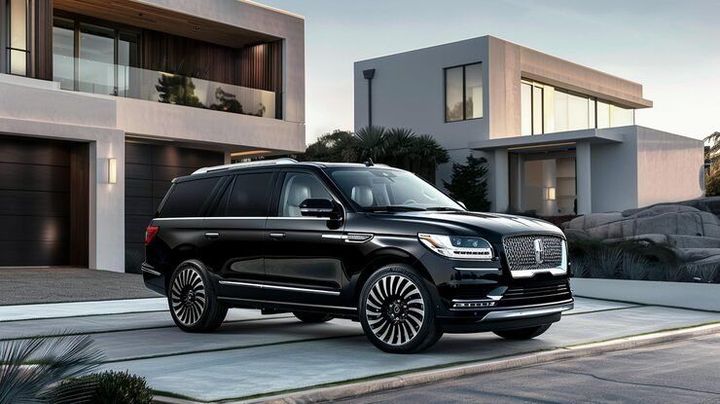
Luxury SUVs generally appear in several body formats. Compact models use a smaller footprint for urban roads, while midsize SUVs balance passenger space and maneuverability. Full-size SUVs provide more cabin volume and may include three seating rows.
Some models use a coupe-like roofline that reduces rear headroom or cargo flexibility in exchange for a different exterior shape. Traditional boxier designs usually prioritize interior volume. Wheelbase, ground clearance, seating layout, and cargo dimensions therefore help explain how an SUV is intended to be used.
Importance
Luxury SUVs matter because vehicle use has become more varied. Families may need flexible seating and luggage space, while urban drivers may place greater importance on parking assistance, visibility, and cabin technology. Long-distance drivers may pay attention to ride comfort, noise control, navigation, and driver assistance systems.
The growing range of powertrains also affects how people understand the category. Petrol, diesel in some markets, hybrid, plug-in hybrid, and battery-electric systems can appear in SUV lineups. In India, the wider passenger-vehicle market has been moving toward electrification alongside conventional powertrains. SIAM reported that electric passenger-vehicle registrations increased by more than 80% in FY 2025–26 compared with the previous year.
Interior features and daily use
Interior features can include multi-zone climate control, electrically adjustable seats, memory settings, panoramic roofs, ambient lighting, digital instrument displays, large infotainment screens, wireless smartphone connectivity, and premium audio systems. Availability varies by model and configuration.
Practicality remains important even in vehicles focused on comfort. Useful factors include:
- Number of seating rows and usable passenger space
- Rear-seat access and adjustment range
- Cargo volume with different rows in use
- Storage compartments and charging ports
- Visibility and camera coverage
- Ease of operating climate and infotainment controls
Recent Updates
From 2024 through 2026, luxury SUVs have increasingly reflected broader changes in the automotive industry. Electrification, connected systems, software-based functions, and more advanced driver assistance have become important areas of development. SIAM’s 2026 automotive design publication identifies electrification, connected and autonomous systems, sustainable mobility, and new design practices as major directions affecting vehicle development in India.
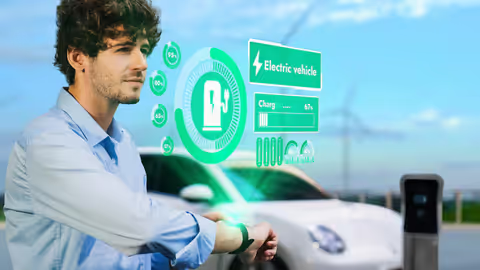
Battery-electric SUVs use electric motors and high-voltage battery packs as their main propulsion system. Hybrid systems combine an engine with electric assistance, while plug-in hybrids can recharge their battery externally.
Technology and connectivity
Current luxury SUVs commonly integrate multiple digital functions. Depending on the vehicle, these can include over-the-air software updates, connected vehicle applications, digital keys, voice controls, navigation, wireless smartphone integration, surround-view cameras, and customizable driver displays.
Driver assistance has also expanded. Systems may include adaptive cruise control, lane-centering assistance, blind-spot monitoring, forward collision warning, automatic emergency braking, rear cross-traffic alerts, and parking assistance. These technologies are intended to assist the driver, not replace attention or control.
India's automotive industry is also discussing wider electrification and low-carbon mobility. SIAM's 2026 Global Electrification Mobility Summit focused on electric mobility, charging infrastructure, and sustainable transportation, reflecting the continuing shift toward electrified vehicles.
Performance and ride systems
Performance in a luxury SUV is shaped by several connected systems. Engine or motor output is only one part. Transmission behavior, traction management, suspension design, steering, braking, tires, vehicle weight, and aerodynamics all influence how a vehicle responds.
Some SUVs use adaptive suspension that changes damping characteristics according to driving conditions. Air suspension can vary ride height on compatible vehicles. All-wheel-drive systems can distribute torque between axles or wheels to manage traction, although their operation differs substantially between designs.
A simple comparison can help explain the main areas:
| Area | What it describes | Why it matters |
|---|---|---|
| Powertrain | Engine, motor, or combined system | Determines how propulsion is produced |
| Drivetrain | Front-, rear-, or all-wheel drive | Affects traction and vehicle behavior |
| Suspension | Springs, dampers, and related systems | Influences ride and body control |
| Ground clearance | Space between the vehicle and road surface | Affects clearance over uneven surfaces |
| Cargo capacity | Available luggage and storage space | Indicates practical carrying ability |
| Driver assistance | Electronic systems that support driving | Adds monitoring and assistance functions |
Laws or Policies
In India, luxury SUVs are subject to the same broad road-vehicle regulatory framework as other passenger vehicles in their applicable category. Requirements can cover vehicle type approval, safety equipment, emissions, registration, insurance, and roadworthiness.
Bharat New Car Assessment Programme, commonly called Bharat NCAP, provides a separate vehicle safety assessment framework. The programme evaluates applicable M1 vehicles up to 3,500 kg through areas including Adult Occupant Protection, Child Occupant Protection, and Safety Assist Technologies. Its published ratings are based on crash testing and safety-feature assessments.
Bharat NCAP is different from mandatory regulatory compliance. A crash-test rating provides additional information about tested safety performance, while legal requirements determine whether a vehicle can be approved for road use. The Bharat NCAP system has continued to publish ratings for vehicle models and variants through 2026.
Registration and documentation
Vehicle registration in India is administered through the relevant transport authorities and the Parivahan system. Official registration guidance refers to documents such as a roadworthiness certificate, pollution-under-control certificate, valid insurance certificate, and other documents depending on the vehicle and circumstances. Imported vehicles can require additional customs documentation.
Rules can vary by vehicle type, state procedure, and individual situation, so current central and state transport information is important for compliance.
Tools and Resources
Several official and technical resources can help readers understand luxury SUVs without relying only on advertising material. The Bharat NCAP website provides vehicle safety ratings, assessment information, and explanations of its testing framework.
The Parivahan Sewa portal provides information related to vehicle registration and transport documentation. It can be used to review registration procedures and required documents.
Manufacturer specification sheets can help readers compare dimensions, seating capacity, powertrain type, cargo measurements, wheel sizes, and available technology. Independent road tests and technical publications can provide additional context about driving behavior, while owner manuals explain controls, warning systems, charging procedures, and safety functions for specific vehicles.
Useful comparison resources include:
- Vehicle dimension and cargo-volume tables
- Fuel-economy or energy-consumption calculators
- Charging-range planning tools for electric SUVs
- Insurance and registration calculators where applicable
- Bharat NCAP safety-rating databases
- Official vehicle manuals and specification sheets
These resources describe different parts of a vehicle, so figures should be read in their stated test conditions and model configuration.
FAQs
What are luxury SUVs?
Luxury SUVs are sport utility vehicles that combine SUV characteristics such as elevated seating, flexible cargo space, and available all-wheel drive with features focused on cabin comfort, materials, technology, and refinement.
What interior features are common in luxury SUVs?
Common luxury SUV interior features can include adjustable seats, multi-zone climate control, digital displays, advanced infotainment, smartphone connectivity, panoramic roofs, premium audio, and additional cabin lighting. Equipment varies by model and configuration.
What safety systems are found in luxury SUVs?
Luxury SUVs may include airbags, electronic stability control, anti-lock braking, tire-pressure monitoring, parking cameras, blind-spot monitoring, adaptive cruise control, lane assistance, and automatic emergency braking. Availability and operating conditions differ between vehicles.
How does Bharat NCAP apply to luxury SUVs in India?
Bharat NCAP can assess eligible M1 passenger vehicles up to 3,500 kg. Its evaluation covers adult occupant protection, child occupant protection, and safety-assist technologies, with results expressed through a star-rating framework.
How do electric luxury SUVs differ from petrol or hybrid SUVs?
Electric luxury SUVs use battery-powered electric motors as their primary propulsion system. Hybrid SUVs combine an internal-combustion engine with electric propulsion or assistance, while petrol SUVs rely on an internal-combustion engine. These differences affect energy use, charging or refueling, weight, packaging, and driving characteristics.
Conclusion
Luxury SUVs combine SUV body styles with features focused on cabin comfort, performance, digital technology, and safety assistance. Recent vehicle development has placed greater attention on electrification, connected systems, driver assistance, and structured safety assessment. In India, regulatory approval, registration requirements, and Bharat NCAP assessments provide different forms of information about vehicle compliance and safety performance. Understanding the body layout, interior equipment, powertrain, technology, and safety systems gives readers a clearer framework for understanding this vehicle category.