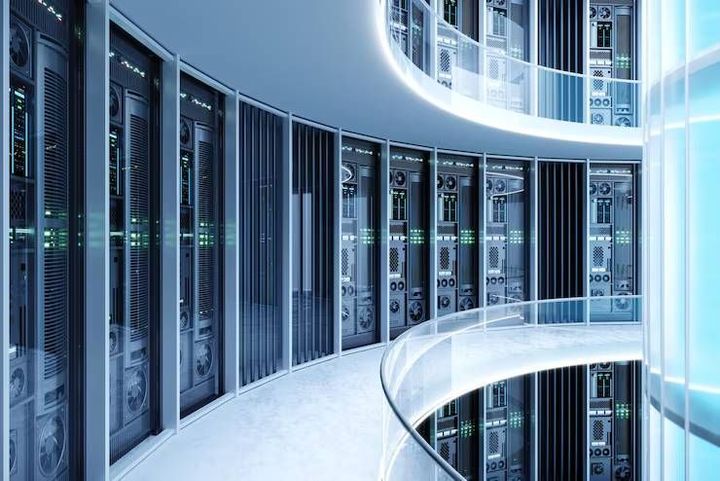
AI Data Center Infrastructure Guide: Hardware, Networking, Storage and Essential Systems
An AI Data Center Infrastructure Guide explains the hardware, networking, storage, power, cooling, and supporting systems needed to operate artificial intelligence workloads. A data center is a facility that houses computing equipment and the systems required to keep it running. AI data centers build on traditional data center designs but often require greater computing capacity, faster communication between processors, and more intensive power and cooling arrangements.
Context
An AI Data Center Infrastructure Guide explains the hardware, networking, storage, power, cooling, and supporting systems needed to operate artificial intelligence workloads. A data center is a facility that houses computing equipment and the systems required to keep it running. AI data centers build on traditional data center designs but often require greater computing capacity, faster communication between processors, and more intensive power and cooling arrangements.
Artificial intelligence applications, including language models, image recognition, scientific computing, and industrial automation, depend on processing large amounts of data. Training an AI model may require thousands of calculations to run across multiple processors, while an AI application serving users must process requests reliably. These workloads influence how data center infrastructure is designed, connected, monitored, and maintained.
Understanding AI Data Center Hardware
Hardware forms the computing foundation of an AI data center. Different components perform different tasks, and their effectiveness depends on how well they work together.
Graphics processing units (GPUs): Process many calculations in parallel and are widely used for AI model training and inference.
Central processing units (CPUs): Manage general computing tasks, operating systems, data preparation, and coordination between components.
AI accelerators: Specialized processors designed to handle particular machine learning operations efficiently.
Memory: Holds information that processors need to access quickly, including model parameters and intermediate calculations.
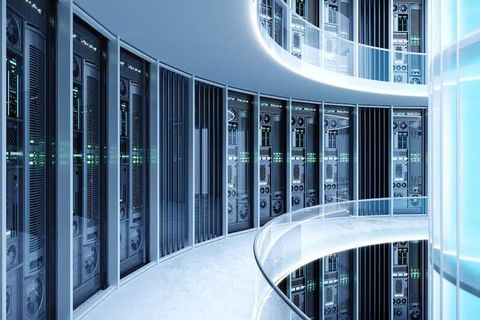
Server racks: Organize servers and related equipment into structured units for power delivery, cooling, and maintenance.
A single AI workload may use several types of processors. The appropriate configuration depends on model size, processing requirements, available memory, and the amount of data that must move between devices.
The Role of Networking and Storage
Networking connects servers, processors, storage systems, and external networks. AI workloads often require rapid communication between processors, especially when a model is distributed across multiple machines. Network design therefore affects how efficiently computing resources can work together.
Storage systems retain datasets, model files, checkpoints, software, and operational records. Depending on the workload, a data center may combine high-speed solid-state storage with larger-capacity storage systems. The design must balance data access speed, capacity, reliability, and protection against data loss.
Importance
AI data center infrastructure matters because it supports applications used in research, healthcare administration, education, manufacturing, financial analysis, and everyday digital tools. The infrastructure behind an AI application influences its response time, reliability, operating requirements, and ability to handle changing workloads.
For organizations, poorly coordinated hardware, networking, storage, power, or cooling can create bottlenecks. A powerful processor may remain underused if data arrives too slowly, while inadequate cooling can cause equipment to reduce its operating speed or shut down to protect itself. These issues make infrastructure planning important for both technical performance and operational continuity.
Essential Infrastructure Components
An AI data center includes much more than servers and processors. Its supporting systems help maintain stable operation.
Power distribution: Delivers electricity to servers and other equipment through appropriate electrical infrastructure.
Uninterruptible power supplies (UPS): Provide temporary backup power during certain interruptions and help bridge the transition to another power source.
Backup generators: Supply electricity during longer outages when correctly configured and maintained.
Cooling systems: Remove heat produced by processors, memory, networking equipment, and power components.
Monitoring systems: Track temperatures, electrical conditions, equipment status, and network performance.
Physical security: Uses measures such as access controls, surveillance, and restricted equipment areas.
These systems are interdependent. Increasing computing density can raise electrical demand and heat output, which may require changes to rack design, power distribution, cooling capacity, and facility monitoring.
Comparing Major Infrastructure Components
| Component | Main purpose | Important consideration |
|---|---|---|
| GPUs and AI accelerators | Execute AI calculations | Processing capability and memory |
| CPUs | Manage general computing tasks | Workload coordination |
| High-speed networking | Connect processors and servers | Bandwidth and latency |
| Storage systems | Retain datasets and model files | Capacity and access speed |
| Power infrastructure | Deliver stable electricity | Capacity and redundancy |
| Cooling equipment | Remove generated heat | Thermal capacity and efficiency |
| Monitoring tools | Track system conditions | Visibility and alert accuracy |
The requirements vary by workload. A facility designed for model training may prioritize large groups of connected accelerators, while an inference facility may emphasize predictable response times, geographic proximity to users, and flexible capacity.
Recent Updates
AI data center infrastructure has been changing as organizations deploy larger models, expand AI computing capacity, and investigate more efficient ways to manage energy and heat. Developments from 2024 through 2026 have included higher-density accelerator systems, faster interconnects, liquid cooling, and greater attention to electrical supply constraints. Adoption differs by facility, processor generation, climate, and workload.
High-Density Computing and Advanced Networking
Newer AI computing platforms increasingly combine multiple accelerators within closely connected systems. High-speed interconnects allow processors to exchange model data and coordinate calculations. Ethernet and InfiniBand are among the networking technologies used in AI environments, with the choice depending on performance requirements, architecture, and operational needs.
Higher-density systems can increase the amount of computing performed within a limited physical area, but they also place additional demands on power delivery and thermal management. Infrastructure planning must account for the entire system rather than evaluating processors separately.
Liquid Cooling and Energy Management
Traditional air cooling remains important in many data centers, but high-density AI equipment can produce more heat than conventional cooling arrangements were designed to handle. Direct-to-chip liquid cooling circulates coolant through cold plates attached to heat-generating components. Other designs use liquid-based systems to transfer heat away from equipment, sometimes alongside air cooling.
Liquid cooling requires careful management of coolant flow, pressure, leak detection, maintenance, and heat rejection. It is not automatically appropriate for every facility, and its effectiveness depends on the equipment and overall cooling design.
Energy management is another major focus. Operators may examine power usage effectiveness (PUE), which compares total facility energy consumption with the energy used by IT equipment. PUE helps describe facility overhead, but it does not measure every aspect of environmental impact, such as the source of electricity or water use.
Modular Design and Infrastructure Planning
Some facilities use modular power, cooling, and computing units to support staged expansion. This approach can allow capacity to be added in planned increments, although it still requires careful coordination of electrical connections, physical space, network capacity, and cooling infrastructure.
Planning also increasingly considers the availability of grid electricity, local environmental conditions, equipment lead times, and the physical space required for future expansion. These factors can influence when and where new AI computing capacity becomes operational.
Laws or Policies
AI data center infrastructure is shaped by electrical safety requirements, building regulations, environmental rules, data protection laws, and standards relevant to equipment and facility operations. Requirements depend on the country, state, local authority, facility size, and type of activity. Technical standards can guide engineering decisions, but they do not automatically replace applicable legal requirements.
Data Center Regulations in India
In India, data center projects may be subject to local building permissions, fire safety requirements, electrical safety rules, environmental approvals where applicable, and state-specific regulations. Facilities must assess the requirements relevant to their location, construction, backup power arrangements, and operating activities.
The Digital Personal Data Protection Act, 2023, forms part of India's legal framework for processing digital personal data. Applicable obligations depend on the provisions in force, associated rules, and the circumstances of the data processing. Organizations operating AI systems should also consider applicable cybersecurity requirements and contractual obligations for handling information.
Energy, Environmental, and Technical Standards
Data centers may need to comply with electricity regulations, generator-related environmental requirements, and rules governing water use or emissions, depending on their configuration and location. Energy efficiency and environmental reporting requirements can also vary by project and jurisdiction.
Technical references such as ASHRAE guidance for thermal conditions and standards from the International Organization for Standardization can support facility planning and operational management. These references have different scopes and may be voluntary unless incorporated into a contract, regulation, or other binding requirement.
Organizations should assess current requirements with qualified engineering, legal, and environmental professionals before constructing or modifying a facility. This is particularly relevant when installing high-density racks, new cooling arrangements, or large electrical systems.
Tools and Resources
Several tools help engineers and facility operators understand AI data center infrastructure, estimate requirements, and monitor operations. The appropriate choice depends on whether the task involves facility design, hardware selection, network performance, energy analysis, or ongoing maintenance.
Infrastructure Design and Performance Tools
Computer-aided design (CAD) and building information modeling (BIM) tools help represent facility layouts, equipment locations, cable routes, and supporting systems. Electrical and thermal modeling tools can help assess expected loads, heat distribution, and equipment requirements before installation.
Monitoring platforms can track server utilization, temperature, power consumption, network traffic, and hardware health. Tools such as Prometheus and Grafana are used in some environments to collect, display, and analyze operational metrics. Their suitability depends on the system architecture and the information sources available.
Technical Documentation and Planning Resources
The NVIDIA technical documentation library provides information about supported GPU platforms and related computing technologies. The NVIDIA Networking documentation and official Ethernet or InfiniBand technical resources can help explain communication architectures. ASHRAE publications provide guidance on thermal conditions and environmental considerations for data centers.
Planning spreadsheets can record server counts, accelerator specifications, rack power estimates, network ports, storage capacity, cooling assumptions, and expansion requirements. These estimates need validation against manufacturer specifications and engineering calculations rather than relying on generalized figures.
Infrastructure Planning Checklist
A basic planning review can include:
Define the AI workload, expected processing demand, and data volume.
Identify CPU, GPU, accelerator, memory, and storage requirements.
Estimate rack power demand and cooling needs.
Plan network bandwidth, latency, and connectivity between systems.
Evaluate backup power, redundancy, and physical security.
Review applicable regulations, environmental conditions, and expansion plans.
The checklist provides a starting structure rather than a complete engineering specification. Detailed design requires workload testing and site-specific assessment.
FAQs
What is AI data center infrastructure?
AI data center infrastructure includes the computing hardware, networking, storage, electrical systems, cooling equipment, and monitoring tools used to run artificial intelligence workloads.
What hardware is required for an AI data center?
Common hardware includes GPUs or AI accelerators, CPUs, memory, storage devices, network switches, and server racks. The configuration depends on the workload, model size, and processing requirements.
Why is liquid cooling used in AI data centers?
Liquid cooling can remove heat from high-density computing equipment when conventional air cooling is insufficient or less suitable. Its design must account for coolant management, equipment compatibility, maintenance, and heat rejection.
How does networking affect AI data center performance?
Networking determines how quickly processors and servers exchange information. Bandwidth, latency, and interconnect design can affect distributed model training and the movement of data between computing systems.
Which standards and tools help with AI data center planning?
ASHRAE guidance, ISO standards, manufacturer documentation, electrical modeling tools, and infrastructure monitoring platforms can support planning and operations. Applicable legal requirements depend on the facility's location and design.
Conclusion
AI data center infrastructure combines processors, networking, storage, power, cooling, and monitoring into an integrated computing environment. Recent developments emphasize high-density hardware, faster interconnects, liquid cooling, and more detailed energy planning. Facility design must account for workload requirements, reliability, physical constraints, and applicable regulations. Understanding these components provides a foundation for evaluating how AI computing systems are built and operated.