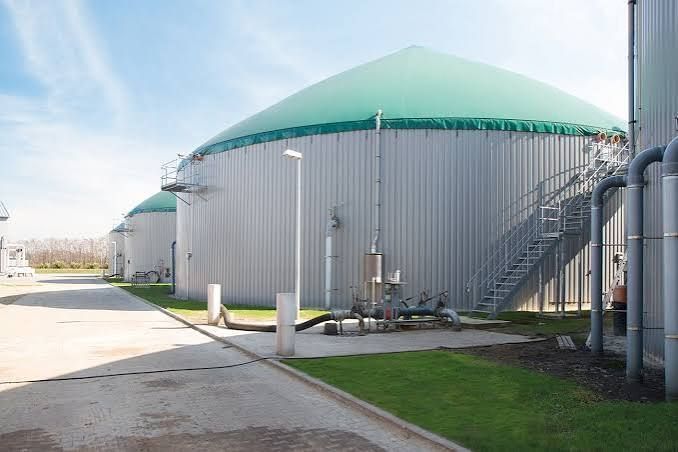
Biogas Plant Setup: Guide to Choosing the Right Location and Equipment
A biogas plant setup is a system designed to convert biodegradable organic material into biogas through a natural biological process called anaerobic digestion. In this process, microorganisms break down materials such as animal manure, agricultural residues, food waste, and certain organic industrial wastes in an environment without oxygen.
Biogas technology has been used in India for several decades, particularly in rural areas where cattle manure and agricultural materials are readily available. The Ministry of New and Renewable Energy (MNRE) has supported small biogas plants since the early 1980s, while medium-sized systems have also been developed for thermal and power applications.
A successful biogas plant setup involves more than installing a digester. Planning must consider the available feedstock, daily quantity of material, water availability, land, plant capacity, equipment selection, gas usage, slurry management, safety measures, and regular operation.
How a biogas plant works
A typical plant has several connected stages. Organic material is first collected and prepared before entering the digester. Inside the sealed digester, microorganisms break down the material and produce biogas.
The main components commonly include:
- Feed preparation and mixing area for preparing organic material
- Inlet arrangement for transferring feedstock into the digester
- Anaerobic digester where biological decomposition occurs
- Gas holder or gas collection arrangement for storing generated gas
- Gas piping and valves for controlled movement of gas
- Moisture and impurity management equipment where required
- Outlet arrangement for removing digested slurry
- Slurry storage or handling area for further agricultural use
The exact arrangement depends on plant capacity, feedstock, technology, climate, and the intended use of the gas.
Common biogas plant designs
Several designs are used in India. MNRE identifies models such as the Deenbandhu fixed-dome model, KVIC floating-dome design, prefabricated reinforced cement concrete digesters with floating drums, and flexi-bag plants.
| Plant type | General characteristic | Common consideration |
|---|---|---|
| Fixed dome | Underground masonry or concrete structure | Requires suitable construction and gas-tightness |
| Floating drum | Gas holder moves according to gas volume | Includes a movable gas storage component |
| Prefabricated RCC | Uses manufactured reinforced concrete components | Site preparation and component installation are important |
| Flexi-bag | Flexible membrane-based structure | Requires suitable space and protection from physical damage |
Importance
A carefully planned biogas plant setup can address several practical issues at the same time. Organic waste can be processed through controlled digestion, while the resulting gas can provide a source of renewable energy. The digested material, known as slurry or digestate, can also be managed as an organic manure resource.
MNRE states that its Biogas Programme covers applications such as clean cooking fuel, lighting, thermal requirements, small power generation, and production of organic-enriched bio-manure.
The topic is relevant to households, farms, dairy operations, institutions, food-processing units, and larger waste-management projects. The appropriate design depends heavily on the type and quantity of organic material available at the site.
Assessing the feedstock
Feedstock is one of the first factors to examine during planning. Common materials include cattle dung, poultry waste, food waste, vegetable and fruit residues, agricultural residues, and certain industrial organic wastes. MNRE's Waste to Energy Programme identifies biodegradable urban, agricultural, livestock, and industrial materials as potential feedstocks for biomethanation projects.
Before selecting equipment, planners should determine:
- Daily quantity of available feedstock
- Moisture content and consistency
- Seasonal changes in availability
- Presence of stones, plastic, chemicals, or other unwanted material
- Water required for preparation
- Distance between the feedstock source and plant
- Intended use of the produced gas
A plant should be matched to a dependable feedstock stream rather than being selected only according to the desired gas output.
Selecting the right equipment
Equipment selection depends on plant capacity and the physical characteristics of the feedstock. A small household system may require relatively simple feeding, digestion, gas collection, and slurry arrangements, while a larger facility can require pumps, mixers, gas treatment equipment, monitoring instruments, pressure-control components, and additional storage.
Important equipment considerations include material durability, compatibility with the feedstock, ease of inspection, availability of replacement components, and safe operation. Gas-carrying components require particular attention because leaks can create fire and health hazards.
Recent Updates
The biogas sector in India has continued to develop as part of broader renewable-energy and waste-management programmes. MNRE's National Bioenergy Programme includes the Biogas Programme and the Waste to Energy Programme, covering different plant sizes and applications. Phase-I of the National Bioenergy Programme covered the financial period through 2025–26.
The current direction also includes larger biomethanation projects using urban, agricultural, industrial, and livestock waste. The Waste to Energy Programme supports projects producing biogas, Bio-CNG or compressed biogas, and electricity from eligible waste streams.
Increasing attention to waste-based energy
Recent development has focused on treating organic waste as a potential energy resource rather than handling it only as discarded material. This has increased interest in systems that can integrate waste collection, anaerobic digestion, gas purification, energy use, and digestate management.
Digital monitoring is another area of development in larger plants. MNRE's Waste to Energy guidelines include requirements related to SCADA or remote monitoring systems for applicable projects, reflecting greater attention to operational data and plant performance.
Planning for different scales
Small and medium biogas plants continue to have different technical requirements. MNRE's Biogas Programme covers small plants from 1 to 25 cubic metres of daily biogas generation and medium plants above 25 up to 2,500 cubic metres per day.
Larger waste-to-energy projects can involve more complex feedstock handling, gas treatment, power generation, or compressed biogas production. Therefore, equipment and installation planning need to correspond to the intended scale rather than applying a single design to every project.
Laws or Policies
Biogas plant installation in India can be influenced by renewable-energy programmes, environmental requirements, local construction rules, electrical regulations, fire-safety considerations, and waste-management requirements. The exact approvals depend on plant size, location, feedstock, technology, and intended gas or energy application.
MNRE's National Bioenergy Programme provides the main central framework for several categories of biogas and waste-to-energy projects. Its Biogas Programme supports small plants and medium systems, while the Waste to Energy Programme addresses larger projects using urban, industrial, and agricultural wastes or residues.
Technical standards and safe installation
Technical planning is important because biogas contains combustible methane. Gas piping, valves, storage systems, pressure controls, ventilation, electrical equipment, and flame sources need to be considered during plant design and installation.
MNRE has published a code of practice covering the design, construction, installation, and operation of biogas and biomethane plants. The document provides a technical reference for project planning and plant operation.
Projects that process industrial effluents, sewage, municipal organic material, or other regulated waste streams may also require environmental permissions or compliance with applicable pollution-control requirements. The relevant State Pollution Control Board and local authorities should be consulted for project-specific requirements.
Government programmes
The central government has used different programmes to support biogas development. MNRE states that small biogas plants are implemented through state departments, dairy cooperatives, State Renewable Energy Agencies, Biogas Development and Training Centres, KVIC, and other designated institutions.
Programme availability and application conditions can change between financial periods. The official MNRE and Bio-Urja portals should therefore be checked for current application status, eligibility, technical requirements, and programme notifications.
Tools and Resources
Several resources can help with a biogas plant setup and equipment planning. Government publications are particularly useful because they provide information about technical requirements and programme conditions.
Useful resources include:
- MNRE Biogas Programme pages for information about plant categories, approved models, programme structure, and implementation arrangements.
- MNRE Waste to Energy resources for larger biomethanation, biogas, Bio-CNG, and power-generation projects.
- Bio-Urja Portal for information related to eligible waste-to-energy applications and project procedures.
- Technical drawings and project reports for understanding digester layouts, gas lines, feed systems, and slurry arrangements.
- Basic feedstock records for estimating daily material availability and seasonal changes.
- Site plans for checking available land, access routes, water supply, drainage, and distances between major components.
For planning purposes, a basic calculation can start with daily feedstock availability and the expected digestion requirements. However, actual gas production depends on factors such as feedstock composition, temperature, retention time, loading rate, and digester operation. Engineering calculations are therefore required for detailed plant sizing.
MNRE also lists training courses and technical programmes related to construction, maintenance, commissioning, and operation of approved biogas plant models.
FAQs
What equipment is required for a biogas plant setup?
A typical biogas plant setup includes a feed preparation area, inlet system, anaerobic digester, gas collection arrangement, gas piping, valves, outlet system, and slurry-handling area. Larger plants may require pumps, mixers, gas purification equipment, monitoring instruments, and additional storage.
How do I choose equipment for a biogas plant?
Equipment should be selected according to feedstock type, daily feed quantity, plant capacity, gas application, site conditions, and operating requirements. Components should also be compatible with the material being processed and designed for safe gas handling.
What should be considered when planning biogas plant installation?
Planning should consider land availability, feedstock supply, water access, digester location, drainage, gas-use location, slurry management, equipment access, ventilation, and safety. The plant layout should allow inspection and maintenance of important components.
What are the main types of biogas plants in India?
Common models include fixed-dome, floating-drum, prefabricated RCC, and flexi-bag systems. MNRE identifies these designs within its Biogas Programme, with selection depending on capacity, site conditions, feedstock, and intended use.
Are there government programmes for biogas plant installation in India?
Yes. MNRE has operated the National Bioenergy Programme, including the Biogas Programme and Waste to Energy Programme. Eligibility, application procedures, programme periods, and financial provisions depend on the plant category and applicable guidelines.
Conclusion
A biogas plant setup requires coordinated planning of feedstock, plant capacity, equipment, site conditions, installation, gas handling, and slurry management. Different plant designs and equipment arrangements are appropriate for different scales and types of organic material. India's renewable-energy framework includes programmes supporting biogas and waste-to-energy development, alongside technical guidance for plant design and operation.