Data Center Cooling Solution Guide: Air Cooling, Liquid Cooling and Infrastructure Requirements
A data center cooling solution is a collection of equipment, controls, and infrastructure used to keep computing equipment within a suitable temperature range. Servers, storage systems, networking hardware, and power equipment generate heat while operating. Without adequate heat management, equipment performance, reliability, and operating conditions can be affected.
Traditional data centers mainly depended on air conditioning and carefully managed airflow. As computing systems became more powerful, the amount of heat generated in concentrated areas increased. This has encouraged the development of newer approaches, including liquid cooling and hybrid cooling systems.
The basic purpose remains straightforward: remove heat from IT equipment and transfer it safely outside the computing environment. A complete data center cooling system may include chillers, cooling towers, computer room air handlers, pumps, heat exchangers, fans, piping, controls, sensors, and backup equipment.
Why Cooling Is Part of Data Center Design
Cooling cannot be treated as a separate activity added after a facility is built. It is closely connected with rack arrangement, electrical infrastructure, room design, equipment density, airflow patterns, and available utility resources.
For example, a rack containing conventional servers may distribute heat across a relatively broad area. A high-density computing rack can concentrate much more heat in a smaller space. This difference can influence whether conventional air cooling is sufficient or whether liquid cooling should be considered.
Importance
Cooling is important because modern computing equipment needs a controlled physical environment. Excessive heat can contribute to thermal stress, equipment instability, and reduced operating efficiency. Poor airflow can create localized hot spots even when the average room temperature appears acceptable.
A data center cooling solution therefore helps address several practical challenges:
- Removing heat generated by computing equipment
- Maintaining suitable temperature and humidity conditions
- Managing changing IT loads
- Reducing unwanted hot spots
- Supporting equipment reliability
- Managing energy consumption
- Providing cooling during planned maintenance
- Supporting higher rack densities
Cooling also matters from an energy perspective. Data centers use electricity for computing, networking, power conversion, lighting, cooling, and other infrastructure. Cooling equipment can represent a significant portion of overall facility energy use, making energy management an important part of data center design.
Airflow and Heat Management
Airflow management is one of the foundations of traditional data center cooling. Server racks are generally arranged so that equipment receives conditioned air from one direction and releases warmer air in another.
Common approaches include hot aisle and cold aisle layouts. In a cold aisle arrangement, equipment intakes face a shared cool-air path, while exhaust air is directed toward a hot aisle. Separating these air streams helps reduce the mixing of warm and cool air.
Simple measures can also affect cooling performance:
- Sealing unused rack openings
- Managing cable openings
- Controlling airflow beneath raised floors where applicable
- Preventing unwanted air recirculation
- Maintaining appropriate fan operation
- Monitoring temperature at multiple locations
Recent Updates
Data center cooling has been changing as artificial intelligence, high-performance computing, cloud infrastructure, and other demanding workloads increase computing density. These applications can place significantly greater thermal demands on individual racks than many conventional workloads.
Air cooling remains widely used, particularly for equipment with moderate heat density. However, liquid cooling has gained greater attention because liquids can transfer heat more effectively than air in certain high-density applications.
Growth of Liquid Cooling
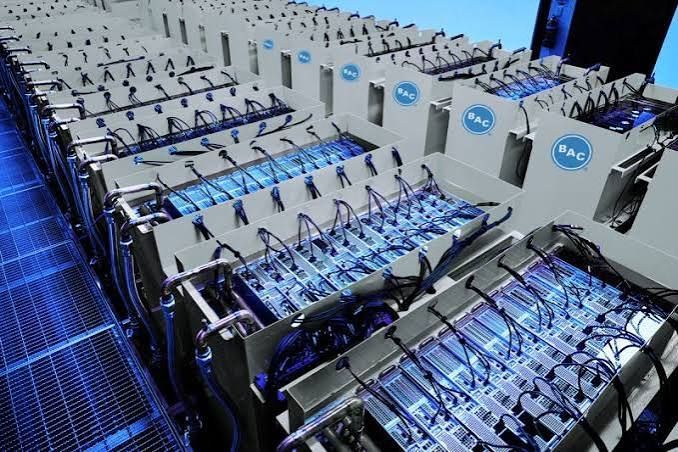
Direct-to-chip liquid cooling is one of the major developments in modern data center infrastructure. In this arrangement, a cooling plate is placed close to heat-producing components such as processors. Liquid flows through the cooling plate and carries heat away from the component.
Other approaches include immersion cooling, where computing equipment is placed in a specially designed electrically insulating liquid. Hybrid arrangements can combine liquid cooling for high-heat components with air cooling for other equipment.
More Intelligent Cooling Controls
Modern facilities increasingly use sensors, monitoring platforms, and automated controls to adjust cooling according to actual operating conditions. Temperature, humidity, airflow, pressure, and equipment load can be monitored continuously.
Data analytics can help identify unusual temperature patterns and areas where cooling capacity is not being used efficiently. The growing use of artificial intelligence also creates interest in dynamic cooling management, although the actual capabilities vary between systems and facilities.
Higher Rack Density
Rack power density is becoming an important consideration in cooling design. Traditional systems may work effectively for moderate-density racks, while newer computing environments can require substantially greater heat removal within a small physical area.
The following table illustrates general cooling considerations rather than fixed industry thresholds:
| Cooling approach | Typical application | Main heat-transfer method | Key infrastructure |
|---|---|---|---|
| Air cooling | Conventional IT loads | Conditioned air | CRAC or CRAH units, ducts, fans |
| Rear-door heat exchanger | Higher-density racks | Air-to-liquid heat transfer | Rack doors, water loop, pumps |
| Direct-to-chip liquid | High-density processors | Liquid at component level | Cold plates, pumps, manifolds |
| Immersion cooling | Specialized high-density systems | Liquid around equipment | Tanks, heat exchangers, fluid management |
| Hybrid cooling | Mixed workloads | Combination of air and liquid | Multiple cooling circuits and controls |
Laws or Policies
Data center cooling is affected by several categories of regulations and technical requirements. The exact rules depend on the location, building type, equipment, and environmental conditions.
Building and Mechanical Requirements
Facilities normally need to follow applicable building, electrical, mechanical, fire-safety, and occupational requirements. These rules can affect equipment placement, ventilation, piping, electrical connections, emergency systems, and access areas.
Cooling installations may also need to meet requirements related to pressure-containing equipment, refrigerants, electrical safety, and mechanical systems.
Environmental Considerations
Some cooling systems use refrigerants, water, or other fluids. Environmental rules may therefore address refrigerant handling, emissions, water consumption, wastewater management, chemical storage, or disposal practices.
Water-cooled systems can require additional planning where water availability is limited. Air-cooled systems may reduce dependence on cooling water but can have different energy and equipment requirements.
Energy Efficiency Requirements
Energy efficiency policies can influence data center design and operation. Some jurisdictions have introduced reporting, efficiency, or sustainability requirements for large facilities.
Common metrics include Power Usage Effectiveness, or PUE, which compares total facility energy use with energy used by IT equipment. PUE is useful for understanding facility efficiency, but it should not be treated as the only measure of cooling performance.
Tools and Resources
Several tools help engineers, facility managers, and data center planners understand cooling requirements.
Thermal Modeling Tools
Computational fluid dynamics software can model airflow, temperature distribution, and heat movement within a data center. These models can help identify potential hot spots before physical changes are made.
Cooling Load Calculators
Cooling load calculations estimate how much heat a facility needs to remove. Inputs can include IT equipment load, lighting, people, building characteristics, outdoor conditions, and other heat sources.
Environmental Monitoring
Temperature and humidity sensors provide information about conditions at different points in a facility. Rack-level sensors can provide more detailed information where equipment density is high.
Infrastructure Monitoring Platforms
Data center infrastructure management platforms can combine information about power, cooling, space, and IT equipment. This can help operators understand how changes in computing loads affect physical infrastructure.
Planning Templates
Cooling design checklists and infrastructure templates can help organize information such as:
- IT load
- Rack density
- Room dimensions
- Cooling capacity
- Airflow arrangement
- Liquid cooling requirements
- Pump capacity
- Heat exchanger requirements
- Backup arrangements
- Monitoring points
- Maintenance access
FAQs
What is a data center cooling solution?
A data center cooling solution is a combination of equipment and infrastructure designed to remove heat from computing equipment and maintain suitable environmental conditions. It can use air, liquid, or a combination of both.
How does air cooling work in a data center?
Air cooling uses fans and air-handling equipment to circulate conditioned air through the computing environment. Cool air reaches equipment intakes, absorbs heat, and carries the warmer air toward cooling equipment for heat removal.
When is liquid cooling used in data centers?
Liquid cooling is generally considered when computing equipment generates high heat density that becomes difficult to manage efficiently with air alone. Direct-to-chip and immersion cooling are two approaches used for specialized workloads.
What infrastructure does a data center cooling system require?
Infrastructure can include cooling units, pumps, heat exchangers, piping, fans, controls, sensors, electrical connections, and heat-rejection equipment. The exact arrangement depends on facility design and IT requirements.
Can air and liquid cooling be used together?
Yes. Hybrid cooling can combine air cooling for conventional equipment with liquid cooling for high-density components. This approach can be useful in facilities containing different types of computing workloads.
Conclusion
A data center cooling solution is an essential part of physical data center infrastructure because computing equipment continuously produces heat. Air cooling remains widely applicable, while liquid and hybrid approaches are gaining attention as computing density increases. Effective cooling design involves more than selecting cooling equipment; airflow, rack density, power infrastructure, monitoring, water use, and regulatory requirements also need consideration. The appropriate approach depends on the facility, equipment, workload, environmental conditions, and infrastructure design.