Exploring Robotic Cell Culture Systems: What You Need to Know
Exploring robotic cell culture systems can help clarify how modern laboratories automate repetitive culture tasks while improving consistency and workflow control. These systems range from compact benchtop units to integrated platforms designed for advanced research environments.
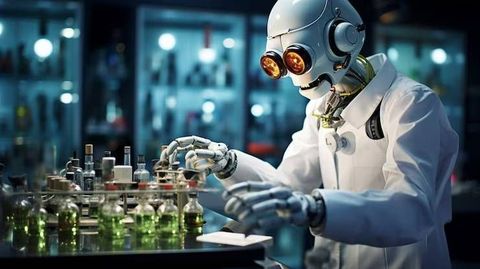
Robotic cell culture systems are automated laboratory platforms designed to perform repeated tasks involved in growing, maintaining, monitoring, and handling cells. Traditional cell culture often requires researchers to carry out processes such as liquid handling, media changes, cell counting, plate movement, and sample preparation manually. Automation can coordinate many of these steps through robotic equipment, software, sensors, and specialized laboratory instruments.
Cell culture is widely used in biomedical research, drug discovery, biotechnology, regenerative medicine, and other areas of life-science research. Because cells can be sensitive to environmental conditions and handling methods, consistent laboratory procedures are important.
A robotic cell culture system can combine several components, including:
- Robotic arms for moving laboratory vessels
- Automated liquid-handling equipment
- Incubation and environmental-control units
- Imaging systems for observing cells
- Cell-counting and analysis instruments
- Laboratory information management software
- Automated plate and sample storage
- Sensors for monitoring selected conditions
The overall purpose is not simply to replace human activity. Instead, automation can organize repetitive workflows and provide greater consistency while allowing researchers to focus on experimental design, analysis, and interpretation.
How Robotic Cell Culture Automation Works
A typical automated cell culture workflow begins with prepared cell samples and laboratory vessels. The system then performs programmed operations according to predefined protocols.
Depending on the configuration, the workflow may include:
- Preparing culture vessels and reagents
- Dispensing controlled liquid volumes
- Moving plates or vessels between instruments
- Maintaining appropriate incubation conditions
- Performing scheduled media changes
- Capturing images or measurements
- Recording experimental information
- Preparing samples for further analysis
Software acts as the central coordination layer. It can define the sequence of operations, track samples, and record information generated during experiments.
This approach is particularly useful when a laboratory performs the same protocol repeatedly. Automated processes can reduce variation caused by differences in timing, handling, or manual pipetting.
Importance: Why Robotic Cell Culture Matters Today
Modern biological research increasingly involves large numbers of samples and complex experimental designs. Manual workflows can become difficult to manage when researchers need to repeat procedures across many plates or experimental conditions.
Robotic cell culture systems can address several practical challenges.
Improved consistency: Automated equipment can follow programmed procedures with controlled timing and liquid handling.
Higher experimental throughput: Multiple samples can be processed within a coordinated workflow, depending on the system's configuration.
Better traceability: Digital records can connect samples, procedures, measurements, and experimental conditions.
Reduced repetitive work: Researchers can spend less time performing routine physical operations.
Standardized workflows: Defined protocols can help laboratories reproduce established procedures more consistently.
These benefits can be relevant to academic laboratories, biotechnology research, pharmaceutical research, cell-based assay development, and other scientific environments.
Applications Across Modern Research
Robotic cell culture automation has applications in several research areas.
| Application | Typical Role of Automation |
|---|---|
| Drug discovery | Repeated cell-based screening workflows |
| Toxicology research | Controlled exposure and observation studies |
| Stem cell research | Repetitive culture and monitoring procedures |
| Cancer research | High-throughput cell experiments |
| Cell-based assays | Consistent preparation and measurement |
| Biotechnology | Standardized laboratory workflows |
| Regenerative medicine research | Controlled cell-processing studies |
The exact capabilities vary considerably between systems. Some platforms automate only liquid handling, while more advanced robotic laboratory automation can connect incubation, imaging, sample handling, and analytical instruments.
Recent Updates and Trends
During 2025 and 2026, laboratory automation continued to develop alongside advances in artificial intelligence, computer vision, robotics, and data management. One important trend has been the movement toward more integrated laboratory workflows rather than isolated automated instruments.
Artificial intelligence and machine-learning techniques are increasingly being investigated for image analysis, experimental optimization, and interpretation of complex biological data. Computer vision can help analyze characteristics such as cell morphology, growth patterns, and changes over time.
Another developing area is the integration of robotic platforms with digital laboratory records. Connecting instruments and experimental data can make it easier to track samples and reproduce protocols.
Miniaturization is also important. Smaller-volume workflows can reduce reagent consumption and allow researchers to investigate larger numbers of experimental conditions.
In 2025–2026, interest has also continued around automated stem-cell and organoid workflows. These models can require carefully controlled and repeatable procedures, making automation an area of active research and development.
However, automation does not automatically guarantee better scientific results. Protocol design, calibration, biological variability, environmental control, and data quality remain important.
Laws, Regulations, and Research Policies
Robotic cell culture systems are influenced by the regulatory environment in which the research is conducted. Requirements can differ depending on whether the work is basic research, preclinical research, clinical research, or manufacturing.
Laboratories working with human-derived biological materials may need to follow applicable ethical, biosafety, privacy, and institutional requirements. Research involving human participants or identifiable biological information may also require appropriate institutional review.
For laboratories conducting regulated pharmaceutical or biotechnology research, documentation and data-integrity expectations can be particularly important. Automated systems may therefore need appropriate validation, access controls, audit trails, calibration records, and electronic documentation.
In India, biomedical research involving human participants is subject to national ethical frameworks and institutional oversight. Laboratories should follow the applicable requirements for their specific research activity rather than assuming that one regulatory framework applies to every cell culture experiment.
The same principle applies internationally. Researchers should identify the relevant national regulations, institutional procedures, biosafety requirements, and research standards before implementing an automated workflow.
Tools and Resources for Robotic Cell Culture
A successful automation program generally requires more than robotic hardware. Several supporting tools can help laboratories design and monitor workflows.
Laboratory information management systems: These can organize sample identities, experimental records, and data.
Liquid-handling calibration tools: These help verify dispensing accuracy and repeatability.
Cell imaging software: Image-analysis platforms can assist with measuring cell characteristics from microscope images.
Workflow-design software: Visual workflow tools can help researchers plan the sequence of automated laboratory operations.
Data-analysis tools: Statistical and scientific analysis platforms can help evaluate experimental results.
Environmental monitoring tools: Sensors can track selected laboratory conditions and provide records for quality management.
Protocol templates: Standard operating procedures can define consistent steps for automated workflows.
Training resources: Laboratory automation courses, equipment documentation, research publications, and institutional training programs can help teams understand automation principles.
When selecting resources, laboratories should consider compatibility, data-management requirements, validation needs, and the biological application rather than focusing only on automation hardware.
Challenges and Considerations
Robotic cell culture can provide useful advantages, but implementation also introduces technical challenges.
Automation systems require carefully designed protocols. A poorly designed automated workflow can reproduce an error repeatedly. Regular calibration and maintenance are therefore important.
Biological systems also have natural variability. Cells can behave differently because of factors such as passage history, genetic characteristics, culture conditions, and experimental handling.
Integration can be another challenge. A laboratory may use equipment from several categories, and connecting instruments can require compatible communication protocols and software.
Data management is equally important. Automated experiments can generate large datasets, especially when imaging and repeated measurements are involved. Researchers need appropriate methods for organizing, storing, analyzing, and protecting this information.
Frequently Asked Questions
What is a robotic cell culture system?
A robotic cell culture system is an automated laboratory setup that uses robotics, software, and laboratory instruments to perform repeated cell culture and handling procedures.
Can robotic systems completely replace laboratory researchers?
No. Automation can perform programmed and repetitive operations, but researchers remain responsible for experimental design, biological interpretation, quality control, and scientific decisions.
What types of cells can be handled by automated systems?
The suitable cell types depend on the equipment, culture protocol, and research application. Automated systems can be configured for various cell-based workflows, but not every platform is suitable for every cell type.
Does automation guarantee reproducible results?
No. Automation can improve procedural consistency, but reproducibility also depends on cell quality, experimental design, environmental conditions, calibration, and appropriate quality-control procedures.
What should a laboratory consider before implementing automation?
Important considerations include workflow complexity, sample volume, instrument compatibility, data management, validation requirements, laboratory space, maintenance, and staff training.
Conclusion
Robotic cell culture systems represent an important development in laboratory automation. By coordinating liquid handling, sample movement, incubation, imaging, and data recording, these systems can support repeatable and scalable cell-based research workflows.