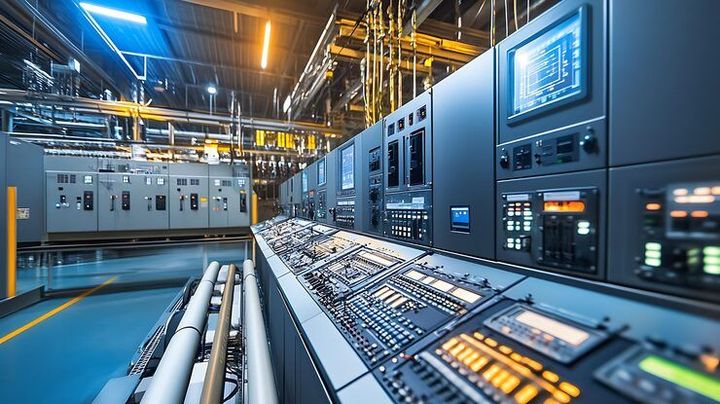
Industrial Power Distribution Systems: Overview of Automation and Digitalization
Industrial power distribution systems are the electrical infrastructure used to receive, transform, control, protect, and distribute electricity throughout factories, manufacturing plants, processing facilities, warehouses, data centers, and other large industrial environments.
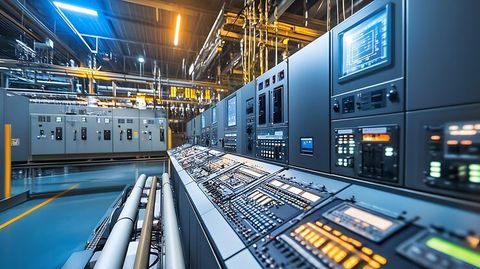
A typical system can include transformers, switchgear, circuit breakers, protection relays, busbars, distribution panels, cables, meters, sensors, and control equipment. These components work together to move electrical power from an incoming supply to machines, production lines, lighting systems, HVAC equipment, pumps, motors, and other loads.
Traditional distribution systems often depend on physical inspections and local electrical panels. Modern systems increasingly combine these electrical components with automation and digital technologies. Sensors can collect information about voltage, current, temperature, power quality, equipment status, and energy consumption. Digital controllers can then process this information and provide it to operators through monitoring platforms.
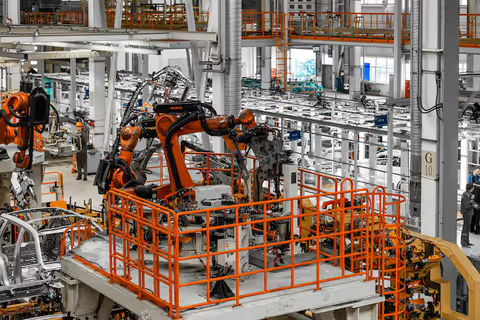
Industrial automation is also changing how electrical equipment is controlled. Intelligent electronic devices, programmable logic controllers, supervisory control systems, industrial communication networks, and automated protection functions can work together to provide faster information about electrical conditions.
Digitalization does not mean replacing every conventional component. Instead, it generally means adding communication, measurement, data processing, and intelligent control capabilities to an electrical distribution architecture.
Importance
Reliable electrical distribution is important because modern industrial operations depend on continuous and predictable power for motors, automation equipment, computers, process machinery, refrigeration, compressed-air systems, and other loads.
A distribution problem can affect multiple areas of a facility. Voltage disturbances, overloads, short circuits, poor power quality, overheating, or equipment failures can interrupt production processes and create safety concerns.
Automation and digitalization address several of these challenges by making electrical conditions more visible.
Important applications include:
- Real-time monitoring: Operators can observe electrical measurements from centralized interfaces.
- Protection coordination: Digital protection devices can detect abnormal electrical conditions and initiate protective actions.
- Energy monitoring: Metering systems can track electricity consumption across equipment, production areas, or process stages.
- Predictive maintenance: Historical measurements can help identify unusual temperature, current, vibration, or loading patterns.
- Power quality analysis: Digital meters can identify disturbances such as voltage variation, harmonics, and power-factor changes.
- Remote supervision: Authorized personnel can monitor electrical assets from centralized control locations.
- Asset management: Digital records can help organize information about transformers, breakers, panels, relays, and other equipment.
The development of industrial power distribution is also connected with electrification, renewable generation, energy storage, electric vehicles, and increasingly digital manufacturing environments.
A modern facility may therefore need to manage conventional grid electricity alongside distributed generation, battery storage, automated loads, and digital control systems.
Recent Updates
Digitalization has become an important area of development in power distribution during 2025 and 2026. International standards organizations have continued publishing technical guidance covering intelligent communication, industrial IoT, digital switchgear, and power-system automation.
In February 2026, IEC published IEC TR 63353:2026, which addresses IIoT applications in power distribution system management. The report describes architecture, system components, and applications for integrating IoT technologies with intelligent power distribution management.
IEC also published IEC TR 61850-1-1:2026 in February 2026. It provides an updated introduction and overview related to communication networks and systems used for power utility automation and intelligent electronic devices.
Another notable 2026 development is IEC TR 62271-322:2026, published in July 2026. It discusses digital technologies for high-voltage switchgear and controlgear, including developments involving IoT, cloud and edge computing, digital twins, artificial intelligence, and cybersecurity.
These developments reflect several broader trends:
- Greater use of intelligent electronic devices
- Integration of industrial IoT sensors
- Edge-based electrical data processing
- Digital substations and intelligent switchgear
- Increased attention to cybersecurity
- Digital twins for electrical asset management
- Automated power-quality monitoring
- Integration of energy storage and distributed generation
Medium-voltage DC distribution is also receiving attention as electrification expands. An IEC 2025 white paper examined MVDC networks in the context of increasing electrification, distributed generation, and changing power-system requirements.
These technologies are developing at different rates, so an industrial facility should select them according to its electrical architecture, operational requirements, safety framework, and technical capability.
Laws or Policies
Electrical distribution systems must comply with applicable national, regional, and local electrical regulations. Requirements can cover installation, earthing, protection, inspection, metering, electrical safety, equipment ratings, and operating procedures.
In India, the Electricity Act, 2003 provides the broader legal framework for the electricity sector. The Central Electricity Authority maintains regulations covering electrical safety and electricity supply.
The Central Electricity Authority (Measures relating to Safety and Electric Supply) Regulations, 2023 provide requirements concerning electrical safety and supply installations. The CEA also states that its Chief Electrical Inspectorate Division administers statutory inspections of new and existing electrical installations.
India has also continued updating its electricity framework. The Electricity (Amendment) Rules, 2025, notified on September 19, 2025, included provisions concerning Energy Storage Systems and their use within generation, transmission, distribution, or consumer arrangements.
During 2026, the CEA has also listed amendments and draft regulations covering areas such as safety and electric supply, technical standards for electrical plants and lines, grid connectivity, metering, and cybersecurity in the power sector. Draft regulations should be distinguished from regulations that have already taken legal effect.
For industrial facilities, compliance should therefore be checked against the regulations applicable to the installation's location, voltage level, electrical configuration, and operational characteristics.
Tools and Resources
Several categories of tools can support the planning, monitoring, and analysis of industrial power distribution systems.
Electrical design tools can help engineers model distribution networks, short-circuit conditions, protection coordination, load flow, and equipment selection.
Energy monitoring platforms can organize electricity measurements from digital meters and sensors. They can help users compare consumption patterns across departments, machines, shifts, or production areas.
Power-quality analyzers can measure electrical parameters such as voltage, current, frequency, harmonics, transients, and power factor.
SCADA platforms can provide centralized visualization of electrical equipment and process conditions. They are commonly used to display alarms, measurements, equipment states, and historical information.
PLC and automation platforms can coordinate electrical and industrial processes where programmable control is appropriate.
Industrial communication protocols such as IEC 61850, Modbus, and other standardized communication technologies can support data exchange between compatible electrical and automation equipment.
Maintenance templates can be used to record inspection dates, equipment identification, operating measurements, alarms, protection settings, and maintenance observations.
A useful digitalization program generally begins with a clear inventory of electrical assets and measurement requirements rather than installing technology without a defined operational purpose.
Key Components of a Digital Industrial Distribution System
| Component | Main Function |
|---|---|
| Transformer | Changes electrical voltage levels |
| Switchgear | Controls and protects electrical circuits |
| Circuit Breaker | Interrupts electrical faults and abnormal currents |
| Protection Relay | Detects defined electrical fault conditions |
| Smart Meter | Measures electrical parameters and consumption |
| Sensor | Collects temperature, current, voltage, or other data |
| PLC | Performs programmable control functions |
| SCADA | Provides centralized monitoring and visualization |
| Communication Network | Transfers information between devices |
| Energy Storage System | Stores electrical energy for defined applications |
FAQs
What is an industrial power distribution system?
An industrial power distribution system is the network of electrical equipment used to receive, transform, protect, control, and distribute electricity throughout an industrial facility.
How does automation improve power distribution?
Automation can provide faster monitoring, alarm management, protective actions, equipment status information, and centralized control. The exact functions depend on the electrical architecture and automation design.
What is digitalization in electrical distribution?
Digitalization involves using sensors, intelligent devices, communication networks, software, and data analysis to improve the monitoring and management of electrical distribution assets.
Why is cybersecurity important for digital power systems?
Connected electrical equipment can communicate with industrial networks and control systems. Cybersecurity helps protect these systems against unauthorized access, manipulation, and disruption.
Can renewable energy and battery storage be integrated into industrial distribution systems?
Yes. Industrial facilities can integrate distributed generation and energy storage when the system is appropriately designed and complies with applicable technical and regulatory requirements.
Conclusion
Industrial power distribution is evolving from a mainly physical electrical infrastructure into a more connected and information-driven system. Automation, intelligent protection, digital meters, industrial communication, and data analytics can provide better visibility into electrical conditions and equipment behavior.