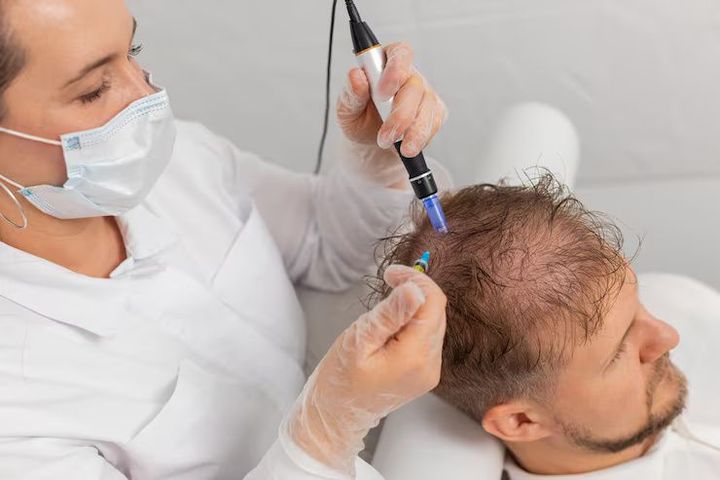
Hair Restoration Clinics Options for Advanced Transplant Procedures
Hair restoration clinics have become increasingly focused on techniques that prioritize natural-looking results, precise graft placement, and individualized treatment planning.
Modern hair transplantation has moved beyond simply transferring hair from one area of the scalp to another. Advances in follicular extraction, graft handling, implantation methods, and surgical planning allow specialists to consider hair density, donor availability, facial proportions, and the expected progression of hair loss.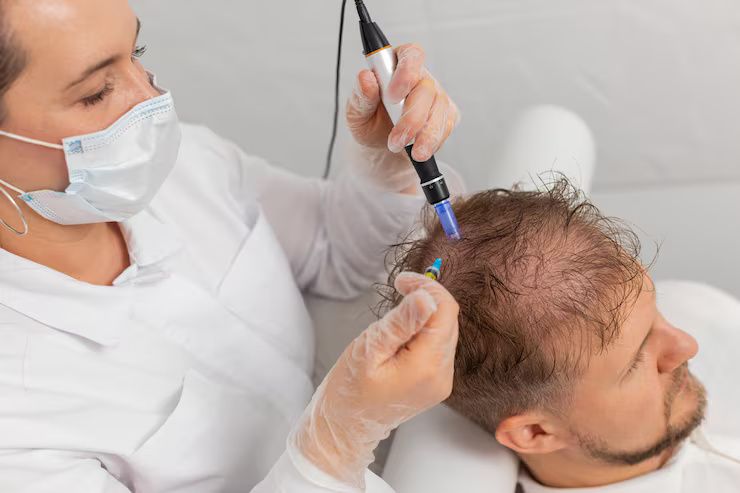
The choice of clinic and procedure should therefore be based on more than the name of a technique. Understanding how different transplant approaches work, what makes a clinic technically capable, and how long-term planning affects the result provides a clearer framework for evaluating hair restoration options.
How Modern Hair Transplant Procedures Are Planned
A successful transplant begins with assessment rather than surgery. A qualified clinician typically examines the pattern and progression of hair loss, scalp condition, existing density, and the characteristics of the donor area.
The donor region is particularly important because transplanted follicles are generally obtained from areas that are more resistant to the effects of androgenetic hair loss. The available donor supply places a practical limit on how extensively the scalp can be reconstructed.
Treatment planning may also consider age, hairline design, hair characteristics, previous procedures, and the likelihood of future hair loss. These factors help determine whether transplantation is appropriate and which approach may provide the most suitable long-term result.
Comparing Advanced Transplant Approaches
Several techniques are used in contemporary hair restoration, but they differ in how follicles are harvested, prepared, and implanted.
| Procedure approach | General characteristic | Planning consideration |
|---|---|---|
| FUE | Individual follicular units are extracted from the donor area | Requires careful donor management and extraction planning |
| FUT | A strip of donor tissue is removed and divided into follicular units | Can provide substantial graft availability but leaves a linear donor scar |
| DHI | Follicular units are implanted using a specialized implantation approach | Requires precise control of graft placement and direction |
| Sapphire-assisted FUE | Uses specialized blades during the recipient-site preparation stage | Focuses on controlled incision characteristics and graft placement |
These approaches are not automatically interchangeable. The appropriate method depends on the patient's characteristics, the clinician's expertise, and the objectives established during consultation.
The Role of FUE in Contemporary Hair Restoration
Follicular unit extraction, commonly known as FUE, involves removing individual follicular units from the donor area rather than harvesting a continuous strip of tissue. The extracted grafts are then prepared for placement in areas affected by hair loss.
One of the major considerations with FUE is extraction discipline. Excessive or poorly distributed harvesting can reduce the appearance of density in the donor area. Experienced surgical teams therefore need to consider graft distribution, follicular characteristics, and the patient's future needs.
FUE may be particularly relevant when minimizing a linear scar is a priority. However, the technique still involves surgery, and its suitability depends on individual scalp and donor characteristics.
Understanding FUT and Its Continued Role
Follicular unit transplantation, or FUT, uses a strip of tissue from the donor region. Individual follicular units are then dissected from that tissue under magnification before being prepared for transplantation.
Although FUE receives considerable attention, FUT remains relevant in certain clinical situations. It can provide access to a substantial number of follicular units without requiring individual extraction of every graft.
The trade-off is the presence of a linear scar in the donor region. Scar characteristics vary according to surgical technique, healing, individual biology, and post-operative care.
Precision Matters During Graft Placement
Harvesting follicles is only one part of the procedure. Recipient-site design and graft placement strongly influence the final appearance.
Natural hair grows at different angles and directions across the scalp. The frontal hairline, temples, mid-scalp, and crown each have distinct growth patterns. A transplant that ignores these characteristics can appear less natural even when graft survival is satisfactory.
Clinicians therefore consider factors such as:
- Hairline shape and transition zones
- Angle and direction of existing hair
- Graft density
- Follicular unit characteristics
- Relationship between the frontal region and crown
- Available donor follicles
The objective is not simply to place as many grafts as possible. It is to distribute available follicles in a way that creates a coherent appearance while preserving donor resources.
What to Look for in a Hair Restoration Clinic
Evaluating a clinic requires attention to the medical team, surgical process, and approach to patient assessment.
A credible clinic should clearly identify the qualified medical professional responsible for diagnosis and treatment. Patients should understand who performs the surgical portions of the procedure and how responsibilities are divided among physicians, technicians, and other staff.
The consultation should also involve realistic discussion of limitations. A responsible clinician should be willing to explain donor constraints, potential risks, expected growth timelines, and the possibility that additional treatment may be appropriate in the future.
Clear documentation and consistent clinical protocols are also valuable indicators of an organized medical practice.
Technology Supports Technique, but Does Not Replace Expertise
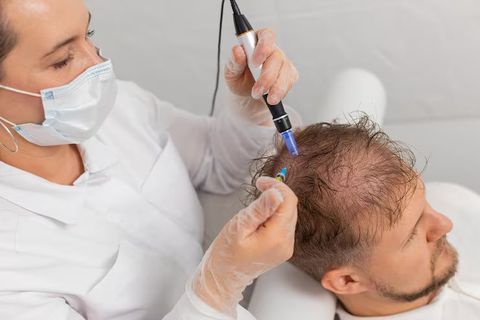
Hair restoration has benefited from improvements in magnification, graft handling, imaging, extraction instruments, and implantation devices. These technologies can support precision and workflow efficiency when used appropriately.
However, technology alone does not determine the quality of a transplant. Surgical judgment remains essential when designing the hairline, selecting extraction areas, handling grafts, and determining placement patterns.
Marketing terms associated with advanced procedures can sometimes make techniques appear more different than they actually are. Patients should therefore focus on the underlying surgical process and clinical expertise rather than choosing a procedure solely because of a particular technology label.
Recovery and Hair Growth Require Patience
Hair transplantation does not produce an immediate final result. The transplanted follicles need time to establish themselves and progress through their normal growth cycle.
Temporary shedding can occur during the early period after transplantation, and visible growth develops gradually. The timing and degree of growth vary between individuals.
Post-procedure instructions can include guidance about scalp care, physical activity, washing, medication, and follow-up appointments. Following the clinical team's instructions is an important part of protecting the transplanted area during recovery.
Long-Term Planning Is Essential
A transplant should be considered within the broader pattern of hair loss rather than as an isolated procedure. Existing non-transplanted hair may continue to thin, potentially changing the overall appearance over time.
For this reason, clinicians may discuss strategies for managing ongoing hair loss alongside transplantation. The objective is to create a plan that accounts for both the current condition of the scalp and potential future changes.
This is especially relevant for younger patients or individuals with progressive hair loss. Preserving donor follicles for future needs can be as important as achieving short-term visual improvement.
Questions to Consider Before Choosing a Clinic
A consultation can be more productive when patients arrive prepared with specific questions. Useful areas to discuss include the clinician's qualifications, the proposed technique, donor availability, expected graft requirements, possible complications, recovery, and long-term planning.
It is also useful to understand whether the proposed procedure is genuinely appropriate for the individual's pattern of hair loss. A technically advanced procedure is not necessarily the right choice for every patient.
The strongest clinical decisions generally come from a combination of accurate diagnosis, realistic expectations, appropriate technique selection, and careful surgical planning.
Conclusion
Modern hair restoration clinics offer several approaches to transplantation, including FUE, FUT, and specialized implantation techniques. The most appropriate option depends on individual hair-loss patterns, donor characteristics, clinical objectives, and the expertise of the medical team.
Understanding the procedure, evaluating the clinic's surgical practices, and considering long-term hair-loss progression can help patients approach transplantation with more realistic expectations. Advanced technology can support the process, but careful diagnosis, experienced clinical judgment, precise graft handling, and thoughtful planning remain central to achieving a natural-looking result.