Hair Transplant Guide: Procedure Types, Recovery and Important Factors
A hair transplant is a surgical procedure in which hair follicles are moved from an area of the scalp with relatively stable hair growth to another area where hair density has decreased. The procedure is mainly associated with pattern hair loss, although transplantation can also be considered in selected cases involving certain forms of scarring or hair loss following trauma or surgery.
Context
Modern hair transplantation developed from earlier hair-restoration techniques and gradually moved toward the use of individual follicular units. A follicular unit is a natural grouping of hair follicles that grows together. Modern procedures attempt to preserve these groupings while placing them into recipient areas according to the planned hairline and density.
Two major approaches used today are follicular unit excision, commonly known as FUE, and follicular unit transplantation, commonly known as FUT or strip excision. Both approaches involve removing hair-bearing tissue from a donor area and placing follicular units into areas requiring additional coverage. A 2025 review describes FUE and linear strip excision as established approaches within contemporary hair transplantation.
Hair transplant procedures involve surgical manipulation of the scalp, so they are different from cosmetic products or non-surgical hair-care routines. The suitability of transplantation depends on factors such as the type and pattern of hair loss, donor-hair availability, scalp condition, age, medical history, and the expected progression of hair loss.
How a hair transplant works
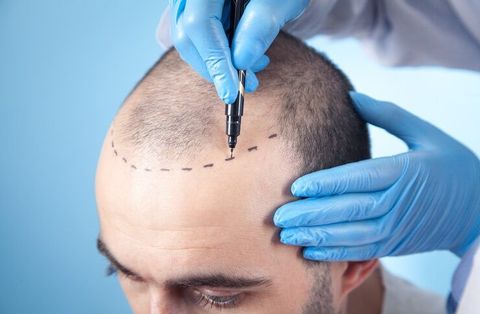
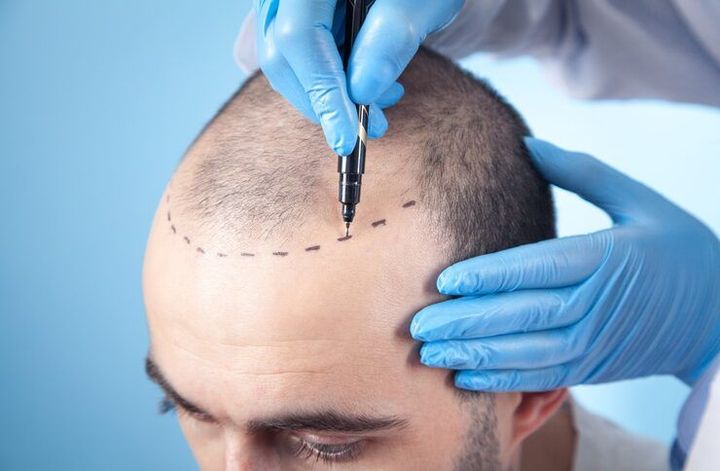
The procedure generally involves three broad stages: planning, harvesting, and implantation. During planning, the donor and recipient areas are assessed and the intended hairline and distribution of grafts are considered.
During harvesting, individual follicular units may be extracted directly from the scalp in FUE, while FUT involves removing a strip of hair-bearing scalp and separating it into follicular units. The selected grafts are then placed into small recipient openings in the area being treated.
The number of grafts and their placement depend on the available donor supply and the area requiring coverage. Hair characteristics such as thickness, curl, direction, and follicular-unit structure can also influence the planning process.
Importance
Hair loss can have physical, cosmetic, and psychological effects. The significance of these effects varies considerably from one person to another. Hair transplantation is therefore not simply a matter of adding hair; it involves planning around existing hair, donor resources, scalp characteristics, and the potential progression of hair loss.
A major consideration is that transplanted follicles do not necessarily prevent other existing hair from becoming thinner later. This is why long-term planning is an important part of hair restoration discussions.
Factors that influence suitability
Several factors can influence whether a hair transplant is appropriate:
- Pattern of hair loss: The underlying type and distribution of hair loss should be understood before surgical planning.
- Donor area: Hair follicles must be available in a suitable donor region to create grafts for transplantation.
- Hair characteristics: Hair thickness, texture, color, and curl can influence the visual appearance of coverage.
- Scalp condition: Existing inflammation, scarring, or other scalp problems may affect planning and healing.
- Age and progression: The current pattern may change over time, making long-term planning relevant.
- Medical history: Previous procedures, health conditions, and medications can influence surgical planning and recovery.
A proper assessment is important because not every form of hair loss is appropriate for transplantation. Some conditions require investigation or treatment of the underlying cause before a surgical approach is considered.
FUE and FUT comparison
| Factor | FUE | FUT |
|---|---|---|
| Harvesting method | Individual follicular units are extracted | A strip of hair-bearing scalp is removed |
| Donor-area wound pattern | Multiple small extraction sites | Linear incision |
| Graft preparation | Follicular units are prepared individually | Follicular units are separated from the strip |
| Main planning consideration | Donor distribution and extraction pattern | Donor-area strip and incision |
| Technique requirements | Precise extraction and handling | Careful strip removal and graft preparation |
The choice between these approaches depends on individual circumstances rather than a single method being suitable for everyone. Modern hair transplantation also includes variations in instruments and graft-handling techniques.
Recent Updates
Hair transplantation research between 2024 and 2026 has focused on improving follicular-unit extraction, graft handling, surgical planning, and postoperative care. Research reviews have described developments in punch design, motorized extraction systems, and robotic assistance for selected stages of FUE.
Technology-assisted procedures
Robotic and computer-assisted approaches continue to receive research attention. These systems may assist with aspects such as follicle identification, extraction planning, or surgical precision, although their availability and clinical use vary. Reviews of robotic surgery in reconstructive fields also note that wider implementation involves technical, training, and evidence-related considerations.
Technology does not remove the need for clinical judgment. Hair direction, density, donor limitations, scalp characteristics, and long-term hair-loss patterns still require individualized planning.
Greater attention to complications and recovery
Recent literature has also placed attention on complications and donor-area healing. A 2024–2025 scoping review examined complications reported after modern hair transplantation, emphasizing that surgical procedures can involve risks even when techniques are minimally invasive.
Research into FUE donor-area healing has examined inflammation, wound care, and tissue recovery. Current evidence remains varied for some additional interventions, which means emerging techniques should be distinguished from established surgical principles.
Changing expectations about results
Modern hair transplantation increasingly focuses on natural-looking hairline design, preservation of donor resources, and management of existing hair loss. A 2025 state-of-the-art review highlighted hairline design, technical planning, instrumentation, patient selection, and concurrent management of hair loss as important areas in contemporary practice.
Laws or Policies
Hair transplantation involves a medical procedure, so applicable rules can cover clinical practice, professional qualifications, facility standards, informed consent, advertising, privacy, record keeping, and the handling of medical information. The exact requirements vary by jurisdiction and by the type of facility or professional involved.
Informed consent and patient information
Medical procedures generally involve providing information about the procedure, potential risks, expected recovery, alternatives, and relevant limitations before consent is obtained. Written documentation may also be part of a clinical record.
Marketing and advertising rules can restrict misleading statements about medical procedures. Claims concerning outcomes, complication rates, permanence, or patient experiences should therefore be supported by appropriate evidence and presented without creating unrealistic expectations.
Privacy and medical information
Hair-transplant consultations and procedures can involve photographs, medical histories, contact information, and other personal health information. Applicable privacy rules may govern how such information is collected, stored, shared, and retained.
Because requirements vary between jurisdictions, regulatory information should be checked with the appropriate local medical, health, privacy, or professional authority when a legal determination is needed. This article provides general educational information rather than legal guidance.
Tools and Resources
Several resources can help people understand hair loss and hair transplantation without relying solely on promotional material.
Medical literature databases
PubMed provides access to published biomedical research and can be used to examine studies and reviews concerning hair transplantation, alopecia, surgical techniques, recovery, and complications. Recent reviews provide useful background on current procedures and developing technologies.
Hair-loss documentation
A simple record of hair-loss changes can help organize information for a clinical discussion. It may include the approximate duration of hair loss, areas affected, changes noticed over time, previous treatments, and relevant medical history.
Consistent photographs can also help document changes over time. Photographs should be taken under similar lighting, distance, camera position, and hairstyle conditions if they are being used for personal comparison.
Questions for a consultation
Useful questions may include:
- What type of hair loss is present?
- Is the donor area adequate for the proposed procedure?
- Which transplant technique is being considered, and why?
- What does the recovery period generally involve?
- What complications should be understood before the procedure?
- How might continuing hair loss affect long-term planning?
- What follow-up is normally provided after the procedure?
These questions can help separate the technical aspects of a procedure from assumptions about its eventual appearance.
FAQs
What is a hair transplant?
A hair transplant is a surgical procedure that moves hair follicles from a donor area of the scalp to an area with reduced hair density. It is commonly used for selected forms of pattern hair loss.
What is the difference between FUE and FUT hair transplant procedures?
FUE involves extracting individual follicular units from the donor area, while FUT involves removing a strip of hair-bearing scalp and separating it into follicular units. Both approaches require careful graft handling and recipient-area planning.
How long does hair transplant recovery take?
Recovery varies according to the procedure, the number of grafts, individual healing, and postoperative instructions. Temporary scalp changes can occur during the early recovery period, while transplanted hair develops over a much longer period.
Is hair transplant surgery permanent?
Transplanted follicles are selected because of their characteristics in the donor area, but the long-term appearance can still be affected by continuing hair loss, aging, scalp conditions, and other factors. A 2025 review describes donor dominance as an important biological principle in transplantation while also emphasizing patient selection and long-term planning.
What are important factors before a hair transplant?
Important factors include the cause and pattern of hair loss, donor-hair availability, scalp health, hair characteristics, medical history, surgical technique, expected recovery, and the possibility of future hair loss. These factors are considered together rather than separately.
Conclusion
Hair transplantation involves moving hair follicles from a donor area to regions with reduced hair density, with FUE and FUT representing two established approaches. Procedure planning considers hair-loss pattern, donor availability, scalp condition, hair characteristics, and long-term changes. Developments through 2024–2026 have included improved extraction tools, technology-assisted procedures, and increased research into recovery and complications. Individual outcomes and recovery can vary, so the information in this guide should be understood as general educational information rather than medical advice.
Disclaimer: The information provided in this article is for informational purposes only. We do not make any claims or guarantees regarding the accuracy, reliability, or completeness of the information presented. The content is not intended as professional advice and should not be relied upon as such. Readers are encouraged to conduct their own research and consult with appropriate professionals before making any decisions based on the information provided in this article.