Industrial Automation Components Guide: Sensors, Controllers, Drives, Motors and Their Uses
Industrial automation refers to the use of machines, electronic equipment, computer systems, and control technologies to perform manufacturing and industrial activities with limited manual intervention. It plays an important role in modern industries, including automotive manufacturing, food processing, pharmaceuticals, electronics, packaging, and material handling.
Context
Industrial automation refers to the use of machines, electronic equipment, computer systems, and control technologies to perform manufacturing and industrial activities with limited manual intervention. It plays an important role in modern industries, including automotive manufacturing, food processing, pharmaceuticals, electronics, packaging, and material handling.
Industrial automation components are the individual devices that make automated operations possible. These include industrial sensors, programmable logic controllers (PLCs), motor drives, electric motors, control panels, communication devices, and other electrical equipment. Each component performs a particular function, but they generally work together as part of an integrated automation system.
The development of industrial automation began with mechanical equipment designed to reduce repetitive manual activities. Over time, electrical control systems, electronic circuits, and computer-based technologies introduced more advanced operating methods. Today, manufacturers combine hardware, software, and communication networks to monitor machines, control production processes, and collect operational information.
An industrial automation system generally follows three basic stages: detecting information, processing instructions, and performing an action. Sensors collect information from the surrounding environment, controllers evaluate the information, and output devices such as motors or actuators carry out the required movement or operation.
Understanding these industrial automation components helps explain how modern factories operate and how different technologies contribute to manufacturing activities.
Importance
Industrial automation components are important because they help manufacturing facilities manage repetitive activities, maintain process consistency, and monitor equipment performance. They also help operators identify operating conditions and respond to changes during production.
Several industries depend on these technologies for their daily operations. Automotive manufacturers use automated equipment for assembly and material movement, while food processing facilities use sensors and controllers to monitor temperature, filling levels, and packaging activities.
The importance of these components can be understood through several applications:
Process monitoring: Industrial sensors measure temperature, pressure, humidity, distance, and liquid levels.
Machine control: Programmable logic controllers coordinate different machine operations through programmed instructions.
Motion management: Electric motors and variable frequency drives control the movement and speed of industrial equipment.
Production consistency: Automated control systems help maintain similar operating conditions across repeated production cycles.
Equipment monitoring: Connected devices collect information that helps identify unusual operating conditions.
Workplace safety: Safety sensors, emergency stops, and protective control systems help manage machinery-related hazards.
These technologies also affect everyday consumers. Automated production systems are used in manufacturing household appliances, packaged food, electronic devices, vehicles, and other commonly used products.
However, automation systems also introduce challenges. Equipment compatibility, electrical interference, cybersecurity, maintenance requirements, and employee training must be considered when integrating different components. A failure in one important component can interrupt several connected operations.
Types of Industrial Automation Components
Industrial automation systems contain different categories of equipment. Their functions depend on the type of manufacturing process, machine configuration, and required control operations.
Industrial Sensors
Industrial sensors detect physical conditions and convert them into electrical signals that automation systems can interpret. They act as the information-gathering elements of an automated process.
Common industrial sensor types include:
Proximity sensors: Detect nearby objects without requiring direct physical contact.
Temperature sensors: Measure temperature changes in machines, liquids, and production environments.
Pressure sensors: Monitor pressure levels in hydraulic, pneumatic, and industrial processing systems.
Photoelectric sensors: Use light to detect objects, movement, or changes in position.
Level sensors: Measure the amount of liquid or material inside tanks and containers.
Flow sensors: Monitor the movement of liquids and gases through pipelines.
For example, a proximity sensor installed near a conveyor belt can detect the arrival of an object and send information to a controller.
Programmable Logic Controllers
A programmable logic controller, commonly known as a PLC, is an industrial computer designed to control machines and production processes.
PLCs receive signals from input devices, process programmed instructions, and activate output devices. They are commonly used in packaging equipment, assembly lines, material handling systems, and industrial processing facilities.
A typical PLC includes a central processing unit, input and output modules, memory, and communication interfaces. Its programming determines how connected equipment responds to different operating conditions.
For example, a PLC can control a packaging machine by receiving information from a sensor, activating a conveyor motor, and controlling a filling mechanism according to programmed conditions.
Variable Frequency Drives
Variable frequency drives (VFDs) control the operating speed of alternating-current electric motors by adjusting the frequency and voltage supplied to the motor.
They are commonly used in pumps, fans, compressors, conveyors, and industrial ventilation equipment.
VFDs allow operators to adjust motor speed according to process requirements instead of running equipment continuously at a fixed speed. Many modern drives also include monitoring features, protective functions, and communication capabilities.
Industrial Electric Motors
Electric motors convert electrical energy into mechanical movement. They are essential components in many automated machines and manufacturing systems.
Common industrial motor types include:
AC motors: Used in pumps, fans, compressors, and general industrial machinery.
DC motors: Used in applications requiring particular speed-control characteristics.
Servo motors: Designed for controlled movement and accurate positioning.
Stepper motors: Move in defined steps and are used in selected positioning applications.
Synchronous motors: Operate in coordination with the frequency of the electrical supply.
Motor selection depends on factors such as operating speed, torque requirements, load characteristics, and control accuracy.
Industrial Control Panels
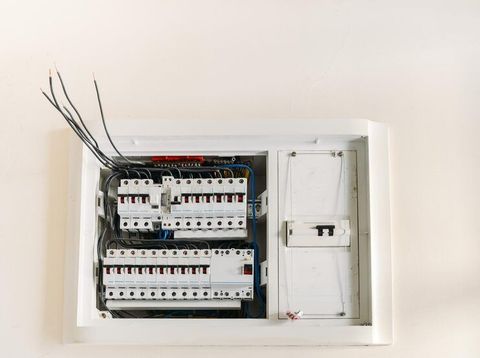
Industrial control panels contain electrical and electronic equipment used to manage machine operations. They commonly include circuit breakers, relays, contactors, PLCs, power supplies, terminal blocks, and protective devices.
These panels organize electrical connections and provide a central location for controlling automated equipment. Their design depends on the machine configuration, electrical requirements, and applicable safety standards.
Industrial Communication Devices
Communication devices connect automation components and allow them to exchange operational information.
Common technologies include Ethernet-based industrial networks, Modbus, PROFINET, EtherNet/IP, and other industrial communication protocols.
These connections allow PLCs, sensors, drives, computers, and monitoring systems to share information. Communication compatibility is important when equipment from different manufacturers operates within one system.
How Industrial Automation Components Work Together
Individual automation components perform different functions, but their combined operation creates an automated production process.
Consider a conveyor system used in a manufacturing facility. A sensor detects an approaching product and sends an electrical signal to the PLC. The controller processes the signal and activates an output connected to a motor control system.
The motor then moves the conveyor belt, while additional sensors monitor product position and movement. If an abnormal condition occurs, the control system may stop the equipment or generate an alert, depending on its programming and safety configuration.
The following table explains the basic functions of common components.
| Component | Primary Function | Common Application |
|---|---|---|
| Industrial sensors | Detect physical conditions | Object detection |
| PLC controllers | Process control instructions | Assembly lines |
| Variable frequency drives | Adjust motor speed | Pumps and fans |
| Electric motors | Produce mechanical movement | Conveyors |
| Control panels | Organize electrical controls | Machine operations |
| Communication devices | Exchange operational data | Connected factories |
| Safety controllers | Manage safety functions | Automated machinery |
The coordination between these components allows machines to perform operations in a controlled sequence.
Recent Updates and Industry Trends (2024–2026)
Industrial automation is gradually moving toward connected, data-driven, and intelligent manufacturing systems. Developments in artificial intelligence, industrial robotics, digital twins, and industrial Internet of Things (IIoT) technologies are influencing how automation components are designed and integrated.
Artificial Intelligence and Smart Sensors
Modern industrial sensors increasingly support digital communication and advanced monitoring functions. Some systems combine sensor information with artificial intelligence to identify unusual patterns, recognize operating changes, and support equipment monitoring.
This development is particularly relevant to manufacturing facilities that collect large amounts of machine data.
Industrial Internet of Things
IIoT connects industrial equipment through communication networks. Sensors, controllers, and monitoring platforms can exchange information about machine conditions and production activities.
Connected automation systems allow operators to view equipment information from centralized monitoring platforms. Network security and reliable communication are important considerations when implementing these systems.
Digital Twins and Predictive Maintenance
A digital twin is a digital representation of a physical machine, production process, or manufacturing system. It can use operational data to represent equipment conditions and support simulations.
Predictive maintenance uses information such as temperature, vibration, and operating hours to identify possible equipment problems before a major interruption occurs.
Robotics and Advanced Manufacturing
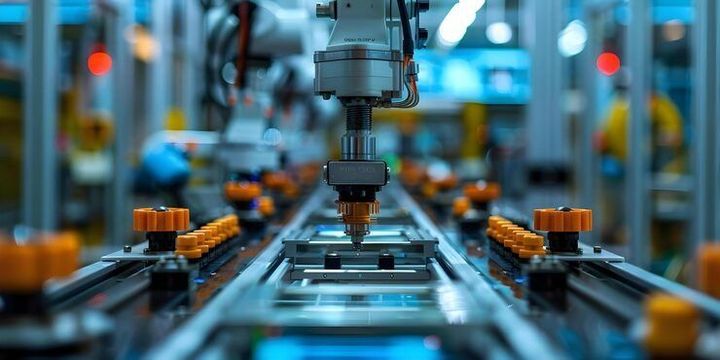
Industrial robotics continues to influence manufacturing automation. Robots are used in welding, material handling, assembly, inspection, and packaging.
India's advanced manufacturing roadmap published by NITI Aayog in 2025 identified artificial intelligence, robotics, advanced materials, and digital twins as important technologies for manufacturing development. Discussions around India's robotics ecosystem also continued during 2026.
Laws or Policies in India
Industrial automation equipment in India is influenced by electrical safety requirements, machinery standards, workplace regulations, and product certification rules. The applicable requirements depend on the equipment category, installation, and intended use.
Bureau of Indian Standards
The Bureau of Indian Standards (BIS) develops Indian Standards covering electrical equipment, industrial machinery, programmable controllers, and related technologies.
Relevant standards include IS 14254 for programmable controllers and IS 17885 for digital twin frameworks in manufacturing. These standards provide technical guidance for equipment characteristics, integration, and system development.
Machinery and Electrical Equipment Regulations
India introduced the Machinery and Electrical Equipment Safety (Omnibus Technical Regulation) Order in 2024. However, the Ministry of Heavy Industries subsequently issued amendments and officially withdrew the order on 16 January 2026.
Therefore, manufacturers and importers should check the latest applicable notifications rather than assume that the original requirements remain in force. Other product-specific Quality Control Orders and BIS certification requirements may still apply to particular equipment categories.
Workplace Safety Requirements
The Occupational Safety, Health and Working Conditions Code, 2020, became effective in November 2025. It establishes provisions relating to workplace health, employee safety, and working conditions.
These requirements are relevant to industrial facilities that operate automated machinery. Employers must consider machinery hazards, electrical risks, employee protection, and applicable safety obligations.
International standards, including IEC 60204-1, also provide technical guidance on the electrical equipment of machinery. Their application depends on relevant Indian requirements and project specifications.
Tools and Resources
Several technical resources help readers understand industrial automation components, equipment specifications, and system integration.
BIS Standards Portal: Provides access to Indian Standards, technical documents, and information about applicable certification requirements.
IEC Standards Database: Contains international standards covering electrical equipment, machinery safety, and industrial automation.
PLC Programming Software: Platforms such as Siemens TIA Portal and CODESYS support PLC configuration, programming, and testing.
Electrical Design Software: Tools such as EPLAN support electrical engineering documentation, control panel planning, and circuit design.
Industrial Simulation Software: Platforms such as MATLAB and Simulink support system modelling, simulation, and control-system analysis.
IIoT Monitoring Platforms: Industrial monitoring systems help collect and visualize information from connected machines and sensors.
These resources are used for different purposes, including equipment selection, technical learning, system development, and operational monitoring.
FAQs
What Are Industrial Automation Components?
Industrial automation components are individual devices used to control and monitor automated machinery. They include sensors, PLC controllers, electric motors, variable frequency drives, control panels, and communication equipment.
What Is the Difference Between a PLC and a VFD?
A PLC processes programmed instructions and controls machine operations, while a variable frequency drive adjusts the speed of an electric motor. Both components can work together in an automated system.
Which Sensors Are Commonly Used in Industrial Automation?
Common industrial automation sensors include proximity, temperature, pressure, photoelectric, flow, and level sensors. Their selection depends on the physical condition being measured or detected.
What Is the Role of Electric Motors in Industrial Automation?
Electric motors convert electrical energy into mechanical movement. They operate conveyors, pumps, fans, compressors, robotic equipment, and other industrial machines.
How Does Industrial Automation Improve Manufacturing Processes?
Industrial automation supports consistent machine operation, process monitoring, repetitive task management, and coordinated equipment control. Its results depend on system design, equipment condition, and operating requirements.
Conclusion
Industrial automation components form the foundation of modern automated manufacturing systems. Sensors, PLC controllers, variable frequency drives, electric motors, and communication devices perform different functions while working together to manage industrial operations. Developments in artificial intelligence, robotics, IIoT, and digital twins are expanding the capabilities of connected manufacturing environments. Understanding these components and their applications provides useful insight into the operation of modern industrial facilities.