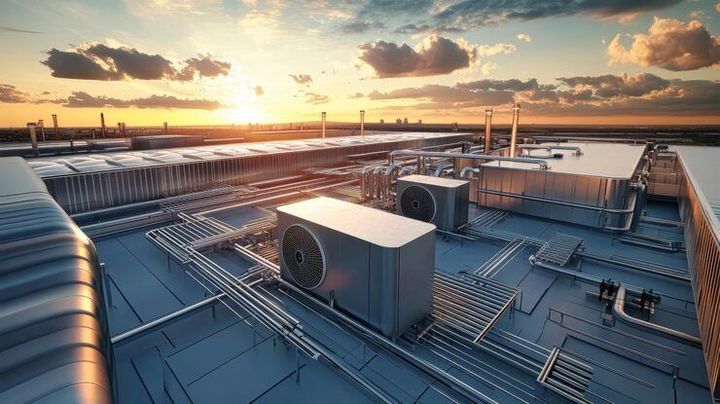
Industrial Heat Pumps Guide: Technologies, Components, Heat Sources and Operating Methods
Industrial heat pumps are energy systems that transfer heat from one location to another to provide heating for manufacturing processes, industrial operations, and commercial facilities. Unlike conventional heating equipment, which generates heat primarily by burning fuel or using electrical resistance, an industrial heat pump captures existing thermal energy from sources such as air, water, industrial waste heat, and production equipment.
Context
Industrial heat pumps are energy systems that transfer heat from one location to another to provide heating for manufacturing processes, industrial operations, and commercial facilities. Unlike conventional heating equipment, which generates heat primarily by burning fuel or using electrical resistance, an industrial heat pump captures existing thermal energy from sources such as air, water, industrial waste heat, and production equipment.
The technology is based on the same scientific principles used in refrigerators and domestic air conditioners. However, industrial heat pumps are designed to handle larger heating requirements, higher operating temperatures, and continuous production activities. They can recover heat that would otherwise be released into the surrounding environment and reuse it for different industrial applications.
Industrial heat pump technology developed from refrigeration and mechanical heat-transfer systems. As manufacturing facilities began looking for ways to improve energy efficiency and manage industrial heating requirements, heat pump applications expanded beyond buildings into production environments.
Today, industrial heat pumps are used in food processing, chemical manufacturing, paper production, textile facilities, pharmaceutical manufacturing, and other industries. Their operating methods depend on the required temperature, available heat sources, production conditions, and equipment configuration.
Importance
Industrial heat pumps are important because heating represents a significant part of energy consumption in many manufacturing processes. Industries require controlled temperatures for drying, cleaning, pasteurization, evaporation, washing, and material processing. Conventional boilers and fuel-based heating systems can release considerable amounts of unused thermal energy during operation.
Industrial heat pumps address this challenge by transferring and upgrading existing heat instead of relying entirely on newly generated thermal energy. This approach can improve overall energy utilization when suitable heat sources and operating conditions are available.
Several industries benefit from understanding this technology:
Food and beverage manufacturing: Heat pumps support pasteurization, drying, cleaning, and hot-water preparation.
Chemical processing: They provide controlled heating for selected production stages and temperature-sensitive operations.
Textile manufacturing: Heat pumps can support fabric drying, washing, and process-water heating.
Paper production: Recovered heat can support drying processes and other thermal requirements.
Pharmaceutical manufacturing: Temperature-controlled heating can support cleaning, preparation, and selected production activities.
Automotive manufacturing: Industrial heat pumps can contribute to facility heating, drying operations, and thermal management.
Another important consideration is energy efficiency. A heat pump can deliver more thermal energy than the electrical energy it consumes because it transfers heat from an external source. Its performance is commonly measured using the Coefficient of Performance (COP).
However, actual performance depends on electricity consumption, source temperature, required output temperature, equipment design, and operating conditions. Industrial heat pumps are particularly relevant where facilities have continuous heating requirements and accessible sources of recoverable heat.
Recent Updates
Industrial heat pump technology has continued to develop through improvements in compressor design, refrigerants, temperature capabilities, digital controls, and industrial heat recovery.
One important development is the expansion of high-temperature industrial heat pumps. Earlier commercial systems were primarily associated with lower-temperature applications. Newer technologies are extending their operating ranges, allowing selected systems to provide process heat at temperatures approaching or exceeding 150°C.
The development of advanced systems is also increasing interest in industrial applications requiring higher-temperature outputs. However, the availability and commercial maturity of equipment vary across temperature ranges.
Another development is the integration of industrial heat pumps with waste heat recovery systems. Manufacturing facilities can capture thermal energy from exhaust streams, cooling equipment, wastewater, and other industrial processes. This recovered energy can then be transferred to applications requiring heating.
Digital monitoring is also becoming increasingly important. Modern control systems can monitor temperatures, pressures, electricity consumption, compressor performance, and refrigerant conditions. These measurements help operators understand system performance and identify operating irregularities.
Recent developments include:
High-temperature technology: Improvements in compression cycles and system configurations are extending industrial heating applications.
Advanced refrigerants: Research is examining refrigerants with lower global warming potential and suitable operating characteristics.
Waste heat integration: Heat pumps are increasingly being evaluated alongside industrial heat recovery systems.
Hybrid heating systems: Facilities can combine heat pumps with boilers or other heating equipment to manage changing production requirements.
Digital controls: Sensors, automated monitoring, and intelligent controls are supporting more precise thermal management.
According to the International Energy Agency, commercially available industrial heat pumps can already address a substantial share of low- and medium-temperature industrial heating requirements. Developments in high-temperature systems are expanding the potential applications, although technical limitations remain at higher temperatures.
Laws or Policies
In India, industrial heat pumps operate within a broader regulatory framework covering energy efficiency, electricity consumption, environmental protection, and industrial equipment.
The Energy Conservation Act, 2001, provides an important foundation for improving energy efficiency across different sectors. It established the framework for the Bureau of Energy Efficiency (BEE), which develops and implements energy efficiency initiatives.
Several policies and programmes are relevant to industrial heat pump adoption.
1. Perform, Achieve and Trade (PAT) Scheme
The PAT Scheme is administered by BEE and focuses on improving energy efficiency in energy-intensive industries. Designated industrial facilities receive specific energy consumption targets and must follow applicable reporting, monitoring, and verification requirements.
Energy-saving improvements can contribute to compliance with the scheme. Industrial heat pumps may be considered among the technologies used to improve thermal energy utilization.
2. ADEETIE Scheme
The Assistance in Deploying Energy Efficient Technologies in Industries and Establishments (ADEETIE) Scheme was introduced by the Ministry of Power in 2025 and is implemented through BEE.
The programme focuses on helping micro, small, and medium enterprises adopt energy-efficient technologies through technical assistance and financial mechanisms, including interest subsidies. It covers selected industrial clusters and energy-intensive sectors.
Industrial heat pump projects may be relevant where they meet the programme's applicable technical and eligibility requirements.
3. Energy Conservation and Efficiency Regulations
India's energy conservation framework includes requirements relating to energy audits, reporting, and efficiency improvements for designated industrial consumers. These requirements encourage facilities to examine energy consumption and identify opportunities for better thermal management.
4. Environmental and Refrigerant Regulations
Industrial heat pump installations must also consider applicable environmental requirements, refrigerant handling rules, equipment safety, and industrial pollution-control regulations. Refrigerant selection is particularly important because some substances have significant global warming potential.
Specific requirements depend on the refrigerant, equipment configuration, facility location, and industrial application.
Tools and Resources
Several technical resources help manufacturers, engineers, and facility operators understand industrial heat pump technologies and evaluate their applications.
1. Heat Pump Performance Calculators: These tools estimate heating output, electricity consumption, and COP using source and output temperatures.
2. Energy Audit Tools: Industrial energy audit platforms help identify heating requirements, energy losses, waste heat sources, and potential efficiency improvements.
3. Thermal Energy Monitoring Systems: Temperature sensors, pressure instruments, flow meters, and electricity meters provide information about operating conditions.
4. Process Heat Mapping: Heat mapping helps identify where thermal energy is generated, consumed, and released within a manufacturing facility.
5. Technical Research Platforms: The following organizations provide information about heat pump technologies, industrial energy efficiency, and thermal systems:
International Energy Agency (IEA): Industrial electrification, heat pump research, and energy technology developments.
Bureau of Energy Efficiency (BEE): Indian energy efficiency programmes, industrial policies, and energy conservation information.
IEA Heat Pumping Technologies: International research projects, technical publications, and industrial heat pump developments.
National Productivity Council (NPC): Industrial energy efficiency, energy auditing, and productivity-related resources.
Main Industrial Heat Pump Components
An industrial heat pump contains several connected components that work together to transfer thermal energy.
| Component | Main Function |
|---|---|
| Compressor | Increases refrigerant pressure and temperature. |
| Evaporator | Absorbs heat from the available heat source. |
| Condenser | Transfers heat to the industrial heating circuit. |
| Expansion Valve | Reduces refrigerant pressure before evaporation. |
| Refrigerant | Transfers thermal energy through the refrigeration cycle. |
| Heat Exchanger | Transfers heat between separate fluid circuits. |
| Control System | Monitors and regulates operating conditions. |
Common Industrial Heat Sources
The available heat source influences system design and operating performance.
| Heat Source | Industrial Application |
|---|---|
| Ambient Air | Facility heating and selected process applications. |
| Ground Heat | Thermal energy extraction from the ground. |
| Wastewater | Heat recovery from industrial water streams. |
| Cooling Water | Recovery of heat from cooling operations. |
| Exhaust Heat | Recovery of thermal energy from industrial exhaust. |
| Process Waste Heat | Reuse of heat released during manufacturing. |
FAQs
What is an industrial heat pump?
An industrial heat pump is a thermal system that transfers heat from a source such as air, water, or industrial waste heat to provide heating for manufacturing processes. It uses electricity to operate components such as compressors and circulation equipment.
How does an industrial heat pump work?
An industrial heat pump operates through a refrigeration cycle involving evaporation, compression, condensation, and expansion. It absorbs heat from a source, raises the refrigerant temperature through compression, and transfers the resulting heat to an industrial heating circuit.
What are the main types of industrial heat pumps?
Common types include air-source, water-source, ground-source, waste heat recovery, and high-temperature heat pumps. They differ according to their heat sources, operating temperatures, system configurations, and industrial applications.
What industries use industrial heat pump technology?
Food processing, textiles, chemicals, paper manufacturing, pharmaceuticals, automotive production, and selected other manufacturing sectors use industrial heat pumps for heating, drying, cleaning, and thermal energy recovery.
What is the COP of an industrial heat pump?
The Coefficient of Performance measures the relationship between the heat delivered and the electricity consumed. For example, a COP of 3 indicates that a system delivers three units of thermal energy for every unit of electrical energy consumed under the specified measurement conditions.
Conclusion
Industrial heat pumps transfer and reuse thermal energy for various manufacturing and industrial heating applications. Their technologies include air-source, water-source, waste heat recovery, and high-temperature systems, supported by components such as compressors, evaporators, condensers, and expansion valves. Developments in refrigerants, digital controls, and heat recovery are expanding their industrial applications. In India, energy efficiency programmes and industrial regulations provide a broader framework for evaluating their role in manufacturing operations.