Industrial Epoxy Flooring: A Guide to Installation and Care
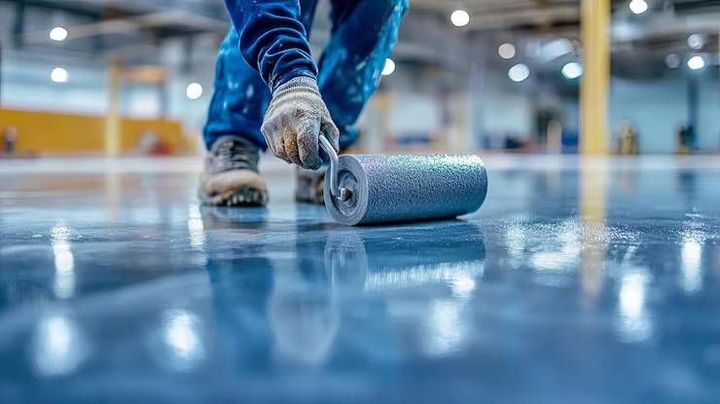
Industrial epoxy flooring is a protective floor coating designed for facilities that require durable, cleanable, and reliable surfaces. It is created by combining epoxy resin with a hardening agent, producing a solid layer that bonds to a properly prepared substrate. Depending on the formulation and application method, the finished surface can provide resistance to abrasion, chemical exposure, moisture penetration, and regular industrial traffic.
Flooring performance has become an important consideration as industrial environments adapt to changing production methods, more demanding hygiene expectations, and increasingly complex equipment layouts. Warehouses, manufacturing plants, laboratories, processing facilities, and distribution centers need surfaces that support daily operations without creating unnecessary maintenance difficulties.
Industrial epoxy flooring can help improve floor cleanliness, support organized workflows, and protect concrete substrates from premature deterioration. However, its effectiveness depends on several factors, including the condition of the existing floor, environmental conditions during application, coating thickness, and the type of activity performed in the facility.
Understanding these factors helps facility managers and maintenance professionals make informed decisions. Installation is not simply a matter of applying resin to concrete; it requires systematic preparation, appropriate material selection, controlled curing, and ongoing inspection. The following sections explain how these elements influence flooring performance across different industrial applications.
Who it affects and what problems it solves
Industrial epoxy flooring is relevant to facility managers, maintenance engineers, production supervisors, construction professionals, and industrial safety teams. Each group approaches flooring from a different perspective, but all depend on a surface that can withstand routine operations while remaining practical to maintain.
Manufacturing facilities often experience continuous movement from machinery, carts, and material-handling equipment. An appropriate epoxy system can help protect concrete against abrasion and certain chemical exposures. Warehouses may use epoxy coatings to support housekeeping, improve visibility through designated floor markings, and maintain surfaces exposed to repeated traffic.
Food processing environments and laboratories may require seamless, easily cleaned surfaces that support established hygiene procedures. Specialized epoxy formulations can contribute to these requirements, although the complete flooring system must also meet the facility's specific sanitation and chemical-resistance needs.
Common problems include concrete dusting, surface deterioration, difficult cleaning, and damage caused by spills or repeated mechanical contact. Epoxy coatings can address some of these issues when the underlying concrete is structurally sound and the selected system is appropriate for the exposure conditions.
Nevertheless, several mistakes can reduce performance. Applying epoxy over contaminated concrete, ignoring moisture transmission, selecting an unsuitable formulation, or allowing traffic before full curing can lead to peeling, bubbling, discoloration, or premature wear.
Another frequent mistake is assuming that every epoxy coating provides the same level of protection. Different products vary in thickness, flexibility, chemical resistance, slip characteristics, and curing requirements. Evaluating the operating environment before choosing a system helps prevent avoidable failures and supports more consistent long-term floor maintenance.
Recent updates and industry trends
Over the past year, industrial flooring discussions have continued to emphasize durability, maintenance planning, worker safety, and environmental performance. Facility operators increasingly consider flooring as part of a broader operational system rather than an isolated construction component.
One important trend is the development of coating formulations designed for specific working conditions. These include systems intended for faster return to service, improved resistance to selected chemicals, and better performance in environments exposed to temperature variation. Actual curing times and performance characteristics remain dependent on the product formulation and application conditions.
Automation is also influencing floor planning. Facilities using autonomous mobile robots and automated material-handling equipment need surfaces with predictable traction, consistent flatness, and clearly defined travel routes. Epoxy flooring can support these requirements when the substrate and finished coating meet the relevant operational specifications.
Many organizations globally are also paying closer attention to low-emission materials, indoor air quality, and responsible construction practices. Water-based and other lower-emission formulations may be suitable for certain applications, although their performance must be assessed against the demands of the environment.
Digital maintenance records, inspection schedules, and asset management software are helping teams track floor deterioration and coordinate repairs. Rather than waiting for extensive damage, maintenance professionals can document cracks, worn traffic lanes, and coating separation before these problems disrupt operations.
These developments demonstrate that modern industrial flooring decisions increasingly combine material science, workplace safety, environmental considerations, and preventive maintenance.
Comparison of industrial epoxy flooring systems
Different flooring systems serve different purposes. Conventional epoxy coatings, self-leveling epoxy, epoxy mortar, and epoxy systems with specialized surface finishes vary in thickness, installation requirements, and suitability for demanding environments.
Comparison factor | Standard epoxy coating | Self-leveling epoxy | Epoxy mortar system |
|---|---|---|---|
Efficiency | Suitable for routine protection | Creates a uniform finish | Supports demanding industrial use |
Automation compatibility | Depends on surface quality | Suitable for consistent travel surfaces | Depends on finish and installation accuracy |
Scalability | Practical for many floor areas | Suitable for broad interior surfaces | Appropriate for selected high-load zones |
Maintenance | Routine cleaning and inspections | Generally straightforward cleaning | May require specialized repair procedures |
Flexibility | Limited by formulation | Depends on resin characteristics | Depends on mortar composition |
Installation speed | Varies with preparation and curing | Requires controlled application | Usually involves additional preparation |
Reliability | Depends on substrate and exposure | Depends on thickness and curing | Can perform well under demanding conditions |
Energy use | Mainly associated with preparation and application | Depends on equipment and curing conditions | Depends on installation methods |
Implementation complexity | Often relatively straightforward | Requires careful mixing and spreading | Requires skilled preparation and placement |
Integration capability | Can accommodate suitable markings | Supports designated traffic layouts | Can incorporate specialized industrial zones |
Chemical resistance | Formulation-dependent | Formulation-dependent | Formulation-dependent |
Repair requirements | Local repairs may be possible | Repairs may require finish matching | Repairs can require substantial surface preparation |
The comparison shows that there is no universally suitable epoxy system. Standard coatings may meet the needs of areas with moderate traffic, while self-leveling systems are useful when a consistent finish is important. Epoxy mortar is often considered where the floor experiences demanding mechanical conditions.
Selection should account for the concrete condition, expected loading, exposure to chemicals, hygiene requirements, and maintenance capabilities. The most appropriate system is one that matches actual operating conditions rather than simply providing the thickest coating or the smoothest appearance.
Regulations and practical guidance
Industrial epoxy flooring projects should follow applicable building requirements, occupational safety expectations, environmental guidance, and product-specific installation instructions. Internationally recognized standards may address concrete preparation, coating performance, slip resistance, and workplace safety. The relevant requirements depend on the facility's function and the regulations applicable to its location.
Before installation, contractors should evaluate concrete strength, surface contamination, existing coatings, cracks, and moisture conditions. Mechanical preparation methods, such as grinding or abrasive blasting, may be necessary to establish an appropriate bonding profile. Dust and residues must be removed before coating application.
Worker protection is another important consideration. Epoxy components and hardeners can cause skin or eye irritation, and some formulations may release vapors during application. Appropriate ventilation, protective equipment, safe material handling, and adherence to safety data sheets are essential. The area should remain restricted until the coating has reached the required condition for occupancy or traffic.
Environmental considerations include emissions, waste management, packaging disposal, and the handling of unused chemicals. Lower-emission products may be appropriate for some projects, but the complete formulation and application conditions should be evaluated.
Which option suits different situations?
Small operations: A conventional epoxy coating may be appropriate for light-duty workshops or storage rooms when the concrete is sound and exposure demands are moderate.
Large-scale facilities: Self-leveling or specialized epoxy systems may suit extensive production areas where uniformity, traffic planning, and coordinated installation are important.
Beginners: Following manufacturer instructions and obtaining a professional substrate assessment can help prevent application errors.
Experienced professionals and growing organizations: Epoxy mortar or chemically resistant formulations may suit specialized operating zones, provided their performance is verified against actual loading and exposure conditions.
Across all situations, testing a representative floor area and establishing a documented maintenance plan can improve consistency and help identify problems early.
Tools and resources
Appropriate tools and technical resources support accurate preparation, controlled application, and reliable maintenance. The equipment required varies with the floor's condition, the selected coating system, and the scale of the project.
Concrete moisture meter: Helps assess moisture conditions when used according to its measurement method and limitations.
Surface profile tester: Supports evaluation of concrete preparation and coating adhesion requirements.
Industrial floor grinder: Removes surface contaminants and prepares concrete for coating application.
Epoxy mixing equipment: Helps combine resin and hardener consistently according to specified proportions.
Wet-film thickness gauge: Measures the thickness of an uncured coating where the method is appropriate.
Safety data sheets: Explain material hazards, handling procedures, protective equipment, and emergency measures.
Floor inspection checklist: Records cracks, worn areas, peeling, contamination, and maintenance activities over time.
Using these resources systematically can help teams document installation quality and maintain consistent inspection practices.
Frequently asked questions
What is industrial epoxy flooring?
Industrial epoxy flooring is a protective surface system formed when epoxy resin reacts with a hardening agent. It is commonly applied over prepared concrete in manufacturing facilities, warehouses, laboratories, and other operational environments. Depending on its formulation, the coating can improve cleanability and resistance to abrasion or selected chemicals. Its actual performance depends on substrate preparation, application quality, curing conditions, and the type of industrial exposure.
How does epoxy flooring differ from ordinary concrete flooring?
Ordinary concrete provides the structural base, while an epoxy system adds a protective layer over that base. The coating can reduce surface dusting, improve cleanability, and provide additional resistance to certain forms of wear and chemical exposure. However, epoxy does not correct every structural defect in concrete. Cracks, movement, moisture problems, and inadequate substrate strength must be evaluated before installation.
How long does industrial epoxy flooring take to cure?
Curing time varies according to the resin formulation, ambient temperature, humidity, coating thickness, and substrate conditions. Some systems permit limited foot traffic relatively quickly, while full chemical resistance and mechanical performance may require additional time. Installers should follow the manufacturer's technical documentation rather than relying on a general timetable. Premature use can damage the coating and compromise its expected performance.
What maintenance does industrial epoxy flooring require?
Routine maintenance typically includes removing dust and debris, cleaning spills promptly, using compatible cleaning agents, and inspecting areas exposed to heavy traffic. Abrasive equipment or unsuitable chemicals can damage certain finishes. Facility teams should also check for peeling, cracks, impact damage, and worn markings. Prompt repairs help prevent localized deterioration from spreading and maintain a safer, more manageable working surface.
Is industrial epoxy flooring suitable for every facility?
No. Epoxy flooring is not appropriate for every environment or exposure condition. Some formulations may be unsuitable for prolonged ultraviolet exposure, severe thermal cycling, persistent moisture problems, or particular aggressive chemicals. Very flexible substrates and areas with significant structural movement may also require alternative systems. A technical assessment should consider operating temperatures, chemical exposure, traffic patterns, slip resistance, and the condition of the existing floor.
Conclusion
Industrial epoxy flooring can support durable, cleanable, and organized working environments when the system is selected and installed according to operational requirements. Its effectiveness depends on more than the coating material itself. Concrete preparation, moisture assessment, correct mixing, controlled curing, and appropriate worker protection all influence the final result.
Facility managers should evaluate the demands of their working environment before choosing between standard epoxy coatings, self-leveling systems, and epoxy mortar. They should also consider cleaning procedures, chemical exposure, equipment traffic, and the availability of trained installation professionals. Regular inspections and prompt repairs can extend useful service life and reduce interruptions associated with avoidable floor deterioration.
Looking ahead, industrial flooring practices are likely to continue emphasizing lower emissions, specialized performance characteristics, automation compatibility, and data-supported maintenance planning. Organizations that monitor these developments while following applicable safety and environmental requirements can make more informed decisions. A carefully specified flooring system, supported by documented installation procedures and consistent care, provides a practical foundation for reliable industrial operations.