Industrial Process Equipment Guide: Systems, Functions, Applications, Features and Operating Principles
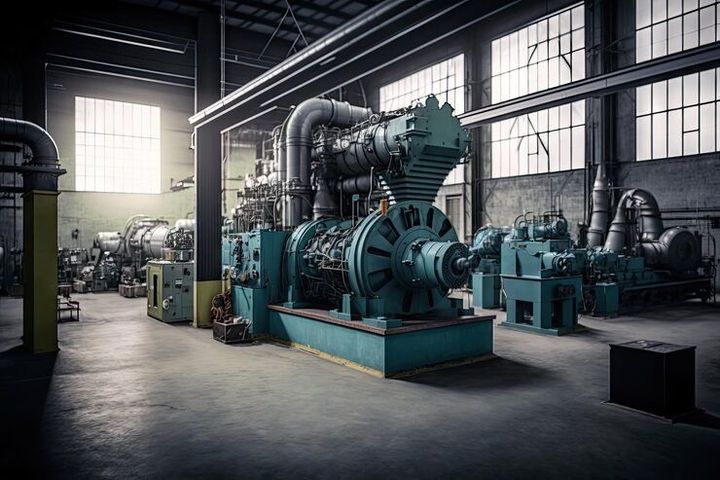
Industrial process equipment includes the machines, vessels, pumps, compressors, heat-transfer units, mixers, filters, conveyors, control devices, and supporting systems used to transform, move, heat, cool, separate, store, or monitor materials. These systems developed alongside modern manufacturing as industries needed repeatable ways to handle raw materials and control physical and chemical processes.
Context
Industrial process equipment includes the machines, vessels, pumps, compressors, heat-transfer units, mixers, filters, conveyors, control devices, and supporting systems used to transform, move, heat, cool, separate, store, or monitor materials. These systems developed alongside modern manufacturing as industries needed repeatable ways to handle raw materials and control physical and chemical processes.
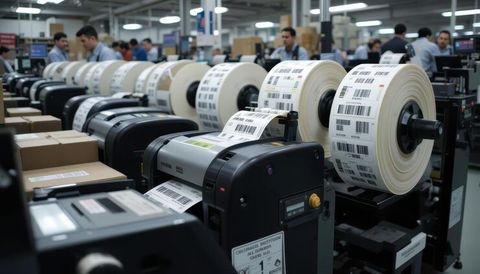
A process system normally combines several pieces of equipment rather than relying on one machine. For example, a production line may use pumps to move liquids, heat exchangers to adjust temperature, tanks to hold materials, valves to regulate flow, and sensors to monitor operating conditions. Understanding how these components work helps non-technical readers recognize the role of industrial process equipment in factories and processing facilities.
Common equipment groups
Industrial process equipment can be grouped by its main function:
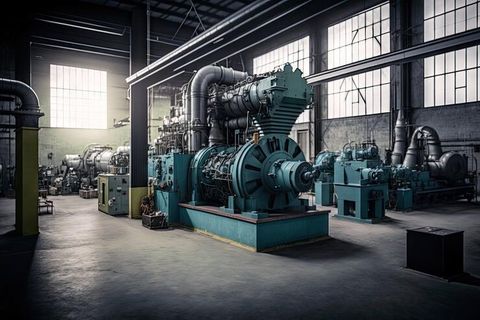
- Fluid handling: pumps, compressors, blowers, valves, and piping systems.
- Heat management: heat exchangers, boilers, heaters, chillers, and cooling systems.
- Separation: filters, centrifuges, separators, membrane units, and dryers.
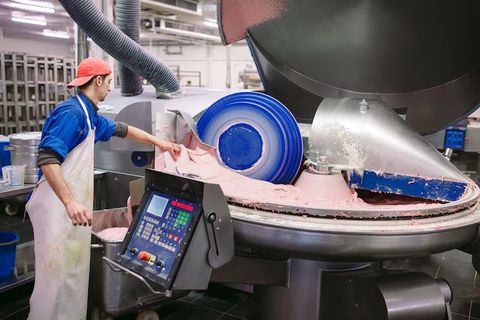
- Material processing: mixers, reactors, grinders, crushers, presses, and forming machines.
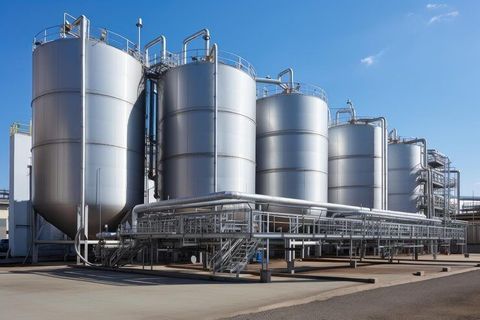
- Storage and transfer: tanks, silos, hoppers, conveyors, and loading systems.
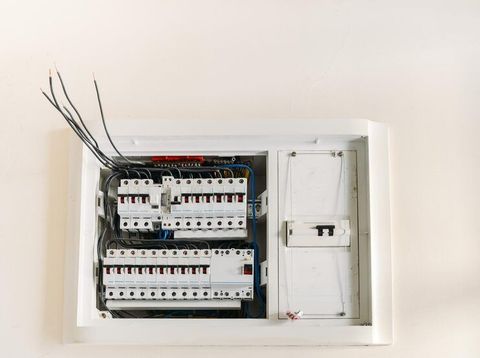
- Measurement and control: sensors, meters, programmable controllers, and control panels.
Importance
Industrial process equipment matters because many everyday products depend on controlled manufacturing or processing. Food ingredients, packaged materials, chemicals, metals, construction products, medicines, energy products, and water-treatment processes can all involve combinations of process equipment.
The equipment also addresses practical production challenges. Materials may need to move between stages, remain within a certain temperature range, mix uniformly, or be separated into useful fractions. Automated monitoring can also help operators observe pressure, temperature, flow, level, vibration, and other conditions without relying only on manual checks.
How systems work together
A typical process begins with an input material and moves through several controlled stages. Each stage has a defined purpose, while instruments provide information that helps the control system maintain operating conditions. The arrangement depends on the material, process sequence, production scale, and required operating conditions.
| Equipment type | Main function | Typical application |
|---|---|---|
| Pump | Moves liquids | Water, chemicals, process fluids |
| Compressor | Raises gas pressure | Air and gas handling |
| Heat exchanger | Transfers heat | Heating or cooling streams |
| Mixer | Combines materials | Food, chemicals, polymers |
| Filter | Removes selected particles | Water and process fluids |
| Tank | Holds materials | Storage and process buffering |
| Valve | Regulates flow | Piping and process control |
| Sensor | Measures conditions | Temperature, pressure, level |
Recent Updates
From 2024 through 2026, industrial process equipment has increasingly been connected with digital monitoring, automation, energy management, and data-based maintenance. Manufacturers and plant operators are using more sensors, industrial networks, programmable controls, and software dashboards to observe equipment conditions and process performance.
Energy efficiency has also become a major part of industrial equipment planning. In India, the Bureau of Energy Efficiency reports that its Perform, Achieve and Trade framework covered 1,333 energy-intensive industrial units in 2025, representing about 55% of industrial energy consumption, with reported energy savings of 25.78 million tonnes of oil equivalent.
Another current direction is the integration of condition monitoring with equipment controls. Vibration, temperature, pressure, electrical readings, and flow data can be collected continuously, allowing unusual patterns to be identified earlier. Digital twins and industrial analytics are also being explored for process modelling, equipment monitoring, and planning.
Automation and energy management
Modern process equipment increasingly combines mechanical hardware with electronic measurement and control. Variable-speed drives can adjust motor operation according to process requirements, while automated control loops can regulate variables such as flow, temperature, and pressure.
Energy management is becoming more structured as well. BEE's industrial efficiency programmes and energy-audit framework place attention on energy-intensive sectors and measurable efficiency improvements.
Another development is the use of connected equipment data. Information from sensors can be stored over time and compared with normal operating ranges. This creates a clearer record of equipment behavior and can support maintenance planning, process analysis, and identification of operating changes.
Laws or Policies
In India, industrial process equipment is affected by several layers of regulation. Requirements can depend on the type of machinery, the material being processed, workplace conditions, emissions, pressure systems, electrical equipment, and the state where a facility operates.
The Bureau of Indian Standards maintains Indian Standards and conformity-assessment frameworks for many products and machines. Its Know Your Standard portal allows users to search standards by an IS number or product keyword and view related documents, amendments, testing information, and other standard-related details.
Machinery safety rules have also developed in recent years. BIS documentation for the Machinery and Electrical Equipment Safety framework includes requirements and standards covering equipment such as pumps and compressors, with amendments issued during 2025 and 2026. The exact requirement depends on the equipment category and applicable standard.
Workplace safety is another important area. The Ministry of Labour and Employment describes factory safety and occupational health requirements as a major regulatory area, with state governments and Union Territory administrations applying relevant factory rules within their jurisdictions.
Energy policy also influences industrial equipment. Under the Energy Conservation Act framework, certain energy-intensive industries are designated for energy-efficiency measures, including mandatory energy audits for applicable designated consumers.
Environmental requirements may also apply when industrial processes involve emissions, wastewater, hazardous materials, noise, or waste generation. The applicable requirements can vary according to the industry and location. This article provides general information rather than legal, engineering, or compliance advice.
Tools and Resources
Several resources can help readers understand industrial process equipment and its operating principles.
Standards and technical references
The BIS Know Your Standard portal is useful for locating applicable Indian Standards, amendments, testing information, and related conformity documents. Equipment manuals, technical datasheets, piping diagrams, and process flow diagrams can then provide more detailed information about a specific system.
Energy and process assessment tools
BEE provides information about industrial energy efficiency, designated consumers, energy audits, and the Perform, Achieve and Trade framework. These resources can help readers understand how energy use is measured within applicable industrial sectors.
Common calculation references
Process engineers and students may encounter calculators for flow rate, pressure drop, heat transfer, pump head, motor power, tank volume, and energy use. Spreadsheet templates are also commonly used to organize equipment data, operating readings, inspection records, and process measurements.
Process flow diagrams and equipment datasheets are particularly useful learning resources because they show how individual components fit into a larger system. Basic instrumentation diagrams can also help readers understand the relationship between sensors, controllers, valves, pumps, and other equipment.
FAQs
What is industrial process equipment?
Industrial process equipment is a group of machines and systems used to move, transform, heat, cool, separate, store, or monitor materials during industrial operations. Examples include pumps, compressors, heat exchangers, tanks, filters, mixers, valves, and sensors.
What are the main types of industrial process equipment?
The main groups include fluid-handling equipment, heat-transfer equipment, separation equipment, material-processing machines, storage systems, and measurement and control equipment. A single facility may use several groups in one process.
How does industrial process equipment work?
Equipment performs a defined physical function within a process. Pumps create liquid movement, compressors raise gas pressure, heat exchangers transfer thermal energy, and sensors measure operating conditions that can be used by control systems.
Why is automation used with process equipment?
Automation helps monitor and regulate process variables such as pressure, temperature, flow, level, and speed. It can also provide recorded operating data for analysis and process supervision.
What standards apply to industrial process equipment in India?
Applicable requirements depend on the equipment, industry, location, and intended use. Indian Standards, machinery safety requirements, factory rules, environmental requirements, and energy-efficiency provisions may all be relevant.
Conclusion
Industrial process equipment brings together machines, instruments, controls, and supporting systems to manage materials through defined industrial processes. Its applications range from fluid movement and heat transfer to separation, mixing, storage, and automated monitoring. Recent developments have increased the use of sensors, automation, data analysis, and energy-efficiency measures. In India, applicable standards and regulatory requirements depend on the equipment and facility, so the relevant rules must be considered for each specific application.