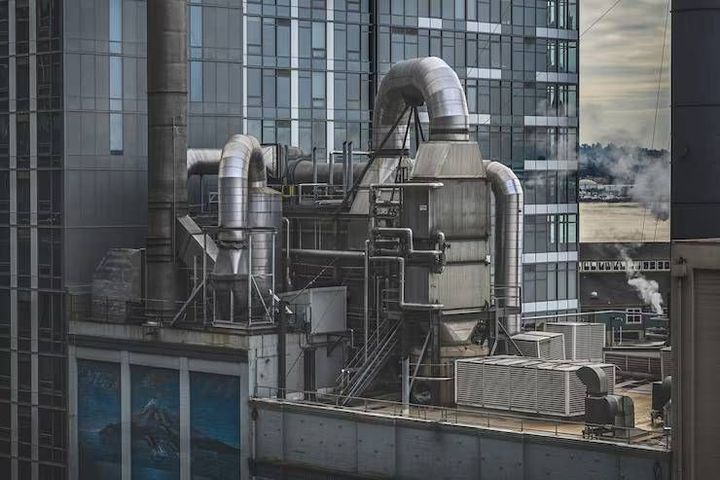
Industrial Ventilation Systems Discover Guide: Explore Modern Industrial Air Management
Industrial ventilation systems are designed to control airflow, temperature, humidity, dust, fumes, vapors, gases, and other airborne contaminants in industrial environments.
They can use mechanical fans, ducts, filters, exhaust equipment, air-cleaning systems, and controlled air supplies to manage indoor air conditions.
This Industrial Ventilation Systems Discover Guide explains the basic types, purposes, operating principles, recent technology developments, regulatory considerations, and useful resources. Understanding industrial air management can help workers, engineers, facility teams, students, and researchers understand how ventilation supports safer and more controlled workplaces.
Context
Industrial ventilation is an engineering approach used to move and manage air within factories, workshops, warehouses, laboratories, processing areas, and other workplaces. Its purpose can include removing unwanted airborne substances, supplying outdoor air, controlling heat, and maintaining suitable environmental conditions.
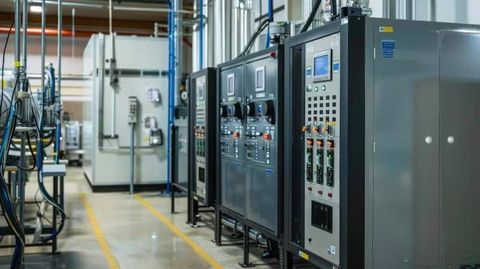
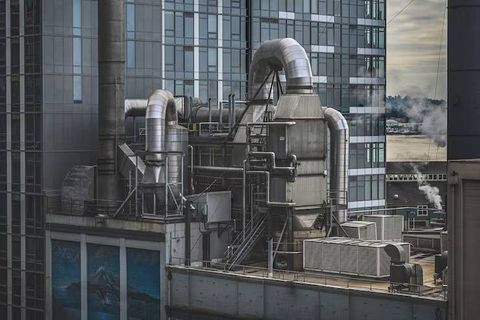
A typical system may contain fans, ductwork, air inlets, exhaust hoods, filters, dampers, sensors, and control equipment. The exact arrangement depends on the building, production processes, contaminants, heat loads, and required airflow.
Two broad approaches are commonly discussed: general or dilution ventilation and local exhaust ventilation. General ventilation changes or circulates air throughout an area, while local exhaust ventilation attempts to capture contaminants near their source before they spread through the workplace. NIOSH identifies local exhaust ventilation as an example of an engineering control for airborne emissions.
| System type | Main purpose | Typical application |
|---|---|---|
| General ventilation | Dilute and distribute air | Factories and warehouses |
| Local exhaust | Capture contaminants at source | Welding and chemical processes |
| Supply ventilation | Introduce controlled air | Production areas |
| Exhaust ventilation | Remove indoor air | Workshops and process areas |
| Filtration | Remove particles | Dust-generating processes |
| Heat recovery | Transfer heat between air streams | Energy-conscious facilities |
The design process generally considers airflow volume, pressure, contaminant characteristics, capture location, duct layout, filtration, fan capacity, and discharge arrangements.
Importance
Industrial air management matters because workplace activities can generate dust, fumes, mists, vapors, gases, heat, moisture, and other airborne conditions. Appropriate engineering controls can reduce exposure to hazards and help maintain suitable working environments.
NIOSH describes engineering controls as measures that remove or reduce hazardous conditions and identifies ventilation as one type of engineering control. The hierarchy of controls places engineering controls above administrative controls and personal protective equipment in the preferred order of hazard reduction.
Industrial ventilation can be relevant to:
- Manufacturing facilities
- Metalworking areas
- Chemical processing plants
- Food-processing facilities
- Laboratories
- Warehouses
- Foundries
- Woodworking areas
- Pharmaceutical production areas
- Construction environments
Ventilation can also influence thermal comfort and indoor air quality. CDC guidance notes that improving air circulation can help dilute airborne respiratory particles, while filtration and air-cleaning approaches can further improve air cleanliness.
A system must be appropriately designed for the specific hazard. General air movement alone may not adequately control a contaminant generated at a particular workstation, which is why source capture can be important for certain industrial processes.
Recent Updates
Modern industrial ventilation is increasingly connected with sensors, automation, digital monitoring, variable-speed drives, energy management, and computerized control systems. These technologies can provide information about airflow, pressure, temperature, filter conditions, and equipment operation.
Sensor-based systems can monitor changing conditions and adjust ventilation equipment according to defined control parameters. Variable-frequency drives can regulate fan speed when system requirements change.
Air-cleaning technology has also developed. CDC guidance identifies filtration and germicidal ultraviolet air treatment as two methods for improving workplace air cleanliness, while noting that emerging technologies require careful consideration and appropriate implementation.
Recent areas of interest include:
- Smart airflow monitoring
- Automated fan-speed control
- Differential-pressure monitoring
- Improved filtration
- Heat-recovery ventilation
- Energy monitoring
- Digital maintenance records
- Air-quality sensors
- Advanced local exhaust designs
- Computer-assisted ventilation analysis
For workplaces concerned about airborne respiratory particles, CDC guidance discusses ventilation, filtration, and air cleaning as complementary approaches. Its guidance also describes air changes per hour as one way to assess ventilation, while emphasizing that appropriate ventilation depends on the specific building and circumstances.
Laws or Policies
Industrial ventilation requirements vary by country, industry, workplace activity, and hazard. Regulations may address ventilation directly or through requirements concerning airborne contaminants, occupational exposure, hazardous processes, and workplace conditions.
In the United States, OSHA has specific ventilation requirements covering areas such as general industry and construction. For example, OSHA's general industry ventilation standards include 29 CFR 1910.94, while construction requirements include 29 CFR 1926.57.
OSHA also explains that it does not have one general indoor-air-quality standard covering all workplace situations, although it has ventilation requirements and standards addressing specific contaminants.
In India, workplace ventilation requirements have historically been addressed through factory legislation and associated rules. The Ministry of Labour and Employment materials describe requirements concerning adequate ventilation, temperature, dust, fumes, gases, and other workplace conditions.
The Occupational Safety, Health and Working Conditions Code, 2020 also identifies ventilation, temperature, humidity, and environments involving dust, noxious gases, fumes, and impurities among matters that may be prescribed for workplace health and safety.
Specific compliance requirements should be checked against the current national, state, local, and industry-specific rules applicable to a facility.
Tools and Resources
Industrial ventilation analysis can involve engineering calculations, measurement instruments, technical standards, equipment documentation, and workplace exposure assessments.
Useful resources include:
- OSHA ventilation standards and technical guidance
- NIOSH engineering-control resources
- CDC workplace ventilation guidance
- Government occupational-safety publications
- Applicable building and ventilation codes
- Industrial hygiene references
- Fan and filtration technical documentation
- Airflow measurement equipment
- Differential-pressure instruments
- Air-quality monitoring equipment
Common calculations may involve airflow rate, duct velocity, air changes per hour, pressure loss, fan capacity, capture velocity, and filter performance.
For example, air changes per hour can be calculated from the airflow supplied to a room and the room volume. However, an ACH value by itself does not establish whether a particular industrial contaminant is adequately controlled. Source characteristics, capture efficiency, contaminant concentration, and applicable exposure limits must also be considered.
Maintenance records can help document filter replacement, fan inspection, duct condition, airflow measurements, and corrective actions. NIOSH also maintains engineering-control information covering workplace hazards and control approaches.
FAQs
What are industrial ventilation systems?
Industrial ventilation systems are engineered arrangements that move, supply, exhaust, filter, or otherwise manage air in industrial workplaces. They can help control airborne contaminants and environmental conditions.
What is local exhaust ventilation?
Local exhaust ventilation captures contaminated air close to where it is generated. This approach can help prevent dust, fumes, vapors, or other contaminants from spreading throughout a workplace.
Why is airflow important in industrial ventilation?
Airflow determines how effectively air is supplied, moved, captured, filtered, or exhausted. The required airflow depends on the building, process, contaminant, equipment, and applicable standards.
What technologies are used in modern ventilation systems?
Modern systems may use air-quality sensors, pressure sensors, variable-speed fans, automated controls, improved filters, heat recovery, and digital monitoring systems.
How often should an industrial ventilation system be inspected?
Inspection frequency depends on the system design, workplace hazards, operating conditions, regulations, and manufacturer requirements. Systems handling hazardous contaminants may require more frequent assessment and monitoring.
Conclusion
Industrial ventilation systems are an important part of modern industrial air management. They can control airborne contaminants, provide outdoor air, manage heat and humidity, and support appropriate workplace environmental conditions.
The main approaches include general ventilation, local exhaust ventilation, filtration, controlled air supply, and exhaust systems. Modern developments increasingly combine these approaches with sensors, automated controls, digital monitoring, and energy-management technologies.
Effective ventilation depends on the specific workplace rather than a single universal design. Factors such as contaminant characteristics, process location, airflow requirements, building layout, filtration, and applicable exposure limits all influence system design.
Regulatory requirements also vary by country and industry. Reviewing current government regulations, applicable standards, technical documentation, and workplace exposure information is an important part of understanding industrial ventilation systems and maintaining appropriate air-management practices.