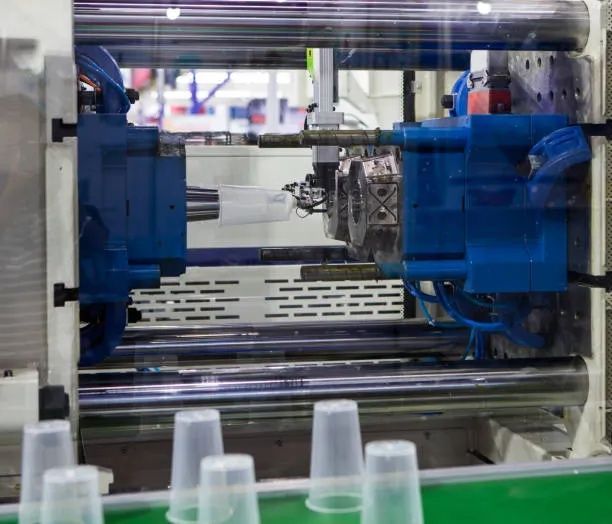
Injection Molding Machines A Complete Guide to Types, Components and Applications
Injection molding machines are industrial machines used to produce plastic and rubber parts by forcing a heated material into a mold, where it cools and takes the shape of the mold cavity. Injection molding machines are widely used for producing items with consistent dimensions, including containers, automotive components, electrical housings, medical components, household products, and industrial parts.
The basic concept of injection molding has existed for more than a century, with the technology developing from relatively simple molding equipment into computer-controlled hydraulic, electric, and hybrid machines. Modern systems can control temperature, pressure, injection speed, clamping force, and other process conditions with considerable precision.
An injection molding machine generally works through a repeated cycle. Plastic pellets or another suitable material are fed into a heated barrel, melted, and pushed toward a mold. The mold closes under clamping force, the material is injected into its cavity, the part cools, and the mold opens so the finished component can be removed.
How injection molding machines work
The process begins when raw material enters the machine through a hopper. A rotating screw moves the material through a heated barrel while friction and controlled heating gradually turn it into a molten state.
The screw then moves forward and pushes the molten material through a nozzle into the mold. After the cavity is filled, pressure is maintained for a controlled period before the material cools sufficiently for removal.
The main stages are:
- Material feeding: Plastic pellets or other suitable feedstock enter the hopper.
- Melting and mixing: The screw moves and heats the material inside the barrel.
- Mold closing: The clamping mechanism brings the mold halves together.
- Injection: Molten material enters the mold cavity under controlled pressure.
- Cooling: The material solidifies while heat is removed through the mold.
- Mold opening: The two mold halves separate.
- Ejection: Ejector mechanisms push the molded component out.
The sequence then repeats for the next cycle. The exact settings depend on the material, mold design, component geometry, and machine configuration. ISO 20430 describes safety requirements for injection molding machines used for processing plastics and rubber and covers machines using hydraulic and/or electrical drives for platen movement.
Importance
Injection molding machines are important because they allow manufacturers to produce large numbers of molded components with repeatable shapes and dimensions. The technology is used across many industries because molds can be designed for relatively simple parts as well as complex components with features such as ribs, clips, threads, and textured surfaces.
The process also supports different production requirements. Small components may be produced using compact machines, while larger parts require machines with substantially greater clamping forces and injection capacity.
Why machine selection matters
The machine needs to match the mold, material, component size, and required production conditions. An unsuitable combination can result in problems such as incomplete filling, excessive flashing, warping, inconsistent dimensions, or damage to the mold.
Important factors include:
- Clamping force: Determines how much force the machine can apply to keep the mold closed during injection.
- Injection capacity: Relates to the amount of material that can be injected during a cycle.
- Injection pressure: Influences the ability to fill cavities with different geometries.
- Screw design: Affects melting, mixing, and material movement.
- Mold dimensions: Determine whether the mold can physically fit within the machine.
- Control system: Regulates process conditions such as temperature, pressure, speed, and timing.
Main types of injection molding machines
Injection molding machines can be classified according to their drive systems and particular production requirements.
| Machine type | Main characteristic | Typical application |
|---|---|---|
| Hydraulic | Uses hydraulic systems for major machine movements | General-purpose molding |
| Electric | Uses electric motors and drives | Precision components |
| Hybrid | Combines hydraulic and electric systems | Varied production requirements |
| Vertical | Uses a vertical clamping arrangement | Inserts and specialized components |
| Two-shot | Allows different materials or colors in one cycle | Multi-material parts |
Hydraulic machines have traditionally been widely used because hydraulic systems can generate substantial clamping and injection forces. Electric machines use electrically driven mechanisms and can provide precise control of movement and process parameters. Hybrid machines combine characteristics of both approaches.
Vertical injection molding machines are configured differently from conventional horizontal systems and can be useful for insert molding or applications where components need to be positioned before injection.
Recent Updates
Injection molding technology has continued to develop between 2024 and 2026, with particular attention to energy management, automation, digital monitoring, material efficiency, and circular production. These developments are not limited to one machine type, and the appropriate technology depends on the production requirements.
Energy efficiency has received increasing attention. Technical publications have reported that all-electric and servo-controlled machines can use less energy than older hydraulic configurations under certain operating conditions. Energy use can also be influenced by mold cooling, runner design, heating systems, and process settings.
Electric and hybrid systems
Electric machines use motor-driven mechanisms instead of relying primarily on hydraulic actuation. This can allow precise control of screw movement, injection speed, and other operations.
Hybrid systems combine electric and hydraulic technologies. They can be configured to use electric drives for selected movements while retaining hydraulic systems where high force or particular machine characteristics are required.
The choice between hydraulic, electric, and hybrid equipment depends on factors such as component size, cycle requirements, precision, material, energy use, and production conditions.
Digital monitoring and automation
Modern injection molding equipment increasingly incorporates sensors, programmable controls, data collection, and automated handling. These systems can monitor variables such as temperature, pressure, screw position, cycle time, and machine status.
Automation can also be used for part removal, inspection, material handling, and packaging. Digital monitoring allows production data to be reviewed over time, helping identify changes in process conditions.
Recycled and alternative materials
Material efficiency has become another important area of development. Research published in 2025 examined injection molding using recycled materials together with rapidly produced prototype molds and process simulation. The study demonstrated the technical investigation of recycled polypropylene-based and recycled polyamide materials in injection molding applications.
The wider plastics sector is also placing greater attention on circularity, recycling, material tracking, and the use of recycled polymers. Recent industry and policy activity indicates that these topics are becoming increasingly connected with plastics processing and product design.
Laws or Policies
Injection molding machines are affected by machinery safety requirements, workplace safety rules, electrical requirements, environmental regulations, and material-specific regulations. The exact requirements depend on where equipment is manufactured, installed, or operated.
ISO 20430 is an international safety standard specifically covering injection molding machines for plastics and rubber. It addresses significant hazards associated with machine design and foreseeable misuse. The standard was reviewed and confirmed in 2025, meaning the 2020 edition remains current according to ISO.
Machinery safety frameworks
Regional machinery legislation can establish requirements for machine design, documentation, conformity assessment, protective systems, and manufacturer responsibilities. For example, Regulation (EU) 2023/1230 establishes health and safety requirements for machinery and is scheduled to apply from January 2027, replacing the earlier machinery directive framework.
Such rules can affect injection molding equipment placed on regulated markets. Requirements may include technical documentation, risk assessment, protective measures, instructions, and conformity procedures.
Workplace and environmental considerations
Operators may also need to follow workplace requirements covering machine guarding, emergency controls, electrical safety, heat exposure, noise, material handling, and maintenance procedures.
Environmental requirements can relate to plastic waste, emissions, recycling, chemical substances, and the handling of production scrap. Because these requirements vary across jurisdictions and applications, manufacturers and operators need to consider the rules applicable to their specific equipment and process.
Tools and Resources
Several technical resources can help readers understand injection molding machines and their operation. Machine manuals and technical specifications provide information about machine capacity, controls, operating limits, mold dimensions, and safety procedures.
Simulation software can model material flow, filling behavior, cooling, pressure, and potential defects before physical production. Such analysis can help engineers examine mold and process conditions during development.
Other useful resources include:
- Material data sheets for understanding processing temperatures and material characteristics.
- Mold design references for cavity layouts, runners, gates, cooling channels, and ejection systems.
- Process monitoring systems for recording temperature, pressure, cycle time, and other production information.
- Technical standards for understanding machinery safety and related requirements.
- Industry research papers for studying new materials, simulation methods, automation, and circular manufacturing.
ISO's official catalogue provides information about ISO 20430 and other standards related to plastics and rubber machinery.
FAQs
What are injection molding machines used for?
Injection molding machines are used to produce molded plastic and rubber components. Applications include packaging components, automotive parts, electrical housings, household items, medical components, and industrial products.
What are the main types of injection molding machines?
The main types include hydraulic, electric, hybrid, and vertical injection molding machines. Machines can also be classified according to specialized capabilities, such as two-shot or insert molding.
What are the main components of an injection molding machine?
The major components include the hopper, barrel, screw, heating system, nozzle, injection unit, clamping unit, mold, ejector system, hydraulic or electric drive system, and control system. Each component performs a specific role during the molding cycle.
How do injection molding machines work?
An injection molding machine heats plastic material until it becomes molten, pushes it into a closed mold under controlled pressure, allows the material to cool, and then opens the mold so the component can be ejected.
What are recent developments in injection molding machines?
Recent developments include greater use of electric and hybrid drives, digital monitoring, automation, process simulation, energy management, and the processing of recycled materials. These developments reflect broader changes in precision manufacturing and circular plastics production.
Conclusion
Injection molding machines combine heating, material movement, injection, clamping, cooling, and ejection into a repeated manufacturing cycle. Hydraulic, electric, hybrid, and specialized machine configurations are used for different production requirements. Recent developments have focused on energy management, digital controls, automation, process simulation, and recycled materials. Safety standards and machinery regulations also play an important role in machine design, installation, and operation.