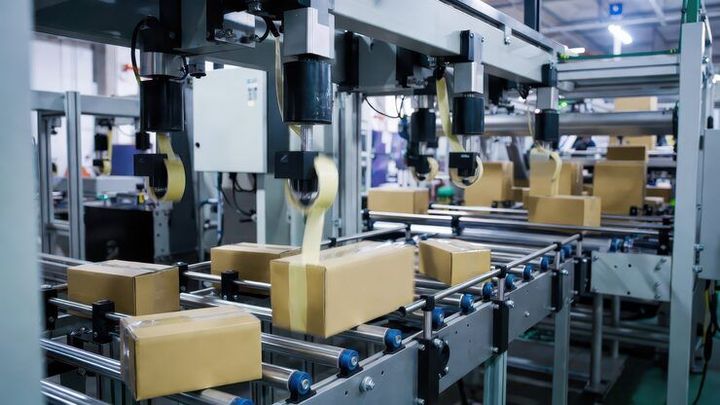
Packaging Line Overview: Machinery, Packaging Stages, Material Handling and Quality Control
A packaging line is a connected sequence of machines and material-handling systems used to prepare products for storage, transport, distribution, or retail presentation. Depending on the product, a packaging line may include conveyors, filling machines, weighing systems, sealing machines, labeling equipment, inspection systems, case packers, and palletizing equipment.
Context
The basic concept developed from the need to make packaging more consistent and organized than manual handling alone. As manufacturing processes became more automated, individual packaging machines began to operate as connected systems. Sensors, programmable controls, conveyors, and inspection equipment can now coordinate several stages within one production line.
A packaging line can be designed for many product categories, including food, beverages, pharmaceuticals, household products, chemicals, cosmetics, consumer goods, and industrial components. The exact machinery depends on the product characteristics, packaging material, package format, production requirements, and quality criteria.
Main packaging line components
A complete packaging line does not necessarily use the same equipment for every application. Common components include:
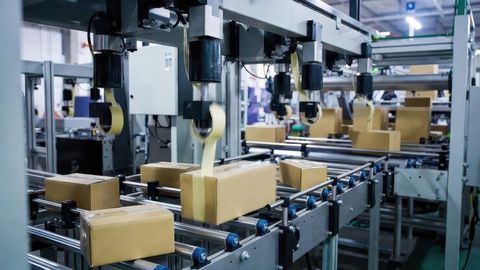
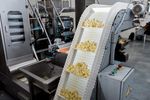
Conveyors for moving products and packaging materials between stages
Filling or dosing equipment for placing a measured quantity into a container
Capping or sealing equipment for closing packages
Labeling machines for applying product identification information
Coding systems for printing batch, date, or other production information
Inspection equipment for checking package characteristics
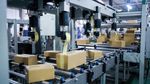
Case packing equipment for placing individual packages into larger containers
Palletizing equipment for arranging cases or containers for movement and storage
These machines are normally connected through control systems that coordinate product movement and machine operation. A packaging line may be fully automated, partly automated, or arranged around manual operations depending on the process.
Primary, secondary, and tertiary packaging
Packaging stages are often described according to the level at which packaging is applied. Primary packaging directly contains the product, such as a bottle, pouch, tray, tube, or jar.
Secondary packaging groups primary packages together. Cartons, boxes, and multipacks are common examples. Tertiary packaging is used to organize larger quantities for transportation or storage, with pallets, stretch wrapping, and larger shipping units being typical examples.
| Packaging level | Typical purpose | Common equipment |
|---|---|---|
| Primary | Contains the product | Filling, forming, sealing, capping |
| Secondary | Groups individual packages | Cartoning, case packing, bundling |
| Tertiary | Groups larger units | Palletizing, stretch wrapping, strapping |
| Inspection | Checks package characteristics | Vision systems, checkweighers, detectors |
| Material handling | Transfers products between stages | Conveyors, lifts, accumulation systems |
Importance
Packaging lines play an important role in modern manufacturing because packaging is often connected directly to product handling, identification, storage, and distribution. A problem at one stage can affect later stages, making coordination between machines important.
For example, inconsistent product spacing can affect filling or labeling equipment. A poorly formed package can interfere with sealing or case packing. An inspection system may identify a problem after several upstream machines have already processed the product.
Packaging lines also have to handle changing package formats. A single production environment may process different container sizes, labels, carton dimensions, or product quantities. This has increased attention toward flexible equipment, controlled changeovers, digital monitoring, and modular line design. Recent packaging-industry research identifies automation, flexibility, sustainability, workforce considerations, and digital tools as important areas of development.
Material handling within a packaging line
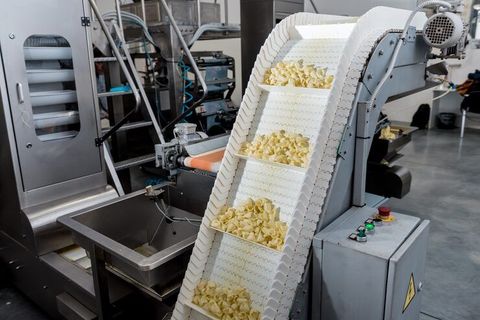
Material handling connects the different stages of a packaging process. Conveyors are among the most common systems, but packaging lines may also use accumulation tables, elevators, robotic transfer systems, feeders, and guided vehicles.
The handling system must maintain suitable product flow without creating unnecessary pressure, collisions, or interruptions. Accumulation areas can provide temporary space between machines so that a short interruption in one section does not immediately stop every connected operation.
Packaging line workflow
A typical workflow may follow this sequence:
Product infeed moves products into the packaging area.
Orientation positions products correctly for the next machine.
Filling or dosing places the required quantity into the package where applicable.
Closing seals, caps, folds, or otherwise closes the package.
Labeling applies identification information.
Coding adds production-related information where required.
Inspection checks selected package characteristics.
Secondary packaging groups individual units into cartons or cases.
Palletizing arranges larger units for handling and storage.
Not every packaging line uses every stage. Some products require specialized forming equipment, while others arrive in containers that only need filling, closing, labeling, and inspection.
Quality control
Quality control is integrated into many modern packaging lines rather than being limited to a final manual inspection. Checkweighers can identify packages outside a defined weight range, while machine vision can examine features such as label placement, package appearance, closures, and print characteristics.
Other inspection technologies can detect foreign material or physical characteristics when appropriate to the application. The inspection method must be selected according to the type of product and the characteristic being examined.
Quality data can also be collected from individual machines. Production teams may use this information to identify recurring interruptions, rejected packages, equipment adjustments, and changes in operating conditions.
Recent Updates
Packaging lines have increasingly incorporated connected controls, machine vision, data collection, robotics, and flexible automation. Recent industry research indicates that manufacturers are looking beyond isolated automation and are increasingly considering how machines, operators, data systems, and production processes work together.
Machine vision and artificial intelligence
Machine vision is becoming more capable of examining package characteristics at production speed. Newer systems can combine cameras, image-processing software, and pattern recognition to identify selected defects or variations.
Artificial intelligence is also being explored for packaging equipment. Current industry research includes applications involving machine performance, defect detection, operator knowledge, and predictive maintenance. These technologies do not replace the need for suitable inspection criteria or properly configured equipment.
Flexible automation
Packaging operations increasingly need equipment capable of handling multiple formats and frequent changeovers. This has encouraged the use of programmable controls, recipe management, servo-driven mechanisms, robotic systems, and modular machine configurations.
Robotic palletizing and collaborative robotic systems are also being incorporated into some packaging environments. Industry research indicates that palletizing is a significant area for automation because it involves repetitive product handling and changing package configurations.
Sustainability and material changes
Packaging material development is also influencing machinery design. Changes in material thickness, recycled content, flexible structures, reusable formats, and recyclable packaging can affect feeding, forming, sealing, labeling, and inspection processes.
As packaging regulations and environmental requirements evolve across different markets, equipment may need to accommodate changing package specifications. This makes material compatibility an important consideration during packaging line design. Recent industry research identifies material changes and regulatory requirements as continuing influences on packaging equipment.
Digital integration
Modern packaging lines can connect machine controls with manufacturing information systems. Data may include production counts, machine status, downtime events, inspection results, and operating parameters.
IT and operational technology integration has become an important area of packaging-line development. Industry research has also highlighted data standardization, cybersecurity, digital work guidance, and operator training as areas receiving increased attention.
Laws or Policies
Packaging machinery is affected by several types of rules and technical standards. The exact requirements depend on the machinery, product, packaging material, workplace, intended market, and application.
Machine safety standards can address hazards associated with moving components, electrical systems, guarding, access points, control systems, cleaning, adjustment, and maintenance. ISO's packaging machinery committee develops standards covering machinery safety, classification, terminology, energy consumption, efficiency, and availability.
ISO 24158 is an example of a developing international standard series addressing general safety requirements for packaging machinery. Its scope covers machinery used for conditioning packaging materials and for primary, secondary, and tertiary packaging.
Packaging operations may also be affected by rules concerning product labeling, traceability, food-contact materials, waste management, recycling, workplace safety, and electrical equipment. These requirements vary between jurisdictions and product categories.
For this reason, packaging line design generally considers both machine-level safety and the requirements applicable to the packaged product. Technical standards can provide a framework, but the legally applicable requirements depend on the particular operating environment.
Tools and Resources
Several tools can help with packaging line planning, operation, and evaluation.
Packaging line layout tools
Computer-aided design software can be used to create equipment layouts and examine conveyor paths, machine locations, access areas, and material flow. Three-dimensional models can also help visualize space requirements before equipment is installed.
Production monitoring systems
Manufacturing dashboards can display production counts, machine states, downtime events, inspection results, and other operating information. These systems can help organize information from multiple machines into a common view.
Packaging calculators
Packaging calculators can assist with basic calculations involving package dimensions, case quantities, pallet patterns, conveyor capacity, and material usage. The assumptions used in each calculation should match the actual packaging format and equipment characteristics.
Inspection and validation records
Digital or paper records can document inspection criteria, machine settings, package dimensions, test results, and production observations. Standardized records can make it easier to compare results between production runs.
Equipment documentation
Machine manuals, electrical diagrams, pneumatic diagrams, parts lists, operating instructions, and changeover procedures are important resources for understanding how individual machines connect to the overall packaging line.
FAQs
What is a packaging line?
A packaging line is a sequence of connected machines and material-handling equipment that prepares products for packaging, inspection, grouping, and distribution. The configuration varies according to the product and package format.
What machines are used in a packaging line?
Common packaging line machinery includes conveyors, filling machines, dosing systems, capping or sealing machines, labeling equipment, coding systems, inspection equipment, case packers, palletizers, and wrapping systems. Not every line requires all of these machines.
How does quality control work in a packaging line?
Quality control can involve weight checking, machine vision, code verification, seal inspection, package-dimension checks, and other methods. Inspection points can be placed at different stages so that specific characteristics are examined during production.
How does material handling affect packaging line performance?
Material handling determines how products and packaging components move between machines. Poor synchronization can create accumulation, product collisions, empty machine cycles, or interruptions, while controlled material flow helps maintain continuity between stages.
What are recent packaging line automation trends?
Recent trends include machine vision, robotics, connected controls, digital production monitoring, flexible changeovers, artificial intelligence applications, and greater integration between information and operational systems. Sustainability-related material changes are also influencing packaging equipment design.