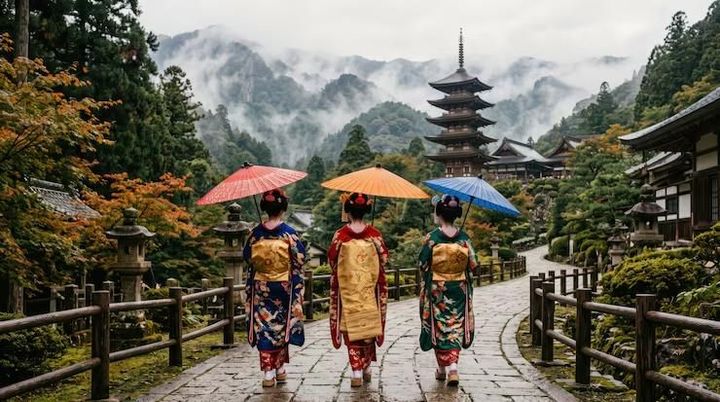
Kyoto Travel Guide: Attractions, Cultural Experiences, Seasons, Transportation and Travel Tips
Kyoto is a historic city on Japan’s main island of Honshu and served as Japan’s imperial capital for more than a thousand years. Its history has shaped a distinctive cultural landscape containing temples, shrines, traditional neighborhoods, gardens, tea culture, seasonal festivals, and historic architecture. Today, Kyoto remains an important destination for people interested in Japanese history, culture, food, architecture, and traditional arts.
A Kyoto travel guide usually brings together information about attractions, cultural experiences, seasons, transportation, local customs, and practical travel tips. Understanding these areas can make it easier to move around the city while respecting residential communities and cultural sites.
Kyoto includes well-known areas such as Higashiyama, Gion, Arashiyama, Fushimi, and central Kyoto. Each area has a different character. Visitors may encounter Buddhist temples, Shinto shrines, bamboo landscapes, traditional wooden buildings, gardens, markets, museums, and modern shopping districts within the same city.
Importance
Understanding Kyoto’s cultural landscape
Kyoto contains numerous historic religious and cultural sites, including Kiyomizu-dera, Fushimi Inari Taisha, Kinkaku-ji, Ginkaku-ji, and the Arashiyama area. These places attract visitors throughout the year, while seasonal events can create particularly busy periods.
A useful Kyoto travel guide also needs to explain that Kyoto is a living city rather than an open-air museum. Residential neighborhoods, local businesses, schools, religious institutions, and transportation networks operate alongside tourist attractions. Visitors therefore need to consider local customs and the daily activities of residents.
Managing transportation and crowds
Kyoto’s narrow streets and concentrated sightseeing areas can become congested, especially during spring blossoms, autumn foliage, holidays, and commuting periods. Kyoto’s tourism authorities have introduced measures focused on distributing visitors across different areas, reducing pressure on buses and roads, and improving visitor information.
Travel planning can therefore involve more than choosing attractions. Visitors may need to consider the location of each site, available trains or buses, walking distances, luggage arrangements, and expected crowd levels.
Recent Updates
Changes in tourism management
From 2024 through 2026, Kyoto has continued developing approaches intended to balance tourism with residents’ daily lives. These include visitor-distribution measures, public transportation congestion measures, hands-free sightseeing initiatives, and additional information about crowded areas. Kyoto has also expanded the use of congestion information and live camera views during busy tourism periods.
The city’s recent approach places greater attention on spreading visitors across different locations and transportation routes instead of concentrating activity around a small number of famous areas. In 2026, Kyoto continued these measures for both spring and autumn travel periods.
Luggage and transportation awareness
Large suitcases can create difficulties on crowded city buses and trains. Kyoto’s official tourism information encourages visitors to use luggage storage or luggage transportation options and to avoid bringing large pieces of luggage onto city buses when possible.
Transportation planning has also become more important because buses can become particularly crowded during seasonal sightseeing periods. Kyoto’s official travel guidance recommends considering both trains and buses when planning routes.
Kyoto accommodation tax
Another significant recent change concerns Kyoto’s accommodation tax. From March 2026, the tax structure was revised so that the amount varies according to the nightly accommodation amount per person. The current rates range from ¥200 to ¥10,000 per person per night, depending on the applicable accommodation-price category.
This tax applies to accommodation within Kyoto City. Travelers planning accommodation should therefore account for the applicable tax separately from the room amount shown in their accommodation information.
Laws or Policies
Entry requirements for Japan
Kyoto follows Japanese national immigration and travel rules. Entry requirements depend on nationality, passport type, purpose of travel, and length of stay. Some travelers may enter under visa-exemption arrangements, while others need a visa before traveling.
Travelers should check current Japanese immigration requirements before departure because entry rules can change. Passport validity, immigration procedures, customs requirements, and any required electronic travel information should be confirmed through official Japanese government sources.
Rules around cultural sites
Temples, shrines, historic buildings, gardens, and residential areas may have their own rules. Photography may be restricted in particular locations, and some areas may prohibit entry into private property or certain buildings.
Kyoto also asks visitors to respect residents and traditional communities. Current guidance specifically asks visitors not to touch or follow geiko and maiko for photographs without permission, enter private property, or block streets with large groups.
Public transportation etiquette
Japanese public transportation has established etiquette concerning queues, luggage, priority seating, noise, and boarding procedures. Kyoto’s travel guidance asks passengers to line up when boarding, keep luggage under control, avoid loud conversations, and leave priority seats available for people who need them.
These practices are particularly relevant in Kyoto because many buses and trains are used by residents as part of their everyday transportation.
Attractions and Cultural Experiences
Historic temples and shrines
Kyoto’s religious heritage is one of its central cultural features. Kiyomizu-dera is associated with the Higashiyama area, while Fushimi Inari Taisha is recognized for its long sequence of torii gates. Kinkaku-ji, also known as the Golden Pavilion, is associated with a historic Zen Buddhist temple complex.
Other places, including Ginkaku-ji, Ryoan-ji, and Nanzen-ji, provide different examples of temple architecture, gardens, and religious traditions. Visitors should check individual opening arrangements because access conditions can vary.
Traditional neighborhoods
Gion and Higashiyama contain streets and buildings associated with Kyoto’s traditional urban character. Walking through these districts can provide an understanding of historic architecture and local neighborhood patterns.
Visitors should remember that some streets are residential areas. Quiet behavior, appropriate photography, and keeping entrances and roads clear are important parts of respectful sightseeing.
Seasonal cultural experiences
Kyoto changes considerably with the seasons. Spring is associated with cherry blossoms, while autumn is known for changing foliage. Summer includes festivals and traditional events, while winter can provide a quieter atmosphere and different views of temples and gardens.
Cultural experiences may include tea-related activities, traditional crafts, temple visits, garden viewing, seasonal festivals, and visits to museums. Availability varies according to location and season.
Seasons and Travel Conditions
| Season | General characteristics | Travel considerations |
|---|---|---|
| Spring | Cherry blossoms, mild temperatures | Popular sightseeing period and possible crowding |
| Summer | Warm weather, festivals, greenery | Heat and humidity can affect walking |
| Autumn | Foliage, comfortable temperatures | Popular period with increased visitor activity |
| Winter | Cooler weather, occasional snow | Shorter daylight and colder conditions |
Spring and autumn can produce particularly high visitor numbers around major attractions. Kyoto’s transportation guidance notes that buses can become especially crowded during cherry blossom and autumn foliage periods.
Weather can also influence walking plans. Summer may require attention to heat and humidity, while winter travelers should consider colder temperatures and shorter daylight hours.
Transportation
Trains and subway
Kyoto has several railway networks in addition to the Kyoto City Subway. Trains can be useful for reaching areas such as Arashiyama, Fushimi, northern Kyoto, and destinations connected with neighboring cities.
The subway is particularly useful for several central areas and can be combined with walking or other transportation. Route planning should consider the location of the nearest station rather than assuming Kyoto Station is always the most convenient arrival point.
Buses
Buses connect many parts of Kyoto that are not directly served by subway lines. However, congestion can affect travel times during busy periods. Kyoto’s official travel guidance recommends combining buses with trains where practical.
Transportation IC cards can be used on Kyoto City buses, although payment arrangements can differ between operators. Travelers using cash should also be aware that fare procedures vary between bus companies.
Walking and cycling
Walking is useful in compact historic districts, especially when several attractions are located close together. Cycling can also be practical on suitable routes, although visitors should follow local traffic rules and park bicycles only in permitted locations.
Large luggage can make walking and public transportation more difficult. Kyoto provides information about luggage storage and transportation between Kyoto Station and accommodation locations.
Travel Tips
Planning daily routes
Grouping nearby attractions can reduce unnecessary travel across the city. A day focused on Higashiyama, for example, can include several nearby cultural locations, while an Arashiyama visit can be planned around the surrounding temples, gardens, and riverside area.
Checking transportation conditions before leaving can also help identify crowded routes. Kyoto provides travel information intended to help visitors understand congestion and transportation conditions.
Respecting local communities
Visitors should remain quiet in residential streets, avoid blocking narrow roads, follow photography restrictions, and keep public areas clean. In traditional neighborhoods, maintaining appropriate distance from residents and cultural practitioners is particularly important.
Keeping luggage compact during sightseeing can also make buses, trains, and narrow streets easier for everyone to use.
Tools and Resources
Several resources can help with Kyoto travel planning. Kyoto’s official tourism website provides information about attractions, transportation, seasonal conditions, etiquette, luggage arrangements, and visitor guidance.
Useful planning tools include:
- Kyoto public transportation maps for understanding train, subway, and bus connections.
- Transportation IC cards for convenient payment on participating transit systems.
- Kyoto congestion information for checking conditions around popular sightseeing areas.
- Luggage storage and luggage transportation information for travelers carrying large bags.
- Japan’s official immigration and entry-information resources for checking current travel requirements.
- Kyoto City information about accommodation tax and tourism policies.
Because transportation arrangements, entry rules, and local policies can change, travelers should verify current information before departure.
FAQs
What are the main attractions in a Kyoto travel guide?
Commonly discussed attractions include Kiyomizu-dera, Fushimi Inari Taisha, Kinkaku-ji, Ginkaku-ji, Ryoan-ji, Arashiyama, and the historic districts around Higashiyama and Gion.
Which season is suitable for Kyoto travel?
Kyoto can be visited throughout the year. Spring is associated with cherry blossoms, summer with festivals and greenery, autumn with foliage, and winter with cooler weather and a different seasonal atmosphere.
How does transportation work in Kyoto?
Kyoto uses trains, subway lines, buses, taxis, and walking routes. Combining trains and buses can help with route planning, particularly when roads are congested.
What cultural experiences can visitors find in Kyoto?
Visitors can explore temples and shrines, traditional gardens, tea-related activities, historic neighborhoods, museums, seasonal events, and traditional craft-related experiences.
What travel tips are important when visiting Kyoto?
Important Kyoto travel tips include checking transportation conditions, managing luggage carefully, respecting photography rules, keeping noise low in residential areas, and following local cultural etiquette. Kyoto specifically encourages visitors to avoid blocking streets and to respect residents’ privacy.
Conclusion
Kyoto combines historic architecture, religious heritage, traditional neighborhoods, seasonal scenery, and modern urban transportation. A practical Kyoto travel guide therefore needs to cover attractions, cultural experiences, seasons, transportation, local etiquette, and current tourism policies. Recent measures have placed additional attention on congestion management, visitor distribution, luggage handling, and balancing tourism with residents’ daily lives. Understanding these factors provides useful context for planning a visit to Kyoto.