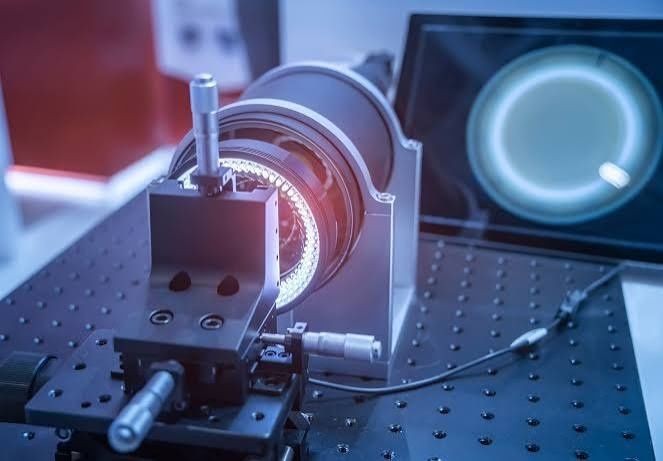
Optical Sensors Explanation: Learn About Light Detection, Sensing Methods and Uses
Optical sensors are devices that detect changes in light and convert those changes into measurable electrical signals or digital information.
They are used in automation, manufacturing, healthcare equipment, communication systems, vehicles, environmental monitoring, consumer electronics, and many other applications.
An optical sensor may detect visible light, infrared radiation, ultraviolet radiation, or a specific wavelength range. Understanding optical sensors, their sensing methods, operating principles, and practical uses helps students, engineers, technicians, and general readers understand how light-based detection works in modern technology.
Context
An optical sensor is an electronic or optoelectronic device that responds to light. Depending on its design, it can detect the presence, absence, intensity, wavelength, position, distance, motion, or other characteristics of light.
The basic process usually involves a light source, an optical path, a sensing element, and signal-processing electronics. A light-emitting diode or laser may provide illumination, while a photodiode, phototransistor, image sensor, or another detector receives the reflected or transmitted light.
Optical sensors can be divided into several common types:
| Optical sensor type | Main detection principle | Common uses |
|---|---|---|
| Photodiode | Converts light into current | Measurement and communication |
| Phototransistor | Uses light to control current | Object detection |
| Photoelectric sensor | Detects interruption or reflection | Industrial automation |
| Infrared sensor | Detects infrared radiation | Motion and proximity |
| Fiber-optic sensor | Uses changes in transmitted light | Industrial and structural monitoring |
| Image sensor | Converts optical information into data | Cameras and machine vision |
The sensing method depends on the application. Through-beam systems detect an object when it interrupts a light path. Reflective systems measure light returned from a target. Diffuse systems detect reflected light directly from an object, while fiber-optic systems transmit optical signals through fibers to or from a sensing location.
Optical sensors can work without physical contact with the object being measured. This characteristic can be useful when direct contact could interfere with a process or when the target is moving.
Importance
Optical sensors matter because light can provide information quickly and without mechanical contact. Their ability to detect small changes in intensity, position, wavelength, or reflected signals supports many forms of automated measurement.
In industrial environments, optical sensing can help identify objects, count components, detect changes in position, monitor production processes, and support machine-vision systems. In healthcare equipment, optical detection can be used for measurements involving light absorption, reflection, or transmission.
Other areas affected by optical sensing include:
- Robotics and automated equipment
- Transportation and vehicle systems
- Consumer electronics
- Telecommunications
- Environmental monitoring
- Laboratory instruments
- Building automation
- Security and monitoring equipment
The performance of an optical sensor depends on several factors. Ambient light, target color, surface texture, distance, alignment, wavelength, temperature, and electronic noise can influence detection results.
For this reason, selecting an optical sensor requires consideration of the physical environment as well as the measurement requirement. A sensor designed for a controlled laboratory environment may not perform in the same way in a dusty industrial setting or under strong outdoor sunlight.
Recent Updates
Recent developments in optical sensors are increasingly focused on smaller devices, improved sensitivity, wider spectral detection, lower power consumption, and integration with digital processing.
One notable research direction involves intelligent photodetectors that process optical information closer to the sensing stage. In June 2026, the U.S. Department of Energy described research into spectral kernel machines that can analyze optical spectra and extract environmental information at high speed while using relatively low power.
Another important development is the expansion of advanced laser-sensing technologies. The IEC published IEC TS 60825-13:2026 in February 2026, providing guidance for radiometric measurements and analysis used in laser-product classification. The document addresses measurement methods for determining laser emission levels and related exposure parameters.
The IEC also published IEC TS 60825-20:2025, which addresses safety considerations for products intentionally exposing the face or eyes to laser radiation, including certain applications involving facial recognition, eye tracking, and gesture detection.
These developments show a broader movement toward combining optical detection with computing. Instead of simply generating a raw signal, some newer systems can perform more processing near the sensing stage, potentially reducing data movement and supporting faster responses.
Laws or Policies
Optical sensors do not follow one universal regulation because requirements depend on the sensor's technology, application, location, and whether it incorporates lasers, LEDs, radio functions, or other electronic components.
For laser-based optical systems, IEC 60825-1 provides a major international reference for laser-product classification and safety requirements. It covers laser radiation from 180 nm to 1 mm and includes requirements concerning classification, information, warnings, and protective measures.
For lamps and LED-based optical radiation, IEC 62471 addresses photobiological safety. It provides exposure limits, measurement methods, and classification approaches for electrically powered incoherent broadband optical radiation, including LEDs, within specified wavelength ranges.
Electronic optical sensors may also fall under broader electronic-equipment requirements. In the European Union, the RoHS Directive restricts specified hazardous substances in electrical and electronic equipment, while the EMC Directive addresses electromagnetic compatibility. Applicability depends on the particular equipment and its scope.
In India, applicable requirements can depend on the equipment category. The Bureau of Indian Standards maintains compulsory registration information for specified electronics and information-technology goods, with product categories and applicable standards defined through government notifications.
Manufacturers, integrators, and users should therefore check the rules applicable to the complete equipment rather than assuming that every optical sensor has the same regulatory requirements.
Tools and Resources
Several resources can help readers learn about optical sensors and understand their technical characteristics.
Useful resources include:
- IEC publications for optical-radiation and laser safety standards
- Bureau of Indian Standards resources for applicable Indian standards
- European Commission resources for RoHS and EMC requirements
- Photonics and optics reference materials for understanding wavelength and detection principles
- Manufacturer datasheets for electrical, optical, and environmental specifications
- Laboratory instruments such as optical power meters and spectrometers for measurement and testing
When studying a sensor datasheet, useful specifications to review include detection range, spectral response, response time, operating temperature, supply voltage, output type, sensing distance, accuracy, and environmental protection rating.
FAQs
What is an optical sensor?
An optical sensor is a device that detects light or changes in optical radiation and converts the detected information into an electrical or digital signal.
How do optical sensors detect objects?
They can detect objects by measuring interruption, reflection, transmission, or changes in the intensity of light. The exact method depends on the sensor design.
Where are optical sensors used?
Optical sensors are used in industrial automation, robotics, vehicles, medical equipment, telecommunications, cameras, environmental monitoring, laboratory instruments, and consumer electronics.
What is the difference between infrared and visible-light sensors?
An infrared sensor responds primarily to infrared radiation, while a visible-light sensor is designed to respond to wavelengths within or around the visible spectrum. Their applications depend on the required detection characteristics.
Are optical sensors affected by ambient light?
Yes. Strong sunlight, artificial lighting, reflections, dust, and other environmental conditions can affect certain optical sensing systems. Sensor design, wavelength selection, shielding, modulation, and signal processing can help manage these effects.
Conclusion
Optical sensors provide a practical way to detect and measure information carried by light. Their applications range from simple object detection to advanced imaging, communication, automation, environmental monitoring, and optical measurement.
Understanding sensing methods, detector types, operating conditions, and applicable safety requirements is important when evaluating an optical sensing system. Recent developments are also bringing more intelligence and processing capabilities closer to the sensor itself.
For learners and technical users, starting with basic concepts such as wavelength, reflection, transmission, photodetection, and signal conversion provides a useful foundation. More advanced study can then examine fiber-optic sensing, spectral detection, machine vision, laser sensing, and intelligent photodetectors.
As optical technologies continue to develop, sensor systems are becoming increasingly integrated with digital electronics and data-processing techniques. Their role in automated and measurement-oriented technologies is therefore expected to remain significant.