Ready-Made Furniture Explained: Types, Materials, Designs, Uses, Benefits and Key Considerations
Ready-made furniture refers to furniture that is manufactured in advance and made available in standard sizes, designs, and configurations. Unlike furniture created specifically for one room or individual requirement, ready-made pieces generally follow predefined measurements and construction methods. They can include beds, tables, chairs, wardrobes, cabinets, sofas, desks, shelves, and storage units.
The development of ready-made furniture is closely connected with changes in housing, manufacturing, and everyday lifestyles. As homes and workplaces became more varied in size and layout, standardized furniture provided a practical way to furnish different spaces using repeatable designs. Modern manufacturing techniques also allow furniture components to be produced consistently and assembled efficiently.
Ready-made furniture can be supplied fully assembled or in separate components that are put together after delivery. Flat-pack furniture is one common example. It typically contains panels, fittings, hardware, and assembly instructions that allow the item to be constructed at its intended location.
Common Types of Ready-Made Furniture
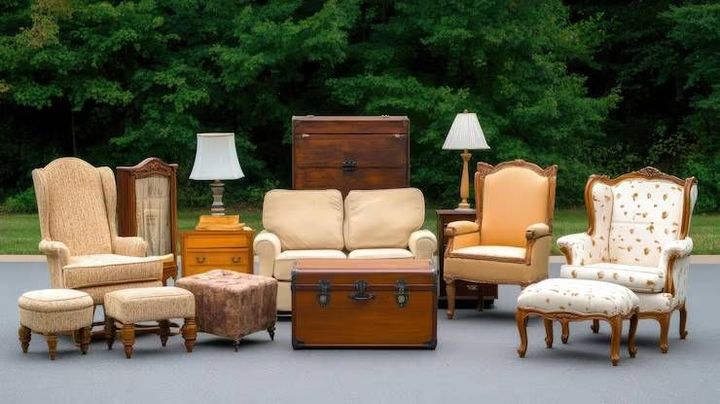
Ready-made furniture is available for many areas of a home, office, educational facility, and other indoor environments. Common categories include:
- Living room furniture: Sofas, coffee tables, television units, side tables, and shelving.
- Bedroom furniture: Beds, wardrobes, bedside tables, dressers, and storage cabinets.
- Dining furniture: Dining tables, chairs, benches, and storage units.
- Office furniture: Desks, work chairs, cabinets, meeting tables, and shelving.
- Storage furniture: Bookcases, cupboards, modular cabinets, and drawer units.
- Outdoor furniture: Tables, chairs, benches, and storage products designed for suitable outdoor conditions.
The type selected usually depends on the room, available space, intended use, and required storage capacity.
Importance
Ready-made furniture matters because furniture has to accommodate different activities while fitting within available space. A dining table, for example, needs enough surface area for meals while allowing people to move around it. A wardrobe needs suitable internal compartments while fitting within the dimensions of a bedroom.
Standardized furniture can also make space planning easier. Because many products are manufactured around established dimensions, users can compare measurements before arranging a room. This is particularly relevant in apartments, offices, classrooms, and other spaces where floor area may be limited.
Benefits and Practical Considerations
Several characteristics explain why ready-made furniture is widely used:
- Standard dimensions: Measurements are generally established before production, making room planning more straightforward.
- Design variety: Furniture is available in traditional, contemporary, minimalist, industrial, and other visual styles.
- Assembly options: Some products arrive assembled, while others are designed for on-site assembly.
- Material choices: Different wood-based panels, solid wood, metals, plastics, glass, and upholstery materials may be used.
- Replaceable components: Certain modular designs use separate panels, shelves, handles, hinges, or other parts.
- Space planning: Modular furniture can help organize storage and work areas according to available floor space.
There are also limitations to consider. Standard dimensions may not fit unusually shaped rooms, narrow passages, or spaces with architectural restrictions. Assembly requirements can also vary, and furniture made from different materials may respond differently to moisture, heat, impact, and repeated use.
Recent Updates
From 2024 through 2026, developments in the Indian furniture sector have included increased attention to standardized product requirements, material specifications, testing, and conformity assessment. The Bureau of Indian Standards maintains a dedicated furniture standards framework covering areas such as chairs, tables, desks, storage units, beds, and related products.
Digital room planning has also become more common. Online furniture platforms and design applications increasingly use measurement tools, room visualization, product dimensions, and digital layouts to help users understand how furniture may fit into a particular space. These tools do not replace physical measurement, but they can support preliminary planning.
Material development is another continuing trend. Wood-based panels, engineered boards, metal components, laminated surfaces, and different upholstery materials are used across contemporary furniture designs. BIS has also published the revised IS 12823:2025 specification covering prelaminated medium-density particle boards made from wood and other lignocellulosic materials.
Modular and compact designs remain relevant as living and working spaces change. Furniture with multiple storage sections, adjustable arrangements, folding components, or integrated functions is increasingly used where space needs to serve several purposes.
Laws or Policies
In India, furniture is influenced by standards and quality-control requirements administered through the Bureau of Indian Standards (BIS). The BIS furniture standards framework includes specifications for work chairs, general-purpose chairs and stools, tables and desks, storage units, beds, and bunk beds.
The Furniture (Quality Control) Order, 2025 brought specified furniture products under a quality-control framework. The BIS listing identifies products such as work chairs, general-purpose chairs and stools, tables and desks, storage units, beds, and bunk beds under the relevant Indian Standards. The framework has also been subject to amendments and transition provisions during 2026.
For upholstered non-domestic furniture, the Protective Textiles Quality Control (Upholstered Composites used for Non-Domestic Furniture) Order, 2024 established requirements for specified protective textile materials used in such furniture. The order was issued under the Bureau of Indian Standards Act, 2016.
Consumers and organizations can consult the BIS standards catalogue to identify relevant Indian Standards. BIS also provides information about standards, product certification, and complaint-related processes through its official platforms.
| Furniture category | Example Indian Standard | Main area covered |
|---|---|---|
| Work chairs | IS 17631:2022 | Work-chair specifications |
| General-purpose chairs and stools | IS 17632:2022 | General seating |
| Tables and desks | IS 17633:2022 | Table and desk requirements |
| Storage units | IS 17634:2022 | Storage furniture |
| Beds | IS 17635:2022 | Bed specifications |
| Bunk beds | IS 17636:2021/2022 listings | Bunk-bed requirements |
The exact regulatory status of a particular furniture product can depend on its category, materials, intended use, and applicable order. Current BIS documentation should therefore be consulted when a specific compliance question arises.
Tools and Resources
Several tools can help readers understand and plan ready-made furniture.
Measurement and Room-Planning Tools
A measuring tape or digital measurement application can help record room dimensions, doorway widths, wall lengths, and available floor space. Room-planning software can then be used to create a basic layout and examine how furniture dimensions relate to the room.
Furniture Dimension Checklists
A simple checklist can record:
- Room length and width
- Ceiling height where relevant
- Door and corridor measurements
- Furniture width, depth, and height
- Clearance around doors and drawers
- Storage capacity
- Assembly requirements
- Material and surface information
- Maintenance instructions
Standards and Information Resources
The BIS standards portal provides a searchable catalogue of Indian Standards and information about furniture-related standards. Its published materials can help readers understand the specifications associated with different furniture categories.
Product documentation is another useful resource. Assembly instructions, material descriptions, care information, dimensions, load information, and warranty terms can help users understand how a particular furniture item is intended to be used and maintained.
FAQs
What is ready-made furniture?
Ready-made furniture is furniture manufactured in standard designs and dimensions before it is selected for a particular space. It includes items such as beds, tables, chairs, wardrobes, cabinets, and desks.
What materials are commonly used in ready-made furniture?
Common materials include solid wood, plywood, particle board, medium-density fibreboard, metal, plastic, glass, and various upholstery materials. A single furniture item may combine several materials.
What are the main types of ready-made furniture?
Common types include bedroom furniture, living room furniture, dining furniture, office furniture, storage furniture, and outdoor furniture. Each category contains different designs based on its intended use.
How does ready-made furniture differ from custom furniture?
Ready-made furniture generally uses predetermined dimensions and designs, while custom furniture is produced around specific measurements or individual requirements. The distinction mainly concerns how the furniture is designed and manufactured.
What should be checked before choosing ready-made furniture?
Important factors include dimensions, material, construction, intended use, available space, assembly requirements, stability, surface finish, storage arrangement, and relevant product documentation. Applicable Indian Standards may also be relevant for certain furniture categories.
Conclusion
Ready-made furniture consists of standardized furniture products designed for common residential, office, institutional, and other uses. Materials, dimensions, construction methods, and designs vary widely across furniture categories. In India, BIS standards and quality-control requirements provide specifications for several furniture products, while recent developments have increased attention to standardized testing and conformity. Understanding dimensions, materials, intended use, assembly requirements, and applicable standards provides a clearer basis for evaluating different ready-made furniture options.