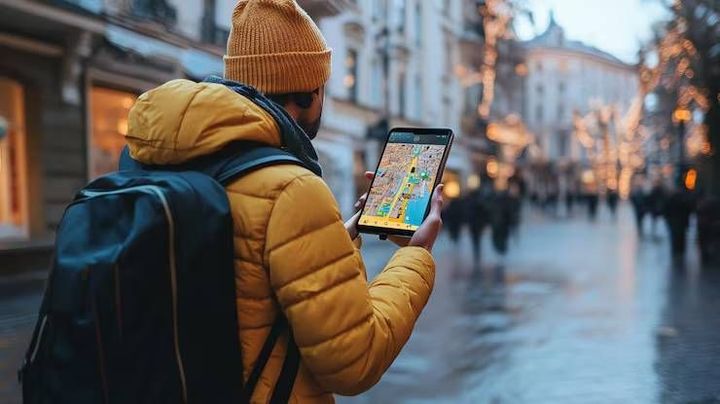
Tracking Travel Guide: Technology, Location Monitoring, Safety Features and Practical Uses
A Tracking Travel Guide explains how modern technology can help people understand, record, and share movement during a journey. Travel tracking can involve smartphone location tools, GPS receivers, navigation applications, wearable devices, vehicle systems, and emergency communication tools. These technologies use location signals and digital maps to show where a person or vehicle is located and how movement changes over time.
Travel tracking developed from basic navigation methods into connected digital systems. Earlier navigation depended heavily on paper maps, road signs, landmarks, and dedicated GPS equipment. Smartphones later combined satellite positioning, mobile networks, digital maps, cameras, sensors, and internet connectivity in a single device.
Today, location monitoring can be used for many practical purposes. A traveler may use it to understand a route, share a current position with family members, find a misplaced device, monitor travel progress, or communicate an emergency location. The technology can work differently depending on the device, network connection, permissions, and geographic environment.
GPS is one of the main technologies involved in travel tracking. A compatible device receives signals from navigation satellites and uses them to estimate its position. Smartphones can also combine GPS with Wi-Fi, mobile networks, Bluetooth signals, and device sensors to improve location information.
Importance
Everyday travel and navigation
Tracking technology can help travelers understand their position while moving through unfamiliar areas. Digital maps can display roads, walking paths, public transportation information, and points of interest. Route monitoring can also show movement toward a selected destination.
Location sharing is particularly useful when people travel together but move separately. A traveler can choose specific people to receive their current location for a selected period. Google Maps, for example, allows users to decide who can see their real-time location and how long sharing remains active.
Travel safety
Location monitoring can provide useful information during unexpected situations. If a traveler becomes lost, a shared location may help another person understand where they are. Emergency systems can also use location information when responding to a request for assistance.
In India, the Emergency Response Support System uses the nationwide 112 emergency number and can receive emergency requests through several communication methods. Its technology includes automatic location identification and digital mapping for emergency response coordination.
Families and group travel
Families may use location tracking when children or older relatives are traveling independently. Group travelers can also use temporary location sharing to coordinate meeting points or understand whether someone has reached a particular destination.
However, tracking depends on permission and device settings. Location information can be sensitive because it may reveal where someone currently is or where they have recently traveled. For this reason, users should understand which applications have location access and which people can see shared information.
Common practical uses
Travel tracking can support several everyday activities:
- Navigation during road, walking, cycling, or public transportation journeys
- Sharing current location with selected contacts
- Monitoring arrival and departure information
- Finding a misplaced smartphone or compatible device
- Recording routes for personal reference
- Supporting emergency communication
- Coordinating movement during group trips
- Reviewing travel routes after a journey
Recent Updates
More integrated location technology
From 2024 through 2026, travel tracking has continued moving toward integrated smartphone and connected-device experiences. Location information is increasingly connected with digital maps, personal safety functions, device-finding systems, and transportation tools.
Google's current location-sharing system can be used through applications such as Maps, Messages, Find Hub, Family Link, and Personal Safety. Depending on the sharing arrangement, recipients may see information such as real-time location and battery status.
Device finding and location sharing
Modern device ecosystems have also expanded location-sharing functions. Google's Find Hub, for example, supports real-time location sharing, map-based location viewing, privacy controls, and notifications related to arrival or departure from selected places.
These developments mean that travel tracking is no longer limited to dedicated GPS units. A smartphone, smartwatch, tablet, or compatible vehicle system may participate in location monitoring depending on its hardware and software.
Greater attention to personal data
Privacy has become an important part of location technology. Location information can reveal movement patterns, frequently visited places, and travel routines. Recent data-protection developments therefore place greater attention on how digital personal information is collected, used, stored, and protected.
India notified the Digital Personal Data Protection Rules, 2025, with different provisions taking effect according to the implementation schedule specified in the rules. The framework provides additional detail around the implementation of India's Digital Personal Data Protection Act, 2023.
Laws or Policies
Digital personal data protection in India
India's Digital Personal Data Protection Act, 2023 establishes a framework for processing digital personal data. The Act covers digital personal data processed within India and can also apply to certain processing outside India connected with activities involving individuals in India.
Location information may form part of digital personal information when it is connected with an identifiable individual. Applications and organizations handling such information therefore need to consider applicable privacy and data-protection requirements.
The Digital Personal Data Protection Rules, 2025 provide additional implementation details. The rules use a phased commencement structure, meaning different provisions become applicable according to the schedule stated in the notification.
Emergency communication
Travelers in India should also be aware of the national 112 emergency system. The system is designed to provide a unified emergency number and supports voice calls, SMS, web requests, email, and panic-alert functions. Location information may be transmitted as part of an emergency request.
Location permissions
Privacy controls also exist at the device and application level. Users can normally decide whether an application can access location information and whether real-time location should be shared with particular people. The exact controls vary according to the operating system, application, device, and account configuration.
Travelers should distinguish between navigation access and continuous location sharing. A map application may need location access to calculate a route, while sharing a live position with another person is a separate function.
Tools and Resources
Several types of digital tools can support a Tracking Travel Guide and everyday location monitoring.
| Tool or resource | Typical purpose | Information involved |
|---|---|---|
| GPS receiver | Position calculation | Satellite signals |
| Digital maps | Navigation and route planning | Roads, routes, locations |
| Location sharing | Coordinating with selected people | Current position |
| Device-finding tools | Locating compatible devices | Device location |
| Emergency systems | Requesting assistance | Location and emergency details |
| Travel journals | Recording journeys | Routes, notes, dates |
| Vehicle navigation systems | Road navigation | Position, route, traffic information |
Google Maps includes location-sharing controls that allow users to select recipients and determine how long sharing continues. It also supports trip-progress sharing during navigation.
Find Hub provides another type of location resource for compatible devices and supports location sharing, map-based viewing, and controls for managing shared locations.
For emergencies in India, the official 112 India system provides information about emergency communication options, including the 112 number and related digital tools.
Before using a tracking tool, travelers should review location permissions, account settings, sharing duration, and connected devices. Battery level and internet availability can also affect how location information is displayed.
FAQs
What is a Tracking Travel Guide?
A Tracking Travel Guide explains how GPS, smartphones, digital maps, location sharing, and related technologies can be used to understand and monitor travel movement. It can cover navigation, safety, device finding, route records, and practical travel coordination.
How does location monitoring work during travel?
Location monitoring can combine satellite positioning with mobile networks, Wi-Fi, Bluetooth, and device sensors. The exact method depends on the device and application. Internet access may be required for some location-sharing and map functions.
Is travel location sharing private?
Location sharing is controlled through device, application, and account settings. Users can usually choose specific people and, in supported applications, set a duration for sharing. Google states that its Location Sharing setting is off by default and becomes active when a user shares their location through a supported Google application or feature.
Can travel tracking help during an emergency?
Location information can assist emergency communication when a compatible system transmits it to an emergency response center. In India, the 112 system supports automatic location identification as part of its emergency response framework.
What should travelers check before using location monitoring?
Travelers should check location permissions, battery level, internet connectivity, sharing recipients, and the duration of location sharing. They should also understand what information the selected application displays to other people.
Conclusion
Travel tracking combines GPS, smartphones, digital maps, connected devices, and emergency communication technologies to support navigation, coordination, and location awareness. Modern systems provide more ways to share and manage travel locations, while privacy controls have become an important part of the technology. In India, data-protection rules and the 112 emergency framework provide relevant policy and safety context. Understanding how location monitoring works can help travelers interpret the information produced by these technologies and their associated privacy settings.