Underwater Hotels Basics With Architecture, Marine Views, and Travel Planning
Underwater hotels are accommodation concepts or operating properties that place guest rooms, suites, lounges, or other spaces below the surface of a body of water.
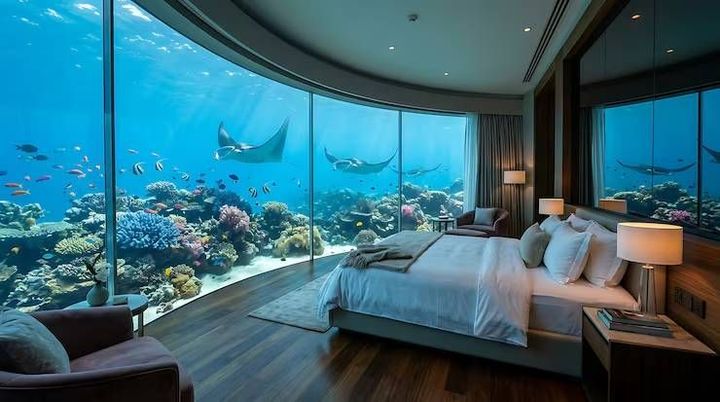
Their defining feature is the opportunity to view the surrounding marine environment through specially designed transparent windows while remaining inside a protected structure. Depending on the design, underwater spaces may be positioned fully beneath the water or connected to structures located above the surface.
The concept comes from a long interest in underwater architecture and marine observation. Engineers, architects, researchers, and tourism developers have explored submerged structures for different purposes, including scientific observation, marine research, recreation, and hospitality.
Underwater accommodation combines architecture, structural engineering, waterproofing, environmental planning, interior design, and tourism. The design must account for water pressure, buoyancy, corrosion, access, ventilation, emergency procedures, electricity, communications, and environmental conditions.
Not every underwater hotel has the same structure. Some designs use underwater rooms connected to a larger above-water resort, while others use partially submerged buildings. Certain concepts have been proposed but never developed into operating properties, so travelers need to distinguish between completed accommodations and architectural concepts.
How Underwater Hotels Are Designed
A submerged guest space must withstand the physical conditions surrounding it. Water pressure increases with depth, meaning structural components and transparent viewing panels must be engineered for the intended operating depth.
A typical underwater accommodation concept can involve:
Structural shell or pressure-resistant enclosure
Reinforced viewing windows
Waterproof seals and connections
Access tunnels or entry structures
Ventilation and climate-control equipment
Electrical and communication systems
Emergency access arrangements
Water and wastewater infrastructure
Corrosion-resistant construction materials
The surrounding marine environment also affects design. Currents, waves, tides, temperature, visibility, sediment, and marine organisms can influence where and how an underwater structure can be placed.
Marine Views
Marine views are a central architectural feature of underwater hotels. Large transparent panels can provide views of fish, coral, plants, sand, rock formations, and changing underwater light conditions.
Visibility is not constant. Water clarity can change because of weather, tides, sediment, plankton, currents, and local marine conditions. The actual view from an underwater room can therefore differ from photographs or architectural renderings.
Importance
Underwater hotels are significant because they combine tourism with specialized architecture and marine environments. They provide a different form of accommodation while creating opportunities to observe underwater ecosystems without entering the water directly.
The concept also raises questions about environmental impact, construction methods, emergency planning, accessibility, and long-term maintenance. These considerations are important because marine structures operate in conditions that differ substantially from conventional buildings on land.
Who Uses Underwater Accommodation?
Underwater accommodation can appeal to travelers interested in architecture, marine environments, unusual travel experiences, photography, ocean observation, and destination tourism.
Travelers may also use underwater spaces as part of a broader resort itinerary that includes activities above the surface. Depending on the destination, nearby activities can include snorkeling, diving, boating, wildlife observation, beaches, cultural visits, and nature excursions.
Architecture and Engineering
Underwater architecture has several technical challenges. The structure must resist external water pressure while maintaining a comfortable interior environment.
Transparent viewing panels require particular attention because they are exposed to pressure differences between the interior and surrounding water. Their shape, thickness, material, support structure, and attachment method are determined through engineering calculations.
Corrosion is another consideration. Saltwater can accelerate deterioration of many metals and construction materials. Protective coatings, material selection, inspection, and maintenance planning are therefore important parts of marine architecture.
Environmental Considerations
Underwater hotels can interact directly with marine ecosystems. Construction activity can disturb sediment, habitats, and marine organisms, while lighting and physical structures can alter conditions around the installation.
Environmental assessment may examine factors such as:
Marine habitat sensitivity
Water circulation
Construction disturbance
Wastewater management
Lighting effects
Noise
Waste handling
Anchoring or foundation methods
Long-term maintenance activities
The environmental requirements depend on the location and ecosystem.
Recent Updates
From 2024 through 2026, underwater hospitality has continued to attract interest through architectural concepts, marine tourism projects, advanced materials, and immersive travel design. The wider hospitality sector has also continued exploring accommodations that connect guests more closely with natural environments.
Immersive Travel Design
Modern hospitality design increasingly incorporates nature as part of the guest environment. Underwater rooms take this concept further by placing marine landscapes directly within the visual field of the accommodation.
Technology can enhance this experience through underwater lighting, high-quality glazing, marine observation systems, and digital information displays. These technologies can help explain the surrounding ecosystem without altering the physical environment.
Structural Materials
Developments in materials engineering continue to influence marine architecture. High-performance polymers, specialized glass, corrosion-resistant alloys, composite materials, advanced sealants, and protective coatings can contribute to underwater construction.
Material selection must account for pressure, water exposure, temperature changes, ultraviolet exposure where applicable, biological growth, and long-term maintenance.
Energy and Environmental Systems
Underwater facilities require systems for ventilation, cooling, heating, lighting, water treatment, wastewater management, and electricity. Energy planning can therefore be more complex than in a conventional hotel room.
Some marine hospitality projects explore renewable energy, efficient lighting, heat management, water conservation, and other environmental approaches. The practical application depends on location, infrastructure, and engineering requirements.
Digital Travel Planning
Travel planning for unusual accommodation has also become increasingly digital. Travelers can use mapping applications, weather tools, transportation planners, booking platforms, and itinerary applications to organize complex journeys.
Because underwater hotels can be located within remote resorts or offshore environments, transportation connections may require additional planning compared with conventional city accommodation.
Laws or Policies
Underwater hotels are affected by tourism rules, building requirements, marine environmental regulations, coastal management policies, maritime rules, health and safety requirements, and local planning laws. The exact framework depends on the country and location.
Marine and Coastal Permissions
Structures placed in marine environments may require authorization from agencies responsible for coastal zones, marine habitats, navigation, environmental protection, or local development.
Environmental assessments can examine how construction and operation may affect marine ecosystems. Protected areas may have additional restrictions concerning construction, anchoring, lighting, waste, or visitor activity.
Building and Structural Requirements
An underwater hotel must comply with applicable structural and safety requirements. These may address pressure resistance, emergency access, fire protection, electrical systems, ventilation, evacuation routes, structural inspection, and occupancy conditions.
The technical standards used for submerged structures can differ from those applied to conventional buildings because underwater environments create additional pressure and access considerations.
Tourism and Guest Safety
Hospitality properties must generally comply with applicable accommodation, sanitation, fire safety, accessibility, and emergency requirements. Underwater properties can require additional emergency procedures because access to the surface may involve tunnels, lifts, vessels, or other specialized routes.
Travelers should understand the property's emergency arrangements and any restrictions associated with marine conditions or access methods.
Tools and Resources
Planning an underwater hotel trip involves several types of travel and technical resources. Mapping platforms can help identify the property's location relative to airports, ports, islands, beaches, and other destinations.
Weather applications can provide information about rainfall, wind, waves, visibility, and marine conditions. These factors may influence boat transfers, diving activities, and other water-based travel plans.
Useful resources include:
Digital maps
Travel itinerary planners
Weather applications
Marine weather information
Transportation planners
Accommodation information platforms
Currency conversion tools
Packing checklists
Diving and snorkeling planning resources
Travel insurance information
Destination accessibility guides
Local tourism information
A simplified comparison of underwater accommodation characteristics is shown below:
| Feature | Underwater Accommodation | Conventional Coastal Hotel | Floating Accommodation |
|---|---|---|---|
| Main Environment | Below water | On land near water | On water |
| Marine Views | Direct underwater views | Usually from above water | Surface-level views |
| Structural Challenge | Water pressure and sealing | Conventional building loads | Buoyancy and movement |
| Access | Specialized access may be required | Standard building access | Dock or marine access |
| Environmental Factors | Marine ecosystem interaction | Coastal environment | Water movement and weather |
| Maintenance | Marine exposure | Land-based exposure | Marine exposure |
Travel Planning
Travelers considering underwater hotels may need to examine more than room availability. The location of the property, transfer arrangements, weather conditions, accessibility, and surrounding activities can all affect the overall itinerary.
A useful planning sequence can include:
Confirming the accommodation location
Checking transfer arrangements
Reviewing seasonal weather conditions
Understanding marine activity schedules
Checking accessibility information
Reviewing cancellation and booking terms
Planning surrounding activities
Allowing additional travel time for remote locations
Marine Visibility
Marine visibility can change throughout the day and across seasons. Water movement can bring sediment into the viewing area, while weather can affect surface conditions and light penetration.
For this reason, underwater views should be understood as naturally changing rather than as a fixed feature. Photographs can illustrate a location, but they cannot guarantee identical visibility during every stay.
FAQs
What are underwater hotels?
Underwater hotels are accommodation facilities that include guest rooms or other spaces located beneath the surface of a body of water. They use specially engineered structures and viewing panels to provide marine views from inside.
How are underwater hotels designed?
Underwater hotels require structural systems capable of handling water pressure, along with waterproofing, ventilation, electrical systems, emergency access, and corrosion-resistant materials. The design also considers the surrounding marine environment.
Can guests see marine life from underwater hotel rooms?
Some underwater rooms are designed with large viewing panels that allow guests to observe surrounding marine environments. Visibility depends on water clarity, lighting, weather, sediment, marine conditions, and the location of the property.
Are underwater hotels environmentally regulated?
Marine structures can be subject to environmental assessments, coastal regulations, marine habitat protections, construction permissions, and wastewater requirements. Specific rules depend on the country, location, and ecosystem.
What should travelers consider when planning an underwater hotel stay?
Travelers should consider location, transportation, weather, marine conditions, accessibility, emergency arrangements, accommodation policies, and nearby activities. Remote underwater properties may require additional transfer planning.
Conclusion
Underwater hotels combine hospitality with marine architecture, structural engineering, and direct views of underwater environments. Their design must address water pressure, waterproofing, corrosion, ventilation, emergency access, energy systems, and environmental considerations. Recent developments have included immersive travel concepts, advanced construction materials, digital planning tools, and greater attention to marine sustainability. Travel planning also needs to account for location, transportation, weather, water conditions, and applicable tourism and environmental requirements.