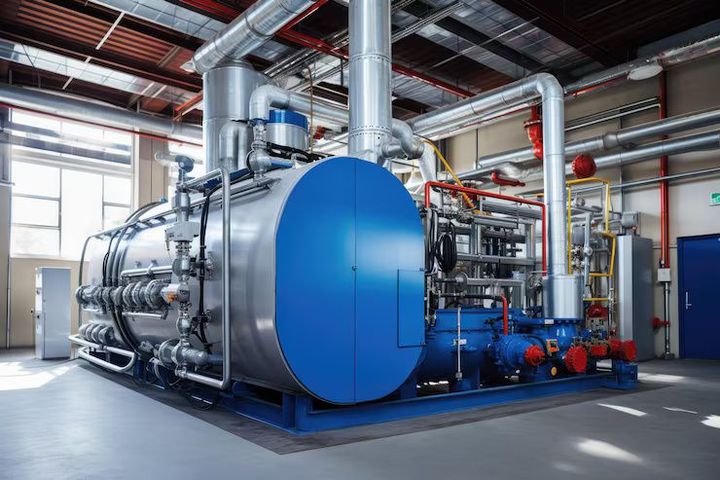
Water Tube Boilers Discover: Construction Methods, Steam Production, Applications and Features
Water tube boilers are steam-generating systems in which water flows through tubes while hot gases produced by combustion pass around the outside of those tubes. Heat moves through the tube walls and converts the water into steam. This arrangement differs from fire tube boilers, where hot gases travel through tubes surrounded by water.
The basic idea developed as industries needed steam at higher pressures and temperatures than some early boiler designs could practically provide. As engineering methods improved, water tube construction became increasingly useful for power generation and industrial processes where controlled steam production is important.
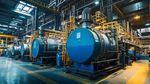
A typical water tube boiler contains several connected parts, including a furnace, water tubes, steam drum, mud drum or lower header, superheater, economizer, burners, feedwater equipment, and piping. The exact arrangement depends on the pressure, steam capacity, fuel, and intended application.
Basic Construction
The construction of a water tube boiler is based on circulating water through tubes exposed to heat. Feedwater enters the system and moves through designated tubes or headers. Heat from combustion raises the water temperature until part of it changes into steam.
The steam-water mixture generally moves toward a steam drum or another separation area. Water can return through downcomers while steam separates and moves toward the superheater or steam outlet. In some designs, circulation occurs naturally because of density differences; other designs use pumps to control circulation.
Main Components
Important components commonly include:
- Furnace: The area where fuel combustion produces heat.
- Water tubes: Tubes containing water or a water-steam mixture.
- Steam drum: A vessel used to separate steam from circulating water in many designs.
- Headers: Components that distribute and collect water or steam from groups of tubes.
- Superheater: Raises the temperature of steam beyond its saturation point.
- Economizer: Uses heat from exhaust gases to warm incoming feedwater.
- Air preheater: Transfers heat from flue gases to combustion air in applicable designs.
- Burner system: Controls the introduction and combustion of fuel.
- Safety equipment: Includes pressure-relief and monitoring components designed to control operating risks.
Importance
Water tube boilers matter because steam remains important in many industrial processes. Steam can transfer heat, drive turbines, support chemical processes, sterilize equipment, dry materials, and provide controlled heating.
Industries such as power generation, chemicals, food processing, paper production, textiles, refining, and manufacturing can use steam as part of their production systems. The boiler therefore forms one part of a larger energy and process network rather than operating as an isolated machine.
Steam Pressure and Heat Transfer
One significant feature of water tube construction is that relatively small quantities of water are contained inside individual tubes compared with some large-vessel boiler arrangements. Tube geometry also provides a large heated surface relative to the amount of water in each tube.
This design can support rapid heat transfer and controlled steam generation. However, actual performance depends on boiler design, operating pressure, fuel characteristics, feedwater quality, combustion control, heat losses, and maintenance practices.
Why Water Quality Matters
Water contains minerals, dissolved gases, and other substances that can affect boiler operation. When water is heated, some dissolved materials can concentrate and form deposits on heat-transfer surfaces.
Common concerns include scale, corrosion, carryover, and excessive dissolved solids. Water treatment and monitoring are therefore important parts of boiler operation because deposits can reduce heat transfer and contribute to tube damage.
Water Tube and Fire Tube Boilers
The two major boiler arrangements can be understood through their flow paths.
| Feature | Water Tube Boiler | Fire Tube Boiler |
|---|---|---|
| Water flow | Inside tubes | Around tubes |
| Hot gases | Around tubes | Inside tubes |
| Typical pressure capability | Suitable for many high-pressure applications | Often used for lower-pressure applications |
| Steam response | Can support rapid steam generation in suitable designs | Generally has greater stored water volume |
| Common applications | Power generation and large industrial processes | Heating and smaller industrial processes |
| Construction | Multiple tubes, headers and drums may be used | Large pressure vessel with fire tubes |
These are general distinctions rather than absolute rules. Individual boiler designs can differ substantially.
Recent Updates
From 2024 through 2026, developments surrounding industrial boilers have increasingly focused on energy efficiency, emissions reduction, heat recovery, automation, and alternative heat sources. The broader industrial sector has also been examining ways to reduce energy intensity and improve process control. The International Energy Agency reported that global energy-efficiency improvement was estimated to accelerate in 2025 compared with 2024, while industrial energy demand remained a major part of overall energy use.
Efficiency and Heat Recovery
Modern boiler systems increasingly incorporate equipment such as economizers, air preheaters, improved insulation, combustion controls, and monitoring systems. These technologies can recover or reduce avoidable heat losses and help operators understand changes in operating conditions.
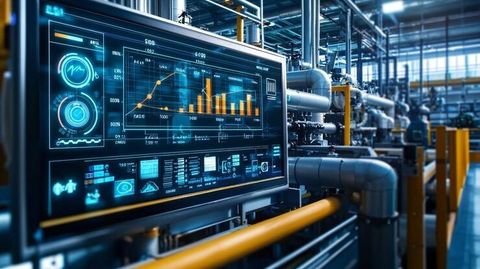
Digital monitoring is also becoming more common. Sensors and control systems can track pressure, temperature, water level, fuel flow, oxygen levels, and other operating parameters. Data can then support process monitoring and maintenance planning.
Electrification and Industrial Steam
Another development is greater attention to electric boilers and other electrified industrial heating technologies. The IEA reported that electric boilers can generate industrial steam and that electrification of low-temperature heat and steam is being examined alongside renewable electricity, thermal storage, and efficiency measures.
This does not mean conventional water tube boilers are being universally replaced. Fuel availability, steam pressure requirements, electricity infrastructure, operating conditions, and the characteristics of each industrial facility all influence which technology is practical.
Automation and Monitoring
Automation can connect boiler instrumentation with plant control systems. Operators can monitor trends and receive alerts when measured conditions move outside defined ranges.
Such systems may help with combustion management, feedwater control, drum-level management, and equipment monitoring. Human supervision and appropriate inspection remain important because automated measurements do not eliminate mechanical or operational risks.
Laws or Policies
In India, boiler safety is governed by national legislation and related regulations. A major recent change was the Boilers Act, 2025, which came into force on May 1, 2025. The Act provides a framework for regulating boilers and boiler components, including registration and inspection during manufacture, erection, and use.
Boilers Act, 2025
The legislation establishes requirements intended to address the safety of people and property from hazards associated with steam boilers. It also provides for authorities, inspection arrangements, recognition of competent persons, and regulatory provisions concerning boiler components.
For an industrial facility, the exact requirements can depend on the boiler, its location, operating conditions, and applicable rules. Owners and operators therefore need to follow the requirements applicable to their installation rather than relying only on general descriptions.
Indian Boiler Regulations
The Indian Boiler Regulations, 1950 have historically provided detailed technical requirements relating to boiler construction, materials, inspection, testing, and related components. The regulations have been amended over time, including amendments concerning inspection and assessment of older boilers.
State authorities also have an important role in boiler inspection and administration. Requirements can include registration, inspection, certification, and operating controls. Current regulatory documents should be checked for the specific state and installation.
Tools and Resources
Several resources can help readers understand water tube boilers and their operating principles.
Boiler Calculators
Engineering calculators can estimate relationships involving steam generation, heat transfer, pressure, temperature, feedwater conditions, and fuel consumption. These calculations are useful for learning, but actual boiler design requires engineering analysis and applicable technical standards.
Monitoring Instruments
Common boiler instrumentation includes:
- Pressure gauges and transmitters
- Temperature sensors
- Water-level indicators
- Flow meters
- Flue-gas analyzers
- Oxygen measurement systems
- Feedwater monitoring equipment
- Vibration and equipment-condition sensors
These instruments help operators observe operating conditions and identify changes that may require investigation.
Government and Technical Resources
For readers in India, India Code provides access to national legislation, including the Boilers Act, 2025. The Central Boilers Board and relevant state boiler authorities are also important sources for regulatory information. The IEA publishes research covering industrial energy efficiency, industrial heat, electrification, and related technology developments.
FAQs
What is a water tube boiler?
A water tube boiler is a steam-generating system in which water flows through tubes exposed to hot combustion gases. Heat passes through the tube walls and converts water into steam.
How does steam production work in a water tube boiler?
Feedwater enters the boiler and circulates through heated tubes. As heat is transferred to the water, it becomes a mixture of water and steam, which is separated in an appropriate part of the system before steam continues toward the outlet or superheater.
What are the main applications of water tube boilers?
Water tube boilers are used in power generation and industrial processes that require steam. Applications can include chemical processing, paper production, food processing, textiles, refining, and various manufacturing operations.
What are the main features of water tube boiler construction?
Common features include water-filled tubes, headers, a furnace, circulation paths, steam separation equipment, and, depending on the design, superheaters and economizers. These components work together to transfer heat and produce controlled steam.
Why are water treatment and inspection important for water tube boilers?
Water treatment helps control deposits, corrosion, and other water-related problems. Inspection helps identify conditions affecting pressure-containing components and supports compliance with applicable boiler safety requirements.
Conclusion
Water tube boilers generate steam by circulating water through tubes exposed to hot gases, making them suitable for many industrial and power applications. Their construction can include drums, headers, superheaters, economizers, burners, instrumentation, and circulation systems. Recent developments have emphasized energy efficiency, heat recovery, digital monitoring, and electrification of industrial heat. In India, the Boilers Act, 2025 provides the current national legislative framework for boiler regulation, while technical regulations and state-level administration remain important to safe and compliant operation.