Aggregate Testing Machines Information With Construction Standards and Laboratory Testing Technology
Aggregate testing machines are laboratory instruments used to evaluate the physical and mechanical properties of aggregates used in construction.
Aggregates include sand, gravel, crushed stone, and other granular materials that form essential components of concrete, asphalt mixtures, road foundations, and drainage systems. Their properties influence the strength, durability, stability, and performance of finished structures.
Aggregate testing machines help laboratories determine whether these materials meet specified technical requirements. Depending on the test, equipment can measure particle size, resistance to crushing, abrasion, impact, water absorption, and particle shape. The results provide engineers, construction laboratories, and quality control teams with information about the suitability of aggregates for particular applications.
How Aggregate Testing Technology Developed
Aggregate testing evolved alongside modern construction practices and the development of standardized laboratory procedures. Early testing relied heavily on manual measurements, sieving, weighing, and mechanical loading. As construction projects became more complex, laboratories adopted specialized equipment to improve repeatability and document material properties more consistently.
Modern aggregate testing technology combines mechanical instruments, electronic weighing systems, digital displays, and computer-based data recording. Although many procedures still require manual preparation, automated features can reduce repetitive work and help laboratory technicians maintain consistent testing conditions.
Common Types of Aggregate Testing Machines
Different instruments examine different material characteristics. No single machine can determine every property required for construction approval.
Sieve analysis equipment separates aggregate particles according to their size.
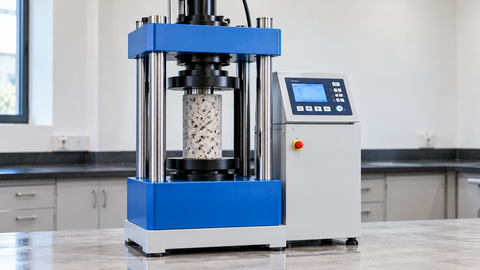
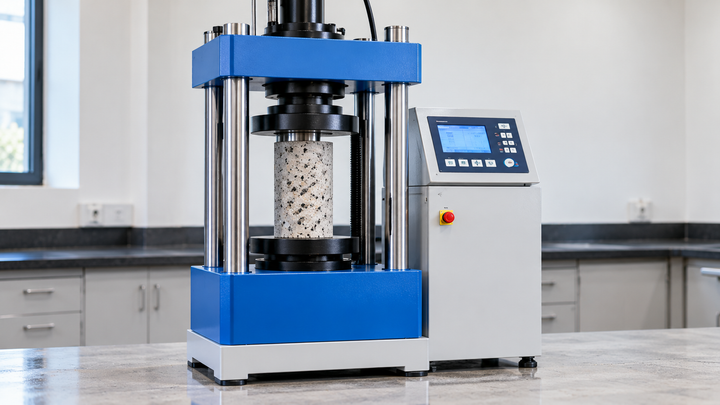
Aggregate crushing value apparatus evaluates resistance to compressive loading under a specified procedure.
Los Angeles abrasion machines assess resistance to abrasion and degradation.
Aggregate impact testing equipment evaluates resistance to sudden impact.
Specific gravity and water absorption equipment measures density-related properties and water uptake.
Flakiness and elongation gauges help classify particles according to their dimensions and shape.
The equipment selected depends on the material, intended application, laboratory procedure, and applicable construction specification.
Importance
Why Aggregate Testing Matters in Construction
Aggregates can vary considerably depending on their geological origin, production process, particle shape, and storage conditions. Two materials that appear similar may behave differently when incorporated into concrete or road construction. Laboratory testing helps identify these differences before materials are used in significant quantities.
In concrete, aggregate grading and particle characteristics affect workability, density, and the amount of cementitious material needed for a particular mixture design. In road construction, aggregate strength and abrasion resistance influence how well pavement materials withstand traffic loading and repeated environmental exposure.
Reliable testing also helps identify potential problems, including excessive fines, unsuitable particle shapes, weak materials, and inconsistent grading. Detecting these characteristics during material assessment can support better quality control and reduce the likelihood of construction defects associated with unsuitable aggregates.
Who Uses Aggregate Testing Equipment?
Several professional groups depend on aggregate testing machines for material evaluation and documentation.
Construction material laboratories use equipment to conduct routine tests and prepare technical reports.
Civil engineers interpret results when evaluating materials for concrete, asphalt, and road foundations.
Aggregate producers monitor material consistency during crushing, screening, and processing.
Infrastructure contractors verify that delivered materials meet project specifications.
Research institutions study aggregate behavior and develop or evaluate construction mixtures.
Inspection and quality assurance teams review test records during project assessments.
For the general public, aggregate testing has an indirect but important connection to roads, bridges, buildings, pavements, and other infrastructure. Proper material evaluation supports construction quality, although the final performance of a structure also depends on design, workmanship, maintenance, and environmental conditions.
Common Testing Challenges
Laboratories must manage several factors to produce dependable results. Incorrect sample preparation, contaminated sieves, worn machine components, inaccurate weighing instruments, and inconsistent testing procedures can affect measurements.
Representative sampling is especially important because aggregate properties may vary throughout a stockpile or production batch. A technically sound test performed on an unrepresentative sample may not accurately describe the material being assessed.
Recent Updates
Digital Measurement and Laboratory Automation
Recent developments in laboratory testing increasingly emphasize digital measurement, electronic recordkeeping, and automated data processing. Modern equipment may include programmable controls, digital timers, electronic load measurement, and interfaces for transferring results to laboratory information systems.
These capabilities can improve traceability and reduce transcription errors. However, digital displays and automated calculations do not independently establish that a test is valid. Equipment condition, calibration, sample preparation, and compliance with the applicable test method remain important.
Data Management and Quality Control
Laboratories are increasingly organizing test results in digital databases rather than relying entirely on handwritten registers. Structured records can help compare results across batches, identify unusual variations, and prepare reports for engineers or project inspectors.
Some facilities also use laboratory information management systems to track sample identification, testing status, equipment maintenance, and approval records. The usefulness of these systems depends on data quality, staff training, and suitable access controls.
Current Equipment Design Trends
Aggregate testing equipment continues to evolve toward improved usability, more consistent measurement, and easier maintenance. Manufacturers may incorporate safer guards, clearer controls, replaceable components, and digital interfaces into laboratory instruments.
Environmental considerations are also relevant. Efficient sample handling, appropriate dust control, durable equipment components, and responsible management of laboratory waste can support better laboratory operations. These developments do not replace established testing procedures; they provide ways to carry them out and document them more effectively.
Laws or Policies
Construction Standards and Testing Procedures
Aggregate testing is influenced by national standards, recognized international methods, contractual specifications, and project-specific technical requirements. These documents define matters such as sample preparation, apparatus dimensions, testing conditions, calculation methods, reporting formats, and acceptance criteria.
In India, aggregate testing and construction materials may be governed by relevant Bureau of Indian Standards (BIS) publications, Indian Roads Congress guidance, and applicable specifications issued by public infrastructure authorities. The appropriate requirements depend on whether the aggregate is intended for concrete, road construction, railway infrastructure, or another application.
Internationally, ASTM International and other standards organizations publish testing methods used in different construction and laboratory settings. A method recognized in one project or jurisdiction should not automatically be assumed to satisfy another project's requirements.
Laboratory Accreditation and Equipment Calibration
Laboratory accreditation can help demonstrate that testing activities follow defined quality and technical procedures. In India, the National Accreditation Board for Testing and Calibration Laboratories (NABL) operates an accreditation framework for testing and calibration laboratories. Accreditation requirements and the laboratory's approved scope determine which activities are covered.
Calibration and verification are also important. Load-measuring devices, balances, timers, and other relevant instruments should be checked according to the applicable method, manufacturer instructions, and laboratory quality procedures. Equipment maintenance records and calibration certificates help establish traceability, but they do not replace proper operation.
Examples of Common Standards and Their Applications
Standard or framework | General application |
|---|---|
IS 2386 series | Methods for testing aggregates for concrete |
IS 383 | Specifications for coarse and fine aggregates used in concrete |
ASTM C136/C136M | Sieve analysis of fine and coarse aggregates |
ASTM C131/C131M | Resistance to degradation of smaller-size coarse aggregate using the Los Angeles machine |
ASTM C127 | Relative density and absorption of coarse aggregate |
ISO/IEC 17025 | Competence requirements for testing and calibration laboratories |
The precise edition, scope, and applicability of each document must be verified for the relevant project. Standards may be revised, and a contract may specify a particular edition or additional acceptance conditions.
Tools and Resources
Equipment Selection and Testing Resources
Selecting aggregate testing machines requires an understanding of the required test methods and the laboratory's workload. Important considerations include the aggregate size range, testing capacity, measurement range, operating requirements, available laboratory space, and compatibility with the applicable standard.
Laboratories can use technical specifications, equipment manuals, standard operating procedures, and maintenance checklists to organize testing activities. A documented equipment register can record instrument identification, installation details, calibration status, maintenance history, and inspection dates.
Useful Laboratory Calculations
Several calculations are routinely used in aggregate testing. Results should be calculated according to the relevant standard rather than applying one formula to every test.
For sieve analysis, the percentage retained on a sieve is generally calculated by dividing the mass retained by the original sample mass and multiplying by 100. Cumulative retained percentages and percentages passing are then determined from the recorded measurements.
Water absorption is commonly calculated using the difference between the saturated surface-dry mass and the oven-dry mass, expressed as a percentage of the oven-dry mass. Crushing value and abrasion loss calculations follow their respective test procedures and specified measurement conventions.
Comparing Equipment Requirements
The following table summarizes practical factors to examine when evaluating laboratory equipment.
Equipment category | Main measurement purpose | Important consideration |
|---|---|---|
Sieve shaker | Particle-size distribution | Sieve compatibility and shaking consistency |
Crushing value apparatus | Resistance to crushing | Loading arrangement and specified dimensions |
Los Angeles abrasion machine | Resistance to degradation | Drum configuration and rotational control |
Impact testing apparatus | Resistance to impact | Drop height and prescribed operating procedure |
Digital weighing balance | Sample mass | Capacity, resolution, and calibration |
Specific gravity apparatus | Density and water absorption | Temperature control and measurement procedure |
Documentation and Technical Resources
BIS publications, ASTM test methods, relevant road construction specifications, laboratory accreditation documents, and equipment operating manuals provide useful technical information. Laboratories should maintain the applicable versions and ensure that technicians understand the procedures relevant to their responsibilities.
FAQs
What Are Aggregate Testing Machines Used For?
Aggregate testing machines evaluate particle size, strength-related characteristics, abrasion resistance, impact resistance, density, water absorption, and particle shape. The results help determine whether aggregates meet the technical requirements of a particular construction application.
Which Aggregate Testing Machines Are Used in Concrete Laboratories?
Common instruments include sieve shakers, crushing value apparatus, specific gravity equipment, water absorption testing equipment, and particle-shape gauges. The exact selection depends on the required tests and the applicable aggregate specification.
Which Standards Apply to Aggregate Testing Machines in India?
Relevant documents can include the IS 2386 series for aggregate testing and IS 383 for aggregates used in concrete. Project requirements may also refer to road construction specifications or other applicable technical standards.
Why Is Calibration Important for Aggregate Testing Equipment?
Calibration helps establish the relationship between an instrument's measurements and recognized reference values. Appropriate calibration, verification, and maintenance support measurement reliability and help laboratories identify equipment that requires adjustment or repair.
How Does Digital Technology Improve Aggregate Laboratory Testing?
Digital controls and electronic records can simplify data collection, reduce manual transcription, and improve sample traceability. The accuracy of the final result still depends on proper sampling, equipment condition, technician competence, and adherence to the prescribed test method.
Conclusion
Aggregate testing machines help laboratories evaluate the physical and mechanical properties of materials used in concrete, asphalt, and other construction applications. Standardized procedures, suitable equipment, representative sampling, and appropriate calibration contribute to reliable testing results. Digital measurement and laboratory data management are improving how results are recorded and reviewed. Applicable construction standards and laboratory quality procedures remain central to the interpretation and use of aggregate test results.

You May Also Like