AI in Smart Home Devices Details: Sensors, Voice Assistants, Learning Systems and Automation
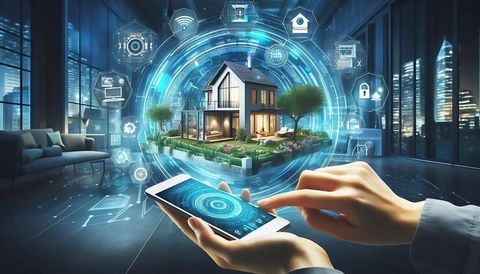
AI in smart home devices refers to the use of artificial intelligence to help connected household equipment understand information, respond to commands, recognize patterns, and perform automated actions. A smart home can include lighting, thermostats, cameras, doorbells, televisions, appliances, locks, speakers, air-quality monitors, and other connected equipment. AI adds a layer of interpretation that allows these devices to respond to more than simple on-and-off instructions.
The idea developed from earlier home automation systems that relied on timers, remote controls, motion detectors, and programmable settings. As sensors, wireless networks, cloud computing, and machine learning developed, household devices gained the ability to process larger amounts of information and respond to changing conditions.
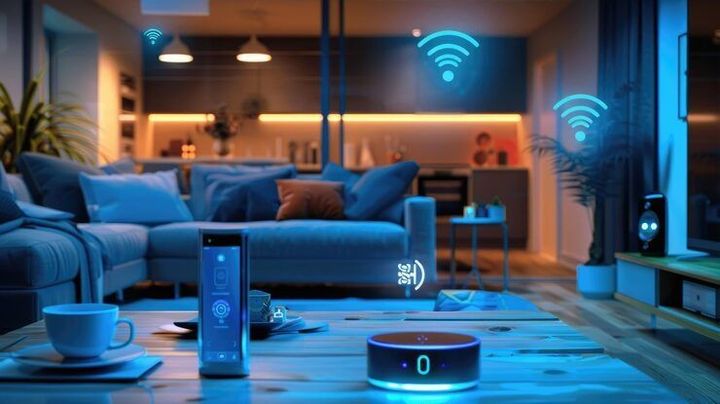
Modern AI in smart home devices commonly combines four elements: sensors collect information, voice assistants interpret spoken requests, learning systems identify patterns, and automation rules determine what should happen next. These components can work together through platforms that connect several devices within one household.
How the technology works
Sensors provide information about the environment. Motion sensors can detect movement, temperature sensors can measure changes in indoor conditions, cameras can analyze visual information, and door or window sensors can identify whether an opening has changed state.
The information can then be processed locally on a device, through a home hub, or through remote computing infrastructure, depending on the system. AI models may help classify sounds, images, speech, activity patterns, or other information before an automated response is produced.
A simple example is a room becoming occupied. A motion sensor can detect activity, an automation system can identify the event, and connected lighting can respond according to a previously configured rule. More advanced systems can combine several signals rather than relying on a single sensor.
| Component | Main role | Example |
|---|---|---|
| Sensors | Collect environmental information | Motion, temperature, light |
| Voice assistants | Understand spoken commands | Turning lights on or off |
| Learning systems | Identify patterns | Recognizing repeated routines |
| Automation | Trigger actions | Adjusting lights after movement |
| Connectivity | Link devices | Wi-Fi, Thread, Bluetooth |
| AI processing | Interpret complex information | Image or speech analysis |
Importance
AI-enabled homes matter because household environments contain many repetitive activities and changing conditions. People may adjust lighting, temperature, appliances, entertainment equipment, and security devices throughout the day. Automation can coordinate these actions according to information collected from connected equipment.
For older adults or people with mobility limitations, voice control and automated routines can reduce the number of physical interactions needed for some household tasks. Voice assistants can also provide hands-free control when someone is cooking, carrying objects, or working in another part of the home.
Energy management is another important area. Connected sensors and automation systems can monitor patterns related to electricity use, temperature, and appliance activity. Matter 1.3 expanded support for energy reporting and energy-management functions, allowing compatible ecosystems to use information about energy consumption in automation and monitoring scenarios.
Privacy and security considerations
Smart home devices can process information about household routines, voices, locations within a home, device activity, and images. This makes privacy and cybersecurity important parts of AI-enabled home technology.
Potential concerns include unauthorized access, weak passwords, outdated software, excessive data collection, and unintended sharing of information. A device with a camera or microphone can also create additional privacy considerations because its sensors may operate in personal spaces.
Security depends on several layers, including device authentication, encrypted communication, software updates, access controls, and appropriate privacy settings. Matter was designed with security and interoperability as core considerations, while India's telecommunications and IoT frameworks also address aspects of device security and connectivity.
Recent Updates
AI in smart home devices has moved toward more natural interaction and broader automation capabilities during 2024–2026. Earlier voice assistants were generally designed around specific commands, while newer AI systems increasingly use conversational models that can interpret more complex requests and context.
Google introduced Gemini-based capabilities for Google Home and Nest experiences, including more advanced camera interpretation, activity descriptions, natural-language interactions, and assistance with creating automations. In 2025, Google announced Gemini for Home as a broader AI foundation for its home ecosystem.
Amazon has also been developing generative-AI capabilities for Alexa. Its Alexa+ system is designed around more conversational interactions and expanded ability to manage household tasks and connected devices. Amazon announced the expansion of Alexa+ into India in 2026.
Interoperability is developing
Another major development is the expansion of Matter, an industry standard designed to help compatible smart home devices communicate across different ecosystems. Matter 1.3 added capabilities related to energy and water management, while Matter 1.4 improved multi-ecosystem coordination and home network infrastructure.
Matter 1.4.2 focused on security, certification, infrastructure, and scalability. Matter 1.5 later expanded the standard to additional categories, including cameras, closures, soil sensors, and further energy-management capabilities.
These developments indicate a shift toward connected environments in which several types of devices can exchange information through shared standards. However, compatibility still depends on the specific device, platform, software version, and supported features.
Laws or Policies
The following policy overview focuses on India. Smart home technology can be affected by several areas of regulation, including data protection, telecommunications, electrical safety, and IoT standards.
Data protection
India's Digital Personal Data Protection Act, 2023 provides a legal framework for processing digital personal data. The Digital Personal Data Protection Rules, 2025 were notified by the Ministry of Electronics and Information Technology, with different provisions entering into force according to a phased timeline.
This framework is relevant to connected-home ecosystems when personal data is processed. Depending on the device and its functions, information such as identifiable recordings, account information, or other data connected to an individual may fall within the broader data-protection framework.
IoT and telecommunications
India's Department of Telecommunications has established technical and cybersecurity requirements for certain categories of IoT and telecommunications equipment. Security requirements can include protection against unauthorized access, encryption, secure firmware updates, vulnerability management, authentication, and access control.
The Department of Telecommunications has also encouraged the use of standardized IoT approaches such as oneM2M for interoperability, authentication, data protection, and device coordination. Certain telecom equipment is subject to testing and certification requirements before use or import in India, depending on its classification.
Electrical and household safety
Smart electrical appliances can also fall within Indian safety standards. BIS lists IS 302 (Part 1):2024 as a general safety standard for household and similar electrical appliances, aligned with IEC 60335-1:2020. Applicable requirements depend on the type of equipment and its regulatory classification.
Tools and Resources
Several platforms and standards can help people understand AI-enabled smart homes and connected devices.
Smart home platforms
Google Home, Amazon Alexa, and Apple Home provide platforms for controlling compatible connected devices and creating automation routines. Their capabilities differ by device, region, account configuration, and software version.
Matter is particularly relevant when evaluating interoperability. The Connectivity Standards Alliance provides technical information, certification resources, and explanations of Matter-compatible ecosystems.
Standards and government resources
For readers in India, the BIS “Know Your Standard” portal can be used to search Indian Standards by product name or standard number and review related technical information.
The Ministry of Electronics and Information Technology provides official information about India's digital-data protection framework, while the Department of Telecommunications publishes information about telecommunications and IoT requirements. These sources can help readers distinguish general smart-home features from regulatory requirements.
FAQs
What is AI in smart home devices?
AI in smart home devices uses artificial intelligence to interpret information from sensors, understand voice commands, identify patterns, and support automated actions. It can be used in lighting, cameras, thermostats, appliances, security equipment, and other connected devices.
How do sensors work with AI in a smart home?
Sensors collect information such as movement, temperature, light levels, sound, or air conditions. AI and automation systems can analyze these signals and determine whether a particular event or condition should trigger an action.
What role do voice assistants play in AI in smart home devices?
Voice assistants interpret spoken language and connect commands with compatible devices or automation routines. Newer generative-AI systems are increasingly designed to understand more conversational requests rather than relying only on fixed commands.
Can AI learn household routines?
Some smart home systems can identify recurring patterns from device activity and use those patterns to support automation. The exact learning capability depends on the platform, device, software, privacy settings, and information available to the system.
Is Matter the same as AI?
No. Matter is a connectivity and interoperability standard rather than an artificial intelligence system. It helps compatible smart home devices communicate across supported ecosystems, while AI can be used within those devices or platforms to interpret information and automate actions.
Conclusion
AI in smart home devices combines sensors, voice assistants, learning systems, connectivity, and automation to create more responsive household environments. Recent developments have expanded natural-language interaction, camera analysis, energy management, and interoperability through standards such as Matter. Privacy, cybersecurity, data protection, electrical safety, and device compatibility remain important considerations as connected homes become more capable. In India, these areas are influenced by data-protection rules, telecommunications requirements, IoT standards, and household electrical-safety standards.