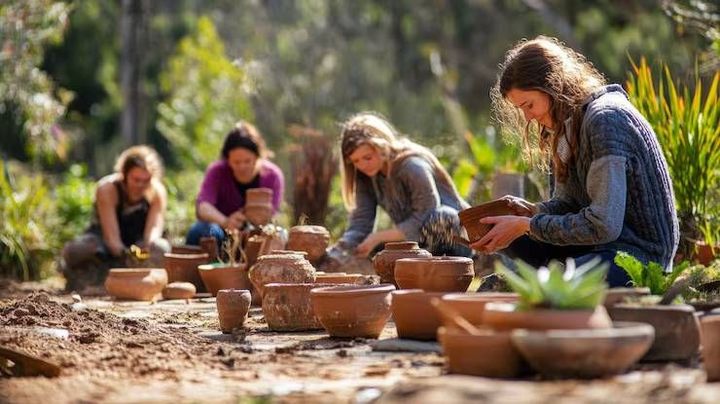
Artisan-Focused Eco Villages Guide With Traditional Arts, Nature, and Local Heritage
Artisan-focused eco villages are communities or destination areas designed around traditional crafts, natural surroundings, cultural heritage, and environmentally responsible living.
They bring together local artisans, residents, visitors, agricultural activities, traditional architecture, and ecological practices within a setting that reflects the character of the surrounding region.
The idea developed from several related movements. Traditional villages have historically depended on local materials, craft skills, farming, community knowledge, and close relationships with natural resources. More recent eco-village concepts add environmental planning, renewable energy, responsible water use, waste reduction, ecological construction, and conservation principles.
An artisan-focused eco village combines these ideas by placing traditional arts and local heritage within the broader framework of sustainable community development. A village may include pottery workshops, textile studios, woodcraft areas, metalwork spaces, food traditions, cultural buildings, gardens, walking paths, and areas for demonstrations or educational activities.
The physical design can vary considerably. Some communities are rural settlements with long-established traditions, while others are newly planned developments inspired by regional architecture and craft practices. The important connection is between cultural identity, local skills, natural surroundings, and community life.
Traditional Arts Within Eco Villages
Traditional arts can include many forms of creative work that have been passed between generations. Common examples include:
Pottery and ceramic techniques
Handwoven textiles
Basketry and natural-fiber crafts
Wood carving
Traditional painting
Metalworking
Stone craftsmanship
Natural-dye techniques
Decorative architectural arts
Traditional food preparation
Craft areas may be integrated into homes, community buildings, workshops, cultural centers, or designated production spaces. Their design can preserve practical knowledge while allowing visitors and younger residents to understand how materials are transformed into finished objects.
Connection With Nature
Nature is another central element of eco-village planning. Buildings may be arranged around existing vegetation, agricultural land, waterways, forests, hills, or other landscape features rather than treating the surrounding environment as separate from the community.
Landscaping can include native plants, community gardens, orchards, rainwater collection areas, walking routes, habitat zones, and shaded public spaces. The specific approach depends on local climate, geography, available resources, and environmental conditions.
Importance
Artisan-focused eco villages matter because cultural traditions can be affected by urbanization, changing lifestyles, reduced access to traditional materials, and declining opportunities for younger generations to learn inherited skills. A community structure that keeps artisans, cultural spaces, natural landscapes, and educational activities connected can help maintain visibility for these traditions.
Eco-village planning also addresses environmental concerns. Communities require energy, water, transportation, food, construction materials, and waste management. Integrating ecological planning into village design can reduce pressure on local resources and encourage more responsible use of land.
Cultural Heritage and Community Identity
Local heritage includes more than historic buildings. It can involve language, food, clothing, music, craft techniques, farming knowledge, ceremonies, stories, building methods, and relationships between people and landscapes.
An artisan-focused eco village can create spaces where these elements remain part of everyday community life. Craft workshops may function as learning environments, while public spaces can accommodate cultural events, demonstrations, exhibitions, and community gatherings.
Preserving heritage also requires sensitivity. Cultural traditions should be represented accurately and respectfully, particularly when they have spiritual, ceremonial, or community-specific significance.
Environmental Planning
Environmental planning can influence nearly every part of an eco village. Building orientation, materials, water systems, energy infrastructure, transportation, vegetation, and waste handling can all affect environmental performance.
Common planning approaches include:
Passive building design for local climate conditions
Rainwater collection and water-efficient systems
Renewable energy integration where appropriate
Local or regionally suitable construction materials
Composting and organized waste separation
Native landscaping
Walking and cycling routes
Protection of sensitive ecological areas
These approaches are not identical for every location. A solution that works in a dry climate may be unsuitable in a humid region, while a mountain community may have different transportation and construction requirements from a coastal settlement.
Benefits for Everyday Life
The concept also relates to community well-being and education. Residents may have access to shared gardens, cultural spaces, workshops, walking areas, and community facilities. Visitors can learn about traditional skills and local ecology through structured educational activities.
When cultural and environmental planning are combined, a village can become a place where heritage is not treated only as a historical subject. Instead, traditional knowledge can remain connected with contemporary community activities.
Recent Updates
Between 2024 and 2026, interest in sustainable tourism, cultural preservation, regenerative landscape planning, and community-based development has continued to influence the design of villages and rural destinations. The broader trend is toward combining environmental considerations with cultural identity rather than treating them as separate planning subjects.
Digital Tools and Cultural Documentation
Digital documentation has become increasingly useful for recording traditional crafts and local knowledge. Photographs, video archives, digital catalogs, geographic mapping, and educational platforms can help document techniques that might otherwise be difficult to preserve.
Three-dimensional scanning and digital modeling can also document historic buildings, tools, architectural details, and cultural spaces. Such records can support education and conservation planning while keeping physical heritage at the center of the community.
Sustainable Architecture
Eco-village construction increasingly considers energy performance, passive cooling and heating, natural lighting, water management, and material selection. Local construction traditions can sometimes provide useful knowledge about adapting buildings to climate conditions.
Modern planning may combine traditional design principles with contemporary structural requirements. The objective is not necessarily to reproduce historic buildings exactly, but to understand how local architecture responds to climate, materials, culture, and community use.
Nature-Based Community Planning
Landscape planning is also receiving greater attention. Rather than concentrating development in ways that isolate natural areas, planners may consider connected green spaces, ecological corridors, native vegetation, water management, and agricultural landscapes.
Nature-based approaches can support biodiversity while creating recreational and educational spaces. However, ecological planning requires consideration of local species, water availability, soil conditions, land ownership, and existing environmental protections.
Artisan Skills and Intergenerational Learning
Another continuing trend is the use of workshops and educational programs to connect younger people with traditional craft techniques. Apprenticeship models, community classes, cultural demonstrations, and digital learning materials can complement direct knowledge transfer between experienced artisans and newer learners.
This approach recognizes that traditional arts are living practices rather than static museum objects. Techniques can change over time while still maintaining connections with historical methods and cultural identity.
Laws or Policies
Artisan-focused eco villages can be affected by several categories of laws and policies. Since requirements differ among countries and regions, planning normally needs to consider cultural heritage, land use, environmental protection, construction, tourism, water, waste, and community development rules.
Heritage Protection
Historic structures, archaeological sites, traditional settlements, and culturally significant landscapes may be protected under national or regional heritage frameworks. Restrictions can apply to construction, demolition, restoration, changes to building appearance, excavation, or alteration of protected sites.
Intangible heritage can also receive institutional recognition. Traditional crafts, music, food practices, ceremonies, and knowledge systems may be documented through cultural heritage programs.
Environmental Regulations
Eco villages can fall under environmental requirements relating to land development, water resources, waste management, biodiversity, construction impacts, and protected areas. Projects located near forests, wetlands, coastlines, mountains, or protected habitats may face additional planning requirements.
Water and wastewater systems are particularly important. A village needs appropriate arrangements for drinking water, sanitation, drainage, rainwater, and wastewater management according to local regulations.
Building and Land-Use Rules
Construction must generally follow applicable planning and building requirements. These can address structural safety, fire protection, accessibility, electrical installations, sanitation, energy performance, and land-use permissions.
Where traditional architecture is incorporated into new construction, planners may need to balance cultural design principles with contemporary safety requirements.
Tools and Resources
Several tools can support the planning, documentation, and management of artisan-focused eco villages. Geographic information systems can help map land characteristics, vegetation, waterways, infrastructure, heritage areas, and transportation routes.
Architectural modeling software can be used to examine building layouts, landscape relationships, sunlight, circulation, and construction concepts. Environmental assessment tools can help evaluate factors such as energy use, water requirements, material selection, and ecological effects.
Useful resources may include:
Heritage documentation templates
Community mapping tools
Geographic information systems
Building energy assessment software
Water-use calculators
Waste management planning worksheets
Craft documentation databases
Digital archive platforms
Ecological survey tools
Landscape planning software
Visitor-flow mapping tools
Community participation templates
A basic planning framework can be represented as follows:
| Planning Area | Main Focus | Example Considerations |
|---|---|---|
| Traditional Arts | Craft preservation | Workshops, teaching spaces, material access |
| Local Heritage | Cultural identity | Historic buildings, stories, architecture |
| Nature | Ecological protection | Native plants, habitats, waterways |
| Buildings | Environmental performance | Orientation, insulation, ventilation |
| Water | Resource management | Rainwater, sanitation, drainage |
| Energy | Resource efficiency | Solar systems, efficient lighting, passive design |
| Mobility | Movement | Walking routes, cycling, public transport links |
| Waste | Material management | Separation, composting, recycling |
| Education | Knowledge transfer | Workshops, archives, demonstrations |
Community mapping is particularly useful because local residents often possess knowledge that may not appear in formal records. Mapping can identify culturally significant locations, traditional resource areas, historic pathways, craft spaces, and natural features.
FAQs
What is an artisan-focused eco village?
An artisan-focused eco village is a community or destination that combines traditional arts and local heritage with environmentally responsible planning. It may include craft workshops, cultural spaces, sustainable buildings, gardens, ecological areas, and community facilities.
How do traditional arts fit into an eco village?
Traditional arts can be integrated through workshops, teaching spaces, cultural centers, demonstrations, exhibitions, and community activities. Crafts such as pottery, weaving, carving, basketry, and natural-dye work may form part of the village's cultural environment.
Why are nature and local heritage important in eco villages?
Nature provides the ecological setting for the community, while local heritage contributes cultural identity and historical continuity. Planning that considers both can connect environmental management with community knowledge and cultural practices.
What laws affect artisan-focused eco villages?
Relevant rules may cover heritage protection, land use, construction, environmental management, water, sanitation, waste, accessibility, and public safety. Exact requirements depend on the location and type of development.
How can technology support local heritage preservation?
Digital mapping, photography, video, three-dimensional documentation, online archives, and educational platforms can record traditional buildings, craft techniques, landscapes, and cultural knowledge. These tools can complement physical preservation and direct community learning.
Conclusion
Artisan-focused eco villages combine traditional arts, local heritage, community life, and environmental planning within a shared setting. Their development can involve cultural documentation, sustainable architecture, ecological landscape management, responsible resource use, and intergenerational learning. Recent approaches increasingly use digital tools alongside traditional knowledge to document and manage cultural and natural resources. Laws covering heritage, construction, land use, water, waste, and environmental protection remain important considerations in planning these communities.