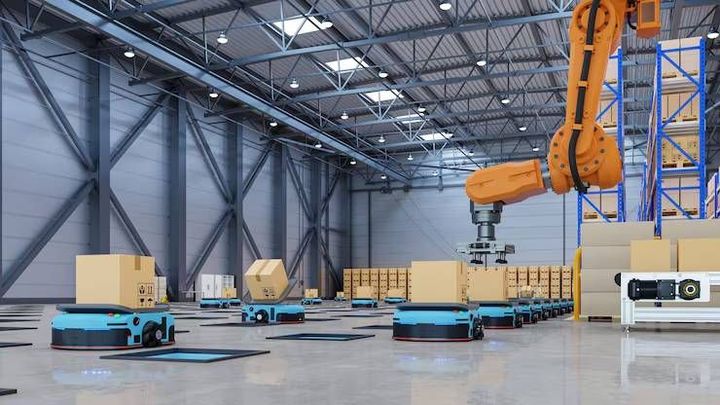
Automated Material Handling Systems Guide With Modern Logistics and Warehouse Technology
Automated material handling systems are technologies used to move, store, sort, retrieve, and organize materials within warehouses, manufacturing plants, distribution facilities, and logistics environments.
These systems combine mechanical equipment, software, sensors, conveyors, robots, and control platforms to coordinate the movement of goods with limited manual intervention.
Material handling has existed for centuries, but modern automation developed as industrial production and warehousing became more complex. Early systems relied on carts, cranes, conveyors, and manually operated lifting equipment. Later developments introduced powered conveyors, automated storage systems, programmable controllers, barcode scanning, and computerized warehouse management.
Today, an automated material handling system can connect several stages of a facility. Products may arrive at a receiving area, move through inspection or sorting, enter storage, and later travel toward picking, packing, palletizing, and shipping areas.
Main Types of Automated Material Handling Systems
Different equipment categories perform different material-handling tasks. Automated storage and retrieval systems use computer-controlled mechanisms to place and retrieve inventory from defined storage locations.
Automated guided vehicles and autonomous mobile robots move materials between designated areas. Conveyors provide continuous movement along fixed routes, while robotic arms can perform picking, palletizing, depalletizing, or other handling activities.
Common technologies include:
Conveyor systems for continuous material movement
Automated storage and retrieval systems
Automated guided vehicles
Autonomous mobile robots
Robotic picking systems
Sorting equipment
Pallet handling systems
Lift and vertical transport equipment
Warehouse control systems
Barcode and RFID identification systems
The appropriate combination depends on facility size, product characteristics, inventory volume, workflow, available space, and required level of automation.
How Automated Material Handling Works
An automated system generally begins with identification. Barcode scanners, RFID readers, cameras, or other sensors can identify products and determine where they need to move.
Control software then coordinates equipment based on predefined rules. A warehouse management system may determine an inventory location, while a warehouse control system can translate that instruction into movements performed by conveyors, robots, lifts, or automated vehicles.
Sensors provide feedback during operation. If a conveyor detects an obstruction or an automated vehicle encounters an unexpected condition, the control system can respond according to its programmed safety and operating logic.
Importance
Automated material handling systems are important because modern warehouses and manufacturing facilities may need to move large quantities of products through multiple stages. Manual movement alone can become difficult to coordinate when inventory locations, product types, order volumes, and delivery schedules change frequently.
Automation can organize repetitive movement and provide digital information about where materials are located. It can also connect physical handling equipment with inventory and production software.
Warehouse Operations
In a warehouse, material handling begins with receiving and continues through storage, picking, packing, staging, and dispatch. Each stage requires coordination between physical equipment and inventory information.
Automated systems can connect these stages through conveyors, mobile robots, storage equipment, scanners, and software platforms. The exact workflow depends on whether a facility handles individual products, cartons, pallets, containers, or a mixture of formats.
Manufacturing Applications
Manufacturing facilities use material handling systems to move raw materials, components, work-in-progress items, and finished products. Automated vehicles can transport components between production areas, while conveyors can move items through defined manufacturing stages.
Robotic systems can also transfer components between machines. When integrated with production software, these systems can provide information about material movement and equipment status.
Workforce and Workplace Design
Automation changes the way people interact with warehouses and factories. Instead of manually carrying products over long distances, workers may supervise automated equipment, manage exceptions, inspect materials, maintain systems, or perform activities that require human judgment.
Facility design therefore needs to consider pedestrian routes, vehicle routes, robot operating zones, emergency access, maintenance areas, and equipment interfaces. Clear separation between automated traffic and pedestrian movement can be an important safety consideration.
Inventory Visibility
Automated material handling is closely connected with inventory management. Identification technologies can associate products with storage locations, movement records, and order information.
Accurate inventory information depends on reliable scanning, labeling, software configuration, and operational procedures. Automation can improve the availability of movement data, but incorrect identification or system configuration can still produce inaccurate records.
Recent Updates
From 2024 through 2026, automated material handling has continued to develop around robotics, artificial intelligence, machine vision, autonomous mobile robots, warehouse software, and connected industrial systems. The general direction has been toward more flexible automation rather than systems designed only for fixed and repetitive routes.
Autonomous Mobile Robots
Autonomous mobile robots can navigate warehouse environments using sensors, mapping technologies, cameras, or other navigation methods. Unlike traditional fixed conveyors, mobile robots can travel between different locations according to changing assignments.
Some systems transport shelves, carts, containers, or individual products. Their operating area may be coordinated through fleet-management software that assigns tasks and monitors robot positions.
Artificial Intelligence and Machine Vision
Artificial intelligence is increasingly being applied to selected warehouse and material-handling activities. Machine vision can help identify products, determine package positions, inspect objects, and support robotic picking.
AI-based systems depend on appropriate data and controlled operating conditions. Their capabilities vary according to the application, hardware, software, and training information available.
Digital Warehouse Management
Warehouse management platforms increasingly connect inventory records with automated equipment. A warehouse management system can track inventory locations and order requirements, while a warehouse control layer can coordinate equipment movements.
Application programming interfaces and industrial communication protocols can connect warehouse software with robots, conveyors, storage equipment, and enterprise systems.
Flexible Automation
Facilities with changing product ranges may require automation that can accommodate different package sizes and workflows. Modular conveyors, mobile robots, configurable storage systems, and programmable robotic equipment can provide different forms of flexibility.
This approach differs from highly fixed automation, where equipment is designed around one specific material flow. Flexible systems can be useful when product ranges, storage arrangements, or order patterns change over time.
Energy and Monitoring Systems
Automated warehouses use electrical power for motors, conveyors, charging systems, control equipment, lighting, and environmental systems. Monitoring platforms can provide information about equipment activity and energy use.
Data from motors, drives, sensors, robots, and other equipment can also support maintenance planning. Maintenance teams can review operating information alongside physical inspections and established maintenance schedules.
Laws or Policies
Automated material handling systems are influenced by workplace safety requirements, machinery regulations, electrical standards, building rules, data requirements, and transportation regulations. The applicable rules vary by country, industry, facility type, and equipment configuration.
Machinery and Workplace Safety
Automated systems can contain moving conveyors, robotic arms, mobile vehicles, lifting mechanisms, and storage equipment. Safety requirements may therefore address guarding, emergency stops, access controls, warning systems, pedestrian routes, and equipment isolation.
Risk assessments can consider potential interactions between people and automated machinery. Maintenance activities may require procedures for controlling electrical, mechanical, hydraulic, or pneumatic energy.
Warehouse Vehicle Safety
Automated guided vehicles and autonomous mobile robots operate around people, storage racks, doors, and other equipment. Facilities may establish designated routes, restricted areas, speed controls, warning systems, and pedestrian crossings.
The exact requirements depend on the technology and jurisdiction. Facility operators generally need to account for both the automated equipment and the surrounding workplace.
Data and System Controls
Connected warehouses generate information about inventory, equipment activity, orders, locations, and system events. Data-management requirements may apply when systems process personal or commercially sensitive information.
Cybersecurity can also be relevant because automated material handling equipment may connect to enterprise networks. Access controls, network segmentation, software maintenance, and monitoring can form part of a broader industrial cybersecurity program.
Tools and Resources
Planning automated material handling requires information about products, storage locations, movement patterns, equipment dimensions, facility layout, and software integration.
Warehouse simulation software can model product flows and equipment movements before physical changes are made. Facility-layout software can help visualize conveyors, racks, robots, charging areas, pedestrian paths, and maintenance zones.
Useful planning resources include:
Warehouse layout software
Material-flow simulation tools
Inventory analysis worksheets
Conveyor capacity calculations
Storage-density calculators
Robot simulation platforms
Fleet-management dashboards
Warehouse management systems
Warehouse control systems
Barcode and RFID planning tools
Preventive maintenance schedules
Safety risk assessment templates
A simplified comparison of common technologies is shown below:
| Technology | Primary Function | Main Planning Consideration |
|---|---|---|
| Conveyor | Fixed-route movement | Facility layout |
| AS/RS | Automated storage and retrieval | Storage configuration |
| AGV | Guided material transport | Routes and navigation |
| AMR | Flexible mobile transport | Mapping and traffic |
| Robotic Picker | Product handling | Product shape and gripping |
| Sortation System | Product separation | Flow volume and destination |
| Pallet System | Pallet movement | Load dimensions |
| RFID | Product identification | Reading range and placement |
Software Integration
Warehouse management software generally handles inventory and order information, while warehouse control software can coordinate physical equipment. Enterprise resource planning platforms may provide additional information about purchasing, production, inventory, and distribution.
Successful integration depends on compatible interfaces and accurate data exchange. System planners may need to define product identifiers, storage locations, equipment commands, status messages, alarms, and exception-handling procedures.
Facility Planning
Space planning is essential because automated equipment needs room for operation and maintenance. Conveyor routes, robot cells, mobile-robot traffic, storage racks, charging stations, control cabinets, and pedestrian paths all need to fit within the facility.
Future changes should also be considered. Equipment access, utility connections, network infrastructure, and expansion areas can influence how easily an automated system can be modified later.
FAQs
What are automated material handling systems?
Automated material handling systems are technologies that move, store, sort, retrieve, or organize materials with automated equipment and software. Examples include conveyors, automated storage systems, mobile robots, robotic arms, and sorting equipment.
How do automated material handling systems work?
Sensors and identification technologies collect information about products and equipment conditions. Control software then coordinates conveyors, robots, storage mechanisms, or automated vehicles according to programmed workflows.
What is the difference between AGVs and AMRs?
Automated guided vehicles generally follow defined navigation methods or routes, while autonomous mobile robots can use mapping and onboard sensing to navigate more dynamically. Actual capabilities vary by system design.
How are automated material handling systems used in warehouses?
They can support receiving, storage, retrieval, picking, sorting, pallet movement, packing, staging, and dispatch. Different technologies can be connected to coordinate material movement across several warehouse areas.
What factors affect automated material handling system planning?
Important factors include product dimensions, inventory volume, storage density, movement frequency, facility layout, equipment capacity, software integration, pedestrian movement, maintenance access, safety requirements, and future operational changes.
Conclusion
Automated material handling systems combine physical equipment, sensors, software, and control technologies to move and organize materials across warehouses and industrial facilities. Current developments include autonomous mobile robots, machine vision, artificial intelligence, connected warehouse software, and flexible automation. Effective system planning involves material flow, inventory information, facility layout, safety, maintenance, energy use, and software integration. The final configuration depends on the products, workflow, facility structure, and automation requirements of each operation.