Battery Cell Testing Equipment Guide: Testing Methods, Components, Uses and Performance Factors
Battery cell testing equipment refers to laboratory and production tools used to measure how an individual battery cell behaves under controlled electrical, thermal, mechanical, and safety conditions. A cell is the basic electrochemical unit inside a battery pack. Several cells may be connected together to provide the voltage, energy, and power required for an electric vehicle, energy storage system, electronic device, or industrial application.Battery cell testing developed as rechargeable batteries became more widely used in portable electronics, transportation, and stationary energy storage. Testing helps engineers understand measurable characteristics such as voltage, capacity, current response, internal resistance, temperature behavior, cycle life, and safety response. The equipment creates repeatable test conditions so that results from different cells or test cycles can be compared. A typical battery cell testing setup combines programmable charge-discharge equipment, measurement electronics, temperature sensors, computer-based controls, data recording systems, and protective hardware. The exact arrangement depends on the chemistry, cell format, voltage range, current range, and purpose of the test. Importance Battery cells can behave differently even when they have the same nominal voltage and chemistry. Small differences in manufacturing, temperature, charging conditions, or previous use can influence measured capacity, resistance, and aging. Battery cell testing equipment helps identify these differences through controlled measurements. Testing matters to several groups. Battery researchers use it to study new cell materials and designs. Manufacturers use cell-level measurements during development and production checks. Vehicle and energy-storage developers use test data when evaluating how cells behave inside larger systems. For the general public, these measurements can relate to the operating range, charging behavior, reliability, and useful life of products that contain rechargeable batteries. Common measurements include: Capacity: the amount of electrical charge a cell can deliver under defined test conditions. Energy: the electrical work delivered during a discharge, usually expressed in watt-hours. Power: the rate at which electrical energy can be delivered or accepted. Internal resistance: an electrical characteristic that can contribute to voltage drop and heat generation under load. Cycle life: how cell characteristics change across repeated charge and discharge cycles. Temperature response: how voltage, current capability, and other characteristics change with temperature. No single measurement describes a cell completely. A cell may show a particular capacity at one temperature while responding differently during high-current operation or repeated cycling. Test conditions therefore form an important part of the recorded result. Recent Updates From 2024 through 2026, battery testing has increasingly been connected with the expansion of electric mobility, stationary energy storage, and domestic cell manufacturing. In India, the national Advanced Chemistry Cell program has continued to support the development of large-scale cell manufacturing, increasing the relevance of controlled cell characterization and quality testing. The Ministry of Heavy Industries has also published activity concerning additional Advanced Chemistry Cell capacity for grid-scale stationary storage. Testing standards have also continued to develop. The Bureau of Indian Standards has worked on Indian adoption and revision of battery safety requirements, including work aligned with IEC 62660-3:2022 for electric-vehicle lithium-ion cells. IEC 62660-1 covers performance testing, IEC 62660-2 addresses reliability and abuse testing, and IEC 62660-3 addresses safety requirements. Another continuing trend is broader data collection. Modern battery cell testing equipment can record voltage, current, temperature, time, and calculated values at selected intervals. This supports automated test sequences and makes it easier to compare cells across repeated experiments. Test systems are also being adapted to different chemistries and applications rather than relying on one fixed test profile. The expansion of battery manufacturing also creates a need for repeatable testing at different stages of cell development. Laboratory testing may focus on electrochemical behavior, while production-related testing can focus on consistency, electrical characteristics, and defined quality parameters. Laws or Policies In India, battery-related activities are influenced by product standards, safety requirements, environmental rules, and sector-specific programs. The exact requirements depend on whether the cell is intended for an electric vehicle, portable electronics, stationary storage, or another application. The Battery Waste Management Rules, 2022 provide a framework for battery waste management and extended producer responsibility. The Ministry of Environment, Forest and Climate Change lists several amendments issued during 2024 and a further amendment in 2025. These rules mainly concern collection, recycling, processing, and producer responsibilities rather than laboratory test procedures, but they form part of the wider regulatory environment around batteries. For technical evaluation, Indian Standards and applicable automotive requirements may specify particular tests, limits, sampling conditions, or documentation. The Bureau of Indian Standards provides a “Know Your Standard” portal that allows users to search standards by Indian Standard number or product keyword and view related documents and laboratory information. India also has a national program for Advanced Chemistry Cell battery storage. The Ministry of Heavy Industries states that the PLI ACC scheme was designed around 50 GWh of domestic Advanced Chemistry Cell manufacturing capacity, with implementation activity continuing into the current period. The applicable technical requirement can differ according to the battery category and intended application. For this reason, a testing program normally needs to identify the relevant Indian Standard, automotive requirement, international standard, or other applicable technical specification before individual tests are conducted. Tools and Resources Battery cell testing equipment can range from a single-channel laboratory instrument to a multi-channel automated test platform. The main components usually include: Battery cycler: controls charging and discharging according to a defined current, voltage, power, or time profile. Electronic load: draws a controlled electrical load from the cell during discharge testing. Power supply: provides controlled electrical input during charging or other electrical experiments. Voltage and current measurement: records electrical values needed to calculate capacity, energy, resistance, and related characteristics. Temperature measurement: uses sensors such as thermocouples or resistance temperature detectors to monitor cell temperature. Environmental chamber: controls temperature, and in some systems humidity, so cells can be tested under defined environmental conditions. Data acquisition and software: records measurements, runs test sequences, calculates results, and stores test records. Safety enclosure and protection circuits: help isolate the test area and respond to abnormal electrical or thermal conditions. Different testing methods answer different questions. A constant-current discharge test can measure capacity under a defined load. A pulse test can examine voltage response and resistance characteristics. A cycling test can track changes over repeated charge and discharge operations. Thermal testing can show how cell behavior changes when the surrounding temperature is varied. A simple reference table is useful when comparing common measurements: Test Area Main Measurement Typical Purpose Capacity test Ampere-hours Determine charge delivery under defined conditions Energy test Watt-hours Measure energy delivered during discharge Power test Current and voltage response Examine short-duration electrical capability Resistance test Voltage response to current change Study internal electrical behavior Cycle test Capacity and resistance over cycles Track aging trends Thermal test Temperature and electrical data Study temperature-related behavior Safety test Response under specified conditions Evaluate defined safety characteristics Useful technical resources include IEC standards related to secondary lithium-ion cells, the BIS “Know Your Standard” portal, and BIS laboratory information pages. IEC 62660-1 describes performance testing procedures for propulsion cells, while IEC 62660-2 and IEC 62660-3 address reliability, abuse behavior, and safety. When interpreting test results, the test conditions should always be recorded. A capacity value without its current, temperature, voltage limits, rest periods, and test method can be difficult to compare with another result. For this reason, test software and structured templates are commonly used to keep conditions and results together. Test records may include the cell identification, chemistry, physical format, initial condition, charging profile, discharge profile, ambient temperature, measured voltage, current, temperature, and calculated capacity or energy. Keeping these details together helps provide context for later analysis. FAQs What is battery cell testing equipment? Battery cell testing equipment is a group of electrical, thermal, measurement, and safety instruments used to evaluate individual battery cells under controlled conditions. It can measure characteristics such as capacity, energy, resistance, temperature response, and cycle behavior. What testing methods are used for battery cells? Common battery cell testing methods include capacity testing, charge-discharge cycling, pulse testing, resistance measurement, thermal testing, and defined safety or abuse tests. The selected method depends on the cell chemistry and intended application. What components are included in battery cell testing equipment? A typical system can include a battery cycler, power supply, electronic load, voltage and current measurement channels, temperature sensors, control software, data storage, and protective hardware. Larger systems may use multiple independent test channels. Why is battery cell performance testing important? Battery cell performance testing provides measurable information about electrical behavior and changes during repeated use. The results can help researchers and engineers understand capacity, power response, aging, and temperature effects under defined conditions. Which standards relate to lithium-ion cell testing? IEC 62660 includes standards for performance, reliability and abuse testing, and safety testing of secondary lithium-ion cells used in electric road vehicles. India also uses relevant Indian Standards and automotive requirements for applicable battery categories. Conclusion Battery cell testing equipment provides controlled ways to measure electrical, thermal, aging, and safety characteristics of individual cells. Testing methods can range from basic capacity measurements to repeated cycling, pulse testing, environmental testing, and defined safety evaluations. From 2024 through 2026, the expansion of battery manufacturing and energy storage has increased attention to standardized testing and traceable test data in India. Understanding the test method and its conditions is essential when interpreting battery cell performance results.
Battery cell testing developed as rechargeable batteries became more widely used in portable electronics, transportation, and stationary energy storage. Testing helps engineers understand measurable characteristics such as voltage, capacity, current response, internal resistance, temperature behavior, cycle life, and safety response. The equipment creates repeatable test conditions so that results from different cells or test cycles can be compared.
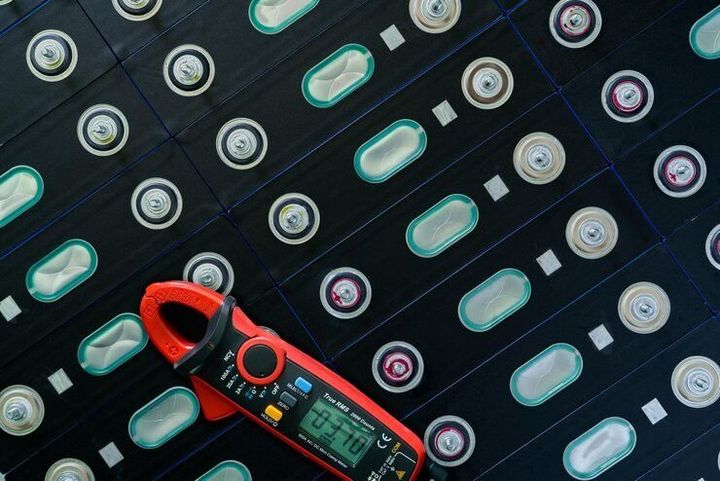
A typical battery cell testing setup combines programmable charge-discharge equipment, measurement electronics, temperature sensors, computer-based controls, data recording systems, and protective hardware. The exact arrangement depends on the chemistry, cell format, voltage range, current range, and purpose of the test.
Importance
Battery cells can behave differently even when they have the same nominal voltage and chemistry. Small differences in manufacturing, temperature, charging conditions, or previous use can influence measured capacity, resistance, and aging. Battery cell testing equipment helps identify these differences through controlled measurements.
Testing matters to several groups. Battery researchers use it to study new cell materials and designs. Manufacturers use cell-level measurements during development and production checks. Vehicle and energy-storage developers use test data when evaluating how cells behave inside larger systems. For the general public, these measurements can relate to the operating range, charging behavior, reliability, and useful life of products that contain rechargeable batteries.
Common measurements include:
- Capacity: the amount of electrical charge a cell can deliver under defined test conditions.
- Energy: the electrical work delivered during a discharge, usually expressed in watt-hours.
- Power: the rate at which electrical energy can be delivered or accepted.
- Internal resistance: an electrical characteristic that can contribute to voltage drop and heat generation under load.
- Cycle life: how cell characteristics change across repeated charge and discharge cycles.
- Temperature response: how voltage, current capability, and other characteristics change with temperature.
No single measurement describes a cell completely. A cell may show a particular capacity at one temperature while responding differently during high-current operation or repeated cycling. Test conditions therefore form an important part of the recorded result.
Recent Updates
From 2024 through 2026, battery testing has increasingly been connected with the expansion of electric mobility, stationary energy storage, and domestic cell manufacturing. In India, the national Advanced Chemistry Cell program has continued to support the development of large-scale cell manufacturing, increasing the relevance of controlled cell characterization and quality testing. The Ministry of Heavy Industries has also published activity concerning additional Advanced Chemistry Cell capacity for grid-scale stationary storage.
Testing standards have also continued to develop. The Bureau of Indian Standards has worked on Indian adoption and revision of battery safety requirements, including work aligned with IEC 62660-3:2022 for electric-vehicle lithium-ion cells. IEC 62660-1 covers performance testing, IEC 62660-2 addresses reliability and abuse testing, and IEC 62660-3 addresses safety requirements.
Another continuing trend is broader data collection. Modern battery cell testing equipment can record voltage, current, temperature, time, and calculated values at selected intervals. This supports automated test sequences and makes it easier to compare cells across repeated experiments. Test systems are also being adapted to different chemistries and applications rather than relying on one fixed test profile.
The expansion of battery manufacturing also creates a need for repeatable testing at different stages of cell development. Laboratory testing may focus on electrochemical behavior, while production-related testing can focus on consistency, electrical characteristics, and defined quality parameters.
Laws or Policies
In India, battery-related activities are influenced by product standards, safety requirements, environmental rules, and sector-specific programs. The exact requirements depend on whether the cell is intended for an electric vehicle, portable electronics, stationary storage, or another application.
The Battery Waste Management Rules, 2022 provide a framework for battery waste management and extended producer responsibility. The Ministry of Environment, Forest and Climate Change lists several amendments issued during 2024 and a further amendment in 2025. These rules mainly concern collection, recycling, processing, and producer responsibilities rather than laboratory test procedures, but they form part of the wider regulatory environment around batteries.
For technical evaluation, Indian Standards and applicable automotive requirements may specify particular tests, limits, sampling conditions, or documentation. The Bureau of Indian Standards provides a “Know Your Standard” portal that allows users to search standards by Indian Standard number or product keyword and view related documents and laboratory information.
India also has a national program for Advanced Chemistry Cell battery storage. The Ministry of Heavy Industries states that the PLI ACC scheme was designed around 50 GWh of domestic Advanced Chemistry Cell manufacturing capacity, with implementation activity continuing into the current period.
The applicable technical requirement can differ according to the battery category and intended application. For this reason, a testing program normally needs to identify the relevant Indian Standard, automotive requirement, international standard, or other applicable technical specification before individual tests are conducted.
Tools and Resources
Battery cell testing equipment can range from a single-channel laboratory instrument to a multi-channel automated test platform. The main components usually include:
- Battery cycler: controls charging and discharging according to a defined current, voltage, power, or time profile.
- Electronic load: draws a controlled electrical load from the cell during discharge testing.
- Power supply: provides controlled electrical input during charging or other electrical experiments.
- Voltage and current measurement: records electrical values needed to calculate capacity, energy, resistance, and related characteristics.
- Temperature measurement: uses sensors such as thermocouples or resistance temperature detectors to monitor cell temperature.
- Environmental chamber: controls temperature, and in some systems humidity, so cells can be tested under defined environmental conditions.
- Data acquisition and software: records measurements, runs test sequences, calculates results, and stores test records.
- Safety enclosure and protection circuits: help isolate the test area and respond to abnormal electrical or thermal conditions.
Different testing methods answer different questions. A constant-current discharge test can measure capacity under a defined load. A pulse test can examine voltage response and resistance characteristics. A cycling test can track changes over repeated charge and discharge operations. Thermal testing can show how cell behavior changes when the surrounding temperature is varied.
A simple reference table is useful when comparing common measurements:
| Test Area | Main Measurement | Typical Purpose |
|---|---|---|
| Capacity test | Ampere-hours | Determine charge delivery under defined conditions |
| Energy test | Watt-hours | Measure energy delivered during discharge |
| Power test | Current and voltage response | Examine short-duration electrical capability |
| Resistance test | Voltage response to current change | Study internal electrical behavior |
| Cycle test | Capacity and resistance over cycles | Track aging trends |
| Thermal test | Temperature and electrical data | Study temperature-related behavior |
| Safety test | Response under specified conditions | Evaluate defined safety characteristics |
Useful technical resources include IEC standards related to secondary lithium-ion cells, the BIS “Know Your Standard” portal, and BIS laboratory information pages. IEC 62660-1 describes performance testing procedures for propulsion cells, while IEC 62660-2 and IEC 62660-3 address reliability, abuse behavior, and safety.
When interpreting test results, the test conditions should always be recorded. A capacity value without its current, temperature, voltage limits, rest periods, and test method can be difficult to compare with another result. For this reason, test software and structured templates are commonly used to keep conditions and results together.
Test records may include the cell identification, chemistry, physical format, initial condition, charging profile, discharge profile, ambient temperature, measured voltage, current, temperature, and calculated capacity or energy. Keeping these details together helps provide context for later analysis.
FAQs
What is battery cell testing equipment?
Battery cell testing equipment is a group of electrical, thermal, measurement, and safety instruments used to evaluate individual battery cells under controlled conditions. It can measure characteristics such as capacity, energy, resistance, temperature response, and cycle behavior.
What testing methods are used for battery cells?
Common battery cell testing methods include capacity testing, charge-discharge cycling, pulse testing, resistance measurement, thermal testing, and defined safety or abuse tests. The selected method depends on the cell chemistry and intended application.
What components are included in battery cell testing equipment?
A typical system can include a battery cycler, power supply, electronic load, voltage and current measurement channels, temperature sensors, control software, data storage, and protective hardware. Larger systems may use multiple independent test channels.
Why is battery cell performance testing important?
Battery cell performance testing provides measurable information about electrical behavior and changes during repeated use. The results can help researchers and engineers understand capacity, power response, aging, and temperature effects under defined conditions.
Which standards relate to lithium-ion cell testing?
IEC 62660 includes standards for performance, reliability and abuse testing, and safety testing of secondary lithium-ion cells used in electric road vehicles. India also uses relevant Indian Standards and automotive requirements for applicable battery categories.
Conclusion
Battery cell testing equipment provides controlled ways to measure electrical, thermal, aging, and safety characteristics of individual cells. Testing methods can range from basic capacity measurements to repeated cycling, pulse testing, environmental testing, and defined safety evaluations. From 2024 through 2026, the expansion of battery manufacturing and energy storage has increased attention to standardized testing and traceable test data in India. Understanding the test method and its conditions is essential when interpreting battery cell performance results.