Biscuit Cooling Conveyors Explanation: Air Circulation, Conveyor Movement, Cooling and Handling
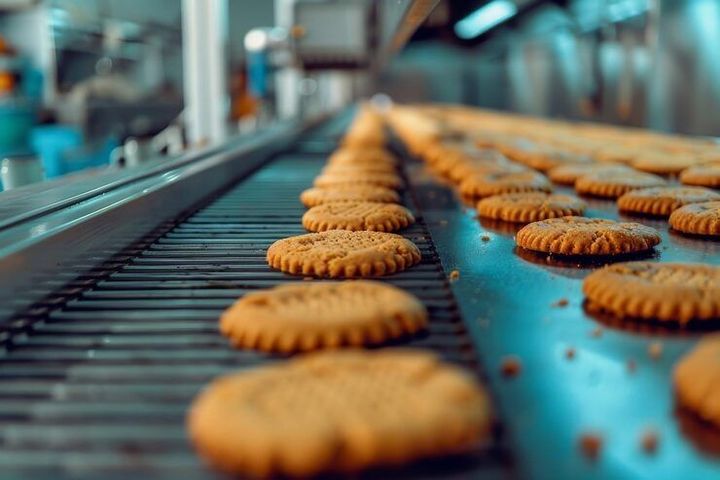
Biscuit cooling conveyors are part of the production process used after biscuits leave an oven. Freshly baked biscuits are hot, relatively soft, and may still contain moisture that needs to redistribute before the products move toward later handling stages. A cooling conveyor provides a controlled path where biscuits gradually lose heat while being transported.
The basic idea is straightforward: biscuits move continuously on a conveyor while surrounding air removes heat from their surfaces. Depending on the production arrangement, cooling may occur through natural airflow, forced air circulation, or a combination of both. The conveyor length, belt movement, airflow, product spacing, and surrounding conditions all influence the cooling process.
In a typical biscuit production line, dough preparation and forming are followed by baking. After baking, the biscuits enter a cooling section before processes such as inspection, stacking, packaging, or other forms of handling. The cooling stage therefore connects baking with the downstream parts of the production line.
How the cooling stage works
When biscuits leave an oven, their internal temperature is higher than the surrounding room temperature. Heat naturally moves from the warmer biscuit toward cooler surrounding air. At the same time, moisture and heat gradually move through the biscuit structure.
A biscuit cooling conveyor provides enough travel distance for this process to take place in a controlled sequence. The conveyor does not simply transport the product from one point to another; its movement and layout form part of the cooling process.
Main components
A biscuit cooling conveyor can include several interconnected elements:
- Conveyor belt or mesh surface for transporting biscuits
- Drive system for controlled belt movement
- Supporting structure and rollers
- Air circulation equipment where forced cooling is used
- Sensors for monitoring operating conditions
- Guards and access areas around moving components
- Transfer points connecting different conveyor sections
The exact arrangement depends on the biscuit type, production line design, available space, and required handling process.
Importance
Cooling is important because freshly baked biscuits can be fragile and difficult to handle immediately after leaving the oven. Their texture can continue to change as heat and moisture redistribute. Moving them directly into later stages without sufficient cooling can create handling difficulties.
A controlled cooling stage also helps establish more consistent conditions before packaging. Packaging a product while it is still excessively warm can affect the environment inside the package through retained heat and moisture. The appropriate cooling condition depends on the biscuit formulation, dimensions, baking process, packaging method, and production environment.
Why air circulation matters
Air circulation is one of the main factors in biscuit cooling. Air moving around the biscuits carries heat away from their surfaces. If airflow is uneven, different parts of a conveyor can experience different cooling conditions.
Forced-air systems use fans or other air-moving equipment to create a more controlled airflow pattern. The direction, volume, temperature, and distribution of air can influence how evenly biscuits cool.
Good airflow design generally considers:
- Air movement across exposed biscuit surfaces
- Uniformity from one conveyor section to another
- Interaction between product spacing and airflow
- Room temperature and humidity
- Heat released by the oven and surrounding equipment
- Protection from dust and other contaminants
Conveyor movement and product spacing
The movement of the conveyor determines how long biscuits remain within the cooling area. A slower belt gives the products more time in the cooling section, while a faster belt reduces their residence time.
Product spacing also matters. Biscuits placed too closely together can restrict airflow around their surfaces. Adequate spacing allows air to move around individual products and can support more uniform heat removal.
The conveyor may contain several sections rather than one continuous straight path. Longer layouts, multiple levels, or serpentine arrangements can provide additional cooling distance when floor space is limited.
Cooling and handling relationship
Cooling and handling are closely connected. A biscuit that is still hot or structurally delicate may respond differently to mechanical transfers than a biscuit that has reached a more stable condition.
Transfer points between conveyor sections therefore require careful attention. Changes in direction, elevation, belt speed, or spacing can influence how biscuits move. Excessive mechanical disturbance may result in cracked or broken products, while poorly controlled transfers can create accumulation.
Recent Updates
From 2024 through 2026, food-processing equipment has continued moving toward greater automation, monitoring, and process control. In biscuit production, this general trend includes increased attention to sensors, automated line control, airflow management, and digital monitoring.
More process monitoring
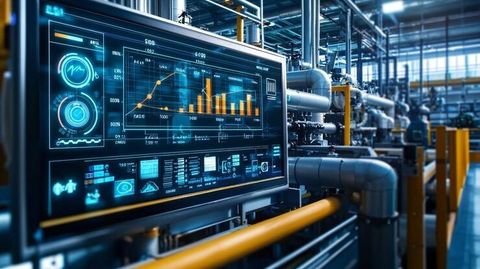
Modern production lines can use sensors to monitor operating conditions at different points. Depending on the equipment design, monitoring may include temperature, belt movement, airflow-related conditions, or production-line status.
Digital control systems can bring information from different parts of a production line into a centralized interface. This can make it easier for operators to observe whether equipment is functioning within its intended operating range.
Greater attention to energy management
Cooling systems may consume electricity through fans, motors, control systems, and related equipment. Current equipment-development trends therefore include attention to airflow efficiency, motor control, and coordinated operation between different parts of a production line.
The practical approach varies by factory. A cooling system must balance adequate heat removal with the operating conditions required for the specific biscuit product.
Hygiene-focused equipment design
Food-processing equipment is also increasingly designed with cleaning and sanitation considerations in mind. Accessible surfaces, suitable materials, controlled product movement, and reduced areas where food particles can accumulate are important considerations in hygienic production environments.
These developments do not change the basic principle of biscuit cooling. Instead, they add greater monitoring and control around the same fundamental processes of air circulation, conveyor movement, cooling, and handling.
Laws or Policies
For biscuit manufacturers in India, food-processing operations are governed by food-safety requirements administered under the Food Safety and Standards framework. FSSAI states that food businesses are required to follow applicable licensing or registration requirements and associated hygiene and sanitary practices.
FSSAI's hygiene requirements include provisions concerning equipment used for food handling and processing. Equipment that comes into contact with food is expected to be made from suitable materials and maintained in a clean and sanitary condition.
Temperature control is also relevant to food processing. FSSAI guidance states that food businesses should have systems for controlling time and temperature where these factors are important to food safety and suitability, including during cooling, with appropriate monitoring and records where applicable.
The regulatory framework continues to be updated. FSSAI's notification records show amendments to the Food Safety and Standards (Licensing and Registration of Food Businesses) Regulations during 2026, so food businesses should refer to current official requirements rather than relying only on older summaries.
For a biscuit production facility, the exact compliance requirements can depend on the type and scale of the food business and the processes being carried out. Equipment design alone does not determine compliance; sanitation procedures, food handling, documentation, licensing, facility layout, and other controls can also be relevant.
Tools and Resources
Several types of tools and resources can help readers understand or evaluate biscuit cooling conveyors.
Temperature measurement tools
Temperature sensors and handheld temperature-measuring devices can help monitor product or environmental conditions. In an industrial setting, permanently installed sensors may feed information into a control system.
Airflow measurement
Airflow-measuring instruments can be used to examine air movement around cooling equipment. These measurements can help identify differences between areas of a cooling conveyor and support process evaluation.
Conveyor monitoring systems
Industrial control systems can monitor belt speed, motor operation, equipment status, and selected process variables. Some systems can also record historical information for process analysis.
Maintenance records
Simple maintenance templates can track inspections of belts, rollers, motors, fans, bearings, guards, sensors, and transfer points. Keeping organized records can help identify recurring equipment issues.
Food-safety resources
For Indian food businesses, the Food Safety and Standards Authority of India provides regulations, notifications, guidance, and licensing information. The FoSCoS platform provides information related to food-business licensing and registration.
A useful reference for understanding current requirements is the official FSSAI food-laws and regulations section, where amendments and regulatory documents are published.
Typical cooling-conveyor factors
| Factor | What it influences |
|---|---|
| Conveyor speed | Time available for cooling |
| Conveyor length | Available cooling distance |
| Air movement | Heat transfer from biscuit surfaces |
| Product spacing | Air access around biscuits |
| Biscuit thickness | Heat movement through the product |
| Ambient temperature | Difference between biscuit and surrounding air |
| Humidity | Moisture-related conditions during cooling |
| Belt design | Product movement and airflow interaction |
| Transfer points | Handling stability between conveyor sections |
These factors interact with one another. Changing one operating condition may affect other parts of the cooling process, so production lines are normally assessed as complete systems rather than as isolated components.
FAQs
What is a biscuit cooling conveyor?
A biscuit cooling conveyor is a conveyor system that transports freshly baked biscuits while allowing heat to leave the products. It forms a transition between the baking stage and later handling or packaging stages.
How does air circulation affect biscuit cooling conveyors?
Air circulation carries heat away from biscuit surfaces. Even airflow can help create more consistent cooling conditions, while restricted or uneven airflow can result in differences between products or conveyor areas.
How does conveyor movement control cooling?
Conveyor movement determines how long biscuits remain inside the cooling area. Belt speed, conveyor length, product spacing, and the arrangement of multiple sections all influence the available cooling time.
Why is cooling important before biscuit handling?
Freshly baked biscuits can be hot and more susceptible to mechanical disturbance. Cooling allows their temperature and internal conditions to change before they reach subsequent handling or packaging stages.
What should be considered when evaluating biscuit cooling conveyors?
Important considerations include airflow, conveyor speed, belt arrangement, product spacing, cooling distance, hygiene, maintenance access, environmental conditions, and compatibility with the rest of the production line.
Conclusion
Biscuit cooling conveyors provide a controlled transition between baking and later stages of biscuit production. Their operation depends on the interaction of air circulation, conveyor movement, cooling distance, product spacing, and handling conditions. Modern systems increasingly incorporate sensors, automation, monitoring, and hygiene-focused design. In India, food-processing operations must also consider applicable FSSAI licensing, hygiene, equipment, and temperature-control requirements.