Carbon Fiber Filament Winding Machines Explained: Types, Components, Applications and Benefits
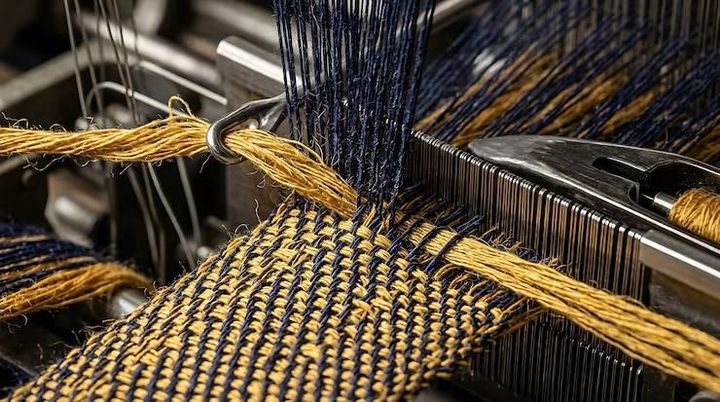
Carbon fiber filament winding machines are specialized manufacturing systems used to produce strong, lightweight composite structures. They wind continuous carbon fiber strands around a rotating mold or mandrel in carefully controlled patterns. The process is widely used to manufacture cylindrical and curved components, including pressure vessels, pipes, drive shafts, and structural parts for aerospace and industrial applications.
Context
Carbon fiber filament winding machines are specialized manufacturing systems used to produce strong, lightweight composite structures. They wind continuous carbon fiber strands around a rotating mold or mandrel in carefully controlled patterns. The process is widely used to manufacture cylindrical and curved components, including pressure vessels, pipes, drive shafts, and structural parts for aerospace and industrial applications.
Filament winding developed as manufacturers sought ways to arrange continuous fibers in specific directions to improve strength and control material use. Traditional winding systems relied more heavily on mechanical controls and operator adjustments, while modern machines may use computer-controlled movement, programmable winding patterns, and automated tension regulation. These developments allow manufacturers to create repeatable composite structures with carefully defined fiber orientations.
Understanding the Filament Winding Process
Carbon fiber consists of thin strands made primarily from carbon atoms. These fibers have high tensile strength relative to their weight, but they are generally combined with a polymer resin to form a composite material suitable for structural applications.
During filament winding, fibers are guided onto a mandrel, which determines the internal shape of the component. The fibers may pass through a resin bath or use a prepreg material in which resin has already been applied. After winding, the composite typically undergoes curing, followed by mandrel removal and finishing when required.
The final properties depend on several factors, including fiber direction, winding angle, resin selection, layer thickness, curing conditions, and component geometry. The machine controls the placement of the fibers, while the complete manufacturing process determines how the finished component performs.
Importance
Carbon fiber filament winding machines are important because many industries require structures that combine low weight with high mechanical strength. Reducing component weight can be useful in transportation, energy systems, industrial equipment, and aerospace engineering, where structural performance and operating requirements influence material selection.
The winding process also addresses the challenge of placing continuous reinforcement along specific load directions. Unlike materials with uniform properties in every direction, carbon fiber composites can be designed so that fibers carry loads along selected paths. However, their performance depends on correct design, manufacturing control, and inspection.
Main Industrial Applications
Filament-wound carbon fiber components are used in several fields:
Aerospace: Structural tubes, selected composite housings, and other components designed for demanding weight and strength requirements.
Automotive and transportation: Drive shafts, lightweight tubes, and selected structural components.
Energy systems: Composite pressure vessels and components used in hydrogen storage systems, subject to appropriate engineering standards.
Industrial equipment: Pipes, rollers, shafts, and other cylindrical structures.
Robotics and automation: Lightweight support tubes and structural members that move repeatedly.
Research and specialized engineering: Composite test specimens and custom-shaped components.
Not every carbon fiber component is manufactured by filament winding. Flat panels, complex aircraft structures, and many automotive body parts may use other methods, such as automated fiber placement, prepreg lay-up, or resin transfer molding.
Types of Carbon Fiber Filament Winding Machines
Machines differ in the way the mandrel rotates, the fiber-delivery system moves, and the winding pattern is controlled.
| Machine type | Main characteristics | Typical applications |
|---|---|---|
| Two-axis winding machine | Coordinates mandrel rotation and basic fiber-guide movement | Simple tubes and cylindrical parts |
| Three-axis winding machine | Adds another controlled movement for more flexible fiber placement | Tubes and selected complex profiles |
| Four-axis winding machine | Coordinates multiple movements to manage more detailed winding paths | Specialized composite components |
| Multi-axis CNC machine | Uses computer numerical control for coordinated motion and programmable patterns | Complex industrial and aerospace parts |
| Automated production system | Integrates winding with material feeding and other production controls | Repeated manufacturing runs |
Axis definitions can differ between manufacturers, so the number of axes alone does not establish what a particular machine can produce. Actual capability depends on its movement arrangement, software, mandrel design, and material-handling equipment.
Recent Updates
Developments in carbon fiber filament winding from 2024 through 2026 reflect broader manufacturing trends toward automation, digital process control, improved material handling, and more consistent production. The availability of these technologies varies by manufacturer and application, and not every facility uses the same level of automation.
Computer-Controlled Winding and Process Monitoring
Modern CNC filament winding machines can follow programmed paths that coordinate mandrel rotation with the movement of the fiber-delivery head. Software can help engineers define winding angles, layer sequences, and movement paths before production begins. Simulation may also help identify potential fiber-placement problems or interference between machine components.
Some systems incorporate sensors to monitor fiber tension, machine position, temperature, or other process conditions. Monitoring can help identify deviations during production, although sensor readings alone do not establish the quality of a finished composite. Inspection and testing may still be required.
Material Development and Manufacturing Efficiency
Carbon fiber materials continue to be developed for different stiffness, strength, temperature, and resin-compatibility requirements. Manufacturers also investigate improved resin systems, prepreg materials, and winding methods that can reduce defects or improve repeatability under defined production conditions.
Another area of interest is digital manufacturing documentation. Recording machine settings, material batches, curing conditions, and inspection results can help manufacturers trace production history and investigate defects. Environmental considerations include resin waste, energy use during curing, and the difficulty of recovering fibers from some cured composite structures.
Laws or Policies
Carbon fiber filament winding machines are affected by industrial safety rules, machinery requirements, environmental regulations, and product-specific standards. The applicable requirements depend on the country, facility, material system, and intended use of the manufactured component.
Industrial Safety and Machinery Requirements in India
In India, manufacturing facilities must consider applicable occupational safety, factory, electrical, and environmental requirements. The Occupational Safety, Health and Working Conditions Code, 2020, forms part of the country's labour-law framework, while the applicable commencement notifications and implementing requirements determine how particular provisions operate. Factory and workplace obligations may also depend on the relevant state rules and the facility's circumstances.
Filament winding operations may involve rotating mandrels, moving machine parts, resin chemicals, curing ovens, and carbon fiber dust during finishing. Appropriate machine guarding, emergency stops, ventilation, personal protective equipment, chemical handling procedures, and operator training are important elements of workplace risk management.
Product Standards and Export Considerations
Components such as pressure vessels and hydrogen storage cylinders may need to comply with standards or approval systems specific to their intended application. Depending on the design and destination market, relevant requirements may include applicable ISO standards, transport regulations, or sector-specific certification and testing procedures.
Carbon fiber materials and related production equipment may also be subject to export-control rules in certain circumstances, particularly where technical specifications, end use, or destination trigger restrictions. Manufacturers must determine the requirements applicable to their specific products rather than assuming that one standard applies to every component.
Tools and Resources
Engineering software, machine documentation, material specifications, and inspection equipment help manufacturers plan and evaluate filament winding operations. Their usefulness depends on the component geometry, production volume, material system, and required performance.
Design and Programming Tools
Computer-aided design (CAD) software can define component geometry and mandrel dimensions. Computer-aided manufacturing (CAM) tools and specialized winding software can translate design requirements into machine movements and winding patterns. Some systems also provide simulation functions to examine fiber paths and potential collisions before production.
Machine manuals and manufacturer documentation explain available axes, mandrel capacity, winding-angle limits, tension-control systems, and supported materials. These specifications are more informative than general machine descriptions when evaluating whether a system suits a particular component.
Materials and Inspection Resources
Composite material datasheets provide information about fiber properties, resin compatibility, storage requirements, and processing conditions. Technical references from organizations such as ASTM International and the International Organization for Standardization (ISO) can help identify relevant test methods and standards.
Inspection methods may include dimensional measurements, visual examination, ultrasonic testing, and other non-destructive testing techniques appropriate to the component. Pressure-bearing structures may require additional qualification and testing under the applicable design rules.
A manufacturing record can document fiber type, resin batch, winding angles, tension settings, curing cycle, operator checks, and inspection outcomes. Such records support traceability and help engineers investigate production variation.
FAQs
What is a carbon fiber filament winding machine?
A carbon fiber filament winding machine places continuous carbon fibers around a rotating mandrel in controlled patterns. The fibers are usually combined with resin and cured to form a composite component.
What are the main types of carbon fiber filament winding machines?
Common configurations include two-axis, three-axis, four-axis, and multi-axis CNC systems. Their capabilities depend on machine movement, control software, mandrel geometry, and material-delivery arrangements.
What are carbon fiber filament winding machines used for?
They are used to manufacture composite tubes, shafts, pipes, pressure vessels, and selected aerospace or industrial components. The process is particularly suitable for parts whose geometry can be formed by winding fibers around a mandrel.
How does CNC control improve filament winding?
CNC control coordinates machine movements and follows programmed fiber paths. This can improve repeatability and support more complex winding patterns, although finished quality also depends on material handling, curing, inspection, and process control.
What factors affect carbon fiber filament winding machine selection?
Important factors include component dimensions, required winding angles, number of controlled axes, fiber-tension control, resin system, production volume, software capability, and inspection requirements. Safety provisions and compatibility with the intended manufacturing process also matter.
Conclusion
Carbon fiber filament winding machines manufacture composite components by placing continuous fibers around a mandrel in controlled patterns. Machine configurations range from relatively simple systems to multi-axis CNC equipment used for more complex production requirements. Material selection, winding angles, curing conditions, inspection, and workplace safety all influence the final component. Applicable manufacturing standards and regulations depend on the product, facility, and intended application.