Static Mixers Guide: Components, Mixing Technologies, Industrial Uses and Key Features
Static mixers are industrial devices designed to blend two or more fluids as they move through a pipe or enclosed channel. Unlike traditional mechanical mixers, they do not use motors, rotating blades, or moving mixing elements inside the mixing chamber. Instead, they use specially shaped internal components to divide, redirect, and combine flowing materials.
Context
Static mixers are industrial devices designed to blend two or more fluids as they move through a pipe or enclosed channel. Unlike traditional mechanical mixers, they do not use motors, rotating blades, or moving mixing elements inside the mixing chamber. Instead, they use specially shaped internal components to divide, redirect, and combine flowing materials.
Static mixer technology developed from the need for continuous and consistent mixing in industrial processes. Traditional mixing equipment often relies on rotating components, which require additional mechanical systems. Static mixers introduced another approach by using fixed elements placed inside pipelines to create mixing through fluid movement.
Today, static mixers are used in chemical processing, water treatment, food production, pharmaceuticals, plastics manufacturing, and other industrial sectors. They can handle different combinations of liquids, gases, and certain solid-liquid mixtures, depending on their design and operating conditions.
What Is a Static Mixer?
A static mixer is a stationary mixing device containing a series of fixed internal elements. When fluids enter the mixer, these elements divide the flow into smaller streams, change their direction, and repeatedly recombine them.
This process helps distribute different materials throughout the flowing mixture. The level of mixing depends on factors such as fluid viscosity, flow rate, element geometry, pressure, and the physical properties of the materials.
Main Components of Static Mixers
A typical industrial static mixer consists of several important components:
Mixer Housing: The external pipe or cylindrical body that contains the mixing elements and directs fluid movement.
Mixing Elements: Fixed internal structures that divide and redirect flowing materials to create uniform distribution.
Inlet Connection: The entry point through which liquids, gases, or other materials enter the mixing system.
Outlet Connection: The section through which the mixed material exits the equipment.
Sealing Components: Gaskets and other sealing arrangements that help prevent leakage between connections.
Supporting Structure: External supports and connections that maintain the equipment's position within an industrial pipeline.
The materials used in construction vary according to operating conditions. Stainless steel, carbon steel, and selected engineering plastics are commonly used for different industrial applications.
Importance
Static mixers play an important role in modern manufacturing because many industrial processes require materials to be combined in consistent proportions. Uneven mixing can affect product characteristics, chemical reactions, processing efficiency, and final material quality.
Their stationary design also makes them suitable for continuous production environments where materials move through pipelines rather than being processed in separate mixing tanks.
Why Static Mixing Matters
Several industrial challenges explain the importance of static mixer technology:
Consistent Material Distribution: Static mixing helps distribute ingredients, chemicals, and other substances throughout a flowing material.
Continuous Processing: Materials can be mixed while moving through an existing pipeline, supporting continuous manufacturing operations.
Compact Equipment Design: Static mixers can be installed within pipeline systems without requiring a separate rotating mixing assembly.
Reduced Mechanical Complexity: Their fixed internal components eliminate the need for internal rotating shafts, blades, and associated drive mechanisms.
Process Integration: They can be incorporated into chemical processing lines, water treatment systems, and production equipment.
Industries That Use Static Mixers
Static mixer applications cover several industrial sectors.
Chemical Processing: Chemical manufacturers use static mixers to combine liquid chemicals, distribute additives, and support controlled reactions. Their suitability depends on chemical compatibility, pressure, temperature, and fluid characteristics.
Water and Wastewater Treatment: These devices help distribute treatment chemicals throughout flowing water. Applications include chemical dosing, pH adjustment, and processes involving coagulants or disinfectants.
Food and Beverage Manufacturing: Static mixers can combine liquid ingredients, additives, and other compatible food-processing materials. Hygienic construction and appropriate cleaning arrangements are important considerations.
Pharmaceutical Manufacturing: Certain pharmaceutical production processes use static mixers for controlled liquid blending and continuous processing. Equipment design must meet applicable hygiene and material compatibility requirements.
Oil and Gas Processing: Static mixers are used for blending compatible fluids, distributing additives, and supporting certain gas-liquid processing operations.
Plastics and Polymer Manufacturing: These devices can distribute pigments, additives, and other materials throughout polymer streams. Special configurations are sometimes required for highly viscous materials.
Recent Updates
Static mixer technology continues to develop through improvements in equipment geometry, computational engineering, advanced manufacturing, and process monitoring. Research published between 2024 and 2026 highlights growing interest in more efficient mixing designs and specialized applications.
Advances in Static Mixer Design
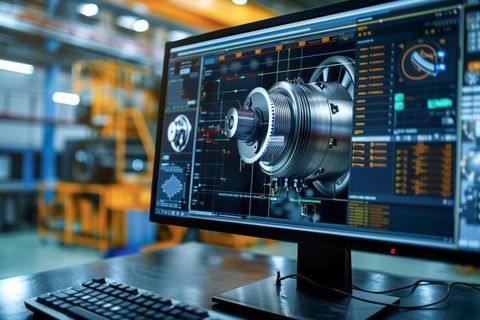
One important development is the use of computational fluid dynamics (CFD) to study how liquids and gases move through mixing elements. Engineers can use computer simulations to examine flow distribution, pressure drop, turbulence, and mixing performance before manufacturing physical equipment.
Research has also explored machine learning and artificial intelligence for developing specialized mixer geometries. These approaches can help researchers evaluate different design possibilities and identify configurations suited to particular operating conditions.
3D Printing and Advanced Manufacturing
Additive manufacturing, commonly known as 3D printing, is creating new possibilities for producing complex internal mixer structures.
Research published in 2026 demonstrated an approach combining generative AI, computational fluid dynamics, and 3D printing to develop static mixer geometries based on selected performance requirements. This research illustrates how digital design methods may support customized industrial mixing equipment.
Energy and Mixing Efficiency
Another area of research focuses on balancing mixing performance with pressure drop and energy requirements. A 2026 study examined gyroid-based static mixer structures using triply periodic minimal surfaces. Such research investigates how alternative internal geometries may improve fluid distribution while managing energy consumption.
Digital Monitoring and Process Control
Industrial manufacturers are increasingly interested in monitoring production conditions through sensors and digital control systems. Static mixing installations can be integrated with flow meters, pressure sensors, temperature instruments, and automated process controls.
These technologies help operators observe changes in operating conditions and identify possible process irregularities.
Laws or Policies
In India, industrial static mixers are influenced by regulations covering factory safety, environmental protection, chemical handling, and manufacturing operations. The specific requirements depend on the industry, materials being processed, installation conditions, and location of the facility.
Industrial Safety Regulations
The Factories Act, 1948, and applicable state factory rules provide an important framework for occupational safety and workplace conditions in factories, subject to the applicable legal framework and commencement provisions.
Industrial installations must consider equipment safety, pressure conditions, maintenance procedures, worker protection, and safe chemical handling.
For facilities handling hazardous chemicals, the Manufacture, Storage and Import of Hazardous Chemical Rules, 1989, establish additional requirements relating to chemical safety, accident prevention, and emergency preparedness.
Environmental Protection Requirements
Several Indian environmental laws can affect industrial facilities using static mixers:
Water (Prevention and Control of Pollution) Act, 1974: Addresses industrial wastewater discharge and water pollution control.
Air (Prevention and Control of Pollution) Act, 1981: Establishes requirements for controlling industrial air pollution.
Environment (Protection) Act, 1986: Provides a framework for environmental standards and pollution prevention.
Hazardous and Other Wastes Rules, 2016: Regulates the management, storage, transportation, and disposal of specified hazardous and other wastes.
The Central Pollution Control Board (CPCB) and respective State Pollution Control Boards oversee relevant environmental requirements. Depending on the facility and its activities, industrial units may require applicable consent and environmental permissions.
Tools and Resources
Different engineering tools and technical resources help manufacturers understand static mixer performance, select appropriate configurations, and evaluate industrial operating conditions.
Engineering and Design Tools
Computational Fluid Dynamics Software: Programs such as ANSYS Fluent and COMSOL Multiphysics help engineers simulate fluid movement and study mixing performance.
CAD Software: Autodesk Inventor and SolidWorks support three-dimensional equipment modelling and component design.
Pressure Drop Calculators: Engineering calculation tools help estimate pressure losses across pipeline mixing elements.
Flow Measurement Instruments: Flow meters measure the quantity of fluid passing through a mixing system.
Industrial Sensors: Pressure and temperature sensors help monitor operating conditions during production.
Technical Information Resources
Several organizations publish information about industrial engineering, manufacturing, and equipment standards.
| Resource | Main Area of Information |
|---|---|
| Bureau of Indian Standards (BIS) | Indian industrial and equipment standards |
| Central Pollution Control Board (CPCB) | Environmental regulations and pollution control |
| Ministry of Environment, Forest and Climate Change | Environmental policies and notifications |
| ANSYS | Computational fluid dynamics and engineering simulation |
| COMSOL | Multiphysics modelling and fluid-flow analysis |
| ASTM International | Materials and testing standards |
These resources help readers understand technical requirements, engineering principles, and regulatory considerations associated with industrial mixing systems.
FAQs
What Is a Static Mixer Used For?
A static mixer combines two or more flowing materials through fixed internal elements. It is used in chemical processing, water treatment, food manufacturing, plastics production, and other industrial applications.
How Does a Static Mixer Work?
A static mixer works by dividing, redirecting, and recombining flowing materials through stationary internal structures. Repeated changes in flow direction help distribute the materials throughout the mixture.
What Are the Main Types of Static Mixers?
Common static mixer configurations include helical element mixers, plate-type mixers, grid mixers, and specialized mixing structures. Each design creates different flow patterns and is suited to particular fluid properties and processing requirements.
What Is the Difference Between Static and Dynamic Mixers?
A static mixer uses fixed internal elements without rotating components inside the mixing chamber. A dynamic mixer uses moving components, such as blades or impellers, to generate mixing. Their suitability depends on the material properties and production process.
Which Industries Use Industrial Static Mixers?
Industrial static mixers are used in chemical manufacturing, pharmaceuticals, food processing, water treatment, oil and gas, plastics, and polymer production. Their configurations vary according to the materials and operating conditions.
Conclusion
Static mixers are important components in continuous industrial processing because they combine flowing materials through stationary internal elements. Their applications extend across chemical manufacturing, water treatment, food processing, pharmaceuticals, and polymer production. Developments in computational engineering, artificial intelligence, and additive manufacturing are creating new possibilities for specialized mixer designs. Their performance depends on equipment geometry, fluid properties, pressure conditions, and the requirements of individual industrial processes.