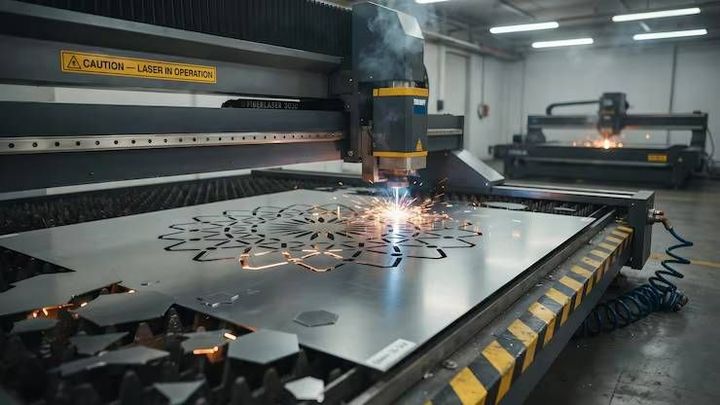
CO2 Laser Cutting Machines Guide: Working Principles, Materials, Features and Applications
CO2 laser cutting machines are computer-controlled systems that use a carbon dioxide laser beam to cut, engrave, or mark selected materials. They have been used in industrial fabrication for decades and remain relevant for sheet materials, plastics, wood, acrylic, textiles, and other non-metallic applications, while some metal-cutting systems also use CO2 technology. A CO2 laser cutting machine combines a laser source, optics, motion system, cutting head, work table, control software, assist gas, and exhaust equipment. Understanding the working principles, materials, features, and applications helps explain where this technology fits within modern manufacturing.
What a CO2 laser cutting machine is
A CO2 laser produces an infrared beam by electrically exciting a gas mixture inside a sealed or flowing tube. Mirrors and lenses guide and focus the beam onto a selected point on the material. The concentrated energy heats and removes a small area, creating a cut or engraved feature as the machine head follows a programmed path.
The cutting process is controlled through computer-aided design files and machine-control software. A drawing is converted into tool paths that define movement, speed, power, and other process settings. Assist gases such as air, oxygen, or nitrogen can be used to move molten material and fumes away from the cutting zone.
How the technology developed
CO2 laser technology emerged from early laser research in the 1960s and became increasingly useful for industrial material processing as laser sources, optics, controls, and motion systems improved. Over time, machines became more automated and easier to connect with digital design and production systems.
The technology now exists alongside fiber and other laser systems. CO2 systems remain particularly relevant where their wavelength and process characteristics suit materials such as acrylic, wood, textiles, plastics, rubber, and selected metals.
Importance
Why CO2 laser cutting matters
CO2 laser cutting machines can create detailed shapes without requiring a conventional cutting blade to contact the material. This makes them useful for intricate profiles, openings, lettering, patterns, and repeated components.
The technology also supports digital production. Once a suitable drawing and cutting program are prepared, the machine can reproduce the same geometry across multiple sheets or workpieces, subject to material variation and correct process settings.
For general users, the main areas of importance include:
- Precision: A focused beam can create narrow cuts and detailed contours.
- Flexibility: Different lenses, power levels, gases, and settings can support different materials.
- Digital control: CAD files and CNC controls connect design information with machine movement.
- Repeatability: Programmed paths can be reused when the same geometry is required.
- Material processing: The technology can handle many non-metallic materials and selected metals, depending on machine configuration.
- Automation: Loading, unloading, sensing, nesting, and monitoring can be integrated into larger production systems.
Materials commonly processed
Material suitability depends on laser power, thickness, composition, surface condition, optics, and machine configuration. A material that cuts cleanly at one setting may behave differently at another thickness or speed.
| Material | Typical CO2 laser use | Important consideration |
|---|---|---|
| Acrylic | Profiles, signs, panels, decorative parts | Edge finish and heat effects |
| Wood | Panels, patterns, components | Smoke, resin, and moisture |
| Cardboard | Prototypes, packaging patterns | Fire and heat control |
| Textiles | Patterns and cut pieces | Material composition |
| Plastics | Sheets and shaped parts | Polymer type and fumes |
| Rubber | Gaskets and flexible parts | Composition and ventilation |
| Glass | Marking or surface treatment | Process method and setup |
| Mild steel | Cutting on suitable systems | Power, thickness, and assist gas |
Some materials should not be processed without confirming their composition and machine guidance. Chlorine-containing plastics, for example, can produce hazardous fumes when heated. Material safety information and machine documentation should be checked before processing unfamiliar materials.
Recent Updates
Automation and digital control
From 2024 through 2026, laser cutting development has continued to emphasize automation, digital programming, machine monitoring, and integration with production software. Modern systems increasingly connect CAD/CAM workflows, nesting, sensors, material handling, and production tracking.
AI-assisted software has also appeared in laser and punch-laser workflows. Recent industrial developments include software that can help evaluate machine run-in conditions, automate programming steps, and use production data to support process decisions. These developments are part of a wider move toward connected manufacturing rather than changes to the basic CO2 laser principle.
Energy and material efficiency
Manufacturers across the laser-cutting sector have also focused on energy management, cooling systems, material utilization, and automated nesting. Nesting software arranges multiple parts on a sheet to reduce unused areas. Machine monitoring can provide information about operating conditions, while improved cooling and control systems can reduce unnecessary energy use.
Another trend is greater integration between cutting equipment and material handling. Automated loading, part removal, sorting, and production tracking can reduce manual movement around the cutting area and create a more connected workflow.
Laws or Policies
Workplace safety in India
In India, laser cutting operations can fall within broader workplace safety and industrial regulations rather than a single rule written only for CO2 laser cutting machines. The Occupational Safety, Health and Working Conditions Code, 2020 is part of the national framework for workplace safety and working conditions. The four Labour Codes, including the OSH Code, came into force on 21 November 2025.
For factories, safety planning can include machine guarding, electrical safety, ventilation, fire precautions, protective procedures, training, and control of workplace hazards. State-level implementation and applicable rules can also matter because factories are subject to the appropriate government and regulatory framework.
Laser equipment also requires attention to optical radiation hazards. Enclosed machine designs, interlocks, warning labels, controlled access, and appropriate operating procedures can help reduce exposure risks. Applicable Indian Standards and the machine manufacturer's technical documentation should be checked for the particular equipment.
Environmental requirements may also apply where cutting produces smoke, dust, fumes, or other emissions. The relevant state pollution control authority and local requirements can determine ventilation, exhaust, waste handling, and other environmental controls.
Tools and Resources
Design and programming tools
Common digital tools used with CO2 laser cutting include CAD software for creating drawings, CAM or nesting software for generating cutting paths, and CNC control software for machine operation. File formats vary by machine and workflow, so compatibility should be confirmed before preparing production files.
Nesting tools can arrange multiple shapes on a sheet while considering spacing, orientation, and cutting sequence. Some modern programming platforms also connect design, nesting, cutting, and production information within a single workflow.
Measurement and reference resources
Helpful resources can include:
- Material data sheets for understanding composition and thickness.
- Laser manufacturer's manuals for operating limits and recommended settings.
- CAD/CAM documentation for file preparation and tool-path concepts.
- Machine maintenance records for tracking optics, filters, cooling, and other components.
- Government labour and safety portals for current regulatory information.
- Bureau of Indian Standards resources for locating applicable Indian Standards.
A cutting parameter chart can be useful for recording material type, thickness, laser power, speed, focus position, assist gas, and observed edge condition. Such records help operators understand how process changes affect results without assuming that one setting works for every machine.
FAQs
What is a CO2 laser cutting machine?
A CO2 laser cutting machine uses an infrared laser beam generated from a carbon-dioxide-based gas mixture to heat and remove material along a programmed path. It can be configured for many non-metallic materials and selected metal applications.
How does a CO2 laser cutting machine work?
The laser source generates a beam that is guided through mirrors and focusing optics. The focused beam heats the material while the cutting head moves according to computer-controlled instructions, with assist gas helping remove material and fumes from the cutting zone.
What materials can CO2 laser cutting machines process?
CO2 laser cutting machines can process materials such as acrylic, wood, cardboard, textiles, rubber, and some plastics. Certain systems can also cut metals, depending on laser power, optics, thickness, machine design, and process settings.
What are the main features of a CO2 laser cutting machine?
Common features include a laser source, focusing lens, motion-control system, CNC controller, work table, exhaust system, assist-gas system, safety enclosure, and software for design or machine programming. Automation and monitoring features vary by model.
Are CO2 laser cutting machines safe to operate?
They can involve laser radiation, heat, smoke, moving parts, electrical hazards, and fire risks. Safe operation depends on suitable enclosure and interlock systems, ventilation, training, maintenance, material controls, and compliance with applicable workplace requirements.
Conclusion
CO2 laser cutting machines combine a laser source, optics, motion control, software, and material-handling systems to create programmed cuts and patterns. Their applications include acrylic, wood, textiles, plastics, rubber, and selected metal processing, with results depending on material and machine configuration. From 2024 through 2026, development has increasingly focused on automation, digital programming, monitoring, nesting, and resource efficiency. In India, workplace safety and environmental requirements form an important part of responsible laser-cutting operations.