Coffee Roasting Machine Guide: Machine Types, Features and Important Selection Factors
A Coffee Roasting Machine is used to heat green coffee beans under controlled conditions so they develop the aroma, color, flavor, and texture associated with roasted coffee. Roasting is a carefully controlled process because temperature, airflow, roasting time, and cooling can all influence the final result. From small batch equipment to larger industrial systems.
Understanding Coffee Roasting Machines
What a coffee roasting machine does
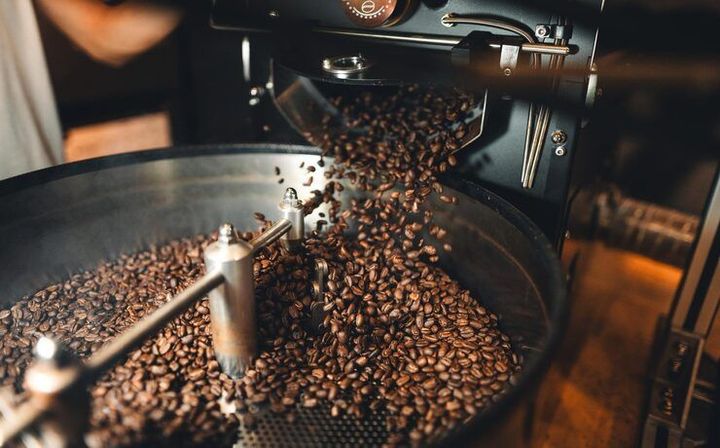
Green coffee beans contain moisture and natural compounds that change when exposed to heat. A coffee roasting machine applies controlled heat while the beans move through the roasting chamber. As the temperature rises, moisture leaves the beans and a series of chemical reactions changes their color, aroma, structure, and flavor characteristics.
A typical roasting process includes several stages:
- Loading green beans into the roasting chamber
- Heating the beans progressively
- Controlling temperature and airflow
- Monitoring changes during roasting
- Reaching the intended roast development
- Removing the roasted beans
- Cooling the beans rapidly
The exact process depends on the machine design and the desired roast profile.
How coffee roasting developed
Early coffee roasting was often performed using simple pans, rotating containers, or manually operated roasting vessels. As coffee production expanded, mechanical equipment was developed to provide more consistent heating and easier control.
Modern machines can incorporate temperature sensors, airflow controls, programmable settings, digital displays, automated cooling systems, and data recording. These features allow operators to repeat roasting profiles more consistently while adjusting parameters when different coffee beans require different treatment.
Main machine categories
Coffee roasting machines can be grouped according to their heating method, drum design, batch capacity, and operating system. Common categories include drum roasters, fluid-bed roasters, sample roasters, and larger continuous roasting systems.
Drum roasters use a rotating chamber to keep beans moving while heat is transferred through the roasting environment. Fluid-bed machines use heated air to suspend and move the beans. Sample roasters are generally designed for small quantities used for testing and evaluation, while larger production systems are designed for higher throughput.
Why Coffee Roasting Machines Matter
Roasting has a major influence on the characteristics of finished coffee. Even when green beans come from the same source, changes in heat application and roasting duration can produce noticeable differences in aroma, acidity, body, color, and flavor.
Consistency in roasting
Manual roasting can be difficult to reproduce precisely because temperature changes, heating patterns, and operator actions may vary. A machine can provide more controlled conditions by regulating important process variables.
Consistency does not mean that every coffee should be roasted identically. Different bean varieties, sizes, moisture levels, and processing methods may require different roasting profiles.
Production requirements
The appropriate machine size depends partly on how much coffee needs to be roasted within a particular period. A small operation may work with smaller batch equipment, while a large production facility may require equipment designed for repeated high-volume batches.
Important capacity considerations include:
- Batch size
- Number of batches per hour
- Roasting duration
- Cooling duration
- Available floor area
- Electrical or fuel requirements
- Ventilation arrangements
- Expected production schedule
Capacity should be considered alongside the entire workflow rather than as an isolated specification.
Heat and airflow control
Temperature control determines how quickly beans absorb heat, while airflow helps remove moisture, smoke, and other roasting by-products. The balance between these variables affects how the roast develops.
Some machines allow operators to adjust burner intensity, drum speed, airflow, or other process parameters. More advanced equipment may record these changes so roasting profiles can be reviewed later.
Types of Coffee Roasting Machines
Drum coffee roasters
Drum roasters are widely associated with traditional coffee roasting. Beans move inside a rotating drum while heat reaches them through a combination of direct and indirect heating.
Their operation allows the beans to remain in motion during roasting, helping distribute heat throughout the batch. Drum machines are available in different capacities, from small equipment for limited batches to large systems for commercial production.
Fluid-bed coffee roasters
Fluid-bed roasters use heated air to move and roast coffee beans. The air circulation can provide rapid heat transfer and helps keep beans moving throughout the roasting chamber.
These machines may have a different roasting profile from conventional drum equipment. Their operation can be useful where rapid roasting and strong airflow control are important considerations.
Sample coffee roasters
Sample roasters are designed for small quantities of green coffee. They are commonly used when coffee characteristics need to be evaluated before larger quantities are roasted.
Because the batch size is small, sample roasting can help compare different beans, processing methods, or roasting profiles. These machines are particularly relevant for quality evaluation and product development.
Continuous coffee roasting systems
Continuous systems are designed for larger-scale operations where coffee moves through different stages without treating every quantity as an independent batch.
They can integrate roasting, airflow management, temperature monitoring, and cooling into a larger production process. Such systems require careful planning because their installation can involve ventilation, electrical, fuel, space, and emissions considerations.
Important Features to Examine
A Coffee Roasting Machine can have many specifications, but not every feature has the same importance for every application.
Capacity and batch size
Capacity describes how much green coffee can be processed during a batch or through a continuous system. A larger nominal capacity does not automatically mean the equipment is suitable for every production environment.
Operators should consider expected batch frequency, available space, cooling capacity, and downstream processing requirements.
Temperature monitoring
Temperature sensors provide information about conditions inside the roasting system. Some machines monitor bean temperature, while others also measure environmental or exhaust temperature.
Accurate monitoring helps operators understand how the roast is progressing. Digital displays and recording functions can make it easier to compare roasting sessions.
Airflow adjustment
Airflow influences heat transfer and the movement of moisture and roasting gases. Adjustable airflow allows operators to modify the roasting environment during different stages.
The required airflow depends on the machine design, bean quantity, roast profile, and other operating conditions.
Cooling system
Cooling begins immediately after roasting. Rapidly reducing bean temperature helps stop further roasting reactions and prepares the beans for subsequent handling.
Cooling systems may use air circulation, cooling trays, agitation, or combinations of these methods. The cooling capacity should be considered alongside the roasting capacity.
Control system
Control systems range from manual switches and gauges to programmable digital interfaces. Some equipment allows users to create, store, and repeat roasting profiles.
Useful control functions can include:
- Temperature adjustment
- Airflow adjustment
- Drum-speed control
- Roast-time monitoring
- Batch recording
- Alarm settings
- Cooling control
The level of automation should match the operator's experience and production requirements.
Key Selection Factors
Choosing a Coffee Roasting Machine involves evaluating the relationship between machine characteristics and the intended roasting process.
| Selection factor | What to examine | Why it matters |
|---|---|---|
| Batch capacity | Quantity processed per batch | Helps match equipment with production volume |
| Heating method | Drum, air, or other heating approach | Influences heat transfer and roasting behavior |
| Temperature control | Sensors, controls, and monitoring range | Supports process observation |
| Airflow | Adjustment range and circulation design | Helps manage heat and roasting gases |
| Cooling | Cooling capacity and duration | Limits continued roasting after discharge |
| Controls | Manual or programmable operation | Affects workflow and repeatability |
| Energy source | Electricity, gas, or other approved source | Influences installation requirements |
| Ventilation | Exhaust and airflow arrangements | Supports appropriate operating conditions |
| Maintenance | Cleaning and inspection access | Affects routine upkeep |
| Space | Machine dimensions and surrounding clearance | Helps with installation planning |
Energy requirements
Coffee roasting requires substantial heat, so energy consumption is an important consideration. Machines may use electricity, gas, or another approved heating method depending on their design and local requirements.
Energy use can vary according to batch size, roast duration, machine insulation, operating temperature, airflow, and heat recovery arrangements. Comparing energy requirements should therefore involve the complete operating process rather than relying on one specification.
Ventilation and emissions
Roasting produces smoke, chaff, moisture, and gases. Appropriate exhaust and ventilation arrangements are therefore important parts of machine installation.
The requirements can vary according to machine size, heating method, building design, and local environmental regulations. Equipment should be installed according to applicable technical and safety requirements.
Maintenance and cleaning
Coffee roasting produces chaff and residue that can accumulate in roasting chambers, ducts, filters, and collection areas. Regular inspection and cleaning are therefore important for maintaining appropriate operating conditions.
Before selecting equipment, users should understand which components require routine attention and whether access points allow cleaning to be performed efficiently.
Recent Developments in Coffee Roasting Equipment
Between 2024 and 2026, coffee roasting technology has continued moving toward greater digital control, process monitoring, energy awareness, and automation.
Digital monitoring
Modern roasting equipment increasingly incorporates digital sensors and electronic controls. Operators can monitor temperature changes, airflow, roasting duration, and other process information through integrated interfaces.
Data recording can also make it easier to compare batches and identify differences between roasting sessions.
Automation and repeatability
Automation is becoming more common in roasting equipment. Programmable roasting profiles can help operators reproduce established process settings while still allowing manual adjustments when required.
Automation does not remove the need for human oversight. Bean characteristics can vary between batches, so operators still need to understand how changes in raw material affect roasting behavior.
Energy efficiency
Energy efficiency has also received increased attention. Manufacturers and operators are examining insulation, heat recovery, burner control, airflow management, and other approaches that may reduce unnecessary heat loss.
The actual energy performance of a machine depends on operating conditions, maintenance, batch size, and production practices.
Laws and Policies Related to Coffee Roasting Machines
Rules affecting coffee roasting equipment depend on the country, region, building type, fuel source, and scale of operation. There is no single global regulatory framework covering every roasting installation.
Equipment safety
Commercial roasting equipment may be subject to electrical, mechanical, fire, gas, pressure, or workplace safety requirements. The exact requirements depend on the machine and location.
Operators should consult applicable local regulations and qualified technical professionals when planning installation or modification.
Environmental requirements
Coffee roasting generates exhaust gases, smoke, and particulate matter. Larger roasting facilities may therefore be subject to environmental or air-emission requirements.
Regulatory thresholds can vary according to production capacity and local legislation. Ventilation and exhaust arrangements should be planned according to the requirements that apply to the installation.
Workplace considerations
Roasting areas involve hot surfaces, moving components, electrical equipment, and potentially combustible materials. Workplace rules may address machine guarding, emergency procedures, ventilation, protective equipment, and employee training.
Safety requirements should be reviewed before equipment is commissioned and whenever the production setup changes.
Tools and Resources for Coffee Roasting
Several practical resources can support machine selection and roasting analysis.
Roast profile templates
A roast profile template can record variables such as starting temperature, temperature changes, airflow adjustments, roast duration, and cooling time. Comparing these records can help identify differences between batches.
Capacity calculators
Production capacity calculators can estimate theoretical output based on batch size, roasting time, cooling time, and operating hours. Actual output may differ because of loading, unloading, cleaning, maintenance, and workflow interruptions.
Energy-use worksheets
An energy-use worksheet can record heating source, operating duration, batch quantity, and energy consumption. Reviewing this information over multiple batches can provide a clearer picture of machine operation.
Manufacturer documentation
Technical manuals, installation guides, specification sheets, and maintenance instructions can provide important information about dimensions, utilities, operating limits, cleaning procedures, and safety requirements.
FAQs
What is a Coffee Roasting Machine used for?
A Coffee Roasting Machine heats green coffee beans under controlled conditions to develop their color, aroma, texture, and flavor. Different machines use different heating and airflow methods.
Which Coffee Roasting Machine types are available?
Common types include drum roasters, fluid-bed roasters, sample roasters, and continuous roasting systems. They differ in capacity, heat transfer, controls, and intended production scale.
What features should be considered in a Coffee Roasting Machine?
Important features include batch capacity, temperature monitoring, airflow control, cooling capacity, control systems, energy requirements, ventilation, cleaning access, and available installation space.
How does a coffee roasting machine control temperature?
Temperature can be managed through heating controls, airflow adjustments, sensors, and programmed roasting profiles. The exact control method depends on the machine design.
Why is cooling important after coffee roasting?
Cooling reduces the temperature of roasted beans and helps limit further roasting after the beans leave the heating chamber. Effective cooling is therefore an important part of the roasting process.
Conclusion
A Coffee Roasting Machine is an important part of coffee processing because controlled heat transforms green beans into roasted coffee with distinct physical and sensory characteristics. Drum, fluid-bed, sample, and continuous systems provide different approaches to roasting, while capacity, temperature control, airflow, cooling, energy use, and maintenance are important selection factors. Recent equipment developments increasingly emphasize digital monitoring, automation, process recording, and energy awareness. Installation and operation should also account for applicable safety, ventilation, environmental, and workplace requirements.