Discover the fundamentals of Food Industry Machinery and Key Insights
Food industry machinery refers to the equipment used to process, prepare, preserve, handle, and package food products. These machines are found in facilities that process grains, dairy products, meat, fruits, vegetables, baked goods, beverages, and other food categories. Their functions range from basic mixing and cutting to automated production, temperature control, filling, sealing, and packaging.
Context
The development of food processing machinery is closely connected to the growth of agriculture, food preservation, and large-scale food distribution. Traditional food preparation relied heavily on manual work and simple tools, while industrial production introduced mechanical equipment to handle larger quantities and maintain more consistent processing conditions.
Modern food manufacturing combines mechanical equipment, electrical controls, sensors, and software to coordinate different production stages. The type of machinery used depends on the food's characteristics, production volume, processing requirements, and intended packaging format.
Food industry machinery does not perform a single function. Instead, it forms part of a connected production system in which raw materials move through preparation, processing, inspection, packaging, and storage.
Main categories of food processing machinery
Food processing equipment can be grouped according to its primary function.
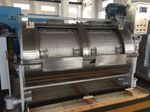
Preparation equipment: Washers, peelers, slicers, cutters, and sorting machines prepare ingredients before processing.
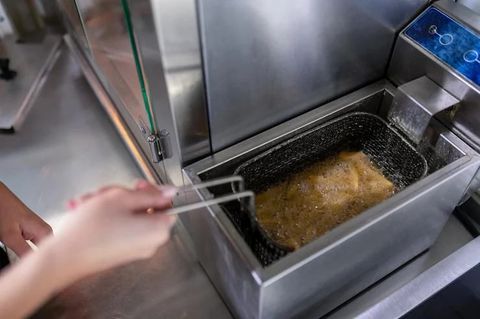
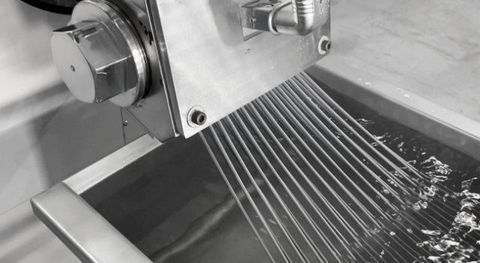
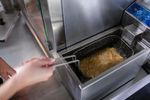
Processing equipment: Mixers, grinders, blenders, ovens, fryers, and pasteurization systems transform ingredients into finished or partially processed products.
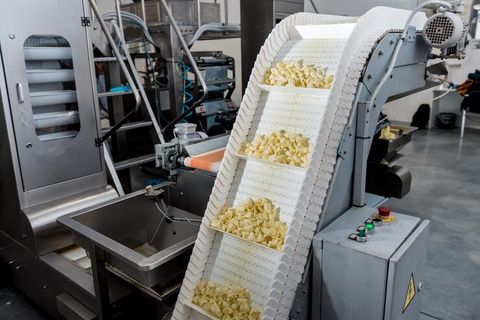
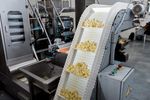
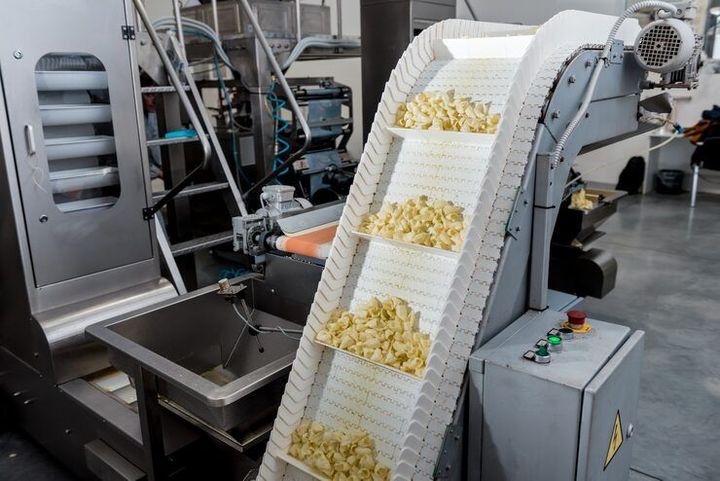
Material-handling equipment: Conveyors, elevators, pumps, and hoppers move ingredients and products between production stages.
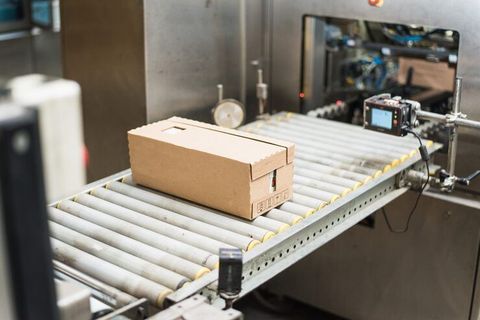
Filling and packaging equipment: Filling machines, sealing machines, labeling machines, and wrapping systems prepare products for distribution.
Inspection equipment: Metal detectors, checkweighers, and vision inspection systems help identify particular product or packaging defects.
How food industry machinery works
Most food production systems follow a sequence of operations. Raw materials are received and inspected, prepared for processing, transformed according to the product requirements, and transferred to packaging equipment. Additional steps may include cooling, heating, drying, freezing, or controlled storage.
Individual machines can operate independently or form part of an automated production line. In an integrated system, sensors and control units coordinate operating speed, temperature, pressure, filling quantities, and other process variables.
The machinery must also be suitable for contact with the food being processed. Equipment design therefore considers cleanability, material compatibility, drainage, temperature exposure, and the prevention of contamination.
Importance
Food industry machinery plays an important role in the modern food supply chain. As food moves from farms and ingredient suppliers to processors, retailers, restaurants, and consumers, machinery helps manage repetitive operations and handle production at different scales.
Mechanized processing can improve consistency between batches and reduce the amount of repetitive manual handling required. It can also support controlled heating, cooling, mixing, portioning, and packaging, depending on the equipment and how it is operated.
These functions are relevant to manufacturers of packaged foods, bakeries, beverage producers, agricultural processors, commercial kitchens, and facilities handling frozen or refrigerated products.
Food safety and product consistency
Food safety is a central consideration in equipment selection and operation. Poorly designed or inadequately cleaned machinery can allow food residues, microorganisms, allergens, or foreign materials to remain in processing areas.
Equipment used for food production may therefore incorporate smooth contact surfaces, accessible cleaning points, suitable seals, and construction materials compatible with the intended food and cleaning procedures. The required design depends on the product, processing conditions, and applicable regulations.
Consistent operating conditions are also important. For example, a heating system must maintain the process conditions required for the particular food, while a filling machine must deliver the intended quantity within its operating specifications.
Production efficiency and resource management
Food processing equipment can influence production speed, energy consumption, water use, ingredient losses, and packaging waste. A poorly coordinated production line may experience delays when one machine operates more slowly than the equipment before or after it.
Manufacturers therefore consider how individual machines interact across the production process. Relevant factors include throughput, changeover time, cleaning requirements, maintenance access, and compatibility with existing equipment.
| Machinery category | Primary function | Common application |
|---|---|---|
| Washing and sorting machines | Clean and classify raw materials | Fruits and vegetables |
| Mixing and blending machines | Combine ingredients | Sauces, dough, and powdered foods |
| Grinding and cutting machines | Reduce material size | Grains, meat, and vegetables |
| Thermal processing equipment | Apply controlled heat | Baking, cooking, and pasteurization |
| Filling machines | Transfer measured quantities into containers | Beverages, sauces, and dairy products |
| Packaging machines | Seal and prepare products for distribution | Snacks, frozen foods, and dry goods |
| Inspection systems | Detect specified defects or contaminants | Packaged and processed foods |
Recent Updates
Food industry machinery has increasingly incorporated automation, digital monitoring, and connected production controls. Developments from 2024 through 2026 reflect a broader shift toward monitoring equipment performance, improving production traceability, and managing resources across manufacturing operations.
These developments do not affect every facility equally. The equipment used by a small bakery may differ considerably from the integrated systems found in a large beverage or packaged-food plant.
Automation and digital monitoring
Automated production lines use sensors, programmable logic controllers, and human-machine interfaces to coordinate machine operations. Depending on the system, operators can monitor temperature, motor speed, pressure, filling levels, and production counts through centralized displays.
Digital monitoring can also help identify unusual operating conditions. For example, changes in vibration or motor temperature may indicate that equipment requires inspection, although such signals do not establish a fault without further assessment.
Artificial intelligence and machine vision
Machine vision systems use cameras and image-processing software to examine products during production. They may identify visible defects, check packaging alignment, verify labels, or assess product dimensions.
Artificial intelligence can support image classification and pattern detection in certain inspection applications. Performance depends on factors such as image quality, training data, lighting, product variation, and the consequences of missed or incorrect detections.
Energy efficiency and hygienic design
Equipment development has also focused on energy management, water reduction, improved insulation, and more efficient cleaning processes. Heat recovery systems, variable-speed drives, and improved process controls can help reduce resource use when appropriately designed for the application.
Hygienic equipment design remains important alongside digital developments. Automated systems still require suitable cleaning procedures, inspection, maintenance, and controls to prevent contamination.
Laws or Policies
Food industry machinery is affected by two related areas of regulation: requirements governing the safety and construction of equipment, and requirements governing food production and handling. The applicable rules depend on the country, product category, machinery type, and intended use.
Food manufacturers generally need to consider hygiene, contamination prevention, equipment maintenance, worker safety, and process controls. Machinery used in food-contact applications may also need to meet requirements concerning materials, surfaces, cleaning, and product compatibility.
Food safety requirements
Internationally, the Codex Alimentarius Commission publishes food hygiene principles and other standards used as references by governments and food-sector organizations. Its General Principles of Food Hygiene address practices intended to control food safety hazards throughout production and handling.
Hazard Analysis and Critical Control Point, commonly called HACCP, is a systematic approach used to identify, evaluate, and control significant food safety hazards. Depending on the operation and applicable rules, equipment monitoring and process records may form part of the relevant control measures.
Machinery and workplace safety
Industrial machinery may be subject to requirements covering guarding, emergency stops, electrical safety, pressure systems, maintenance access, and operator protection. Equipment designed for cleaning must also be isolated and handled according to appropriate safety procedures.
In India, food businesses fall under the food safety framework administered by the Food Safety and Standards Authority of India (FSSAI). The Food Safety and Standards Act and associated regulations establish requirements relevant to food businesses, including hygiene and food handling. Machinery requirements should be considered alongside the rules applicable to the specific facility and food activity.
Regulatory requirements can change, and not every standard applies to every machine. Compliance decisions therefore depend on the current rules and the equipment's intended application.
Tools and Resources
Several technical resources help explain food industry machinery, production planning, and equipment requirements.
Equipment specifications and manuals
Technical datasheets and operating manuals describe a machine's intended use, capacity range, dimensions, power requirements, operating conditions, cleaning procedures, and maintenance intervals. These documents help determine whether equipment is suitable for a particular production process.
Production planning tools
Production calculators and spreadsheet templates can help estimate hourly throughput, batch quantities, line capacity, and packaging requirements. For example, a basic throughput estimate can be calculated by dividing the quantity processed by the time required, provided the units and operating period are consistent.
Such estimates may not account for cleaning, product changeovers, downtime, rejected items, or interruptions. Actual production capacity can therefore differ from a simple theoretical calculation.
Food safety and technical references
The following resources provide information relevant to food processing operations:
Food Safety and Standards Authority of India (FSSAI): Regulations and guidance relevant to food businesses in India.
Codex Alimentarius: International food standards and food hygiene guidance.
International Organization for Standardization (ISO): Standards related to food safety management and other technical requirements.
Manufacturer documentation: Equipment-specific information on operation, cleaning, inspection, and maintenance.
These resources address different aspects of food production and should not be treated as interchangeable. Food hygiene guidance, machinery standards, and equipment instructions serve distinct purposes.
FAQs
What is food industry machinery?
Food industry machinery includes equipment used to prepare, process, preserve, transport, inspect, and package food products. Examples include mixers, grinders, ovens, conveyors, filling machines, and packaging systems.
What are the main types of food processing machinery?
Common categories include preparation equipment, cutting and grinding machines, mixing systems, thermal processing equipment, refrigeration systems, filling machines, packaging equipment, and inspection systems. The machinery used depends on the food product and manufacturing process.
How does automation improve food manufacturing?
Automation coordinates repetitive operations, monitors process conditions, and reduces the need for some manual handling tasks. Its effect on consistency and production output depends on equipment design, operating conditions, maintenance, and process integration.
What regulations apply to food industry machinery?
Requirements may cover food-contact materials, hygiene, cleaning, worker safety, electrical systems, and the wider food production process. The applicable rules vary by jurisdiction and equipment type, so food businesses must consider the regulations relevant to their operations.
What factors influence food processing equipment selection?
Important factors include the food's properties, required production capacity, temperature and pressure conditions, cleaning needs, available space, energy requirements, packaging format, and compatibility with other machinery. Hygiene and maintenance requirements are also relevant.