Commercial Coffee Machines Insights: Brewing Systems, Machine Features, Capacity and Operational Considerations
Commercial coffee machines are designed to prepare coffee and related beverages in environments such as cafés, restaurants, hotels, offices, bakeries, and institutional kitchens. Unlike many household machines, they are generally built to handle repeated use, varied drink requirements, and periods of concentrated demand.
Context
The development of commercial coffee equipment reflects changes in coffee preparation, from traditional manual brewing methods to pressure-based espresso systems and electronically controlled machines. Different brewing systems serve different purposes, depending on the type of beverage, preparation method, and expected number of drinks.
A commercial coffee machine may use ground coffee, whole beans, capsules, or pre-portioned ingredients. Some machines require an operator to manage grinding, dosing, tamping, extraction, and milk preparation, while automated models perform several of these steps internally.
Understanding commercial coffee machines involves more than examining their brewing mechanisms. Capacity, temperature control, water quality, electrical requirements, cleaning procedures, and staff familiarity all influence daily operation.
Common commercial coffee machine types
Commercial coffee equipment can be divided into several categories according to its brewing method and level of automation.
Espresso machines: Force heated water through compacted ground coffee under pressure. They are commonly used to prepare espresso, cappuccino, latte, and other espresso-based drinks.
Filter coffee machines: Pass heated water through ground coffee held in a filter. Some models brew directly into serving pots or insulated containers.
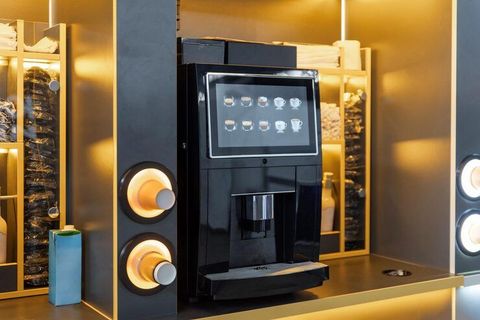
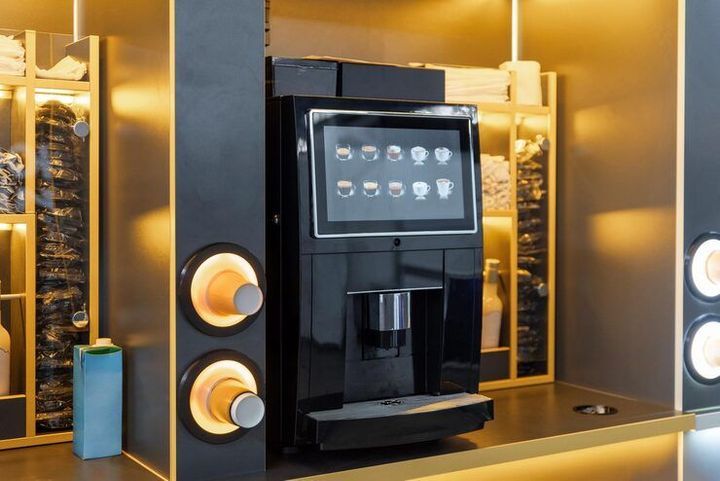
Bean-to-cup machines: Grind whole beans and prepare a drink through an integrated automated process. Certain models also include automatic milk preparation.
Capsule machines: Use pre-portioned coffee capsules or pods, reducing the need for manual dosing and grinding.
Batch brewers: Prepare multiple portions of filter coffee in a brewing cycle. They are often used where coffee is served in repeated batches.
Commercial percolation or urn systems: Heat and dispense larger quantities of coffee, with the exact brewing process varying by equipment design.
Each category has different operating requirements. A machine designed for espresso preparation may not be suitable for producing large batches of filter coffee, while a batch brewer may not support the beverage variety expected in an espresso-focused café.
Importance
Commercial coffee machines influence preparation consistency, staff workflow, beverage availability, and the use of electricity and water. Equipment that does not match the operating environment can create delays during busy periods, uneven drink quality, or additional cleaning and maintenance demands.
These considerations affect café operators, restaurant managers, hotel kitchens, office facilities, and other locations where coffee is prepared regularly. Understanding the relationship between brewing systems and operating conditions helps explain why equipment specifications should be evaluated in the context of actual daily requirements.
Brewing consistency and drink preparation
Coffee extraction depends on several variables, including water temperature, contact time, coffee quantity, grind size, and the relationship between water and coffee. Espresso machines also rely on controlled pressure and consistent preparation techniques.
Machines with programmable settings can help standardize selected parameters. However, automation does not eliminate the influence of bean characteristics, grinder adjustment, water composition, ingredient freshness, or cleaning practices.
Understanding machine capacity
Capacity refers to more than the number of cups a machine can produce in an hour. It may include the size of the boiler, water reservoir, bean hopper, brewing chamber, milk container, and grounds collection area.
The actual number of drinks prepared depends on drink size, recipe complexity, recovery time between cycles, simultaneous brewing and steaming, and the availability of staff. Manufacturer capacity figures should therefore be interpreted according to the stated test conditions.
| Equipment type | Main capacity consideration | Typical operational setting |
|---|---|---|
| Single-group espresso machine | Number of simultaneous brewing groups and recovery time | Smaller beverage stations |
| Multi-group espresso machine | Parallel brewing and steam demand | Busy cafés and restaurant counters |
| Bean-to-cup machine | Brewing cycle time and ingredient capacity | Offices, hotels, and self-operated beverage areas |
| Filter coffee brewer | Batch volume and brewing cycle | Restaurants, meeting areas, and breakfast facilities |
| Coffee urn | Holding volume and dispensing rate | Events and large dining areas |
| Capsule machine | Cycle time and capsule storage | Small offices and limited beverage stations |
These descriptions are general rather than fixed capacity ratings. Actual performance varies between models and depends on operating conditions.
Operational considerations
Commercial coffee preparation also requires attention to the surrounding workspace. Machines need suitable counter space, safe electrical connections, appropriate water access where applicable, and sufficient room for cleaning and ingredient handling.
Staff training is another important factor. Operators need to understand the machine's controls, beverage recipes, cleaning cycle, warning indicators, and safe handling of hot water and steam.
Recent Updates
Developments in commercial coffee machines during 2024–2026 have included greater attention to automation, connected controls, energy use, and workflow consistency. These changes are not uniform across all machine categories, and the availability of individual features depends on the model and intended application.
Automation has become an important part of equipment design. Some machines can manage grinding, portioning, extraction, milk preparation, and recipe selection with limited manual input. This can simplify repeated preparation steps, although the resulting drink still depends on ingredient condition, machine settings, and proper upkeep.
Digital controls and connected equipment
Modern commercial coffee machines may use touchscreens, programmable recipes, digital temperature controls, and usage records. Connected models can also provide selected operating information or fault notifications through compatible applications or management systems.
These functions can help operators monitor equipment and maintain consistent settings across multiple machines. However, connectivity introduces additional considerations, including software compatibility, access permissions, network reliability, and the handling of operational data.
Energy and water efficiency
Equipment development has also placed attention on heating efficiency, standby modes, insulation, and water management. Some machines allow operators to adjust operating schedules or reduce heating activity during periods of low demand.
The practical effect depends on the equipment design, workload, local electricity supply, water conditions, and operating habits. Energy-saving functions should not be interpreted as evidence that every newer machine uses less energy under every operating condition.
Greater attention to cleaning and usability
Manufacturers increasingly incorporate guided cleaning routines, removable components, and automatic rinsing cycles into certain commercial machines. These features can make routine tasks easier to organize, but they do not necessarily replace manual cleaning or the maintenance procedures specified for the equipment.
The broader trend is toward balancing repeatable preparation with practical operation. Machine complexity, cleaning requirements, staff training, and the availability of compatible ingredients remain important considerations when assessing these developments.
Laws or Policies
Commercial coffee machines may be subject to electrical safety, food-contact material, hygiene, pressure-system, and general workplace safety requirements. The applicable rules depend on the country, machine design, installation method, and location where the equipment is used.
International standards can provide technical guidance for evaluating appliance safety. IEC 60335-2-75 addresses safety requirements for commercial dispensing appliances and vending machines, including equipment used to prepare or dispense coffee and other beverages. The standard covers relevant hazards such as electrical risks, heat, mechanical components, and hygiene-related design considerations.
A standard does not automatically establish that every machine complies with the law in every jurisdiction. National adoption, product classification, conformity assessment, certification, and applicable legal requirements must be considered separately.
Food hygiene and workplace safety
Businesses preparing beverages may need to follow applicable food hygiene requirements covering clean equipment, potable water, safe ingredient handling, and appropriate storage of milk or other perishable ingredients. Requirements vary by jurisdiction and the type of operation.
Hot surfaces, pressurized components, steam wands, and electrical connections also create operational hazards. Installation and maintenance should follow the equipment manufacturer's instructions and applicable safety rules. Repairs involving electrical systems or pressure components may require appropriately qualified personnel.
Where a business operates across multiple locations, the relevant local requirements may differ. Regulatory information should therefore be checked against the rules that apply to the actual installation and use of the machine.
Tools and Resources
Several practical resources can help operators understand commercial coffee machine specifications and organize routine operation.
Equipment specification sheets
A specification sheet generally lists machine dimensions, power requirements, water connections, boiler capacity, brewing groups, bean or grounds capacity, and supported functions. Comparing these details can help establish whether the machine fits the available workspace and intended workload.
Brewing calculators and recipe records
Coffee brewing calculators can help estimate coffee-to-water ratios, beverage volumes, and ingredient quantities. Recipe records can document grind settings, dose, extraction time, water temperature, and other relevant parameters.
These records provide a reference for staff and help identify changes when coffee beans, recipes, or operating conditions change. They should be adjusted according to the brewing method rather than applied as one universal recipe.
Maintenance and cleaning schedules
A written schedule can organize routine tasks such as rinsing, milk-system cleaning, emptying grounds containers, inspecting seals, and checking water filtration components. The correct frequency depends on the equipment instructions, usage level, and applicable hygiene requirements.
Water quality and electrical checks
Water testing resources can help assess hardness and other characteristics that influence scale formation and brewing performance. Electrical installation documentation can help establish whether the machine's supply requirements are compatible with the location.
The equipment manual remains an important reference for installation, cleaning, operating limits, and maintenance procedures.
FAQs
What types of commercial coffee machines are available?
Common types include espresso machines, filter coffee brewers, bean-to-cup machines, capsule machines, batch brewers, and coffee urns. Their suitability depends on the beverage menu, expected demand, available space, and required level of operator involvement.
How is commercial coffee machine capacity measured?
Capacity may be described through brewing groups, drinks per hour, batch volume, boiler size, or ingredient storage. These measurements describe different aspects of operation, so stated output figures should be evaluated alongside cycle times and workload conditions.
What features matter in a commercial espresso machine?
Relevant features include temperature control, brewing-group configuration, steam capacity, programmable settings, water connections, cleaning functions, and accessible maintenance components. The importance of each feature depends on the drink menu and preparation workflow.
How often should a commercial coffee machine be cleaned?
Cleaning frequency depends on the machine type, usage, ingredients, and manufacturer's instructions. Milk-contact components often require frequent cleaning, while descaling and other maintenance tasks depend on water conditions and equipment guidance.
Are automatic commercial coffee machines suitable for every business?
Automatic machines can simplify repeated preparation, but they may not suit every beverage menu or operating environment. Capacity, recipe flexibility, ingredient compatibility, cleaning needs, and staff workflow all influence their practical suitability.
Conclusion
Commercial coffee machines use different brewing systems to meet the needs of cafés, restaurants, offices, hotels, and other beverage-preparation environments. Their performance depends on machine capacity, extraction controls, ingredient handling, water quality, maintenance, and operator practices. Recent developments emphasize automation, digital controls, usability, and attention to energy and water consumption. Equipment safety and hygiene requirements also remain important parts of installation and everyday operation.