Custom Engagement Ring Designers Guide With Diamond Selection and Ring Design Tips
Custom engagement ring designers create rings around individual preferences rather than relying only on ready-made patterns. The process usually combines a selected gemstone, a metal choice, a setting style, and design details that determine the ring’s appearance, comfort, and structure.
Modern custom ring design combines traditional techniques with computer-aided design, digital modeling, and precision manufacturing. A person can begin with a general idea, such as a solitaire, halo, three-stone, vintage-inspired, or minimalist ring, and then adjust the proportions, stone shape, metal, setting, and decorative details.
Diamond selection is an important part of the process because the central gemstone can influence the overall appearance of the ring. The widely used 4Cs—cut, color, clarity, and carat weight—provide a framework for evaluating diamonds, while shape, proportions, fluorescence, and certification can provide additional information.
Custom engagement ring designers may also work with laboratory-grown diamonds, natural diamonds, and other gemstones. Laboratory-grown diamonds have the same basic chemical, physical, and optical characteristics as natural diamonds, but their origin is different and should be clearly identified in descriptions and documentation.
Importance
Why Custom Ring Design Matters
An engagement ring is normally worn frequently, so appearance is only one part of the design process. Proportion, durability, finger comfort, setting height, stone protection, and maintenance requirements can also influence the final result.
Custom design can address specific preferences that may not be available in standard ring patterns. For example, someone may prefer an elongated oval diamond, a low-profile setting, mixed-metal construction, engraved details, or a particular arrangement of side stones.
Diamond selection also requires careful comparison. Two diamonds with the same carat weight can look different because of variations in cut quality, proportions, color, clarity, and shape. A diamond grading report can provide standardized information that helps readers understand these differences.
Main Design Factors
Several elements normally work together when creating a custom engagement ring:
- Diamond shape: Round, oval, emerald, pear, cushion, radiant, marquise, and princess are among the commonly recognized shapes.
- Diamond characteristics: Cut, color, clarity, and carat weight influence visual appearance and classification.
- Setting: Prong, bezel, halo, pavé, channel, and other settings affect both appearance and stone protection.
- Metal: Gold, platinum, and other jewelry metals provide different colors, characteristics, and maintenance considerations.
- Ring profile: The height and width of the band influence comfort and how the ring sits on the finger.
- Personal details: Engraving, symbolic elements, birthstones, geometric patterns, and unusual proportions can add individuality.
Ring design tips often begin with balancing appearance and practicality. A very elevated stone position can create a distinctive profile but may interact differently with everyday activities than a lower setting. Similarly, delicate bands can produce a lighter appearance but may require greater attention to maintenance.
Comparing Diamond Characteristics
| Diamond factor | What it describes | Why it matters |
|---|---|---|
| Cut | Proportions, symmetry, and finishing | Influences light performance |
| Color | Degree of body color | Affects visual tone |
| Clarity | Internal and external characteristics | Helps describe visible inclusions |
| Carat | Weight of the diamond | Helps define size and overall proportions |
| Shape | Outline and faceting pattern | Strongly influences ring appearance |
| Grading report | Documented gem characteristics | Provides standardized reference information |
The 4Cs should not be considered separately from the ring design. A diamond's shape and proportions can change how large or narrow it appears, while the setting can affect how much of the stone is visible.
Recent Updates
Personalization and Alternative Designs
Recent engagement ring trends have increasingly emphasized individuality. Industry and fashion coverage has highlighted asymmetrical settings, colored gemstones, mixed metals, geometric influences, east-west orientations, and designs that combine traditional and contemporary elements.
This trend has expanded the role of custom engagement ring designers. Instead of selecting only from established patterns, people can combine elements from several design traditions. A classic round diamond, for example, can be placed in a modern bezel setting or paired with an unconventional band shape.
Laboratory-Grown Diamond Development
Laboratory-grown diamonds have become a more visible part of modern diamond selection. Gemological laboratories continue to provide documentation and identification methods for these stones, including information about their laboratory origin and, where applicable, growth or treatment characteristics.
The distinction between natural, laboratory-grown, and simulated stones remains important. These categories are not interchangeable, and accurate descriptions help readers understand what type of gemstone is being considered.
Digital Ring Design
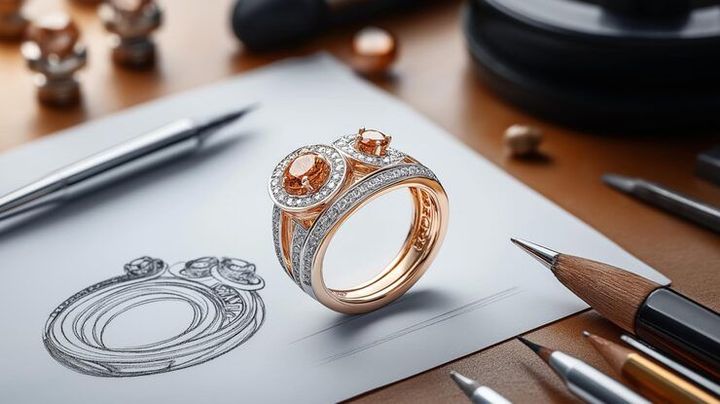
Computer-aided design has also become an important part of custom jewelry development. Digital models can show the proportions of a ring before physical production begins, allowing design elements such as band width, stone placement, setting height, and engraving areas to be reviewed more precisely.
Some designers also use three-dimensional modeling and digital rendering to demonstrate how a proposed ring may appear from different angles. These tools can make communication easier between the designer and the person selecting the ring.
Laws or Policies
Gemstone Disclosure
Jewelry rules differ between countries and regions, but a common principle is that descriptions of gemstones and precious metals should accurately represent what is being provided. Information about gemstone type, treatments, metal composition, and laboratory-grown origin may need to be disclosed depending on the applicable rules.
For example, established jewelry guidance in some jurisdictions requires laboratory-created and simulated gemstones to be clearly distinguished from mined or natural stones. It also addresses disclosures for gemstone treatments and precious-metal descriptions.
Diamond Documentation
A diamond grading report can document characteristics such as color, clarity, carat weight, proportions, and other gemological information. Documentation practices vary by laboratory, so the terminology and information included in reports should be reviewed carefully.
Consumers should also distinguish between a grading report and a guarantee of future market value. A grading document describes gemstone characteristics; it does not establish what the stone will be worth at a later time.
Metal Marking and Consumer Rules
Precious-metal regulations can include requirements for purity descriptions, hallmarking, weight information, and accurate product representations. Requirements differ across jurisdictions, so custom engagement ring designers and consumers need to consider the rules applicable to the location where the ring is produced or supplied.
Tools and Resources
Diamond Comparison Tools
Diamond comparison tools can organize information about carat weight, color, clarity, cut, shape, proportions, and grading documentation. They can be useful when several stones have similar specifications but different visual characteristics.
A 4Cs reference chart is another practical resource. It helps beginners understand terminology before comparing individual diamonds.
Ring Design Software
Computer-aided design platforms allow ring structures to be modeled digitally. These tools can help evaluate band dimensions, stone placement, setting geometry, engraving areas, and overall proportions.
Some platforms also produce three-dimensional renderings that show the proposed ring from multiple viewpoints. This can be particularly useful for custom engagement ring designers working with unusual shapes or complex settings.
Measurement and Planning Tools
Ring-size charts, gemstone dimension calculators, carat-weight references, and metal comparison tables can help organize the planning process. A written design specification can also record the selected diamond shape, approximate dimensions, metal, setting, band profile, and decorative elements.
Keeping these details together can reduce confusion when multiple design changes are being considered.
FAQs
What do custom engagement ring designers do?
Custom engagement ring designers develop ring concepts around individual preferences. They may help coordinate diamond selection, metal choice, setting structure, proportions, engraving, and other design details.
How should I compare diamonds for a custom engagement ring?
Start by reviewing the 4Cs, then consider diamond shape, dimensions, proportions, grading documentation, and how the stone fits the intended ring design. Two diamonds with similar carat weights can have noticeably different appearances.
Are laboratory-grown diamonds suitable for custom ring design?
Laboratory-grown diamonds can be incorporated into custom ring designs. They should be clearly identified as laboratory-grown rather than natural or mined diamonds, and relevant documentation should be reviewed when available.
Which diamond shape works with different ring designs?
Round, oval, cushion, emerald, pear, marquise, radiant, and princess shapes can be used with different settings. The appropriate choice depends on the desired visual proportions, setting structure, and personal design preferences.
What are important ring design tips for everyday wear?
Consider band width, setting height, stone protection, finger comfort, metal characteristics, and maintenance requirements. A design that looks appealing from above should also function comfortably from the side and during regular activities.
Conclusion
Custom engagement ring designers combine gemstone selection, metal choice, setting structure, and personal design details to create individualized rings. Diamond selection involves more than carat weight, with cut, color, clarity, shape, proportions, and documentation all providing useful information. Recent design developments include greater personalization, alternative settings, laboratory-grown diamonds, and digital modeling. Accurate gemstone disclosure, metal descriptions, and applicable consumer rules remain important parts of responsible jewelry design and presentation.