Excavator Spare Parts: A Guide to Hydraulic Components, Engine Parts, Undercarriage and Maintenance
Excavator spare parts are replacement components used to maintain the mechanical, hydraulic, electrical, and structural systems of excavators. Excavators are widely used in construction, mining, quarrying, agriculture, road development, demolition, and material handling.
Because these machines operate under demanding loads, individual components can gradually experience wear, fatigue, contamination, or damage.
An excavator consists of several interconnected systems. The engine provides power, the hydraulic system transfers that power into controlled movement, and the undercarriage supports movement across the working surface. The boom, arm, bucket, swing mechanism, and related components allow the machine to perform digging and material-handling tasks.
Spare parts exist because individual components do not necessarily have the same operating life. Replacing an affected component can be part of routine maintenance or corrective repair, depending on the equipment condition.
Main categories of excavator spare parts
Excavator parts can be grouped according to their function and location within the machine.
| Part category | Examples | Main function |
|---|---|---|
| Engine parts | Filters, belts, gaskets, pumps | Generate and support mechanical power |
| Hydraulic parts | Pumps, valves, hoses, seals | Transfer and control hydraulic energy |
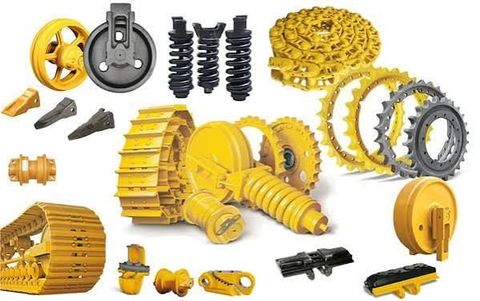
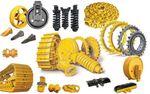
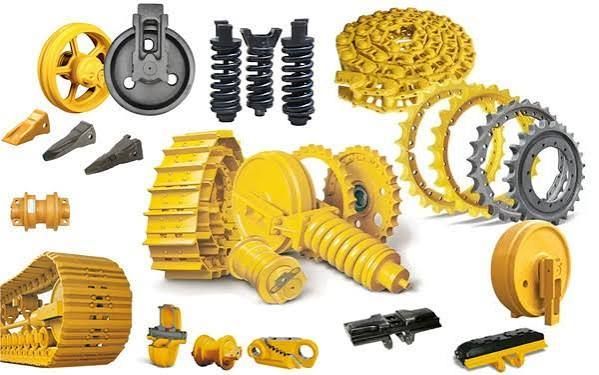
| Undercarriage parts | Track chains, rollers, sprockets | Support movement and machine weight |
| Attachment parts | Buckets, teeth, pins, bushings | Perform digging and material handling |
| Electrical parts | Sensors, switches, wiring | Monitor and control machine functions |
| Cooling parts | Radiators, fans, thermostats | Regulate operating temperature |
| Structural parts | Pins, bushings, boom components | Transfer mechanical loads |
The correct identification of a component is important because excavators can have different configurations even within the same model family.
Identifying the correct component
Useful identification information includes the manufacturer, machine model, serial number, production range, existing part number, component location, and technical specifications. A photograph of the identification plate can also help when physical markings are difficult to read.
Part numbers may change when a component is revised or replaced by a later design. Therefore, a number should be checked against current technical documentation rather than interpreted in isolation.
Importance
Excavator spare parts matter because the condition of individual components can influence the operation of the complete machine. A worn hydraulic seal, damaged track roller, deteriorated hose, or worn bucket tooth can affect a specific function and may contribute to additional mechanical problems if not identified appropriately.
Excavators are often used in environments containing dust, mud, rocks, water, and abrasive materials. These conditions can place significant demands on components that experience repeated movement, pressure, impact, or contact with the ground.
Components exposed to regular wear
Some parts experience greater physical contact or repeated movement than others. Common examples include:
Bucket teeth and adapters
Track shoes and track chains
Rollers and idlers
Bushings and pins
Hydraulic hoses and seals
Filters
Belts and tensioning components
The rate of wear depends on factors such as machine configuration, operating environment, workload, maintenance practices, material being handled, and operating technique.
Hydraulic system importance
Hydraulic components are central to excavator operation. Hydraulic pumps generate fluid flow, while valves regulate where that flow is directed. Cylinders convert hydraulic pressure into mechanical movement of the boom, arm, and bucket.
Hydraulic hoses, seals, fittings, and filters also play important roles. Contamination, excessive heat, damaged seals, or incorrect fluid conditions can affect hydraulic performance and component life.
Undercarriage considerations
The undercarriage carries substantial machine weight and transfers movement to the ground. Track chains, shoes, rollers, idlers, and sprockets are therefore subject to continuous mechanical and environmental exposure.
Ground conditions influence wear. Hard surfaces, rocky terrain, abrasive soil, and frequent turning can create different wear patterns. Regular inspection helps identify changes before they develop into more extensive mechanical issues.
Recent Updates
From 2024 through 2026, excavator maintenance has increasingly incorporated digital equipment records, electronic parts catalogs, condition monitoring, and data-based maintenance planning. These developments are part of a broader shift toward connecting physical machinery with digital maintenance systems.
Digital parts catalogs
Electronic parts catalogs can organize components according to machine model, assembly, serial range, and component number. Illustrated diagrams can help users understand where a particular component fits within a larger assembly.
These catalogs can also make it easier to identify related components. For example, a hydraulic cylinder assembly may contain seals, bushings, pins, and other individual components that have separate identifiers.
Condition monitoring
Modern excavators may contain sensors that monitor parameters such as engine temperature, hydraulic pressure, fluid conditions, operating hours, and other machine data. Depending on the equipment, this information can help identify changes in operating conditions.
Condition monitoring does not eliminate the need for physical inspection. Sensors can provide useful information, but mechanical wear, cracks, loose fasteners, and other physical conditions may require direct examination.
Electronic maintenance records
Digital maintenance platforms can connect equipment identification with inspection records, component changes, operating hours, and technical documentation. This creates a more structured history of individual machines.
A maintenance record may include:
Machine model and serial number
Component identification
Inspection date
Operating-hour reading
Observed condition
Maintenance activity
Technical document reference
Materials and component development
Manufacturers continue to work with different steels, surface treatments, seals, coatings, and manufacturing processes for components exposed to abrasion, impact, pressure, and temperature. The appropriate material depends on the component's operating conditions rather than a single material being suitable for every excavator application.
Laws or Policies
Excavator spare parts in India are affected by workplace safety requirements, equipment regulations, environmental rules, and applicable technical standards. The exact requirements depend on the equipment, workplace, industry, and type of activity.
Workplace safety requirements
The Occupational Safety, Health and Working Conditions Code, 2020 establishes a national framework covering occupational safety and working conditions. Its application depends on the relevant establishment and applicable implementation framework.
For workplaces using heavy construction equipment, employers and operators may also need to follow applicable safety procedures concerning machinery operation, inspection, training, protective equipment, and workplace conditions.
Environmental considerations
Excavator maintenance can generate used engine oil, hydraulic fluid, filters, batteries, contaminated materials, and other waste. Applicable waste-management and environmental requirements can affect how these materials are stored, transported, treated, or disposed of.
The appropriate requirements depend on the type of waste and the activity involved. Businesses may need to maintain records and follow procedures established by applicable environmental authorities.
Technical documentation
Manufacturers typically provide specifications concerning compatible components, fluid requirements, inspection intervals, adjustment procedures, and operating limits. These documents are important references when identifying or installing excavator spare parts.
A component should not be considered appropriate solely because its dimensions appear similar to another component. Pressure ratings, material properties, tolerances, electrical characteristics, and equipment configuration can also matter.
Tools and Resources
Several tools can help with excavator spare parts identification and maintenance planning. Manufacturer parts catalogs and technical manuals are generally important references because they connect individual components with specific equipment configurations.
Identification resources
Useful resources include:
Illustrated parts catalogs
Operator manuals
Workshop manuals
Hydraulic diagrams
Electrical schematics
Component identification plates
Equipment maintenance records
Manufacturer technical databases
The equipment model and serial number should be recorded whenever possible because they can help distinguish different production configurations.
Inspection tools
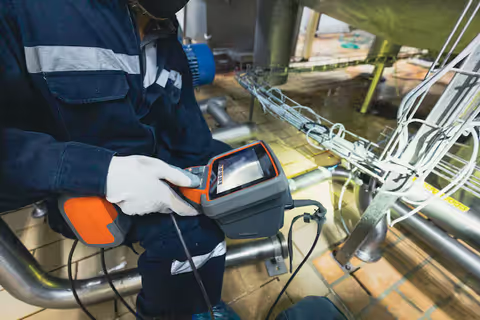
Basic inspection can involve visual examination, measurement tools, pressure gauges, electrical testing equipment, and fluid-analysis equipment, depending on the component being examined.
For example, calipers can help measure component dimensions, while hydraulic pressure gauges can be used by qualified personnel to assess hydraulic-system conditions according to applicable procedures.
Maintenance planning
A spreadsheet or computerized maintenance system can organize information such as equipment hours, inspection intervals, component numbers, installation dates, and observed wear.
This type of record can help establish a history for frequently replaced components and identify recurring maintenance patterns without relying entirely on memory.
FAQs
What are excavator spare parts?
Excavator spare parts are replacement components used in excavators. They can include engine components, hydraulic parts, undercarriage components, electrical items, filters, structural components, and attachment parts.
How do I identify the correct excavator spare parts?
Record the excavator manufacturer, model, serial number, existing part number, component location, and relevant dimensions. These details can then be compared with the manufacturer's parts catalog or technical documentation.
What excavator spare parts experience the most wear?
Wear commonly affects components such as bucket teeth, track chains, rollers, sprockets, bushings, pins, and hydraulic seals. Actual wear depends on ground conditions, operating practices, workload, and maintenance history.
Why are excavator hydraulic spare parts important?
Hydraulic pumps, valves, cylinders, hoses, seals, and filters work together to transfer and control hydraulic energy. Problems with one component can affect the movement or operation of other hydraulic functions.
How often should excavator spare parts be inspected?
Inspection intervals depend on the machine, component, operating environment, and manufacturer's maintenance schedule. Components exposed to heavy loads, abrasive materials, or frequent movement may require more frequent attention.
Conclusion
Excavator spare parts include a wide range of components used across engine, hydraulic, undercarriage, electrical, structural, and attachment systems. Correct identification generally requires more than visual similarity and may involve model numbers, serial information, part numbers, technical drawings, and manufacturer documentation. Digital catalogs, condition monitoring, and electronic maintenance records are increasingly supporting equipment maintenance practices. Applicable workplace, environmental, and technical requirements depend on the equipment and operating environment.