Nuclear Magnetic Resonance (NMR) Systems: Principles & Applications Guide
Nuclear Magnetic Resonance (NMR) systems are sophisticated instruments widely used in various fields, including chemistry, physics, and medicine, for studying molecular structures.
These systems rely on the principles of nuclear magnetic resonance, a phenomenon in which nuclei of atoms resonate in response to an external magnetic field. By exploring the foundational aspects and operational intricacies of NMR systems, we can appreciate their significance in scientific research and their applications in analyzing complex molecular structures.
At its core, NMR technology exploits the intrinsic spin properties of certain nuclei, particularly those with an odd number of protons or neutrons, such as hydrogen (1H) or carbon-13 (13C). These nuclei behave like tiny magnets with a magnetic moment due to their spin. When placed in a strong, uniform magnetic field, these magnetic moments align either with or against the direction of the field, resulting in energy states that can be differentiated by NMR spectrometers. External radiofrequency pulses are used to disturb this equilibrium, causing the nuclei to absorb energy and transition between different energy states. The subsequent relaxation and emission of this energy are detected and analyzed to provide detailed insights into the molecular structure under study.
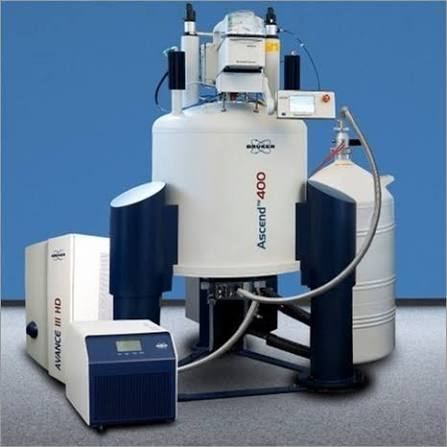
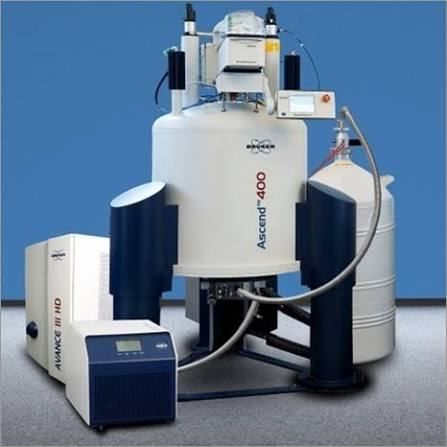
The heart of an NMR system is the superconducting magnet, which generates a highly stable and intense magnetic field. This magnet is typically composed of coils made from superconducting wire, often cooled to cryogenic temperatures using liquid helium or other cooling methods to remove electrical resistance. The strength of the magnetic field directly influences the sensitivity and resolution of the NMR system, enabling it to detect subtle differences in molecular environments. Higher field strengths result in better resolution, which allows researchers to distinguish between closely spaced chemical shifts, crucial for analyzing complex mixtures or intricate biomolecules.
Complementing the superconducting magnet, the radiofrequency transmitter plays a pivotal role in NMR spectroscopy. The transmitter generates precise radiofrequency pulses that match the resonance frequency of the target nuclei. The duration, strength, and sequence of these pulses can be adjusted to manipulate magnetic moments in specific ways, tailoring the experiment to obtain desired information. The design of these pulse sequences, often referred to as pulse programs, is crucial in determining the type of data collected. From simple one-dimensional spectra to more complex multidimensional experiments, these tailored sequences serve as the foundation for sophisticated data analysis and interpretation.
Critically, NMR spectroscopy offers several types of experiment modes, each tailored to analyze specific aspects of the sample. One-dimensional NMR experiments provide quick insights into the overall composition and chemical environment of the sample. They reveal chemical shifts, coupling constants, and line shapes that indicate the presence and proximity of different atoms. In contrast, two-dimensional NMR techniques, such as COSY, NOESY, and HSQC, offer more detailed correlation data, shedding light on the connectivity between atomic nuclei and elucidating complex molecular architectures. Higher-dimensional NMR techniques extend these principles, enabling comprehensive studies of macromolecular systems, like proteins and nucleic acids.
In data acquisition, the emitted radiofrequency signals from the sample are detected by highly sensitive radiofrequency receivers. These receivers capture the free induction decay (FID) signal, a time-domain representation of the magnetic resonance from the sample. This raw data is then stored and processed using Fourier transform algorithms to convert it into a frequency-domain spectrum. The transformation reveals distinct peaks corresponding to various nuclear environments within the molecule, permitting qualitative and quantitative analyses. Modern advancements in computer technologies and algorithms continue to enhance these transformations, improving both speed and accuracy.
NMR systems also comprise a complex console that houses numerous essential components for control and data processing. The console includes amplifiers for boosting radiofrequency signals, analog-to-digital converters for precise data acquisition, and computer systems for coordinating the sequence execution and data management. Integrated software platforms provide user-friendly interfaces for designing experiments, running analyses, and interpreting results, making the technology accessible even to users without extensive prior experience.
Sample preparation is another important component of any NMR analysis. Ensuring that samples are homogeneous and correctly dissolved in appropriate solvents helps in acquiring high-quality spectra. Deuterated solvents are frequently used because they have minimal background signals, allowing for clearer observation of the signals from solute molecules. Also, the concentration of the sample must be optimized to achieve a balance between signal intensity and spectral quality. High concentrations might necessitate additional parameters, like presaturation techniques, to reduce unwanted interactions such as solvent peak suppression.
NMR spectroscopy is invaluable due to its non-destructive nature, which allows samples to be analyzed without alteration or loss, making it ideal for delicate or limited-availability samples. Its ability to provide atomic-level information without requiring crystalline samples distinguishes it from techniques like X-ray crystallography. This feature is particularly important in studying large biomolecules in their natural states, contributing to major advances in structural biology and the understanding of biochemical processes.
Beyond academic and industrial laboratories, NMR technology has notable applications in the medical field. Magnetic Resonance Imaging (MRI), derived from NMR principles, is a prevalent non-invasive imaging technique extensively used in clinical diagnostics. MRI employs strong magnetic fields and radio waves to produce detailed images of soft tissues, organs, and other internal body structures, contributing significantly to the fields of radiology and medical diagnosis.
Continuous advancements in NMR technologies, from the development of higher-field magnets to the innovation of new pulse sequences and computational methods, expand the possibilities and applications of this analytical technique. Researchers rely on NMR to explore molecular dynamics, study interactions at the atomic level, and unveil conformational changes that elucidate many scientific and medical phenomena.
Overall, Nuclear Magnetic Resonance systems represent a cornerstone of modern analytical instrumentation, deeply enriching our understanding of chemical and biological systems. This educational journey into NMR should inspire interest in the technique’s principles and catalyze further exploration and innovation in the field.