Explore Bold Gemstone Necklaces With Statement Jewelry Trends and Design Insights
Bold gemstone necklaces are jewelry pieces designed around prominent colored stones, distinctive shapes, substantial chains, or layered arrangements. Unlike delicate necklaces that use small decorative elements, statement jewelry often places greater visual emphasis on gemstone size, color, texture, or an unusual pendant structure.
These designs can include natural gemstones, laboratory-created stones, treated materials, or combinations of several stone types.
Gemstone necklaces have a long history across many cultures. Colored stones have been incorporated into ceremonial objects, personal ornaments, and decorative jewelry for centuries. Ruby, sapphire, emerald, amethyst, turquoise, garnet, opal, tourmaline, and many other gemstones have been used in different regions and jewelry traditions.
Modern bold gemstone necklaces combine traditional stone-setting techniques with contemporary fashion design. A necklace may feature one large pendant, a sequence of large stones, several connected gemstone elements, or a combination of gemstones and metal components. The overall appearance depends on the stones, cutting style, setting, chain, proportions, and arrangement.
Statement jewelry has also become closely connected with fashion photography, social media, editorial styling, and personal expression. A bold necklace can become the main visual element of an outfit, while simpler clothing allows the gemstone design to remain the primary point of attention.
Main Elements of Bold Gemstone Necklaces
Several components contribute to the character of a statement necklace. The gemstone is often the most noticeable element, but the metal structure and supporting design are equally important.
Common elements include:
Large or strongly colored gemstones
Gemstone pendants
Multiple-stone arrangements
Decorative metal settings
Chain or cord structures
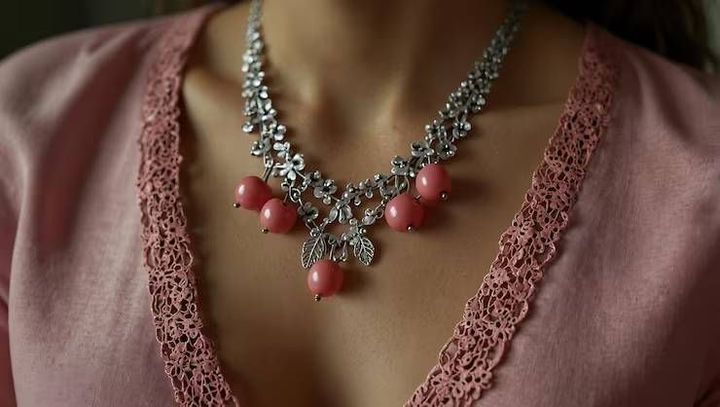
Beaded gemstone sections
Geometric designs
Layered necklace arrangements
Textured or sculptural elements
The proportions of these elements influence how the necklace sits around the neck and how its visual weight is distributed.
Gemstone Shapes and Cuts
Gemstones can be cut into many shapes, including round, oval, cushion, pear, emerald, marquise, square, rectangular, and freeform designs. Cabochon gemstones have smooth, curved surfaces rather than traditional facets and are frequently used when the stone's color, pattern, or optical appearance is the main focus.
Faceted gemstones contain multiple polished surfaces that interact with light. The arrangement of facets can influence brilliance, reflections, and the visual depth of a stone.
Importance
Bold gemstone necklaces are relevant to modern jewelry because they combine material characteristics, craftsmanship, design proportions, and fashion styling. Understanding these elements can help readers recognize why two necklaces with similar gemstone colors can have very different visual effects.
The subject also connects gemstone identification with jewelry construction. A necklace must support its stones securely while maintaining suitable weight distribution and comfortable movement around the neck.
Understanding Gemstone Characteristics
Color is often one of the most noticeable characteristics of a gemstone. It can be considered through hue, tone, and saturation, while transparency describes how much light passes through the material.
Clarity refers to internal characteristics and surface features. Some gemstones naturally contain inclusions, patterns, or other features that contribute to their individual appearance.
Hardness and toughness are separate concepts. Hardness relates primarily to resistance to scratching, while toughness concerns resistance to breaking or chipping. These properties can influence how a gemstone is handled and how its setting is designed.
Popular Gemstone Choices
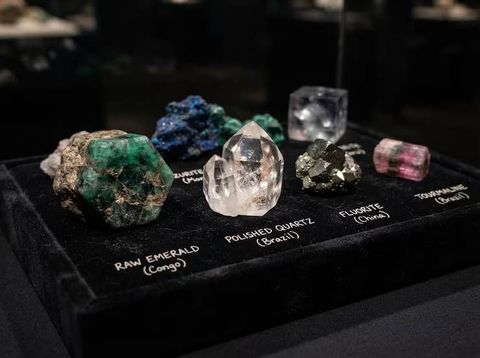
Many colored gemstones can be used in statement necklaces. Ruby is associated with red corundum, while sapphire refers to corundum varieties other than ruby and occurs in several colors.
Emerald is a green variety of beryl and can contain naturally occurring inclusions. Amethyst is a purple quartz variety, while garnet represents a group of minerals that can appear in several colors.
Other materials used in bold necklaces include:
Turquoise
Opal
Tourmaline
Aquamarine
Topaz
Citrine
Tanzanite
Peridot
Moonstone
Each gemstone has different physical and optical properties, so the appearance and care requirements can vary.
Jewelry Settings
The setting holds gemstones within the necklace structure. A bezel setting surrounds the edge of a stone with metal, while prong settings use small metal supports to hold the gemstone in place.
Other settings include channel, pavé, flush, and cluster arrangements. A large gemstone pendant may use a bezel or prong structure, while a necklace containing many small stones can use a combination of settings.
The setting must correspond to the stone's shape, dimensions, durability, and intended position. The necklace also needs adequate structural support around areas where the pendant or gemstone sections connect to the chain.
Metal and Design Choices
Gold, platinum, silver, and other jewelry metals can be used in gemstone necklaces. Metal color can influence the visual relationship between the stone and the surrounding structure.
Yellow gold can create a warm contrast with many gemstones, while white-colored metals can provide a more neutral background. Rose-colored metals introduce another visual tone and can interact differently with red, pink, purple, or neutral-colored stones.
Recent Updates
From 2024 through 2026, statement jewelry has continued to include bold colors, sculptural forms, mixed materials, layered necklaces, personalized designs, and gemstone-focused styling. Social media and digital fashion content have also increased the visibility of distinctive jewelry combinations.
Layered Statement Jewelry
Layering remains an important approach to contemporary necklace styling. Instead of wearing one necklace, some arrangements combine different lengths, chains, pendants, and gemstone pieces.
Layered styling can create visual depth, but the proportions of each necklace matter. A large gemstone pendant may require more space around it than a small chain necklace to remain visually distinct.
Color-Focused Designs
Strong gemstone colors continue to influence statement jewelry design. Designers may use one dominant gemstone color or combine contrasting stones within the same necklace.
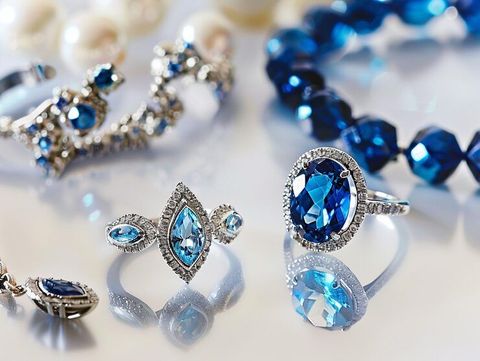
Color relationships can be based on contrast, similar tones, or repeated accents. For example, a necklace can combine blue and green stones for a related palette or use contrasting colors to create a more noticeable visual separation.
Sculptural and Geometric Forms
Modern jewelry design increasingly includes unusual metal shapes, asymmetric arrangements, curved structures, and geometric components. These elements can be combined with gemstones to create necklaces that function as both jewelry and visual design objects.
Geometric cuts such as emerald, square, and rectangular shapes can reinforce this approach. Irregular or freeform stones can create a more organic appearance.
Digital Jewelry Design
Computer-aided design is now widely used in jewelry development. Three-dimensional models can help designers examine gemstone placement, metal thickness, pendant dimensions, chain connections, and overall proportions.
Digital modeling can also support customized designs by allowing different gemstone sizes, shapes, and arrangements to be evaluated before physical production.
Laws or Policies
Gemstone necklaces are influenced by rules concerning jewelry descriptions, gemstone disclosure, precious-metal purity, consumer protection, and international trade. Requirements vary by jurisdiction and by the materials used.
Gemstone Disclosure
Natural gemstones, laboratory-created stones, synthetic materials, imitations, and treated stones are different material categories. Jewelry descriptions should identify these materials accurately according to applicable standards.
Treatments may be used to alter color, clarity, stability, or other characteristics. Where disclosure is required, information about relevant treatments should be presented clearly.
Precious-Metal Identification
Gold, silver, and platinum jewelry can be subject to fineness or hallmarking requirements. A metal mark may communicate information about the proportion of a particular precious metal in an alloy.
The exact marking system depends on the jurisdiction. Jewelry made from metal alloys should therefore be interpreted according to the applicable identification standards.
Trade and Origin Information
Some gemstones and precious materials can be subject to international trade controls or documentation requirements. Origin information may also be relevant to certain supply chains.
Claims about gemstone origin or responsible sourcing should be supported by appropriate documentation. Appearance alone does not establish where a gemstone was mined, processed, or manufactured.
Tools and Resources
Several tools can help readers understand and compare bold gemstone necklaces. Gemstone reference charts can explain hardness, color varieties, transparency, and common treatments. Jewelry measurement guides can help explain necklace lengths and pendant proportions.
Digital jewelry design platforms can display different gemstone shapes, metal colors, pendant structures, and chain arrangements. Three-dimensional modeling can also help visualize how a statement necklace may sit around the neck.
Useful resources include:
Gemstone identification guides
Gemstone hardness references
Jewelry measurement charts
Necklace length guides
Gemstone shape references
Metal purity charts
Jewelry design software
Three-dimensional visualization tools
Gemstone grading reports
Jewelry care instructions
Treatment reference guides
Digital fashion mood boards
A simplified comparison of gemstone necklace approaches is shown below:
| Necklace Style | Main Design Element | Typical Visual Character |
|---|---|---|
| Large Pendant | One prominent gemstone | Central focal point |
| Multi-Stone | Several larger gemstones | Repeated color and shape |
| Gemstone Beaded | Connected gemstone beads | Textured and continuous |
| Layered | Multiple necklace lengths | Greater visual depth |
| Sculptural | Unusual metal structure | Artistic and geometric |
| Cluster | Several stones grouped together | Concentrated detail |
| Mixed Material | Gemstones with varied materials | Contrasting textures |
Necklace Length and Proportion
Necklace length affects where a gemstone pendant rests. Shorter necklaces generally sit closer to the neckline, while longer designs can place a pendant lower on the chest.
Statement necklaces require particular attention to proportion because a large pendant can visually dominate a small neckline area. Clothing neckline, pendant dimensions, chain thickness, and gemstone color can all affect the final appearance.
Jewelry Care
Care requirements depend on the gemstone, metal, treatment, and construction. Some gemstones are more sensitive to heat, chemicals, sudden temperature changes, or physical impact than others.
Routine inspection can identify loose settings, worn connections, damaged clasps, or changes in the gemstone's surface. Cleaning methods should be selected according to the specific materials rather than assuming that one method is suitable for every gemstone.
FAQs
What are bold gemstone necklaces?
Bold gemstone necklaces are statement jewelry pieces that emphasize prominent gemstones, distinctive shapes, substantial metal structures, or layered arrangements. They can include pendants, multiple stones, beads, and sculptural components.
Which gemstones are commonly used in statement jewelry?
Ruby, sapphire, emerald, amethyst, garnet, turquoise, opal, tourmaline, aquamarine, topaz, and other colored gemstones can be used in statement jewelry. Their suitability depends on physical properties, design, and intended wear.
What gemstone characteristics matter in a bold necklace?
Important characteristics include color, clarity, transparency, hardness, toughness, cut, shape, and treatment. These properties influence appearance, durability, setting requirements, and care considerations.
How are gemstones held in statement necklaces?
Common settings include prongs, bezels, channels, pavé arrangements, and clusters. The appropriate setting depends on the gemstone's shape, dimensions, durability, and position within the necklace.
How can bold gemstone necklaces be styled?
Statement necklaces can be worn with simple clothing to emphasize the jewelry or combined with other necklaces for a layered arrangement. Necklace length, gemstone color, metal tone, clothing neckline, and pendant size all influence the overall appearance.
Conclusion
Bold gemstone necklaces combine colored stones, metalwork, settings, and contemporary design into distinctive statement jewelry. Gemstone characteristics such as color, clarity, hardness, transparency, shape, and treatment help explain differences between individual pieces. Recent jewelry trends include layered arrangements, strong gemstone colors, sculptural structures, mixed materials, and digital design techniques. Jewelry disclosure, metal identification, gemstone documentation, sizing, and material-specific care remain important considerations.