Explore Induction Motors: Types, Technology, Working Principles and Application
An induction motor is an electrical machine that converts electrical energy into mechanical rotation. It is widely used in equipment such as pumps, fans, compressors, conveyors, machine tools, mixers, and many other industrial systems. The technology is based on electromagnetic induction, where a rotating magnetic field produced in the stator causes current to be induced in the rotor.
The development of induction motors is closely associated with the growth of alternating-current electrical systems. Their relatively straightforward construction made them suitable for many applications where continuous rotary motion is required. Unlike motors that require electrical connections directly to the rotor, a typical squirrel-cage induction motor transfers energy to the rotor through electromagnetic interaction.
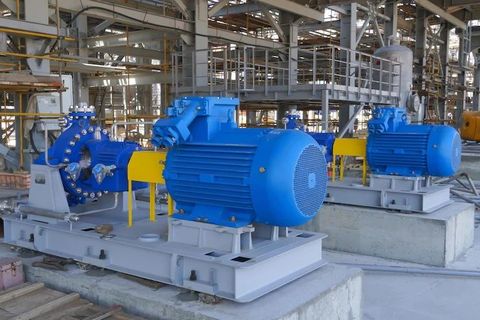
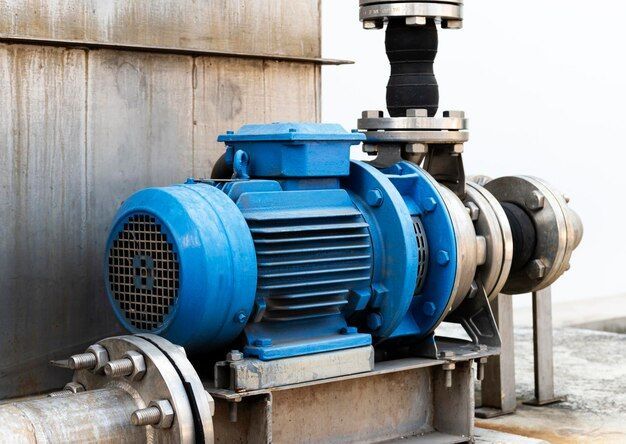
An induction motor generally consists of a stator, rotor, bearings, shaft, frame, cooling arrangement, and electrical connections. The stator contains windings that receive the electrical supply, while the rotor rotates inside the magnetic field created by those windings.
Main components of an induction motor
The stator is the stationary part of the motor and contains the magnetic core and windings. When alternating current flows through the windings, it produces a rotating magnetic field.
The rotor is the rotating component mounted on the shaft. In a squirrel-cage design, conductive bars are connected by end rings, forming a closed electrical path. In a wound-rotor design, the rotor contains windings that can be connected externally through slip rings.
The air gap separates the stator and rotor. It is kept relatively small to support effective magnetic coupling while allowing the rotor to rotate without physical contact with the stator.
Importance
Induction motors matter because rotating machinery is central to many industrial, commercial, agricultural, and infrastructure applications. A motor can provide the mechanical motion required to move fluids, transport materials, rotate tools, compress gases, and operate processing equipment.
Their use also affects electrical energy consumption. Motor efficiency, operating load, speed, starting method, and control strategy can influence how much electrical power is required for a particular mechanical task.
Why motor selection matters
A motor should correspond with the mechanical requirements of the equipment it drives. Important factors include rated power, voltage, frequency, speed, torque, duty cycle, enclosure, environmental conditions, and starting characteristics.
A mismatch between the motor and the driven equipment can create operational challenges. For example, a motor that is significantly oversized for its normal load may operate away from its intended efficiency range, while insufficient capacity can result in overheating or difficulty maintaining the required mechanical output.
Common induction motor characteristics
| Characteristic | Description |
|---|---|
| Supply | Commonly single-phase or three-phase AC |
| Rotor types | Squirrel-cage or wound rotor |
| Speed | Determined by supply frequency, pole count, and slip |
| Starting | Direct starting, reduced-voltage methods, or electronic control |
| Speed control | Can be achieved using variable-frequency drives |
| Typical uses | Pumps, fans, compressors, conveyors, and machinery |
Recent Updates
Induction motor technology continues to develop around energy efficiency, variable-speed operation, improved materials, thermal management, and digital monitoring. One significant recent development is the revision of international efficiency classification standards.
IEC 60034-30-1:2025 establishes efficiency classes for certain single-speed AC motors and introduces IE5 efficiency classification into the standard. The standard covers motors within defined power, voltage, frequency, and pole-count ranges and provides nominal efficiency values according to motor output, frequency, and number of poles.
The revised standard also explains that efficiency classifications are intended to make different motor technologies comparable in terms of energy-efficiency potential. Motor efficiency is only one part of the overall efficiency of a motor-driven system, because losses associated with cables, filters, and frequency converters are outside the scope of the motor classification itself.
Variable-speed operation
Variable-frequency drives, commonly called VFDs, have become an important part of motor-control systems. A VFD changes the frequency and voltage supplied to a motor, allowing its operating speed to be adjusted according to the requirements of the driven equipment.
Speed control can be particularly relevant for applications where demand changes during operation. Pumps and fans, for example, may not always require their full operating speed. Adjusting motor speed can change the mechanical output and electrical demand of the overall system.
Monitoring and digital technologies
Modern motor systems can also incorporate sensors and monitoring equipment that track parameters such as temperature, vibration, current, voltage, speed, and operating hours. This information can help identify changes in operating conditions and support planned inspection activities.
Digital monitoring does not replace physical inspection or engineering assessment. Instead, it provides additional operating information that can be used alongside conventional measurements.
Laws or Policies
Induction motors are affected by electrical safety requirements, energy-efficiency regulations, equipment standards, and building or industrial energy rules. The specific requirements vary by jurisdiction, motor category, rated power, voltage, application, and installation environment.
IEC 60034 standards are widely used as technical references for rotating electrical machines. IEC 60034-30-1 defines efficiency classes for specified line-operated AC motors, while other parts of the IEC 60034 series address subjects such as rating, performance, testing, and thermal characteristics.
Efficiency classifications commonly use IE codes, including IE1, IE2, IE3, IE4, and, under the 2025 revision of IEC 60034-30-1, IE5. The applicable efficiency level depends on the motor's characteristics and the regulatory or technical requirements governing the installation.
National regulations may also reference local standards that establish minimum efficiency requirements. For example, energy-efficiency building guidance can specify minimum motor efficiency classes for particular building categories. Such requirements should be checked against the rules applicable to the location and installation.
Tools and Resources
Several technical resources can help readers understand induction motors and evaluate their operating characteristics.
Motor rating calculations
Basic electrical calculations can help explain motor performance. For a three-phase system, electrical input power is commonly related to voltage, current, power factor, and efficiency. Approximate relationships can be used for educational purposes, while detailed engineering calculations should account for the actual motor and operating conditions.
Motor efficiency references
Efficiency-class tables are useful for understanding the relationship between rated motor power and efficiency. IEC 60034-30-1 provides nominal efficiency classifications for covered motors and distinguishes values according to frequency, pole count, and output power.
Motor monitoring instruments
Common measurement tools include:
- Clamp meters for checking electrical current
- Multimeters for electrical measurements
- Power analyzers for voltage, current, power factor, and power
- Vibration meters for mechanical condition assessment
- Infrared instruments for observing temperature patterns
- Tachometers for measuring rotational speed
These instruments have different purposes and measurement limitations. Readings should be interpreted according to the equipment specifications and applicable safety procedures.
Technical documentation
Motor nameplates and technical datasheets provide important information such as rated voltage, current, frequency, power, speed, efficiency, power factor, insulation class, enclosure rating, and duty classification.
The nameplate is particularly useful because two motors with similar physical dimensions can have different electrical and mechanical characteristics.
FAQs
What is an induction motor and how does it work?
An induction motor converts electrical energy into mechanical rotation through electromagnetic induction. The stator creates a rotating magnetic field, which induces current in the rotor. Interaction between the magnetic field and rotor current produces torque.
What are the main types of induction motors?
The two principal rotor arrangements are squirrel-cage and wound-rotor induction motors. Induction motors can also be classified according to their electrical supply as single-phase or three-phase motors. Squirrel-cage designs are widely used because of their relatively straightforward construction, while wound-rotor designs provide additional control possibilities during starting and operation.
What is the difference between an induction motor and a synchronous motor?
An induction motor normally operates with some difference between the rotating magnetic field speed and rotor speed, known as slip. A synchronous motor operates at synchronous speed under normal steady-state conditions. Their construction, control methods, starting characteristics, and application requirements can therefore differ.
How does a variable-frequency drive control an induction motor?
A variable-frequency drive changes the frequency supplied to the motor and normally adjusts voltage as part of its control strategy. Since motor speed is closely related to supply frequency and pole count, changing frequency allows the motor's operating speed to be controlled.
What does IE efficiency class mean for an induction motor?
The IE classification identifies an efficiency level under the applicable motor-efficiency standard. IEC 60034-30-1 defines classes for specified AC motors, with the 2025 edition adding IE5 to the classification framework.
Conclusion
Induction motors use electromagnetic induction to convert electrical energy into rotary mechanical motion and are available in several configurations for different operating requirements. Their performance depends on factors such as motor type, rated power, load, speed, electrical supply, cooling, and control method. Recent developments have placed greater attention on higher efficiency classes, variable-speed control, and digital monitoring, while international standards continue to define measurement and classification methods. Understanding the motor's working principle, technical ratings, and application requirements provides a foundation for interpreting its role in modern equipment and industrial systems.