Fiber Laser Marking Systems Guide With Industrial Coding, Engraving, and Identification Techniques
Fiber laser marking systems are industrial machines that use concentrated laser energy to create permanent markings on metal and certain non-metal surfaces.
These markings can include serial numbers, product codes, logos, manufacturing information, barcodes, QR codes, and identification symbols. Fiber laser technology is widely used in manufacturing environments where accurate product identification and long-lasting markings are important.
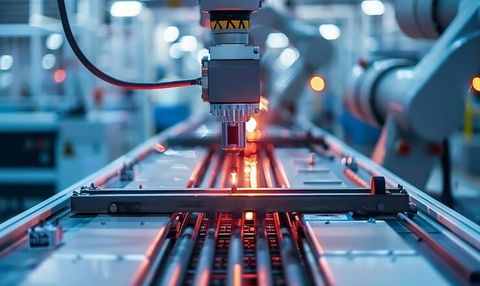
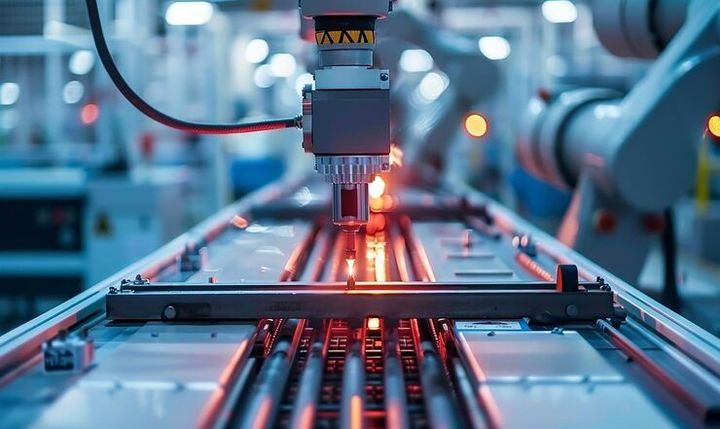
A fiber laser marking system generates a laser beam through an optical fiber containing a suitable active medium. The beam is directed toward a material surface using optical components and controlled by computer software. When the laser interacts with the surface, it changes its appearance through processes such as annealing, engraving, ablation, or surface etching.
Laser marking technology developed from broader advances in industrial lasers and computer-controlled manufacturing equipment. Earlier marking techniques often relied on ink, labels, mechanical engraving, or stamping. Fiber laser systems introduced another approach by enabling precise, digitally controlled marking without requiring direct mechanical contact between the marking tool and the material.
How Fiber Laser Marking Works
The marking process begins when a design or identification pattern is prepared in compatible software. The system converts the design into instructions that control the laser beam's movement across the workpiece.
A galvanometer scanning head commonly directs the beam using rapidly moving mirrors. The focused laser energy interacts with selected areas of the material, creating the required pattern. Marking depth, contrast, and appearance depend on laser power, pulse characteristics, scanning speed, material composition, and other operating parameters.
Common Types of Laser Marking
Different marking techniques are suitable for different applications. The selected method depends on whether the requirement is visual identification, surface modification, or a deeper engraved mark.
Annealing: Changes the surface colour of certain metals through controlled heating, often without removing significant material.
Engraving: Removes material to create a recessed marking that can be felt or measured.
Ablation: Removes a surface layer, such as a coating, to reveal the underlying material.
Surface etching: Produces a shallow marking through controlled surface modification.
Colour marking: Creates contrasting colours on selected metals under appropriate material and process conditions.
Materials Compatible With Fiber Lasers
Fiber laser marking systems are particularly common in applications involving stainless steel, carbon steel, aluminium, brass, copper, and other metals. Their suitability for plastics depends on the polymer composition, additives, colour, and laser wavelength.
Material testing is important because two materials that look similar may react differently to laser energy. Some plastics may discolour, melt, or produce unwanted fumes, while reflective metals may require carefully controlled operating parameters.
Importance
Fiber laser marking systems play an important role in modern manufacturing because products often need reliable identification throughout production, distribution, maintenance, and use. Markings help manufacturers distinguish similar components, connect products with manufacturing records, and maintain traceability across different production stages.
Industries such as automotive manufacturing, electronics, aerospace, medical device production, metal fabrication, and industrial equipment manufacturing use identification marks for different purposes. For example, an electronic component may require a compact data code, while a metal tool may need a durable serial number that remains readable after repeated handling.
Product Traceability and Identification
Traceability connects a physical product or component with relevant production information. A unique serial number or machine-readable code can help identify a component's batch, manufacturing history, inspection status, or maintenance records.
Laser marking can support this process by creating markings directly on the component. However, the usefulness of a marking also depends on code quality, database management, scanning equipment, and the durability of the marked surface.
Operational Advantages and Practical Limitations
Fiber laser marking provides several characteristics that can be useful in industrial settings.
Precision: Fine characters and compact identification codes can be marked on suitable surfaces.
Repeatability: Computer-controlled settings help maintain consistency across production batches.
Reduced consumables: Direct laser marking generally does not require marking ink or adhesive labels.
Integration: Compatible systems can connect with production lines, barcode readers, and automated handling equipment.
Durability: Markings can resist fading when the technique and material are selected appropriately.
There are also limitations. Initial equipment expenditure, maintenance requirements, extraction systems, operator training, and workplace safety measures can affect overall operating expenses. Deep engraving may also require more processing time than a shallow identification mark.
Industrial Applications
Fiber laser coding and engraving are used across a wide range of production activities.
Industry | Common marking application | Main purpose |
|---|---|---|
Automotive | Serial numbers and component codes | Traceability and identification |
Electronics | Compact data codes | Component tracking |
Aerospace | Part numbers and identification marks | Maintenance records and traceability |
Medical devices | Product identifiers and batch codes | Identification and record management |
Metal fabrication | Logos, dimensions, and serial numbers | Product recognition |
Tools and machinery | Model numbers and specifications | Equipment identification |
Electrical equipment | Labels and technical symbols marked directly on surfaces | Inspection and maintenance |
The suitability of each application depends on material characteristics, marking requirements, production speed, and applicable industry rules.
Recent Updates
Recent developments in fiber laser marking focus on automation, software integration, code readability, and production monitoring. Rather than representing a single major change, these developments reflect a broader move toward connected manufacturing and more consistent product identification.
Automation and Smart Manufacturing
Manufacturers increasingly integrate laser marking equipment with automated production lines. Programmable controllers can coordinate marking with product movement, component positioning, and inspection systems.
Integration with manufacturing execution systems can also help transfer product-specific information to the marking machine. This reduces reliance on repeated manual data entry, although incorrect source data or configuration errors can still produce inaccurate markings.
Machine Vision and Code Verification
Machine vision systems use cameras and image-processing software to inspect markings. They can check whether characters are positioned correctly, whether a code is readable, and whether the marked pattern matches the intended design.
For two-dimensional codes, verification equipment can assess characteristics such as contrast, cell definition, and decoding reliability. These checks are particularly relevant when small codes must remain readable throughout the product's life cycle.
Software Improvements and Flexible Production
Modern marking software supports variable text, serial-number sequences, date fields, imported designs, and data matrix codes. These functions are useful when products share a common design but require individual identifiers.
Manufacturing facilities are also paying greater attention to flexible production. A single compatible system may handle different marking patterns and components by changing software settings, fixtures, or validated process parameters. However, not every material or component can be processed using the same configuration.
Energy Management and Equipment Monitoring
Equipment manufacturers increasingly emphasise laser efficiency, system monitoring, and integration with factory controls. Monitoring functions may help operators identify operating irregularities or maintenance requirements.
Actual energy consumption depends on laser output, operating duty cycle, extraction equipment, cooling arrangements, and other components. Performance should therefore be assessed using the complete system rather than the laser source alone.
Laws or Policies
Fiber laser marking systems are affected by workplace safety requirements, machinery regulations, environmental controls, and product identification rules. The exact requirements depend on the country, industry, equipment design, and intended application.
Laser Safety and Workplace Requirements
Industrial fiber lasers commonly operate at wavelengths around 1,064 nanometres, within the near-infrared region. Their beams may be invisible to the human eye, making direct exposure particularly hazardous because a person may not recognise the danger.
Important safety measures can include:
Enclosed marking workstations and suitable interlocks.
Protective eyewear selected for the laser's wavelength and exposure conditions.
Controlled access to the laser operating area.
Warning labels, documented procedures, and operator training.
Appropriate fume extraction and assessment of airborne contaminants.
Electrical safety measures and routine equipment inspections.
Laser classifications and enclosure requirements depend on the system's design and accessible emissions. Applicable standards may include the IEC 60825 series for laser product safety, alongside relevant national workplace requirements.
Product Identification and Traceability Rules
Some industries require permanent product identification or machine-readable codes. Medical device identification frameworks, automotive traceability practices, and aerospace documentation requirements can influence marking design and verification procedures.
A marking machine alone does not establish regulatory compliance. Manufacturers must consider the applicable rules for the product, required data content, code format, placement, readability, and record retention.
Environmental and Equipment Compliance
Laser marking may generate particles, vapours, or fumes depending on the material and process. Facilities may need suitable extraction, filtration, ventilation, and waste-handling arrangements.
Electrical equipment, machinery safeguards, and electromagnetic compatibility may also fall under relevant national or regional requirements. Businesses should verify the rules applicable to their location and application rather than assuming that one standard covers every installation.
Tools and Resources
Several technical tools help users evaluate fiber laser marking systems, prepare marking designs, and maintain consistent production results.
Marking Design and Control Software
Compatible marking software is used to prepare text, symbols, serial numbers, barcodes, and QR codes. Common functions include vector graphics import, font selection, field-based data entry, and variable-data generation.
Before production, operators should verify character spacing, code dimensions, alignment, and data accuracy. A test marking can reveal problems that are difficult to identify from a screen preview alone.
Laser Parameter and Material Testing Tools
Parameter settings help determine how the laser interacts with a particular surface. Important variables include laser power, frequency, pulse duration, scanning speed, hatch spacing, and focal position.
A controlled test matrix can compare different settings against requirements such as contrast, depth, readability, and processing time. The resulting settings should be documented for each validated material and application.
Barcode Verification and Inspection Equipment
Barcode readers confirm whether a marking can be decoded, while verification systems assess code quality against relevant specifications. Vision cameras can also inspect positioning, dimensions, and surface defects.
The distinction matters because a code that can be read by one scanner does not necessarily meet a formal verification grade. Where a particular standard applies, the appropriate verification method should be used.
Equipment Evaluation Checklist
The following table summarises practical factors to assess when comparing industrial marking systems.
Evaluation factor | What to examine |
|---|---|
Laser output | Power, pulse characteristics, and intended application |
Marking field | Available working area and required component dimensions |
Material compatibility | Surface response, reflectivity, and coating characteristics |
Production speed | Marking cycle time and handling requirements |
Software | Variable data, code generation, and production integration |
Safety design | Enclosure, interlocks, and extraction provisions |
Inspection | Code readability and verification capability |
Maintenance | Optical cleanliness, component checks, and technical support arrangements |
FAQs
What Is a Fiber Laser Marking System Used For?
A fiber laser marking system creates identification marks on suitable materials, particularly metals. Common applications include serial numbers, QR codes, data matrix codes, product labels, and component identification.
How Does Fiber Laser Engraving Differ From Laser Marking?
Laser marking changes a surface to create a visible identification pattern, often without significant material removal. Fiber laser engraving removes material to create a recessed mark. The appropriate method depends on the required depth, appearance, and durability.
Can Fiber Laser Marking Systems Mark Plastic?
Some plastics can be marked using fiber lasers, but results depend on polymer composition, additives, colour, and surface properties. Testing is necessary to determine whether the process produces sufficient contrast without unwanted melting or damage.
What Safety Measures Are Required for Industrial Fiber Laser Marking?
Appropriate measures may include protective enclosures, interlocks, controlled access, operator training, and suitable fume extraction. Requirements depend on the laser classification, equipment design, material, and applicable workplace rules.
How Can Manufacturers Check Fiber Laser Marking Quality?
Manufacturers can inspect character clarity, marking position, contrast, and durability. Barcode verification equipment can assess machine-readable codes against applicable quality standards, while test samples help establish suitable process settings.
Conclusion
Fiber laser marking systems provide a computer-controlled method for industrial coding, engraving, and product identification, particularly on metal components. Their applications include traceability, manufacturing records, component recognition, and automated production processes. Effective implementation depends on material compatibility, marking quality, suitable software, equipment integration, and appropriate safety measures. Applicable product identification rules and workplace requirements must also be considered for each application.