Food Processing Machines Guide: Equipment Types, Operating Methods and Industrial Uses
Food processing machines are equipment used to transform raw agricultural products and ingredients into food that can be prepared, packaged, stored, and distributed. A food processing machines guide explains the main equipment types, operating methods, industrial applications, and safety considerations involved in food production.
Context
Food processing machines are equipment used to transform raw agricultural products and ingredients into food that can be prepared, packaged, stored, and distributed. A food processing machines guide explains the main equipment types, operating methods, industrial applications, and safety considerations involved in food production. These machines are used in bakeries, dairy plants, meat processing facilities, beverage factories, grain mills, commercial kitchens, and packaged food manufacturing units.
Food processing has developed alongside agriculture, trade, and food preservation. Early methods relied on manual grinding, crushing, drying, and heating. Industrial development introduced powered mills, mechanical mixers, refrigeration equipment, and automated production lines, allowing manufacturers to handle larger quantities and maintain more consistent processing conditions.
Today, food processing equipment ranges from simple cutting machines to integrated systems that combine washing, mixing, cooking, cooling, and packaging. The appropriate equipment depends on the ingredient, the intended product, production volume, hygiene requirements, and the characteristics that must be preserved during processing.
Main Types of Food Processing Machines
Food processing machines perform different tasks at various stages of production. Common categories include:
Cleaning and washing machines: Remove soil, dust, and other unwanted material from produce and selected raw ingredients.
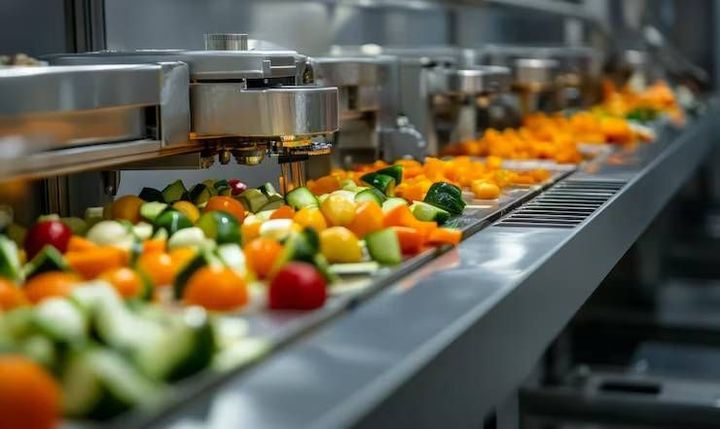
Cutting and slicing machines: Divide vegetables, fruits, meat, and other foods into specified shapes or sizes.
Grinding and milling machines: Reduce grains, spices, nuts, and other ingredients into smaller particles or powders.
Mixing and blending machines: Combine ingredients to produce a consistent mixture, dough, batter, or liquid.
Cooking and heating equipment: Use methods such as boiling, steaming, baking, roasting, or frying to change food properties.
Drying and dehydration machines: Remove moisture to support particular product characteristics and storage requirements.
Filling and packaging machines: Place measured quantities into containers, seal packages, or prepare products for distribution.
Some machines perform one specific operation, while integrated production systems connect several operations in a continuous or semi-continuous process.
Importance
Food processing machines play an important role in modern food production because they help manage large quantities of ingredients, reduce repetitive manual work, and support consistent processing procedures. Their use affects food manufacturers, farmers, restaurants, retailers, and consumers who depend on reliable supplies of processed foods.
Processing equipment can also address practical challenges such as seasonal harvests, product spoilage, inconsistent ingredient sizes, and the need to prepare foods in different formats. However, machinery alone does not ensure food safety. Appropriate cleaning, maintenance, temperature control, ingredient handling, and employee training remain essential.
How Food Processing Machines Work
The operating method depends on the machine's purpose and the physical properties of the food. A grinder uses mechanical force to reduce particle size, whereas a pasteurization system applies controlled heat for a defined process. A dehydrator removes moisture using heated air, controlled humidity, or another drying method.
Many production lines follow a sequence of connected operations:
Receiving and inspection: Raw materials are checked for condition, identity, and suitability.
Preparation: Ingredients may be washed, sorted, peeled, cut, or measured.
Processing: Machines perform grinding, mixing, heating, cooling, fermentation, or another required operation.
Quality checks: Operators monitor factors such as temperature, weight, texture, moisture, or product appearance.
Packaging: Products are placed in suitable containers and sealed according to the packaging requirements.
Storage and distribution: Finished products are held under conditions appropriate to their type.
Not every food follows this exact sequence. Fresh-cut produce, baked goods, dairy products, frozen meals, and dry snacks require different combinations of equipment and controls.
Industrial Applications of Food Processing Equipment
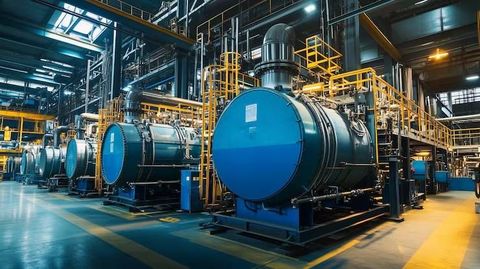
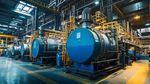
Food processing equipment is used across many industries. Grain mills use cleaning and milling machinery to prepare flour and other grain products. Dairy plants use pasteurizers, homogenizers, separators, tanks, and filling systems, depending on the products being made.
Meat and seafood facilities may use cutting, portioning, chilling, mixing, and packaging equipment. Beverage factories may combine filtration, blending, heating, carbonation, and bottling systems. Bakeries commonly use mixers, dough dividers, proofing equipment, ovens, cooling conveyors, and packaging machinery.
| Industry | Common equipment | Main purpose |
|---|---|---|
| Grain and flour | Cleaners, mills, sifters | Remove impurities and reduce particle size |
| Dairy | Pasteurizers, separators, homogenizers | Process milk and related products |
| Bakery | Mixers, dividers, ovens | Prepare and bake dough |
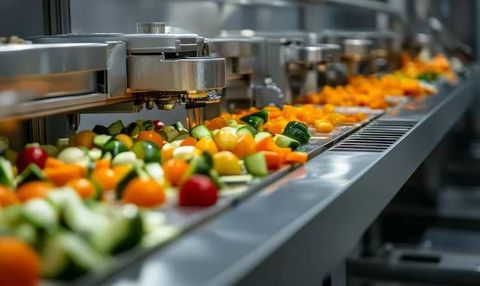
| Fruits and vegetables | Washers, peelers, cutters | Prepare produce for further processing |
| Meat and seafood | Slicers, grinders, chillers | Portion and process ingredients |
| Beverages | Mixers, filters, filling machines | Prepare and package liquids |
| Packaged snacks | Fryers, dryers, sealers | Process and package snack products |
The equipment listed represents common examples, not a complete inventory for each industry. Actual production arrangements depend on the product, applicable food safety controls, and factory requirements.
Recent Updates
Food processing equipment continues to develop through automation, digital monitoring, energy management, and improved hygiene-focused design. During 2024–2026, industry developments have continued to emphasize connected machinery, production data collection, traceability, and more efficient use of water, heat, and electricity. Adoption varies according to factory size, investment capacity, product type, and local infrastructure.
Automation and Smart Manufacturing
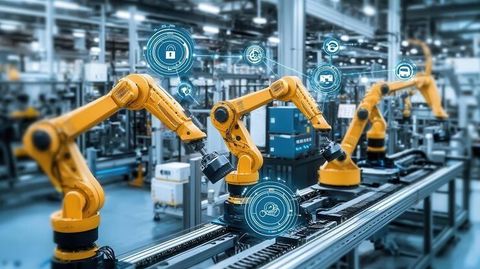
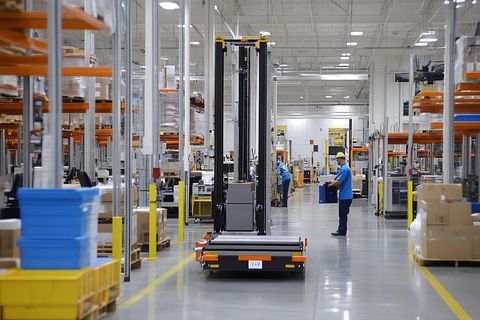
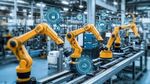
Automated food processing lines can coordinate conveyors, mixers, filling systems, inspection equipment, and packaging machinery. Sensors and programmable logic controllers monitor operating conditions and adjust selected machine functions within defined limits. These systems can reduce the need for repeated manual adjustments, although staff must still supervise production and respond to faults.
Digital monitoring tools can record production temperatures, operating times, machine interruptions, and other process information. Such records may help manufacturers identify recurring problems and investigate variations between batches. Their usefulness depends on accurate sensors, suitable software, and appropriate review procedures.
Hygiene, Traceability, and Resource Efficiency
Equipment design increasingly considers cleanability, drainage, material compatibility, and access for inspection. Stainless steel is widely used in food-contact applications because suitable grades can resist corrosion and withstand many cleaning procedures. Material selection must still account for the food, chemicals used during cleaning, temperature, and operating conditions.
Manufacturers are also examining ways to reduce water use, heat loss, product waste, and unnecessary machine downtime. Examples include heat recovery, improved motor controls, efficient refrigeration, and process monitoring. Such measures require evaluation within the complete production system, since savings in one stage may affect another stage's performance.
Laws or Policies
Food processing machines must be operated within the food safety, workplace safety, environmental, and product standards applicable to the country and facility. In India, manufacturers need to consider requirements relating to food hygiene, equipment suitability, safe working conditions, labeling, and the handling of specific food categories.
Food Safety Regulations in India
The Food Safety and Standards Authority of India (FSSAI) administers India's food safety framework under the Food Safety and Standards Act, 2006, and associated regulations. Applicable requirements can cover licensing or registration, hygienic manufacturing practices, sanitation, storage, and controls intended to prevent contamination.
Food businesses must identify the requirements relevant to their activities and products. Equipment used in food-contact operations should be suitable for its intended purpose and designed, installed, and maintained in a way that supports hygienic processing. Requirements may differ depending on whether a facility handles dairy products, packaged foods, meat, beverages, or other categories.
Machinery Safety and Quality Standards
Factories must also consider applicable occupational safety rules, electrical safety requirements, guarding of moving parts, emergency stops, and safe maintenance procedures. Machinery standards from the Bureau of Indian Standards (BIS), along with relevant industry standards, may apply depending on the equipment and regulatory context.
The Hazard Analysis and Critical Control Point (HACCP) approach helps food businesses identify hazards and establish controls at relevant production stages. It can inform equipment selection and operating procedures, but purchasing a particular machine does not by itself establish compliance.
Food manufacturers should maintain appropriate cleaning schedules, operating instructions, maintenance records, and staff training. Specific obligations depend on the facility, the product, and the current rules applicable to the operation.
Tools and Resources
Several technical resources help food manufacturers understand equipment requirements, plan production processes, and monitor operating conditions. The appropriate resource depends on whether the task involves selecting machinery, designing a production line, validating food safety controls, or maintaining existing equipment.
Equipment Selection and Process Planning
Equipment specifications and manufacturer manuals describe processing capacity, power requirements, operating temperatures, compatible materials, cleaning procedures, and maintenance needs. Comparing these details helps clarify whether a machine fits the intended ingredient and production process.
Production planning spreadsheets can record expected throughput, batch sizes, cycle times, ingredient quantities, machine availability, and maintenance schedules. Basic calculations can estimate theoretical output by multiplying the number of units processed per cycle by the number of cycles completed. Actual output may be lower because of cleaning, changeovers, stoppages, and quality checks.
Food Safety and Technical Resources
The FSSAI website provides information about food safety regulations, licensing, hygiene, and food business requirements in India. The Bureau of Indian Standards provides information about relevant Indian standards, while the Food and Agriculture Organization of the United Nations publishes technical resources on food processing, preservation, and food systems.
Maintenance teams can also use inspection checklists to track unusual vibration, damaged guards, leaks, temperature deviations, worn components, and cleaning completion. These records support routine oversight but do not replace required inspections, validated procedures, or qualified technical assessment.
FAQs
What are the main types of food processing machines?
Common types include washing machines, cutters, grinders, mixers, cooking equipment, dryers, refrigeration systems, and packaging machines. Each performs a particular task within food production.
How do industrial food processing machines work?
Industrial food processing machines use mechanical movement, heat, cooling, pressure, filtration, or moisture removal to change ingredients. Their operating settings depend on the product and the intended processing result.
Which food processing equipment is used in manufacturing plants?
Manufacturing plants may use conveyors, mixers, mills, pasteurizers, ovens, chillers, inspection systems, and packaging equipment. The combination depends on the food category and production sequence.
What food safety rules apply to food processing machines in India?
Food businesses must follow applicable FSSAI requirements and relevant workplace, hygiene, and machinery safety rules. The precise obligations depend on the facility, food category, and type of operation.
How can manufacturers maintain food processing equipment?
Maintenance commonly includes scheduled cleaning, inspection, lubrication where appropriate, calibration, replacement of worn components, and checking safety devices. Procedures should follow the machine's instructions and applicable food safety requirements.
Conclusion
Food processing machines support the preparation, transformation, preservation, and packaging of a wide range of food products. Equipment selection depends on the ingredients, processing method, required output, hygiene needs, and factory layout. Automation and digital monitoring are changing how some facilities control production, while food safety and machinery regulations remain central to their operation. Effective use of processing equipment depends on suitable design, trained operators, regular maintenance, and appropriate process controls.