Future of Vision Systems Facts: AI Development, 3D Vision, Edge Computing and Industrial Inspection
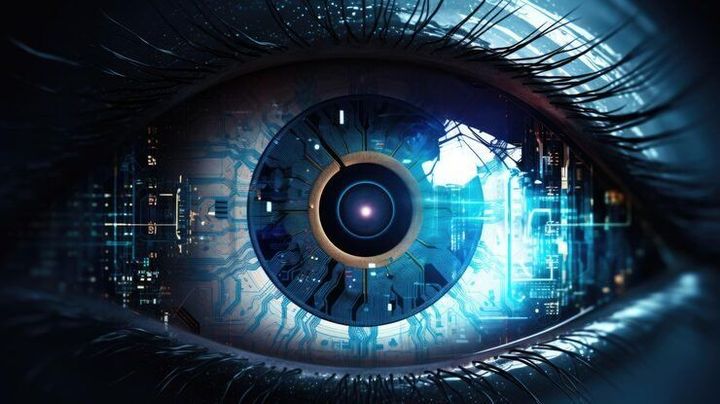
Vision systems are technologies that allow machines to capture, process, and interpret visual information. A typical system can include cameras, lighting, lenses, sensors, image-processing software, and computing hardware. These components work together to examine objects, identify patterns, measure dimensions, or detect visible differences.
The roots of industrial vision systems are connected to automated inspection and measurement. Traditional systems generally depended on programmed rules, such as checking whether an object had a particular shape, size, color, or position. These approaches remain useful for controlled environments, but modern applications increasingly combine computer vision with artificial intelligence.
The future of vision systems is being shaped by several developments, including AI development, 3D vision, edge computing, and industrial inspection. Instead of relying only on fixed image-processing rules, newer systems can use machine-learning models to recognize more complicated visual patterns.
Vision systems are used across manufacturing, electronics, automotive production, packaging, logistics, agriculture, and other fields. Their purpose varies by application. Some systems measure components, while others inspect surfaces, guide robots, verify assembly steps, or identify differences between expected and observed results.
How modern vision systems work
A basic vision system usually follows several stages:
- Image capture: Cameras or other sensors collect visual information.
- Lighting: Controlled illumination helps reveal relevant features.
- Processing: Software prepares the captured image for analysis.
- Detection: Algorithms identify objects, patterns, measurements, or irregularities.
- Decision: The system compares the result with defined inspection criteria.
- Recording: Results can be stored for quality analysis and traceability.
AI development adds another layer by allowing models to learn visual patterns from training examples. This can be useful when defects vary in appearance or when a simple rule-based approach is difficult to maintain.
Importance
Vision systems matter because visual inspection is an important part of many production and quality processes. Human inspection can be affected by lighting, fatigue, repetitive tasks, viewing angles, and differences between individual observations. Automated vision systems can provide a consistent method for examining defined characteristics.
Industrial inspection is one of the major areas where this technology is applied. A camera-based system can inspect products as they move through a production process rather than waiting until the final stage. This can help identify process variations earlier and provide information for further analysis.
The technology also affects workers and engineers. People may increasingly spend more time configuring inspection criteria, reviewing results, maintaining equipment, and investigating unusual cases rather than performing every repetitive visual check manually.
3D vision is particularly useful when depth or shape matters. A two-dimensional image may show the surface of an object, while a 3D system can provide information about height, volume, contours, or spatial relationships.
Common applications
Vision systems can be found in many environments:
- Manufacturing inspection for surface defects and assembly conditions
- Electronics inspection for components, connections, and placement
- Automotive production for dimensional and assembly checks
- Packaging inspection for labels, seals, shapes, and positioning
- Robotics for object recognition and movement guidance
- Logistics for package identification and dimensional analysis
- Agriculture for examining crops, produce, and physical characteristics
- Infrastructure inspection for visible damage and structural conditions
The importance of these applications comes from the ability to collect visual information in a structured and repeatable way.
Recent Updates
From 2024 through 2026, vision technology has continued moving toward AI-assisted inspection, edge processing, 3D sensing, and integration with connected industrial systems. Industry discussions increasingly describe vision systems as part of broader industrial automation rather than as isolated cameras.
AI development is changing how inspection models are created and used. Machine-learning systems can be trained to recognize patterns associated with acceptable and unacceptable conditions. However, model performance depends on factors such as training data, lighting, camera position, product variation, and the quality of inspection criteria.
Growth of edge computing
Edge computing processes data near the location where it is generated. For a vision system, this can mean analyzing camera data on an industrial computer, embedded device, or other nearby hardware rather than sending every image to a remote system.
This approach can reduce the distance data must travel and can support applications where rapid responses are important. Industry sources have highlighted edge computing as an important development for visual inspection because it can support lower-latency analysis and local processing.
Edge computing does not necessarily replace cloud computing. A factory may use local processing for immediate inspection while sending selected results or summarized information to a central system for longer-term analysis.
Expansion of 3D vision
3D vision is also becoming more important for applications involving depth, geometry, and complex shapes. Technologies such as structured light, stereo imaging, and depth sensors can generate information that is difficult to obtain from a conventional two-dimensional camera.
Research and industrial development have also combined 2D imaging, 3D profiling, AI analysis, and edge computing in manufacturing inspection environments. These combinations can support inspection of dimensions, alignment, surfaces, and other physical characteristics.
Greater use of AI-assisted inspection
AI-enabled machine vision is increasingly discussed for quality control, defect detection, real-time vision, multispectral imaging, robotic guidance, and embedded inspection. At the same time, explainability, training data, system integration, and data governance remain important technical considerations.
The direction of development is therefore not simply toward more cameras or larger AI models. It also involves combining sensing, computing, software, automation, and human oversight into a coordinated inspection process.
Laws or Policies
In India, vision systems can be affected by several areas of regulation and standards rather than by one single law specifically governing industrial machine vision. The applicable requirements depend on the equipment, workplace, data being captured, and intended application.
The Bureau of Indian Standards maintains standards covering machinery safety, electrical equipment, automation, and related areas. For example, Indian standards reference principles for machinery risk assessment and risk reduction, electrical equipment of machines, emergency-stop functions, safety distances, and related safety controls.
A 2025 BIS draft aligned with ISO 11161:2025 addressed the safety of machinery integration into systems and included areas such as risk assessment, task-zone design, and risk-reduction measures.
Data protection can become relevant when a vision system captures identifiable people rather than only products or machinery. India's Digital Personal Data Protection framework establishes requirements concerning digital personal data, with the Digital Personal Data Protection Rules, 2025 providing additional implementation details.
India has also established the IndiaAI Mission, which includes pillars covering computing capacity, datasets, application development, future skills, and safe and trusted AI. Government material describes the mission as a national program supporting AI infrastructure and responsible AI development.
For an industrial vision deployment, the relevant requirements therefore depend on the specific machinery, workplace, data, and application. Technical standards and applicable legal requirements should be checked for the particular system rather than assuming that one general rule applies to every vision installation.
Tools and Resources
Several types of tools can help people understand or develop vision-system applications. Their usefulness depends on whether the purpose is education, experimentation, model development, inspection design, or standards research.
AI and computer-vision resources
AI development platforms and computer-vision libraries can be used to study image classification, object detection, image segmentation, and related techniques. Educational datasets can help demonstrate how models learn visual patterns from labeled examples.
India's AIKosh provides datasets, models, toolkits, use cases, and other AI development resources. It is part of the broader IndiaAI ecosystem and can be used as a reference for exploring AI-related materials.
Industrial inspection resources
For industrial applications, useful resources include:
- Camera and lens specifications
- Lighting design guides
- 2D and 3D sensor documentation
- Machine-vision software documentation
- Image datasets and annotation tools
- Industrial automation documentation
- Machinery safety standards
- Quality-control templates
- Inspection checklists
- Technical measurement references
BIS provides a searchable standards platform covering Indian Standards and related technical information. Its machinery safety resources can help readers understand the standards environment surrounding industrial equipment.
Comparison of major technologies
| Technology | Main information captured | Typical use |
|---|---|---|
| 2D vision | Surface appearance and patterns | Defect and label inspection |
| 3D vision | Depth and geometry | Dimension and shape inspection |
| AI vision | Learned visual patterns | Complex defect detection |
| Edge computing | Local data processing | Real-time inspection |
| Cloud computing | Centralized data processing | Analysis and model management |
| Multispectral imaging | Information across wavelengths | Material and surface analysis |
These technologies can also be combined. For example, an industrial inspection system may use a 2D camera for surface information, a 3D sensor for geometry, an AI model for classification, and edge computing for local analysis.
FAQs
What is the future of vision systems?
The future of vision systems is increasingly connected with AI development, 3D vision, edge computing, connected automation, and advanced industrial inspection. Systems are becoming more capable of processing different types of visual information while operating closer to production equipment.
How is AI development changing industrial inspection?
AI development allows inspection systems to learn visual patterns from training examples. This can help with applications where defects have different shapes, textures, or appearances, although reliable results still depend on suitable data, system configuration, and validation.
What is 3D vision used for in industrial inspection?
3D vision provides information about depth, height, shape, and spatial relationships. It can be used for dimensional checks, surface profiling, object positioning, assembly verification, and other applications where two-dimensional images do not provide enough information.
Why is edge computing important for vision systems?
Edge computing allows visual data to be processed close to the camera or machine. This can support rapid local analysis and reduce the need to transfer every captured image to a remote computing environment.
Do Indian rules apply to industrial vision systems?
Potentially, yes. Requirements can involve machinery safety standards, electrical and automation standards, workplace considerations, and data-protection requirements when personal data is involved. The applicable rules depend on the specific equipment and application.
Conclusion
The future of vision systems is being shaped by AI development, 3D vision, edge computing, and increasingly connected industrial inspection. These technologies allow machines to capture and analyze visual information in ways that extend beyond traditional rule-based image processing. Their development also introduces considerations involving data quality, system validation, machinery safety, privacy, and human oversight. In India, technical standards and emerging AI and data-governance frameworks form part of the environment in which these systems are developed and deployed.