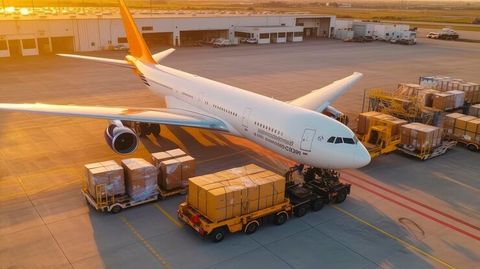
Global Logistics Management Guide for Understanding Worldwide Supply Chains
Global logistics management is the planning and coordination of goods, materials, information, transportation, storage, and related activities across international supply chains. It connects manufacturers, suppliers, warehouses, ports, carriers, distributors, retailers, and customers across multiple geographic regions.
The objective is to coordinate the movement of physical products while managing timing, documentation, inventory, storage, and transportation requirements.
The development of global logistics has followed the expansion of international trade and manufacturing networks. Earlier supply chains often operated within relatively limited geographic areas. As production became more internationally distributed, businesses needed systems for coordinating ocean freight, air cargo, road transportation, rail networks, warehouses, customs processes, and inventory across different locations.
Global logistics management therefore involves much more than transportation. It includes demand planning, supplier coordination, inventory control, shipment planning, documentation, customs procedures, warehouse operations, tracking, risk management, and information exchange.
Modern logistics systems increasingly use digital platforms to connect these activities. Transportation management systems, warehouse management systems, enterprise resource planning platforms, GPS tracking, electronic documentation, sensors, and data analytics can provide information about shipments and inventory throughout the supply chain.
Main Elements of Global Logistics Management
A worldwide supply chain can contain many interconnected activities:
Supplier and procurement coordination
Inventory planning
Warehousing and storage
Ocean freight
Air freight
Rail transportation
Road transportation
Customs documentation
Cargo tracking
Packaging and labeling
Distribution planning
Returns and reverse logistics
Risk and disruption management
Each activity can influence the others. A delay at a port can affect warehouse inventory, production schedules, transportation plans, and downstream distribution.
How a Global Supply Chain Works
A typical international supply chain starts with raw materials or components moving from suppliers toward manufacturing facilities. Finished products may then move through regional warehouses before reaching distributors, retailers, or final users.
Information normally travels alongside the physical shipment. Purchase orders, invoices, packing information, customs documents, tracking records, and inventory data help organizations coordinate movement between different stages.
Because countries use different transportation systems, regulations, documentation requirements, currencies, languages, and infrastructure, global logistics requires coordination across several operating environments.
Importance
Global logistics management affects the availability and movement of many everyday products, including food, clothing, electronics, machinery, medical equipment, household products, and industrial components. Supply-chain performance can influence whether materials arrive at manufacturing facilities and whether finished products reach distribution networks as planned.
The topic is also important because global supply chains can be exposed to disruptions. Weather events, geopolitical developments, port congestion, transportation capacity changes, labor disruptions, regulatory changes, cyber incidents, and sudden demand changes can affect international movement.
Who Is Affected?
Global logistics involves many participants:
Manufacturers
Suppliers
Importers and exporters
Freight carriers
Ports and terminals
Warehouses
Customs authorities
Distributors
Retailers
Technology providers
Consumers
A change at one point in the supply chain can create effects elsewhere. For example, a shortage of a component can interrupt manufacturing, while a transportation delay can increase inventory requirements.
Transportation Modes
International logistics commonly uses several transportation modes. Ocean freight handles large quantities of cargo across long distances, while air freight is generally used when shipment speed or cargo characteristics justify air transportation.
Rail can connect inland regions with ports and distribution centers, while road transportation is important for regional and final-mile movement.
Intermodal transportation combines multiple modes within one broader movement plan. A container might travel by ship, rail, and truck before reaching its final destination.
Inventory and Warehousing
Inventory management is closely connected with logistics planning. Organizations need to balance available stock against expected demand, storage capacity, replenishment schedules, and supply uncertainty.
Warehouses can perform several functions, including receiving, inspection, storage, order preparation, consolidation, cross-docking, packaging, and dispatch. Warehouse management systems can help coordinate these activities through digital inventory records and operational instructions.
Recent Updates
From 2024 through 2026, global logistics management has continued moving toward digital coordination, supply-chain visibility, automation, artificial intelligence, sustainability measurement, and greater attention to resilience.
Digital Supply-Chain Visibility
Digital platforms increasingly connect transportation, warehouse, inventory, and shipment information. Real-time or near-real-time tracking can provide information about shipment location, estimated arrival times, temperature conditions, or other relevant measurements.
Electronic documentation is also becoming more important. Digital records can reduce dependence on physical paperwork and allow information to move between organizations more quickly when compatible systems are available.
Artificial Intelligence and Analytics
Artificial intelligence and advanced analytics are being explored for demand forecasting, route planning, warehouse management, inventory analysis, shipment prediction, and disruption detection.
These systems depend on the quality and availability of underlying data. Human review remains important because logistics decisions can involve regulatory requirements, operational constraints, unusual events, and information that may not be represented accurately in historical data.
Warehouse Automation
Warehouses increasingly use automated storage and retrieval systems, autonomous mobile robots, conveyor systems, scanning equipment, machine vision, and automated sorting technologies.
Automation can be applied selectively rather than throughout an entire warehouse. The appropriate arrangement depends on inventory characteristics, facility design, order patterns, equipment integration, and operational requirements.
Resilient Supply Chains
Recent supply-chain planning has placed greater emphasis on resilience. Organizations may examine supplier concentration, transportation alternatives, inventory buffers, geographic diversification, and contingency plans.
The objective is to understand how a disruption at one location could affect other parts of the network. Digital simulation and scenario planning can help organizations examine different supply-chain conditions.
Sustainability and Logistics
Environmental considerations are also becoming more integrated into logistics planning. Organizations can examine transportation modes, vehicle utilization, warehouse energy consumption, packaging materials, shipment consolidation, and route efficiency.
Carbon accounting tools can provide estimates of emissions associated with transportation and other supply-chain activities. Calculation methods can vary, so the scope and assumptions behind reported figures need to be clearly defined.
Laws or Policies
Global logistics management is shaped by international trade rules, customs requirements, transportation regulations, import and export controls, product standards, environmental rules, and national policies. Requirements vary according to the countries involved, the goods being transported, and the selected transportation modes.
Customs and Trade Documentation
International shipments generally require documentation identifying the goods, parties involved, quantities, values, origin information, and transportation details. Customs authorities use this information to assess shipments according to applicable national requirements.
Trade classification is also important. Products may need to be assigned appropriate customs classification codes, and incorrect information can create delays or compliance issues.
Import and Export Controls
Some products may be subject to additional controls because of their material, technical characteristics, destination, end use, or other factors. Import and export restrictions vary by jurisdiction and can change as trade policies develop.
Businesses involved in international logistics therefore need procedures for checking applicable requirements before goods move across borders.
Transportation and Safety Rules
Different transportation modes have their own safety requirements. Dangerous goods, for example, can be subject to specific packaging, labeling, documentation, and handling rules during transportation.
Road, rail, maritime, and air transportation can each involve different regulatory frameworks. Logistics planning needs to account for the rules applicable to every stage of the journey.
Tools and Resources
Global logistics management uses a wide range of digital and analytical tools. Transportation management systems can support shipment planning, carrier coordination, route management, freight documentation, and tracking.
Warehouse management systems maintain information about inventory locations, receiving, picking, packing, and dispatch. Enterprise resource planning systems can connect logistics information with procurement, manufacturing, finance, and inventory records.
Useful resources include:
Transportation management systems
Warehouse management systems
Enterprise resource planning platforms
Route-planning software
Freight tracking platforms
Inventory forecasting tools
Customs classification references
Shipment documentation templates
Supply-chain risk assessment frameworks
Carbon accounting calculators
Warehouse simulation software
Logistics performance dashboards
A simplified comparison of transportation modes is shown below:
| Transportation Mode | Typical Strength | Common Planning Factor |
|---|---|---|
| Ocean Freight | Large-volume international movement | Transit time and port schedules |
| Air Freight | Rapid long-distance movement | Cargo characteristics and capacity |
| Rail Freight | Inland long-distance movement | Network availability |
| Road Freight | Flexible regional distribution | Distance and road conditions |
| Intermodal | Combination of transportation modes | Transfer coordination |
Key Logistics Measurements
Organizations can monitor several indicators to understand supply-chain performance. These can include inventory turnover, shipment accuracy, transit time, order cycle time, warehouse utilization, transportation capacity, and delivery reliability.
The interpretation of these measurements depends on the business model and supply-chain structure. A high-volume manufacturing network may use different indicators from a small distribution network or a specialized international cargo operation.
FAQs
What is global logistics management?
Global logistics management is the coordination of transportation, inventory, warehousing, documentation, customs activities, information, and material movement across international supply chains.
How does global logistics management support worldwide supply chains?
It connects suppliers, manufacturers, transportation networks, warehouses, distributors, and other participants. Coordination helps organizations plan how materials and finished products move across multiple countries and transportation modes.
What are the main types of global transportation?
The main transportation modes include ocean, air, rail, road, and intermodal transportation. The appropriate combination depends on cargo characteristics, distance, infrastructure, timing requirements, and regulatory considerations.
How does technology affect global logistics management?
Digital systems can provide shipment tracking, inventory information, transportation planning, warehouse coordination, documentation, analytics, and automated processing. Artificial intelligence and predictive analytics are also being applied to selected logistics planning activities.
What regulations affect global logistics management?
International logistics can involve customs rules, import and export controls, transportation safety requirements, product regulations, documentation requirements, and environmental policies. The applicable rules depend on the countries, goods, and transportation modes involved.
Conclusion
Global logistics management coordinates transportation, inventory, warehousing, documentation, customs, technology, and information across worldwide supply chains. Ocean, air, rail, road, and intermodal networks can work together to move materials and finished products between different regions. Recent developments include digital visibility, warehouse automation, advanced analytics, artificial intelligence, resilience planning, and sustainability measurement. International logistics remains closely connected with customs, transportation safety, trade controls, and other regulations that vary by jurisdiction.