Heavy Industrial Packaging and Baling Systems Guide With Automation Insights
Heavy industrial packaging and baling systems are mechanical and automated systems used to compress, bundle, wrap, secure, and prepare large quantities of materials for storage, transportation, recycling, or further processing.
These systems are commonly associated with industries that handle bulky, dense, or high-volume materials such as paper, cardboard, plastics, textiles, agricultural materials, metals, and certain manufactured products.
Traditional packaging activities often involved manual handling, basic strapping equipment, and separate machines for different stages. As industrial production expanded, facilities needed equipment capable of handling heavier loads and larger material volumes with greater consistency. This development contributed to the wider use of industrial balers, compactors, conveyors, wrappers, strapping machines, pallet systems, and automated control equipment.
A heavy industrial packaging system usually consists of several connected components rather than one machine. Material may enter through a conveyor, feeding system, hopper, or loading station. It can then move through compression, forming, tying, wrapping, labeling, weighing, and discharge stages depending on the application.
Automation connects these stages through sensors, programmable logic controllers, motor controls, hydraulic systems, pneumatic components, and industrial communication networks. The resulting system can coordinate repeated activities while providing operators with information about machine status and operating conditions.
Main Types of Industrial Packaging and Baling Equipment
Different materials require different approaches to compression and packaging. Horizontal balers are commonly used where large material volumes need continuous feeding, while vertical balers are often used for lower-volume applications or facilities with limited floor space.
Other equipment categories include:
Hydraulic baling presses for compressing dense materials
Automatic balers for repeated compression and tying cycles
Strapping machines for securing packaged loads
Wrapping systems for stabilizing pallets and bundles
Conveyors for continuous material movement
Compactors for reducing material volume
Bale handling systems for moving compressed units
Weighing systems for recording load information
Sorting systems for separating materials before compression
The equipment arrangement depends on material characteristics, production volume, bale dimensions, available space, and the required handling method.
Importance
Heavy industrial packaging and baling systems can influence how materials move through warehouses, manufacturing plants, recycling facilities, distribution centers, and processing operations. Compressing bulky materials can reduce their physical volume, making storage areas and transportation processes easier to organize.
The systems also address repetitive physical activities. Manual movement of heavy or irregular materials can require significant physical effort and coordination. Mechanical feeding, compression, tying, and discharge systems can reduce the amount of direct handling required during repeated production cycles.
Industries Using Baling Systems
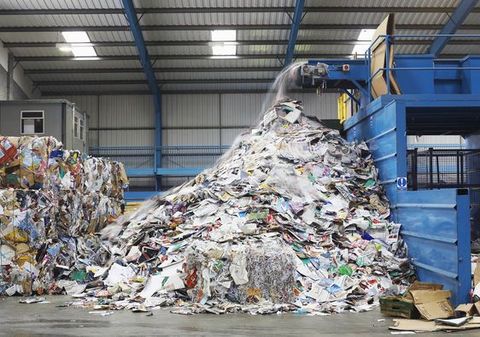
Industrial baling equipment can be found across several material-handling environments. Common applications include paper recovery, cardboard processing, plastic recycling, textile handling, agricultural material processing, and industrial waste management.
The requirements vary significantly between applications. Cardboard may require a different compression arrangement from textile fibers, while plastic films can require specialized feeding and compaction arrangements to prevent material from interfering with moving components.
Material Flow and Workplace Organization
Facility layout is an important part of heavy industrial packaging. Raw materials need adequate space for receiving and temporary storage, while finished bales require designated areas for weighing, inspection, storage, and movement.
A typical material flow may include:
Material receiving
Sorting or preparation
Feeding
Compression
Bale formation
Tying or strapping
Weighing
Discharge
Temporary storage
Final movement
Clear pathways can help reduce congestion around conveyors, forklifts, loading equipment, and bale discharge areas. Equipment access is also important because maintenance personnel need suitable working space around hydraulic systems, motors, sensors, control panels, and other components.
Automation and Operating Consistency
Automation can coordinate multiple stages of an industrial packaging line. Sensors may detect material position, bale chamber conditions, conveyor movement, door positions, or other operating states.
A programmable logic controller can process signals and control sequences according to configured parameters. Human operators can monitor the system through control panels or human-machine interfaces, while alarms can identify certain abnormal conditions.
Automation does not eliminate the need for human oversight. Operators remain important for setup, inspection, material preparation, maintenance coordination, safety procedures, and responding to conditions outside normal operating parameters.
Recent Updates
Industrial packaging and baling systems have continued to incorporate automation, connected controls, energy monitoring, improved machine diagnostics, and more flexible material-handling arrangements. The broader trend is toward integrating mechanical equipment with digital control and monitoring systems.
Smart Baling Systems
Modern automated balers can incorporate sensors that monitor machine conditions during compression and discharge cycles. Data from these sensors can be used to identify operating patterns, detect certain faults, and support maintenance planning.
Digital interfaces can display information such as cycle status, operating alerts, production counts, and machine conditions. Some systems can also connect with plant-level industrial networks for centralized monitoring.
Improved Material Handling
Conveyors and automated feeding systems are becoming increasingly important in high-volume environments. Automatic feeding can help maintain a consistent flow of material into the baling chamber while reducing interruptions caused by manual loading.
Robotic handling can also be integrated into selected packaging environments. Depending on the application, robotic equipment may move bales, position packages, palletize finished units, or perform repetitive handling tasks.
Energy and Hydraulic Management
Hydraulic systems are widely used in heavy baling equipment because they can generate substantial compression forces. Current equipment development includes attention to hydraulic efficiency, motor controls, pump management, and monitoring of operating conditions.
Variable-speed drives can regulate motor operation according to system requirements in suitable applications. Energy monitoring can provide information about equipment usage and help facility operators understand where electrical or mechanical demand occurs.
Data and Predictive Maintenance
Industrial data collection is becoming more common in packaging environments. Machine information can be recorded over time to identify recurring alarms, cycle patterns, temperature changes, vibration conditions, or other indicators.
Predictive maintenance approaches use collected information to support maintenance planning. These systems do not replace physical inspection, but they can provide additional information for understanding equipment behavior.
Laws or Policies
Heavy industrial packaging and baling equipment is affected by several categories of rules, including machinery safety, electrical protection, workplace safety, environmental requirements, waste handling, and transportation regulations. The exact requirements depend on the country, industry, material type, and facility activities.
Machinery Safety
Industrial balers contain moving mechanisms, hydraulic systems, electrical components, and compression chambers. Safety requirements may therefore address machine guarding, emergency stopping systems, access controls, warning mechanisms, electrical protection, and safe operating procedures.
Equipment documentation can also be important for installation, operation, inspection, and maintenance. Facilities generally need procedures that explain how operators interact with machinery and how equipment is isolated during maintenance.
Waste and Recycling Requirements
Where baling systems are used for recyclable materials or industrial waste, environmental rules may influence storage, sorting, handling, transportation, and disposal activities. Different material categories can have different handling requirements.
Facilities handling contaminated, hazardous, or regulated materials may face additional controls. The applicable requirements should be determined according to the material and jurisdiction rather than assumed to be identical across industries.
Worker Protection
Workplace rules may address training, personal protective equipment, machine access, lifting activities, emergency procedures, and exposure to noise or other workplace hazards. Safe operation depends on both equipment design and appropriate workplace procedures.
Tools and Resources
Planning and operating heavy industrial packaging and baling systems can involve several technical resources. Equipment specification sheets help define dimensions, electrical requirements, hydraulic requirements, compression capacity, feeding arrangements, bale dimensions, and discharge configurations.
Facility-layout software can be used to visualize machinery placement, conveyor routes, storage zones, access paths, and maintenance clearances. Process-flow diagrams can help show how materials move from receiving through final storage.
Useful planning resources include:
Equipment specification sheets
Facility layout drawings
Material-flow diagrams
Hydraulic system diagrams
Electrical load calculations
Conveyor capacity worksheets
Bale dimension records
Preventive maintenance schedules
Machine inspection checklists
Industrial automation software
Production monitoring dashboards
Inventory management platforms
A basic comparison of equipment categories can be represented as follows:
| Equipment Type | Primary Function | Typical Automation Level | Main Planning Factor |
|---|---|---|---|
| Vertical Baler | Material compression | Low to medium | Floor space |
| Horizontal Baler | High-volume compression | Medium to high | Material flow |
| Automatic Baler | Repeated compression cycles | High | Continuous feeding |
| Strapping System | Bundle securing | Medium to high | Package dimensions |
| Wrapping System | Load stabilization | Medium to high | Load shape |
| Conveyor System | Material movement | Medium to high | Throughput and layout |
| Bale Handling System | Bale transfer | High | Discharge arrangement |
Digital monitoring platforms can also connect production information with maintenance records and equipment status. When multiple machines are integrated, communication protocols and control architecture need to be considered during system planning.
FAQs
What are heavy industrial packaging and baling systems?
Heavy industrial packaging and baling systems are equipment arrangements used to compress, bundle, secure, wrap, and move bulky or dense materials. They may combine balers, conveyors, strapping equipment, wrapping systems, sensors, and automated controls.
How does automation improve industrial baling systems?
Automation can coordinate feeding, compression, tying, discharge, and material movement. Sensors and controllers can also provide information about machine status, production cycles, and certain operating conditions.
What materials can industrial balers process?
Industrial balers can be configured for materials such as cardboard, paper, plastics, textiles, agricultural materials, and selected industrial materials. Equipment configuration depends on material characteristics and required bale specifications.
What safety requirements apply to heavy industrial baling equipment?
Requirements may cover machine guarding, emergency controls, electrical protection, operator procedures, maintenance isolation, workplace training, and equipment access. Specific requirements vary according to jurisdiction and application.
What factors affect industrial packaging system planning?
Important factors include material type, production volume, bale dimensions, feeding method, available floor space, utility requirements, storage capacity, equipment access, automation architecture, and maintenance requirements.
Conclusion
Heavy industrial packaging and baling systems combine compression equipment, material handling, packaging mechanisms, controls, and facility infrastructure. Automation is increasingly integrated through sensors, programmable controls, digital monitoring, and connected equipment. Facility planning must account for material flow, equipment access, utilities, storage, workplace protection, and applicable regulatory requirements. The resulting system depends on the materials, operating environment, production requirements, and level of automation involved.