Harvesting Equipment: Discover Different Types and Their Agricultural Applications
Harvesting equipment refers to machines, tools, and mechanical systems used to collect crops when they reach the appropriate stage of maturity. Harvesting is one of the final major field operations in crop production, and the equipment used depends on the crop, field conditions, scale of farming, and type of harvesting required.
Context
The development of harvesting equipment is closely connected with agricultural mechanization. Early harvesting depended heavily on hand tools and manual labour. Over time, animal-powered implements and mechanical machines were introduced, followed by engine-powered equipment capable of performing several operations during one field pass.
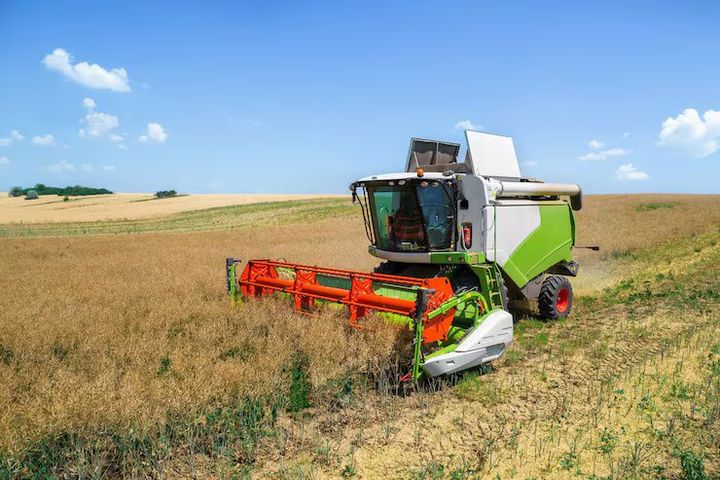
Modern harvesting equipment can perform tasks such as cutting, gathering, threshing, separating, cleaning, and collecting crops. Some machines are designed for one specific operation, while others combine several stages. A combine harvester, for example, can perform harvesting, threshing, separating, and cleaning operations for suitable grain crops.
Main functions of harvesting equipment
Harvesting machinery is designed around the physical characteristics of a crop. Grain crops may require cutting and threshing, while root crops need lifting and separation from soil. Forage crops may require cutting, chopping, and collection.
The main operations can include:
- Cutting or mowing mature plants
- Gathering crops from the field
- Picking individual fruits or vegetables
- Threshing grain from plant material
- Separating useful crop material from unwanted material
- Cleaning harvested material
- Collecting and transferring crops
- Baling or preparing certain crops for storage
The objective is to complete these operations while limiting unnecessary crop damage and allowing the harvested material to move efficiently to the next stage.
Importance
Harvesting must generally take place within a suitable period because crop maturity, weather, moisture, and field conditions can affect the quality of harvested material. Delays can create practical difficulties, particularly when a large area needs to be harvested within a limited period.
Agricultural mechanization can reduce physical labour requirements and help make harvesting operations more timely. FAO notes that sustainable mechanization can reduce hard labour, address labour shortages, improve the timeliness of agricultural operations, and support more efficient resource use.
Harvesting equipment also affects what happens after crops are removed from the field. Machines that combine harvesting and initial processing can reduce the number of separate field operations. However, inappropriate machine settings or unsuitable equipment can also cause grain loss, crop damage, soil compaction, or other problems.
Equipment selection and crop type
Different crops require different harvesting methods. A machine designed for cereal grains cannot simply be used for every crop because crops vary in plant structure, maturity, harvesting position, and required handling.
| Crop or crop group | Common harvesting equipment | Main agricultural application |
|---|---|---|
| Wheat and other grains | Combine harvester | Cutting, threshing, separating, cleaning |
| Corn or maize | Corn picker or combine attachment | Gathering and separating grain or ears |
| Rice | Rice combine harvester | Cutting, threshing, separating and cleaning |
| Forage crops | Mower and forage harvester | Cutting and preparing forage |
| Potatoes | Root crop harvester | Lifting, separating and collecting tubers |
| Sugar beet | Root crop harvester | Topping, lifting, cleaning and collecting |
| Cotton | Cotton harvester | Removing mature cotton from plants |
| Grapes | Grape harvester | Detaching and collecting grapes |
| Coffee | Coffee harvester | Removing mature coffee fruit |
| Hay | Mower and baler | Cutting, forming and collecting dried forage |
This variety explains why harvesting equipment is usually developed around particular crop groups rather than one machine being suitable for every agricultural application.
Manual, semi-mechanized, and mechanized harvesting
Harvesting can be performed manually, mechanically, or through a combination of methods. Smaller fields, delicate crops, uneven terrain, and crops requiring selective picking may still depend heavily on manual operations.
Mechanized systems are more common where crops can be harvested through standardized movements. Semi-mechanized approaches can combine hand labour with powered equipment, allowing machinery to perform physically demanding operations while people handle tasks requiring greater selectivity.
Recent Updates
Harvesting equipment has continued to develop alongside precision agriculture, automation, digital monitoring, and improvements in machine design. Recent agricultural mechanization trends include greater use of sensors, positioning technologies, digital controls, data collection, and automated machine functions.
FAO describes sustainable mechanization as extending from basic hand tools to sophisticated motorized equipment, digital technologies, and geospatial technologies. These developments are intended to improve the efficiency and timeliness of agricultural operations while considering environmental, economic, and social factors.
Precision and automated harvesting
Modern harvesting machines can incorporate sensors and digital systems that monitor operating conditions. Information about crop flow, machine performance, field position, and harvested material can help operators understand how a machine is performing during field operations.
Automation is another developing area. Some equipment can assist with steering, machine adjustments, route planning, or other repetitive operations. The level of automation varies significantly between machines and crops, and many systems still require an operator to supervise the equipment.
Crop-specific machine development
Specialized harvesting equipment is also receiving attention for crops that require different handling methods. ISO has published agricultural machinery safety requirements for several categories, including combine harvesters, forage harvesters, cotton harvesters, sugar cane harvesters, root crop harvesters, and grape, olive, and coffee harvesters.
A recent international safety standard specifically addresses harvesters for grapes, olives, and coffee, reflecting the different mechanical requirements associated with these crops.
Data and machine monitoring
Digital information is increasingly becoming part of agricultural machinery. Monitoring systems can record operational information and help identify variations across a field. When combined with other agricultural data, such information can contribute to more informed field management.
These technologies do not eliminate the need for agricultural knowledge. Weather, crop condition, soil characteristics, machine configuration, and operator decisions continue to influence harvesting results.
Laws or Policies
Harvesting equipment is influenced by agricultural machinery safety rules, environmental requirements, workplace regulations, road-transport rules, and equipment standards. The exact legal requirements vary between countries and regions, so there is no single set of rules that applies everywhere.
International standards provide a common technical reference for machinery safety. ISO 4254-1 establishes general safety requirements for agricultural machinery, including self-propelled, mounted, semi-mounted, and trailed machines. It also addresses information concerning safe working practices and residual risks.
Specific equipment categories have additional standards. ISO 4254-7 covers combine harvesters, forage harvesters, cotton harvesters, and sugar cane harvesters. ISO 4254-17 addresses root crop harvesting machines, including equipment used for lifting, cleaning, conveying, and unloading root crops.
Safety requirements are particularly important because harvesting machines contain moving cutting, feeding, conveying, threshing, and separation components. Operators need appropriate training and should follow the instructions and safety information associated with the equipment.
Environmental and operational considerations
Agricultural machinery policies may also address emissions, noise, soil protection, road movement, fuel use, and environmental effects. Requirements can differ according to machine type and location.
Sustainable agricultural mechanization increasingly considers environmental and social factors alongside productivity. This broader approach recognizes that machinery selection can affect soil, energy use, labour requirements, and the wider agricultural system.
Tools and Resources
Several resources can help readers understand harvesting equipment and its applications. FAO provides information about sustainable agricultural mechanization, agricultural machinery classifications, and crop production systems. Its agricultural machinery classification includes equipment ranging from simple implements to complex machines such as combine harvesters.
Agricultural universities and extension organizations also publish technical material covering machine operation, crop maturity, harvesting methods, and equipment management. These resources can help explain how harvesting methods differ between crops.
International standards organizations provide technical information about machinery safety. ISO 4254 is particularly relevant when researching safety requirements for agricultural equipment.
Useful resources can include:
- Agricultural machinery classification databases
- Crop production and harvesting guides
- Equipment operator manuals
- Agricultural extension publications
- Machinery safety standards
- Crop moisture and maturity references
- Field capacity calculation worksheets
- Agricultural machinery research publications
Field capacity calculations can also help explain how quickly equipment can cover an area. The basic concept considers the working width of the machine, travel speed, and field efficiency. Actual performance depends on turning, unloading, field shape, crop conditions, and machine operation.
FAQs
What is harvesting equipment?
Harvesting equipment includes tools and machines used to collect mature crops. Depending on the crop, equipment may cut, gather, thresh, separate, clean, lift, chop, or collect agricultural products.
What are the main types of harvesting equipment?
Common types include combine harvesters, forage harvesters, corn pickers, root crop harvesters, cotton harvesters, grape harvesters, mowers, balers, and reaper-binders. Each type is designed for particular crops or harvesting operations.
How does harvesting equipment improve agricultural operations?
Mechanized harvesting can reduce physical labour and help complete field operations within suitable harvesting periods. The effect depends on the machine, crop, field conditions, operator, and harvesting method.
What equipment is used for grain harvesting?
Combine harvesters are commonly used for grain crops because they can combine several operations, including cutting, threshing, separating, and cleaning, within one harvesting system.
What are recent developments in harvesting equipment?
Recent developments include sensors, digital monitoring, positioning technologies, automated functions, and greater integration with precision agriculture. These technologies are being developed to improve machine control, field monitoring, and harvesting efficiency.
Conclusion
Harvesting equipment includes a wide range of machines designed for different crops and agricultural operations. Equipment can perform individual tasks such as cutting and picking or combine several processes such as harvesting, threshing, separating, and cleaning. Recent developments are bringing greater use of sensors, digital systems, automation, and crop-specific machinery. Safety standards and sustainable mechanization principles remain important considerations in the development and use of agricultural harvesting equipment.