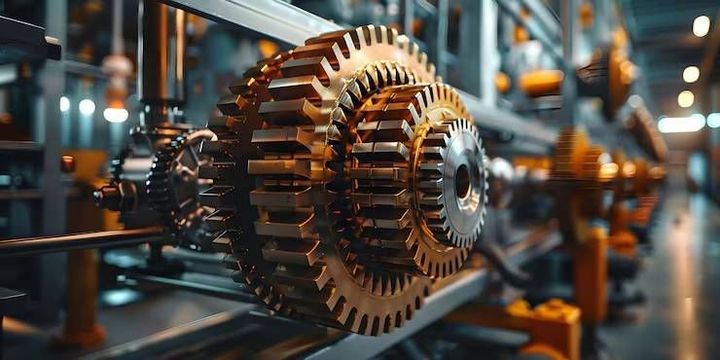
Heavy-Duty Industrial Gearboxes Explained: Types, Components, Applications, Benefits and Selection Factors
Heavy-duty industrial gearboxes are mechanical devices used to transmit power between rotating shafts while adjusting rotational speed and torque. They are essential components in industrial machinery that handles heavy loads, operates continuously, or requires controlled movement. A heavy-duty industrial gearbox typically contains gears, shafts, bearings, a housing, and a lubrication arrangement designed for the demands of a particular application.
Context
Heavy-duty industrial gearboxes are mechanical devices used to transmit power between rotating shafts while adjusting rotational speed and torque. They are essential components in industrial machinery that handles heavy loads, operates continuously, or requires controlled movement. A heavy-duty industrial gearbox typically contains gears, shafts, bearings, a housing, and a lubrication arrangement designed for the demands of a particular application.
The development of industrial gearboxes is closely connected to the growth of manufacturing, mining, transportation, and large-scale mechanical equipment. As industrial machines became larger and more powerful, mechanical systems required ways to transfer energy efficiently while controlling speed and managing high forces. Gearbox designs evolved to accommodate different operating conditions, including heavy loads, frequent starting, and extended operating periods.
How Heavy-Duty Industrial Gearboxes Work
An industrial gearbox receives rotational power from a motor or another driving machine. Its internal gears transfer this motion to an output shaft, changing the relationship between rotational speed and torque according to the gear ratio.
For example, a gearbox with a reduction ratio of 10:1 reduces the output speed to approximately one-tenth of the input speed under ideal conditions. The output torque increases correspondingly, although actual torque depends on efficiency, losses, and operating conditions.
Heavy-duty gearboxes are used in conveyor systems, crushers, cement production equipment, steel plants, cranes, wind turbines, and other industrial applications. Their design depends on the required power, load characteristics, operating environment, and expected duty cycle.
Main Components of an Industrial Gearbox
Several components work together to transmit mechanical power:
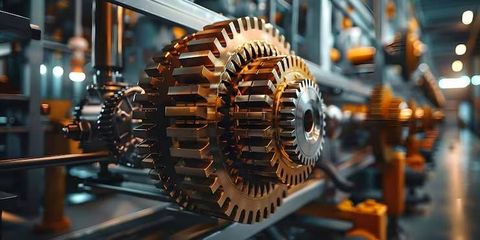
Gears: Transfer motion and determine the speed ratio and direction of rotation.
Shafts: Carry rotating components and transmit torque between the input and output.
Bearings: Support rotating shafts and manage radial or axial forces.
Housing: Encloses internal components and helps maintain alignment and structural stability.
Lubrication system: Reduces friction, controls wear, and helps remove heat.
Seals: Limit lubricant leakage and reduce the entry of dust, moisture, and other contaminants.
Cooling arrangement: Helps control temperature through housing surfaces, fans, oil circulation, or external cooling equipment.
The design and quality of these components influence gearbox reliability, operating temperature, maintenance requirements, and suitability for different industrial environments.
Importance
Heavy-duty industrial gearboxes are important because industrial machinery often needs high torque at controlled speeds. Electric motors may rotate too quickly for equipment that moves heavy materials or processes large quantities of raw materials. A gearbox adjusts the motor's output to meet the mechanical requirements of the driven equipment.
Gearbox performance can affect production continuity, energy use, equipment wear, and workplace safety. An incorrectly selected gearbox may experience overheating, excessive vibration, premature wear, or mechanical failure. Such problems can interrupt production and require additional inspection or repairs.
Industrial Applications
Heavy-duty gearboxes support a broad range of industries.
Mining: Conveyors, crushers, mills, and material-handling equipment require substantial torque to move or process minerals.
Cement manufacturing: Kilns, rotary equipment, and grinding mills rely on controlled rotation under demanding loads.
Steel production: Rolling mills, lifting systems, and processing machinery use gearboxes to transmit high mechanical forces.
Material handling: Conveyor belts, bucket elevators, and bulk-handling systems use reduction gearboxes to regulate movement.
Construction equipment: Selected lifting, mixing, and material-processing machines use heavy-duty gear reduction.
Renewable energy: Wind turbines use gearbox arrangements in certain designs to adapt rotor speed to generator requirements.
Water and wastewater facilities: Industrial gearboxes can drive mixers, clarifiers, and other mechanical equipment.
The operating conditions differ across these sectors. A mining gearbox may face abrasive dust and shock loads, while a gearbox in a water treatment facility may need protection against moisture and corrosion.
Types of Heavy-Duty Industrial Gearboxes
Different gear arrangements suit different combinations of speed, torque, space, and load direction.
| Gearbox type | Main characteristics | Typical applications |
|---|---|---|
| Helical gearbox | Angled teeth provide gradual engagement and smooth power transmission | Conveyors, mixers, industrial drives |
| Bevel gearbox | Changes the direction of power transmission, commonly between intersecting shafts | Processing machinery, specialized drives |
| Planetary gearbox | Uses planet gears around a central sun gear within a compact arrangement | Heavy equipment, winches, high-torque drives |
| Worm gearbox | Uses a worm and worm wheel, often for substantial speed reduction | Selected lifting and positioning systems |
| Spur gearbox | Uses straight teeth and parallel shafts | Industrial machinery with suitable load and speed requirements |
These types may be combined in multi-stage gearboxes to achieve larger reduction ratios. The appropriate design depends on the required torque, operating speed, available installation space, efficiency needs, and expected loading pattern.
Recent Updates
Developments in heavy-duty industrial gearboxes increasingly focus on condition monitoring, improved lubrication, manufacturing precision, and integration with digital industrial systems. From 2024 through 2026, broader industrial equipment trends have included greater use of sensors, predictive maintenance methods, energy monitoring, and connected factory technologies. Adoption varies by industry, equipment age, and operating requirements.
Digital Monitoring and Predictive Maintenance
Sensors can monitor variables such as vibration, temperature, rotational speed, and lubricant condition. When this information is collected over time, maintenance teams can identify unusual operating patterns and investigate potential problems before a failure occurs.
Predictive maintenance systems may combine sensor readings with historical operating data and analytical software. However, sensor alerts do not automatically establish the cause of a problem. Inspection, measurement, and technical assessment may still be necessary.
Materials, Lubrication, and Efficiency
Gearbox manufacturers continue to use manufacturing processes that improve gear geometry, surface finish, and dimensional accuracy. Heat treatment and suitable material selection can influence tooth strength, fatigue resistance, and wear behavior.
Lubrication developments also focus on maintaining appropriate film strength, reducing friction, and managing heat under different operating conditions. The correct lubricant depends on gear design, load, speed, ambient temperature, and manufacturer specifications. Energy efficiency must be evaluated alongside durability, cooling requirements, and the gearbox's complete operating range.
Laws or Policies
Heavy-duty industrial gearboxes are affected by machinery safety requirements, electrical and mechanical installation rules, environmental regulations, workplace safety practices, and applicable technical standards. The exact requirements depend on the country, industry, installation, and intended use.
Industrial Safety Requirements in India
In India, industrial gearbox installations may be subject to relevant provisions of the Factories Act, 1948, where applicable, along with state rules and other occupational safety requirements. The Occupational Safety, Health and Working Conditions Code, 2020, is also part of India's evolving workplace safety framework, with applicability depending on commencement and relevant provisions.
Industrial facilities must consider hazards associated with rotating shafts, exposed gears, lifting equipment, stored mechanical energy, and unexpected machine movement. Appropriate guarding, isolation procedures, inspections, and worker training help reduce these risks.
Technical Standards and Environmental Considerations
Standards published by the International Organization for Standardization (ISO), the American Gear Manufacturers Association (AGMA), and the Bureau of Indian Standards (BIS) may be relevant to gearbox design, ratings, testing, and installation. The applicable standard depends on the gearbox type and industrial application.
Environmental requirements may also affect lubricant storage, leakage prevention, used-oil handling, and waste disposal. Facilities should follow applicable pollution-control requirements and local rules. Compliance should be assessed for the complete machine and installation rather than assuming that a gearbox alone determines regulatory compliance.
Tools and Resources
Several technical resources help engineers, maintenance teams, and industrial operators evaluate heavy-duty industrial gearboxes. The choice of tool depends on whether the task involves initial selection, installation, troubleshooting, or ongoing condition monitoring.
Gearbox Selection and Calculation Tools
Gearbox sizing calculators can estimate the relationship between input speed, output speed, torque, power, and reduction ratio. For a basic calculation, the reduction ratio is the input rotational speed divided by the output rotational speed.
Engineers also need to consider service factor, shock loading, starting frequency, duty cycle, ambient conditions, and required operating life. A calculation based only on motor power may not account for every mechanical demand.
Monitoring and Maintenance Resources
Vibration analyzers, temperature sensors, oil-analysis equipment, and alignment tools can help assess gearbox condition. Manufacturer manuals provide model-specific information about lubrication intervals, allowable loads, installation positions, and inspection procedures.
Useful reference sources include:
ISO: Technical standards and terminology relevant to mechanical equipment.
AGMA: Gear engineering guidance and technical publications.
BIS: Indian standards and related information.
Manufacturer documentation: Installation instructions, rating tables, lubricant specifications, and maintenance procedures.
Maintenance records: Operating hours, inspection findings, lubricant changes, vibration readings, and previous failures.
Gearbox Selection Checklist
Before selecting a heavy-duty industrial gearbox, the main considerations include:
Required input power, speed, output speed, and torque.
Type of driven equipment and load variation.
Expected operating hours and starting frequency.
Mounting position, shaft arrangement, and available space.
Ambient temperature, moisture, dust, and chemical exposure.
Lubrication, cooling, inspection, and maintenance access.
Applicable technical standards and safety requirements.
FAQs
What is a heavy-duty industrial gearbox?
A heavy-duty industrial gearbox is a mechanical power transmission unit designed for demanding industrial loads and operating conditions. It adjusts speed and torque to suit equipment such as conveyors, crushers, mills, and lifting systems.
Which types of heavy-duty industrial gearboxes are commonly used?
Common types include helical, bevel, planetary, worm, and spur gearboxes. Selection depends on the required torque, speed reduction, shaft arrangement, load pattern, and installation space.
How is the correct industrial gearbox size determined?
Selection involves evaluating power, input and output speeds, torque, service factor, shock loads, operating hours, and environmental conditions. Manufacturer rating data and qualified engineering calculations help establish suitability.
What causes heavy-duty industrial gearbox failure?
Possible causes include inadequate lubrication, contamination, misalignment, overloading, excessive temperature, bearing damage, and gear-tooth wear. Vibration measurements, oil analysis, and physical inspection can help identify the underlying problem.
How often should an industrial gearbox be maintained?
Maintenance frequency depends on gearbox design, operating conditions, lubricant type, duty cycle, and manufacturer instructions. Regular inspections and condition monitoring can help identify changes that require further investigation.
Conclusion
Heavy-duty industrial gearboxes regulate speed and torque across manufacturing, mining, construction, material handling, and other industrial sectors. Their performance depends on suitable gear design, component quality, lubrication, installation, and operating conditions. Digital monitoring and improved maintenance practices are increasingly used to assess gearbox condition and manage equipment reliability. Understanding gearbox types, applications, safety requirements, and selection factors provides a foundation for informed industrial equipment planning.