Hydraulic Power Tools Explained: Types, Components, Applications, Benefits and Safety Considerations
Hydraulic power tools are devices that use pressurized liquid to generate force for lifting, cutting, tightening, pressing, or breaking materials. They are used in construction, manufacturing, vehicle maintenance, mining, infrastructure projects, and other industrial activities. Unlike conventional hand tools, hydraulic power tools rely on fluid pressure to perform tasks that may require substantial force or controlled movement.
Context
Hydraulic power tools are devices that use pressurized liquid to generate force for lifting, cutting, tightening, pressing, or breaking materials. They are used in construction, manufacturing, vehicle maintenance, mining, infrastructure projects, and other industrial activities. Unlike conventional hand tools, hydraulic power tools rely on fluid pressure to perform tasks that may require substantial force or controlled movement.
The technology comes from the principles of hydraulics, which describe how liquids transmit pressure within a confined system. Hydraulic systems became increasingly important during industrial development because they could transfer force through hoses and cylinders, allowing machinery to perform demanding operations. Modern hydraulic power tools use these principles in compact, portable, or stationary equipment.
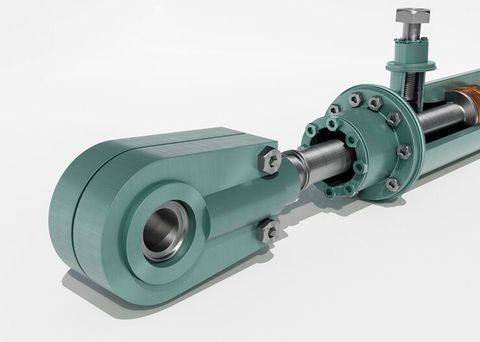
A typical hydraulic power tool works with a hydraulic pump, fluid, control valves, connecting hoses, and an actuator. The pump pressurizes the fluid, and the fluid transfers energy to a hydraulic motor or cylinder. This movement drives the tool's working component, such as a cutting blade, wrench mechanism, or lifting ram.
How Hydraulic Power Tools Work
Hydraulic power tools operate according to Pascal's principle, which states that pressure applied to a confined liquid is transmitted throughout the liquid. A hydraulic cylinder can use this pressure to generate a substantial force across its piston.
The amount of force depends on the pressure and the effective area of the piston. Hydraulic tools can therefore produce significant force without requiring an equally large amount of physical effort from the operator. However, their actual performance depends on system design, pressure limits, fluid flow, and the condition of the equipment.
Importance
Hydraulic power tools are important because many industrial tasks involve heavy materials, resistant components, or tightly controlled mechanical operations. Manual tools may be unsuitable for certain high-force applications, while some electrically powered tools may not meet the requirements of a particular working environment.
These tools can help technicians, construction workers, mechanics, and manufacturing personnel complete tasks involving heavy loads or substantial resistance. Examples include tightening large structural bolts, cutting metal components, lifting machinery, crimping industrial cables, and separating damaged vehicle parts.
Main Types of Hydraulic Power Tools
Hydraulic power tools are designed for different functions. Their operating mechanisms and pressure requirements vary according to the task.
Hydraulic wrenches: Apply controlled rotational force to tighten or loosen large fasteners used in industrial machinery, pipelines, and structural assemblies.
Hydraulic cutters: Use a powerful cutting mechanism for materials such as metal rods, cables, and selected structural components.
Hydraulic jacks: Lift vehicles, machinery, and other loads when the equipment is correctly rated and positioned.
Hydraulic crimping tools: Compress connectors onto electrical cables or hydraulic fittings to form mechanical connections.
Hydraulic presses: Apply compressive force for shaping, fitting, straightening, or separating components.
Hydraulic breakers: Deliver repeated impact force for breaking concrete, rock, and similar materials, commonly in construction equipment.
Hydraulic pullers: Remove tightly fitted components such as bearings, gears, and pulleys.
Hydraulic torque tools: Apply rotational force to fasteners where specified tightening requirements must be followed.
Some tools have an integrated hydraulic power source, while others connect to a separate pump. Portable systems may use manual, electric, battery-powered, or engine-driven pumps, depending on their design.
Main Components of Hydraulic Power Tools
A hydraulic tool contains several connected components that work together to transfer power.
The hydraulic pump moves fluid and creates the flow required for the system to develop pressure under load. The hydraulic fluid transfers energy while also providing lubrication and helping remove heat in suitable systems.
The hoses and fittings carry pressurized fluid between the pump and the tool. Control valves direct fluid flow and regulate movement, while cylinders or hydraulic motors convert fluid power into linear or rotational movement. The working attachment performs the intended task.
| Component | Main function | Important consideration |
|---|---|---|
| Hydraulic pump | Supplies fluid flow | Pressure and flow ratings |
| Hydraulic fluid | Transfers energy | Correct fluid specification |
| Hoses and fittings | Carry pressurized fluid | Pressure rating and condition |
| Control valves | Direct fluid movement | Correct operation and compatibility |
| Cylinder or motor | Produces movement | Force, torque, and travel limits |
| Working attachment | Performs the task | Suitability for the material |
| Pressure gauge or sensor | Indicates system pressure | Accurate readings and condition |
Not every hydraulic tool includes every component in the same arrangement. Some systems combine several functions within a single unit, while others use separate components connected through hoses.
Common Applications Across Industries
Hydraulic power tools appear in many industrial settings because they can deliver controlled force for specialized operations.
In construction, hydraulic cutters, breakers, jacks, and presses support structural work, demolition, and equipment maintenance. In manufacturing, hydraulic presses and crimping tools assist with forming materials and assembling components.
In automotive maintenance, hydraulic jacks and pullers help raise vehicles or remove tightly fitted parts. In energy and infrastructure, hydraulic torque tools and crimpers may be used during pipeline construction, electrical installation, and maintenance of large equipment. Mining and heavy engineering also use hydraulic tools for selected repair and material-processing tasks.
The appropriate tool depends on the material, working position, required force, available power source, and the manufacturer's operating limits.
Recent Updates
Hydraulic power tools continue to develop through improvements in portability, monitoring, energy efficiency, and operator control. Current industrial trends include battery-powered hydraulic pumps, compact equipment designs, pressure monitoring, and integration with digital maintenance systems. These developments vary by manufacturer and tool category rather than representing a single change across the entire industry.
Portable and Battery-Powered Systems
Some modern hydraulic tools use battery-powered pumps to reduce dependence on external electrical connections or engine-driven power units. These designs can be useful in locations where portability and setup flexibility are important. Operating duration, charging requirements, output capacity, and environmental conditions remain important considerations.
Compact pump designs and lighter components may also improve handling in certain applications. However, overall equipment weight, hose arrangements, and the force required for a task still affect how easily a tool can be transported and operated.
Monitoring and Preventive Maintenance
Pressure sensors, electronic controls, and digital monitoring systems can help operators identify abnormal operating conditions. Depending on the equipment, these systems may record pressure, temperature, operating cycles, or maintenance information.
Preventive maintenance increasingly emphasizes inspections, fluid condition, seal integrity, and the identification of leaks before equipment failure occurs. Monitoring tools can support maintenance decisions, but they do not replace physical inspection, correct operation, or manufacturer instructions.
Laws or Policies
Hydraulic power tools are affected by workplace safety requirements, machinery standards, environmental rules, and applicable product regulations. The exact requirements depend on the country, industry, equipment type, and working conditions.
Workplace Safety Requirements in India
In India, industrial workplaces must follow applicable occupational safety and health requirements. The Occupational Safety, Health and Working Conditions Code, 2020, forms part of the country's consolidated workplace-safety framework; its applicability depends on commencement notifications, relevant rules, and the circumstances of the workplace.
Employers and operators should follow applicable requirements for equipment inspection, safe working procedures, worker training, protective equipment, and maintenance. Relevant factory rules, construction safety requirements, and state-level provisions may also apply to particular operations.
Equipment Standards and Pressure Safety
Technical standards can establish requirements for hydraulic equipment design, testing, pressure ratings, and safe operation. The International Organization for Standardization (ISO) publishes standards covering aspects of hydraulic fluid power systems and components. Whether a particular standard is mandatory depends on the relevant law, contract, or technical specification.
Pressurized hydraulic fluid can cause serious injury if it escapes through a damaged hose or fitting. A small leak may produce a high-pressure fluid jet capable of penetrating the skin. Equipment must be depressurized before maintenance, and suspected injection injuries require immediate emergency medical attention, even if the visible wound appears small.
Environmental and Fluid-Handling Considerations
Hydraulic fluid can contaminate soil or water if released improperly. Workplaces should use appropriate storage, spill-control measures, and disposal procedures consistent with applicable environmental requirements. Fluid selection should also account for equipment compatibility and operating conditions.
Tools and Resources
Technical references and maintenance tools help operators understand hydraulic power tool specifications, operating limits, and inspection requirements. Resources should be selected according to the equipment model and intended application.
Technical Documents and Selection Tools
Manufacturer manuals provide information about rated pressure, flow requirements, compatible attachments, approved hydraulic fluids, maintenance intervals, and operating procedures. These documents should be consulted before using unfamiliar equipment or connecting a tool to an external pump.
The ISO website, the Bureau of Indian Standards (BIS) website, and applicable government workplace-safety publications provide information about standards and regulatory requirements. Their relevance depends on the equipment category and the rules applicable to a specific workplace.
Hydraulic force calculators can estimate cylinder force from pressure and piston area. A simplified relationship is:
Force = Pressure × Piston Area
For example, a cylinder operating at a pressure of 10 megapascals with an effective piston area of 0.002 square metres produces a theoretical force of 20,000 newtons. Actual usable force may be lower because of friction, losses, and system limitations. Such calculations do not replace equipment ratings or engineering assessments.
Safety and Maintenance Checklist
Before operating a hydraulic power tool, the following checks are relevant:
Inspect hoses, fittings, seals, and connectors for damage or leakage.
Confirm that the pump and tool have compatible pressure and flow ratings.
Verify that attachments are suitable for the intended operation.
Use appropriate eye, hand, foot, and other protective equipment.
Keep hands and other body parts away from moving components and suspended loads.
Never search for a pressurized leak with bare hands.
Depressurize the system before disconnecting hoses or conducting maintenance.
Follow the manufacturer's procedures for storage, inspection, and fluid replacement.
Training is particularly important when equipment generates high force or operates near heavy machinery, electrical installations, or unstable loads.
FAQs
What are hydraulic power tools used for?
Hydraulic power tools are used for lifting, cutting, pressing, crimping, pulling, and tightening components. Common applications include construction, manufacturing, automotive maintenance, infrastructure work, and heavy equipment repair.
What are the main types of hydraulic power tools?
Common types include hydraulic wrenches, cutters, jacks, presses, crimpers, breakers, and pullers. Each type is designed for a particular operation and has specific pressure, force, and attachment requirements.
How do hydraulic power tools generate force?
A hydraulic pump moves pressurized fluid through a confined system. The fluid acts on a cylinder piston or hydraulic motor, producing linear or rotational movement that powers the tool.
What safety precautions are important when using hydraulic tools?
Operators should inspect equipment, follow pressure ratings, wear appropriate protective equipment, and depressurize the system before maintenance. Damaged hoses and high-pressure leaks require particular attention because escaping fluid can cause serious injuries.
How should hydraulic power tools be maintained?
Maintenance generally includes inspecting hoses and seals, checking fluid condition, examining connectors, and following the manufacturer's inspection schedule. Repairs and fluid replacement should follow the equipment's technical instructions.
Conclusion
Hydraulic power tools use pressurized fluid to perform tasks requiring substantial force and controlled movement. Their main types include wrenches, cutters, jacks, presses, crimpers, breakers, and pullers, each serving different industrial purposes. Advances in portability, monitoring, and maintenance practices continue to influence hydraulic equipment development. Correct equipment selection, compliance with applicable safety requirements, and careful maintenance are essential considerations when these tools are used.

You May Also Like