Industrial Conveyor Belt Guide: Designs, Components, Functions and Industrial Applications
An Industrial Conveyor Belt Guide explains the designs, components, functions, and industrial applications of conveyor belt systems. These systems move materials from one location to another using a continuous belt supported by rollers or a sliding surface. Conveyor technology developed during the Industrial Revolution and expanded as factories, mines, ports, and processing facilities required more organized methods of transporting materials.
Context
An Industrial Conveyor Belt Guide explains the designs, components, functions, and industrial applications of conveyor belt systems. These systems move materials from one location to another using a continuous belt supported by rollers or a sliding surface. Conveyor technology developed during the Industrial Revolution and expanded as factories, mines, ports, and processing facilities required more organized methods of transporting materials.
Modern industrial conveyor belts are used in manufacturing, warehousing, agriculture, mining, food processing, packaging, and logistics. Their design depends on the material being transported, the distance involved, the operating environment, and the required movement speed. Understanding conveyor belt systems helps readers recognize how materials move through industrial operations and how different components contribute to reliable operation.
Understanding Industrial Conveyor Belt Designs
Industrial conveyor belts are available in several designs, each intended for particular material-handling conditions. A system used to transport small packages may differ considerably from one carrying heavy minerals or hot materials.
Common conveyor belt designs include:
Flat belt conveyors: Use a continuous, flat belt to move boxes, packages, components, and other materials along a straight path.
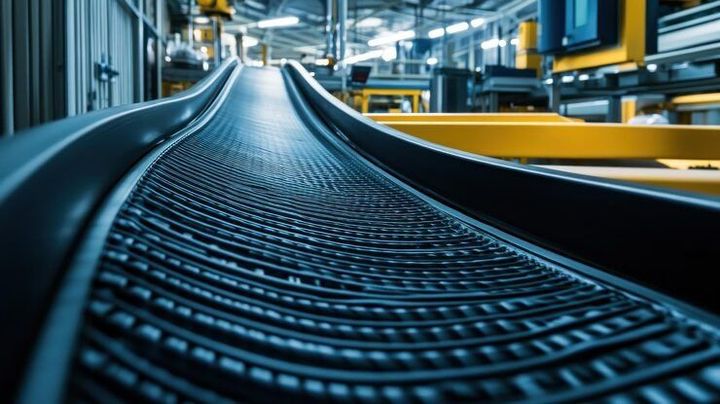
Inclined belt conveyors: Move materials between different elevations, often using textured surfaces or cleats to reduce sliding.
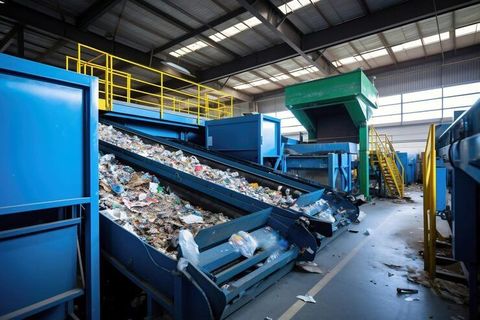
Troughed belt conveyors: Form a curved belt profile that helps contain bulk materials such as grain, sand, and crushed rock.
Modular plastic belt conveyors: Use connected plastic segments and are suitable for selected manufacturing, packaging, and food-processing applications.
Cleated belt conveyors: Feature raised sections that help carry loose or packaged materials on inclined routes.
Curved belt conveyors: Guide materials around bends where the layout requires a change in direction.
The appropriate design depends on the load, belt path, available space, environmental conditions, and required throughput. Some systems combine multiple conveyor sections to connect different production stages.
Importance
Industrial conveyor belt systems play an important role in moving raw materials, work-in-progress items, and finished products. They help organize production lines by creating a predictable path between machines, storage areas, inspection stations, and packaging equipment.
Their performance can affect production schedules, material handling, workplace safety, and equipment downtime. A belt that slips, becomes misaligned, or suffers damage may interrupt connected operations. Understanding conveyor design and maintenance is therefore relevant to factory operators, engineers, warehouse managers, maintenance teams, and businesses that handle bulk materials or manufactured goods.
Main Conveyor Belt Components
A conveyor system contains several parts that work together to support and move the belt. Their arrangement varies according to the system's size, design, and application.
Conveyor belt: The continuous moving surface that carries materials.
Drive pulley: Transfers motion from the drive system to the belt.
Idler rollers: Support the belt and load while reducing resistance during movement.
Drive motor and gearbox: Supply and control the mechanical power needed to move the belt.
Take-up system: Maintains suitable belt tension as operating conditions and belt length change.
Frame and support structure: Hold the conveyor components in the intended alignment.
Belt tracking components: Help keep the belt centered during operation.
Loading and discharge points: Provide locations where materials enter or leave the conveyor.
Additional equipment may include guards, emergency stops, belt cleaners, sensors, speed controls, and monitoring devices. These features depend on the operating risks and the level of automation required.
Conveyor Belt Materials and Selection Factors
Belt materials influence flexibility, durability, resistance to chemicals, and suitability for different temperatures. Rubber belts are commonly used in many bulk-material applications, while PVC and polyurethane belts appear in selected manufacturing, packaging, and food-handling environments. Metal belts may be used where heat resistance, strength, or specific processing conditions are required.
| Belt material or design | Common applications | Important considerations |
|---|---|---|
| Rubber belt | Mining, aggregates, bulk materials | Abrasion, impact, load capacity |
| PVC belt | Packaging and light manufacturing | Flexibility, surface grip, environment |
| Polyurethane belt | Selected food and manufacturing lines | Cleaning requirements, material compatibility |
| Metal belt | Heat-related processing and specialized production | Temperature, weight, corrosion |
| Modular plastic belt | Packaging and selected processing lines | Segment design, cleaning, load distribution |
These applications are general examples rather than universal rules. The belt manufacturer's technical specifications and the operating environment determine whether a material is suitable for a particular installation.
How Industrial Conveyor Belts Function
A motor drives a pulley, causing the belt to circulate around the conveyor structure. Supporting rollers or a sliding bed hold the belt in position while the moving surface carries the load toward its destination.
The drive system, belt tension, pulley alignment, and load distribution all influence performance. Excessive loading, contamination, worn components, or poor alignment may contribute to slippage, material spillage, or uneven belt wear. Correct system design and routine inspection help identify these conditions before they develop into larger operational problems.
Recent Updates
Industrial conveyor technology continues to develop through automation, sensor integration, energy monitoring, and improved material design. Across 2024–2026, broader industrial trends have included increased attention to predictive maintenance, connected equipment, production visibility, and energy efficiency. The adoption level differs according to facility size, application, and investment priorities.
Automation and Smart Conveyor Monitoring
Modern conveyor installations may use sensors to monitor belt speed, motor temperature, vibration, alignment, and other operating conditions. The information can be displayed on industrial control systems so operators can identify abnormal behavior and investigate potential faults.
Some facilities use predictive maintenance methods to analyze equipment data and estimate when inspection or component replacement may be needed. These systems support maintenance planning but cannot eliminate unexpected failures. Sensor accuracy, installation quality, data interpretation, and appropriate maintenance procedures remain important.
Energy Efficiency and Material Improvements
Energy use depends on conveyor length, load, operating speed, drive efficiency, friction, and how frequently the system operates. Variable-frequency drives can adjust motor speed where the process allows it, while efficient motors and appropriate belt selection may reduce unnecessary energy use.
Manufacturers also develop belts with different surface profiles, reinforcement structures, and resistance properties. Such designs can address particular needs, including abrasion, oil exposure, temperature variation, or material containment. Performance should be assessed against documented technical specifications rather than broad claims.
Laws or Policies
Industrial conveyor systems are affected by workplace safety requirements, machinery standards, electrical rules, environmental regulations, and industry-specific operating requirements. The applicable provisions depend on the country, facility, type of work, and system configuration.
Industrial Conveyor Safety in India
In India, industrial establishments must follow applicable occupational safety and health requirements. The Occupational Safety, Health and Working Conditions Code, 2020, forms part of the country's industrial safety framework, with implementation and applicable provisions depending on commencement notifications and relevant rules.
Factories may also be subject to applicable state factory rules, electrical safety requirements, fire precautions, and other requirements governing machinery and workplaces. Employers and facility operators need to determine which provisions apply to their particular establishment.
Machine Guarding and Safe Operation
Moving belts, pulleys, rollers, and drive mechanisms can create entanglement, crushing, and pinch-point hazards. Appropriate safeguards may include fixed guards, emergency-stop devices, warning signs, safe access arrangements, and procedures for inspecting or clearing blocked material.
Maintenance activities require particular attention because unexpected movement can cause serious injury. Equipment should be isolated from hazardous energy sources before maintenance, cleaning, or repair, following applicable procedures. Workers should receive suitable training, and safety devices should not be bypassed during normal operation.
Technical standards published by organizations such as the Bureau of Indian Standards and the International Organization for Standardization may help inform equipment design and safety practices. The relevance of a particular standard depends on the machinery, industry, and applicable legal requirements.
Tools and Resources
Several technical resources help with industrial conveyor belt selection, design review, operation, and maintenance. The information required varies according to whether a person is planning a new installation, investigating a fault, or managing an existing production line.
Conveyor Design and Calculation Tools
Conveyor design calculations help estimate belt speed, material throughput, drive power, and belt tension. For a simple belt conveyor carrying a continuous stream of bulk material, approximate mass throughput can be expressed as:
Throughput = Material mass per unit length × Belt speed
For example, if a conveyor carries 20 kilograms of material per metre of belt and moves at 1.5 metres per second, its theoretical throughput is 30 kilograms per second. Actual throughput may be lower because of loading patterns, spillage, material characteristics, and operating restrictions.
More detailed engineering calculations are needed to determine motor power, starting forces, tension, pulley dimensions, and structural loads. Manufacturer design manuals and engineering software can support these assessments.
Technical Documentation and Maintenance Records
Equipment manuals, belt specification sheets, inspection checklists, and maintenance logs help teams document the condition of conveyor systems. Records may include belt tracking, visible damage, unusual noise, roller condition, motor readings, cleaning activities, and completed repairs.
Organizations such as the Occupational Safety and Health Administration publish conveyor safety guidance that can help readers understand general machinery hazards. Although OSHA requirements apply within their relevant jurisdiction, the guidance may also provide background for industrial safety discussions elsewhere.
A maintenance checklist can include the following points:
Inspect the belt surface for tears, wear, and material buildup.
Check tracking, pulley alignment, and visible roller damage.
Examine guards, emergency stops, and other safety devices.
Review unusual vibration, noise, temperature, or motor readings.
Record faults and follow approved isolation procedures before maintenance.
Inspection frequency should reflect the equipment manufacturer's instructions, operating conditions, and applicable safety requirements.
FAQs
What are the main types of industrial conveyor belts?
Common types include flat belt, inclined belt, troughed belt, cleated belt, curved belt, and modular plastic belt conveyors. Each design supports different load types, routes, and industrial conditions.
What are the main components of an industrial conveyor belt system?
Key components include the belt, drive pulley, motor, gearbox, idler rollers, take-up system, frame, and loading and discharge points. Sensors, guards, cleaners, and emergency stops may also be installed.
How is an industrial conveyor belt selected?
Selection depends on load weight, material characteristics, belt speed, conveyor length, incline, temperature, environmental exposure, and cleaning requirements. Technical specifications should be checked against the intended operating conditions.
Which industries use industrial conveyor belt systems?
Conveyor belts are used in manufacturing, mining, warehousing, agriculture, food processing, packaging, recycling, and logistics. The belt design and supporting equipment vary according to the materials handled.
How can conveyor belt maintenance reduce equipment problems?
Routine inspection can help identify belt damage, misalignment, worn rollers, material buildup, and unusual operating conditions. Corrective work should follow manufacturer guidance and appropriate energy-isolation and workplace safety procedures.
Conclusion
Industrial conveyor belt systems move materials through manufacturing, processing, storage, and distribution operations. Their designs, materials, drive components, and monitoring features must match the intended load and working environment. Automation and condition monitoring are increasingly used to support equipment visibility and maintenance planning. Applicable safety requirements, technical documentation, and regular inspections remain important parts of conveyor system management.